Top

IOTA co-founder meets with Philippine Secretary of Trade to further adoption

Web3 & Enterprise·December 23, 2024, 2:00 AM

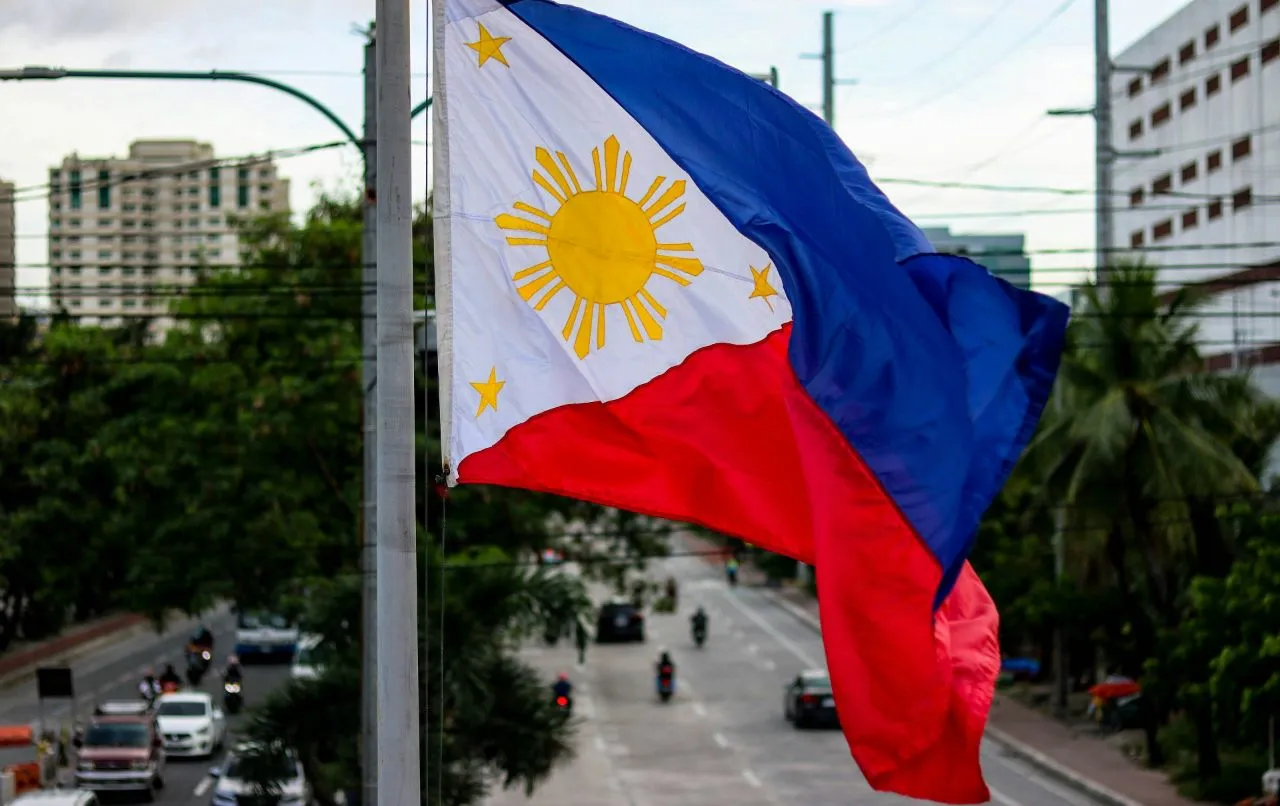
Dominik Schiener, the co-founder of distributed ledger technology (DLT) project IOTA, outlined on X on Dec. 12 that he had met with Cristina Aldeguer-Roque, Secretary of Trade of the Philippines. Commenting further, Schiener wrote:


“We are looking forward to expand IOTA and our trade infrastructure TWIN across South East Asia in 2025.” 
https://asset.coinness.com/en/news/accc9d938255621d26049d925a3d10b8.webp
Photo by iSawRed on Unsplash

Cutting through trade barriers

TWIN refers to IOTA’s Trade Worldwide Information Network, a continuation of another longstanding IOTA project, the Trade and Logistics Information Pipeline (TLIP). The objective of TWIN is to cut through trade barriers and improve connections between disparate national trading systems. In rolling out the network, IOTA has formed a consortium which includes organizations such as TradeMark Africa, the Global Alliance for Trade Facilitation and the Chartered Institute of Export & International Trade.


TWIN seeks to optimize trade processes by merging physical goods with digital infrastructure, eliminating inefficiencies and boosting transparency. Schiener anticipates that once participants place data on the network, they will ultimately tokenize assets on it. In turn, this will result in utility for the IOTA token, once TWIN is released on the IOTA mainnet. The TWIN project is currently staffed by 28 people but Schiener believes that this will grow to 100 people over the course of the next two years.


The project originally emerged in Germany, with the IOTA Foundation having its headquarters in Berlin. Initially, IOTA concerned itself with European blockchain initiatives in trying to find its place in the industry. Earlier this year, its Web3 identity authentication solution was chosen by the European Commission for inclusion within the European Blockchain Sandbox Initiative (EBSI). In August, the IOTA Foundation completed the final stage of the European Union’s blockchain pre-commercial procurement (PCP) program.


Strategic expansion

However, over the course of the past year, the project has expanded towards searching for product market fit within emerging markets. In November 2023, the project established the IOTA Ecosystem DLT Foundation within the Abu Dhabi Global Market (ADGM) financial center in the United Arab Emirates (UAE). This marked the first DLT foundation to have established itself within the ADGM. 


$100 million in funding was provided with the objective of nurturing the IOTA ecosystem and accelerating the growth of the IOTA protocol. Since then, the TON Foundation and the Aptos Foundation have moved to register under the ADGM’s DLT Foundations framework.


East Africa has been ground zero for IOTA’s attempts to enhance cross-border processes related to trade documentation, where it has been working with TradeMark Africa and local regulators.


In Singapore, the IOTA Foundation has collaborated with global innovation ecosystem Tenity to establish the IOTA Accelerator, a 12-week initiative aimed at assisting early-stage startups concerned with real-world asset (RWA) tokenization within the IOTA ecosystem.


Schiener’s meeting in the Philippines would suggest that the project is making greater efforts still in terms of bringing about the adoption of the technology in Southeast Asia. In his X post, Schiener wrote:


“Let's connect the world with sovereign digital infrastructure.”

More to Read
View All
Web3 & Enterprise·

Apr 24, 2023

SAI.TECH Consolidates Mining Product Offering

Singapore’s SAI.TECH, a bitcoin miner and mining infrastructure hardware developer, has chosen to consolidate its product offering. The company has simplified its product range by categorizing them as Ultiaas, Boltbit, and Heatnuc. Virtual annual conferenceThe company took the opportunity to host SAITIME 2023, a virtual corporate annual conference, using the event as a platform to announce its SAIHUB product consolidation.Ultiaas will focus on the development of hardware and software products alongside integrated solutions, in order to enable liquid cooling and heat reuse capabilities while attempting to achieve optimized energy efficiency. In practical terms, these products convert mining chip heat into reusable energy.The team behind the Ultiaas product line believes that the technology can have a significant positive effect on data centers through the harnessing of chip heat in commercial, residential, industrial and agricultural locations. The firm has thoroughly tested the product, with its first successful operation at its testing and distribution facility in Ohio in the United States. According to a press release, the company says that “we look to tap into the state’s vast reservoir of clean energy.” With that, it is already working on the construction of a second site.The green bitcoin mining specialist recycles 90% of the waste heat produced in the mining process, thanks to the technology that it has developed.Boltbit concerns itself with the provision of decentralized transaction system services and technical support. It focuses on blockchain and lightning network technology. Lastly, Heatnuc will focus on the research and promotion of small modular reactors. Unusual price actionThe company, which listed on the Nasdaq last year following a special purpose acquisition companies (SPAC) merger in 2021, was the center of some speculative interest last week. The firm’s shares surged by over 360% to a high of $7.42 in one day’s trading. A week on, the share price has calmed down, trading at $3.68 on Friday. The rationale behind the short-lived share price surge remains a mystery. Kazakhstan scale-backIn August of last year, SAI.TECH decided to scale back an active bitcoin mining site that it is involved in in Kazakhstan. A second phase of the project would have brought 90 MW online. It is still working on phase 1 which will bring 15 MW online.Kazakhstan had seen an influx of bitcoin miners in the wake of a China mining ban a few years ago. The sudden surge in energy consumption on the Kazakh energy grid upset the national power supply, resulting in protests and riots. The country then pushed back against the miners, disconnecting many projects from the grid. It was against this background that it’s understood SAI.TECH decided to scale back its plans in the landlocked Eurasian country.

news
Policy & Regulation·

Dec 27, 2023

Worldcoin withdraws verification service from Indian market

Worldcoin, the startup co-founded by OpenAI CEO Sam Altman, has encountered setbacks in its eye-scanning initiatives just six months after its international expansion. A recent report by TechCrunch indicates that the company’s signature orb eye-scanner is no longer available to users in the Indian market. According to that report, the Worldcoin Foundation clarified that its activities have also been suspended in France and Brazil. The company clarified that its offerings in those markets were only intended to be limited-time product previews as opposed to long-term roll-outs.Photo by Big G Media on UnsplashTemporary service haltIn India, the World App is experiencing widespread adoption, but the orb-verified proof of personhood services has been temporarily halted. The pause aims to allow the protocol to develop and implement a bespoke, safe and orderly process to meet the growing demand. The setback comes after Tools for Humanity, the organization behind Worldcoin, announced the expansion of World ID, its digital identity program linked to iris scans, in July. The startup had ambitious plans, intending to make 1,500 orbs available in over 35 cities globally. Recently, the company unveiled a program offering $5 million in grants to developers utilizing its eye-scanning technology. Regulatory investigationsSam Altman and his co-founders established Worldcoin in 2020 to help individuals prove their digital identity amidst the rise of AI. Over the years, Worldcoin has secured $250 million in funding from notable venture capitalists, including Andreessen Horowitz. However, the startup has faced regulatory challenges, including investigations by French and German regulators and an Argentinian government agency. Altman, himself, has navigated recent challenges. In November, the OpenAI board temporarily removed him as CEO, reinstating him two weeks later. More recently, Fortune reported that Altman quietly received $75 million from the University of Michigan for a new venture capital fund, raising questions about transparency, particularly following the launch of OpenAI’s signature product, ChatGPT. Asian tourIn recent weeks, the project development team behind Worldcoin had engaged in a tour of Asia. The objective of that mission was to gather market feedback prior to engaging in greater efforts to expand the reach of its World ID verification system within the region. To gauge market receptiveness to its product offering, the tour included meetups in major Asian cities such as Hong Kong, Seoul, Singapore and Tokyo. Up until mid-November, the Asian region accounted for 1.4 million World App sign-ups.The introduction of World ID 2.0 by the company on Dec. 13 led to a surge in the price of WLD. Over the course of the 48 hours that followed, it jumped from $2.47 to $4.23, a 71% increase. At the time of writing, the token unit price stood at $3.66. As Worldcoin navigates these challenges, the cryptocurrency industry will closely monitor developments, recognizing the broader implications for the startup’s innovative approach to digital identity verification.

news
Web3 & Enterprise·

Nov 18, 2023

XREX secures MPI license from Singapore regulator

XREX secures MPI license from Singapore regulatorTaipei-based cryptocurrency exchange XREX has received in-principle approval from the Monetary Authority of Singapore (MAS) for a Major Payment Institution (MPI) license.Photo by Mark König on UnsplashBitCheck payment tool offeringThe approval marks a crucial step for the fledgling exchange business, enabling it to offer digital payment token products and services in Singapore. Once it’s upgraded to a full license, XREX will be able to expand its BitCheck payment tool, currently facilitating transactions involving fiat currencies, stablecoins and various cryptocurrencies.This regulatory milestone places XREX among the approved exchanges, stablecoin issuers, neobanks and payment service providers in Singapore. Since the introduction of the licensing regime in January 2020, the MAS has received over 580 applications for payment services licenses, with fewer than 20 Digital Payment Token (DPT) licenses and in-principle approvals granted to date. XREX now joins the ranks of established entities like Coinbase, DBS Vickers, Circle, Paxos, Ripple and Revolut in receiving approval from the MAS.Taking to X on Friday, the company acknowledged the license award while outlining that the license would mean that it can now start to offer an e-money issuance service, cross-border money transfers, account issuance services, digital payment token services, as well as merchant acquisition and domestic money transfer services.Serving home and overseas marketsWayne Huang, Co-Founder and Group CEO of XREX, emphasized that XREX Singapore will serve as the primary provider of products across the Asia Pacific (APAC) region. Simultaneously, XREX Taiwan will continue to play a pivotal role in product design, engineering, research and threat analysis functions for the company. Positioning itself as the Asia Pacific headquarters for the group, XREX Singapore aims to target emerging markets in the region where access to USD liquidity may present challenges.Christopher Chye, CEO of XREX Singapore, expressed the significance of the approval, noting the thorough scrutiny by Singapore’s regulatory authorities. Chye stated:“Singapore wants to attract responsible actors, and the reality is that doing so necessitates a fine-tooth comb. This is great for Singapore and great for our industry as a whole. XREX is looking forward to introducing cheaper, safer, and faster domestic and cross-border payments for Singapore and emerging market businesses.”It was no secret that the company had been working towards acquiring a license in Singapore for some time. In December 2022, its Singapore team tweeted out such a claim, adding that an MPI license from MAS “is one of the most coveted and well-regarded licenses worldwide.”Highlighting Singapore’s progressive and robust regulatory framework, Nick Chang, XREX Group and XREX Singapore Head of Compliance, said:“Singapore boasts a progressive and robust regulatory framework, offering our users the clarity and confidence they need to access digital assets and use stablecoins.”XREX has also made in-roads into the European market. In May of last year, the company opened an office in Lithuania, while becoming a crypto asset service provider within the Baltic state. Earlier this year the company strengthened its compliance process by integrating transaction monitoring and investigative tools from blockchain analysis firm Chainalysis.

news
Loading