Top

X-TICKET teams up with Catalyze Research for XRPL expansion

Web3 & Enterprise·November 06, 2023, 3:48 AM

South Korean Web3 performing arts platform X-TICKET has signed a memorandum of understanding (MOU) with Catalyze Research, a Web3 research firm and an official partner of Ripple, to jointly expand the XRP Ledger (XRPL) ecosystem and support the integration of Web3 into Korea’s performing arts landscape.

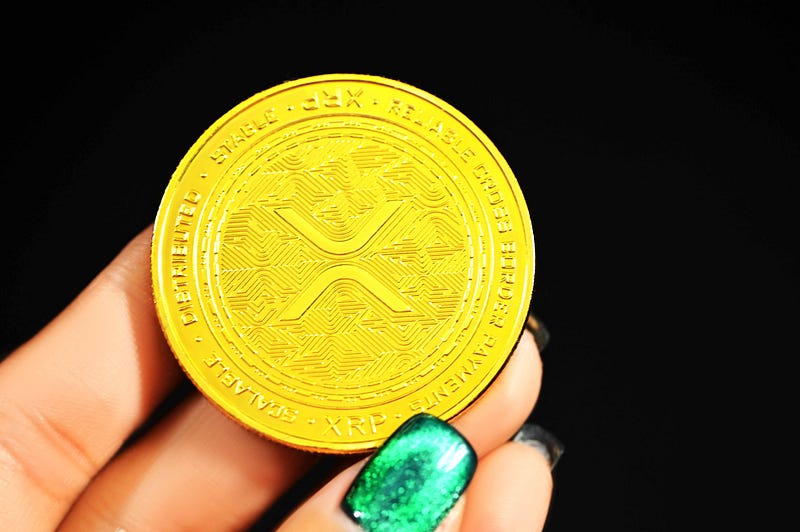
Photo by Kanchanara on Unsplash

“We are delighted to work alongside Catalyze Research. The XRPL ecosystem, together with XRP, is poised to play a significant role in bringing the Korean performing arts industry onto the global stage. We hope to create synergies through collaborations with Korean cultural performances,” said X-TICKET CEO Shin Yong-un.


Leading a new era of event ticketing

X-TICKET harnesses blockchain technology to provide digital collectible tickets for performing arts shows, including live musicals like “Cats” and “The Phantom of the Opera.” This service is expected to revolutionize the industry by preventing various problems that tend to occur with ticketing, such as duplication, loss and scalping, thus fostering a secure, transparent and efficient performing arts ecosystem. The platform recently launched its beta version and held a sales event for NFT tickets to “The Phantom of the Opera” shows.


Pioneering Web3 solutions

Catalyze Research, on the other hand, specializes in Web3 and blockchain research and consultations. The firm teamed up with Ripple in July to expand the presence of XRPL in the Korean market — a decentralized, public blockchain for businesses and developers — and encourage participation in the XRPL developer community.

“Catalyze Research is actively engaged in numerous collaborations to expand the XRPL ecosystem. We plan to implement blockchain technology into X-TICKET and the Korean performing arts sector to extend the ecosystem’s reach,” the firm stated.

The partnership between the two enterprises represents a significant step forward in the intersection of technology and the arts in Korea.

More to Read
View All
Policy & Regulation·

Jan 02, 2025

Regulator pulls plug on Bybit in Malaysia

In Malaysia local regulator the Securities Commission has ordered global crypto exchange platform Bybit to shut down its operations within Malaysia as part of enforcement actions being taken by the regulator against the company.Photo by Esmonde Yong on UnsplashOperating without registration The Securities Commission published a statement to its website late last week outlining that both Bybit and its CEO Ben Zhou had been reprimanded for carrying out digital asset trading activities in Malaysia without having completed the necessary registration. The regulator also pointed out that both Zhou and his company have been listed on its Investor Alert List since July 2021. The Securities Commission took the opportunity to remind investors that they should only deal with what it termed “Recognized Market Operators” (RMOs), a designation it applies to entities that have completed registration with the regulator. Investors who utilize unregistered platforms are not extended any form of protection under Malaysian securities law, the Securities Commission warned, adding that such platforms could put them at risk of fraud and implicate them in money laundering activity potentially. Enforcement actions Bybit has been directed by the regulator to disable its website and mobile applications that are currently targeting Malaysian investors within 14 business days from Dec. 11.  The regulator also wants the company to curb other forms of promotion aimed at Malaysian investors. With that, it has requested that the company take down its Telegram-based support channel for Malaysian customers. Advertising activity, including social media posts, must also cease in cases where such activity is aimed at Malaysian investors. The Securities Commission acknowledged that thus far, Bybit has been compliant with its latest enforcement requests. Intentions to secure licensing Bybit has responded to these developments on its Bybit Malaysia Telegram channel, stating that the company understands that these actions “may cause some inconvenience” to Malaysian customers. “Once we have secured the appropriate licenses, we look forward to reconnecting with you again in the future,” it added. The enforcement action is likely to be a setback for Bybit given that the firm appeared to be focusing on the Malaysian market of late. In June it emerged that the company was moving to relocate Chinese employees to both Malaysia and Dubai.  This is not the first occasion in which Malaysia’s Securities Commission has taken action against a crypto platform. In 2023 the commission ordered the closure of the Malaysian operations of global exchange Huobi (subsequently rebranded as HTX). The circumstances in that instance were similar in that it acted against the exchange and its CEO for operating illegally within the Malaysian market. Within the Malaysian market, only six trading platforms have been registered. These include Hata Digital, Luno, MX Global, Sinegy, Tokenize Technology and Torum International. Earlier the Securities Commission acted similarly in prohibiting Atomic Wallet from operating within Malaysia given its failure to register its digital asset exchange activities. 

news
Policy & Regulation·

Feb 27, 2025

Local crypto firms in talks with Hong Kong’s SFC on crypto staking

Local crypto firms in Hong Kong are understood to be in “active” talks with the Securities and Futures Commission (SFC), with a view towards bringing about the integration of staking within crypto exchange-traded fund (ETF) products. Haiyang Ru, chief risk officer of HashKey Group, a leading Hong Kong-headquartered digital asset financial services firm, told The Block that the Chinese autonomous territory may shortly see the introduction of staking services relative to crypto derivatives trading products and crypto ETFs. He stated: "We are actively discussing with the SFC the introduction of ETF staking and tokenized money market funds, as well as launching an 'Earn' feature alongside spot trading."Photo by tommao wang on UnsplashFocus on staking in 2025HashKey is one of a number of well-known digital asset firms that is in regular contact with the regulator. Other firms are also paying attention to developments. Alessio Quaglini, co-founder and CEO of Hex Trust, a Hong Kong-based firm that offers regulated institutional digital asset custody and staking services, believes that staking will garner greater attention in 2025. He stated: “Institutions that move into crypto custody will naturally seek yield-generating opportunities for their clients."  OSL, one of the first entities alongside HashKey to be awarded digital assets-related licensing in Hong Kong, has also identified rising customer demand for yield-generating products in the crypto space within the Chinese autonomous territory.  Global competitionThe authorities in Hong Kong are likely to be watching developments overseas also. ETH ETFs in the United States have reeled in $3 billion in capital inflows without staking. Since the launch of these products, many industry commentators have suggested that in the event that staking is approved, big institutions, particularly pension funds and wealth managers, are going to be attracted to the passive yields on these ETFs.  Traditional finance (TradFi) loves yield, and in the case of Ether ETFs that include staking, an annual percentage yield (APY) of up to 5% should be possible. Last month, an S&P Global report suggested that there was growing interest from institutional investors with regard to crypto staking opportunities.  Cryptocurrency ETF issuer 21Shares has applied to the Securities and Exchange Commission (SEC) in the U.S. to include staking within its ETH ETF product. A similar application has been made by crypto asset manager Grayscale relative to its ETH ETF offering. With that activity ongoing in the U.S. and inter-jurisdictional competition in terms of digital asset growth opportunities, it’s likely that Hong Kong will be keen to enable this market offering. Staking ‘unparalleled’ in TradFi markets Earlier this week, the SFC introduced a new roadmap geared towards strengthening the digital assets sector in Hong Kong. One of the initiatives itemized is the enabling of crypto staking.  The explanatory document published by the regulator states that it is examining the introduction of staking with safeguards in respect to digital asset custody, liquidity risks and “ensuring that the operational processes for staking are transparent.” The SFC described crypto staking as a yield generation opportunity that is unparalleled in TradFi markets.

news
Policy & Regulation·

Jun 13, 2023

China Launches Digital Yuan ATMs in Hainan Resort City of Sanya

China Launches Digital Yuan ATMs in Hainan Resort City of SanyaThe latest in a long list of initiatives to bring about further use of China’s digital yuan has seen the introduction of e-CNY ATM machines within the resort city of Sanya on Hainan Island. That’s according to a recent report published by the South China Morning Post (SCMP).Photo by Monstera on PexelsInternational currency exchangeThe introduction of e-CNY foreign exchange machines aims to provide visitors with easy access to digital payments and enhance their experience in the local mobile payments ecosystem. Resembling traditional ATMs, these machines allow tourists to deposit 20 different currencies, including US dollars and euros, and receive a physical card loaded with e-CNY in return.The card can be used for seamless payments at participating merchants with a simple tap. Travelers can also use the machines to top up their e-CNY balance, check transaction records, and manage their funds.This initiative addresses the needs of tourists who often face challenges setting up Chinese mobile wallets, which have become essential for retail, dining, transportation, and shopping. These mobile wallets typically require real-name verification and a local bank account, posing difficulties for foreign visitors.While limited prepaid options have been available in recent years, the e-CNY card now offers a convenient digital payment solution without the need to download a separate app. The machines are currently available in two cities, with the Bank of China (BOC), one of 11 authorized banks for e-CNY, leading the development of these innovative devices.Earlier this year, BOC launched a similar foreign exchange machine at Yiwu International Trade City in Zhejiang province, emphasizing China’s efforts to promote digital currency and facilitate financial accessibility. Both Zhejiang and Hainan have been striving to become attractive destinations for foreign tourists and merchants. In May, administrators within the local government in Jiangsu Province confirmed that they would be launching an initiative to promote use of the digital currency within the local education system.The introduction of these machines aligns with Beijing’s mission to develop and promote its sovereign digital currency, known as the Digital Currency Electronic Payment (DCEP). The project, which began trials in 2019, aimed to enhance financial inclusion and digital finance accessibility for unbanked individuals.Digital yuan internationalizationChina has been actively pursuing the internationalization of the digital yuan, seeking to facilitate yuan-denominated trade and investment, while reducing reliance on the existing global financial system. In May, the BOC entered into a partnership with French financial services firm BNP Paribas that will see the company promote e-CNY to its corporate clients.China’s efforts to promote cross-border use of e-CNY extend to regions like Hong Kong, a key offshore yuan center. A trial of the e-CNY for cross-border payments took place last year, facilitating more than 150 million yuan ($22 million) of cross-border e-CNY transfers in 160 payments, involving 20 commercial banks in Hong Kong, Thailand, and the United Arab Emirates (UAE).As China continues to make inroads where adoption and use of the e-CNY are concerned, these developments signal a significant shift in the way we can expect sovereign currencies to be made available globally.

news
Loading