Top

StashAway opens access to Fidelity crypto ETFs in Malaysia

Markets·February 03, 2025, 5:26 AM

StashAway Malaysia, a Malaysian Securities Commission (SC)-licensed digital investment platform, has extended its market offering to include crypto exchange-traded funds (ETFs) within the Southeast Asian nation.


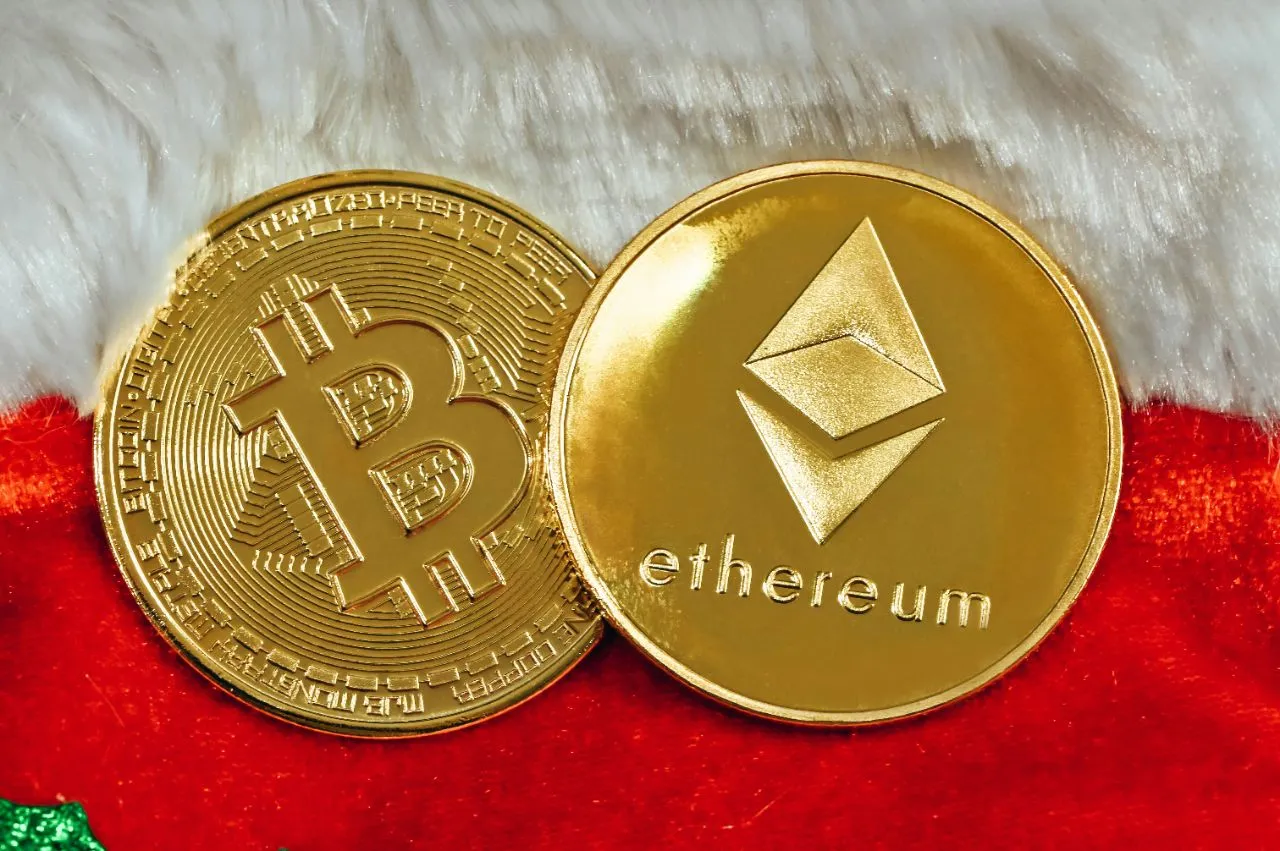
Malaysian daily English language newspaper the Sun reported on Jan. 22 that StashAway will enable Malaysians to invest in two top-tier cryptocurrencies, Bitcoin (BTC) and Ethereum (ETH), through its regulated platform.
https://asset.coinness.com/en/news/b3d65b012b23087826b8fa26858e0fd8.webp
Photo by Traxer on Unsplash

Fidelity products

The company is providing its Malaysian clientele access to crypto investment products offered by American multinational financial services company Fidelity Investments. These include the Fidelity Wise Origin Bitcoin Fund (FBTC) and the Fidelity Ethereum Fund (FETH).


StashAway Malaysia Country Manager Wong Wai Ken explained the company’s rationale in adding the two products. He stated:


“Many of our clients have expressed interest in the long-term potential of major cryptocurrencies like Bitcoin but have been hesitant because of security concerns or the complexities of navigating crypto exchanges. We’re now offering them a familiar and safe way to diversify their portfolios by incorporating crypto through a platform they already know and trust.”


On a previous occasion, Wong told the Sun that its role is to help investors to diversify their portfolios. Adding access to cryptocurrency fits that objective. The StashAway executive believes that while there may be growing mainstream adoption of cryptocurrency, many investors are turned off gaining exposure due to the risks involved with self-custody or the fees and counterparty risk involved with cryptocurrency exchanges.


StashAway charges management fees ranging from 0.2% to 0.8%. The Fidelity crypto ETF products will be offered with a 0.25% annual management fee. 


Last June, Malaysian commercial bank Affin Bank became the first entity to offer a crypto ETF in Malaysia. The bank partnered with local fund management company Cross Light Capital to launch the actively managed digital asset fund. Titled the “Performa Digital Asset Fund,” the product incorporates investment in Bitcoin and Ether exchange-traded products (ETPs), with the remaining third invested in blockchain-related equities.


The approval of eleven Bitcoin ETFs in the United States led to greater consideration for the approval and addition of such products internationally. However, in the first few months following the launch of these products, regulators, exchange platforms and asset management firms still remained cautious. 


In March of last year, Bursa Malaysia, Malaysia’s stock exchange, dismissed the notion of adding cryptocurrency to its multi-asset exchange. Within the region, regulators in Singapore and Thailand both dismissed the idea of enabling Bitcoin ETFs within their markets. 


Since then, Thailand’s regulator has moved closer in its consideration of such a product offering. In the case of Malaysia, earlier this month, the country’s Prime Minister, Datuk Seri Anwar Ibrahim, called for stakeholders such as the central bank to focus on cryptocurrency so that the Southeast Asian nation doesn’t get left behind.


StashAway is headquartered in Singapore. Besides Singapore and Malaysia, the company also serves investors in Thailand, the United Arab Emirates (UAE) and Hong Kong. The digital platform has 50,000 users in Malaysia, where it serves retail and accredited investors. The company was the first robo-advisor platform to acquire a Capital Markets Services License from the SC in Malaysia.


More to Read
View All
Web3 & Enterprise·

Apr 23, 2024

Woo X launches tokenized T-Bills for retail investors

Taipei-headquartered cryptocurrency exchange Woo X has announced the launch of tokenized United States Treasury Bills (T-Bills), marking a significant milestone for the crypto-sector retail investment landscape. In a press release, the company outlined that it has partnered with London-based institutional tokenization platform OpenTrade in order to bring its Earn Vaults product backed by real-world assets (RWAs) to market. The product is being heralded as the first protocol offering tokenized T-Bills accessible to retail investors.Photo by Jorge Salvador on UnsplashStable yield accessWilly Chuang, Chief Operating Officer of Woo X, expressed enthusiasm about the initiative, highlighting its potential to bridge the gap between conventional financial securities and the cryptocurrency market. He told CoinDesk in an email that “for the first time, retail users on a centralized exchange can instantly access an interest-bearing account backed by U.S. Treasury Bills.” With RWA Earn Vaults, Woo X users now have access to stable, predictable yields on their USDC holdings, backed by U.S. Treasury Bills, without encountering additional complexities. These yield-bearing products offer attractive annual percentage rates (APR) ranging from 4.5% to 4.7% for USDC holders. Subscriptions accrue real yields, fully backed by U.S. Treasury Bills, with current annual percentage rates (APRs) for seven-day and 28-day terms standing at approximately 4.5% and 4.75%, respectively. OpenTrade is a tokenization platform supported by Circle, the issuer of the world's second-largest stablecoin, USDC, lending further credibility to the partnership, with USDC boasting a market cap of $34 billion. OpenTrade had established links with Centre, the now-dissolved collaboration between Circle and Coinbase, and the Marco Polo enterprise blockchain project. Interest in RWA tokenizationRecent institutional interest in the RWA tokenization sector is exemplified by BlackRock's launch of the USD Institutional Digital Liquidity Fund, valued at over $298 million. This development underscores the increasing recognition of digital assets as viable investment instruments by traditional financial giants. Additionally, a recent report by CoinGecko highlighted the profitability of tokenized RWAs in the crypto space, positioning it as the second most lucrative narrative in the first quarter of 2024. Lim Yu Qian, an analyst at CoinGecko, noted the substantial profitability of the RWA narrative compared to other sectors, emphasizing its growing prominence.Franklin Templeton's Franklin OnChain U.S. Government Money Fund (FOBXX) has emerged as a notable treasury tokenization fund, reflecting the sector's maturation and investor confidence.  Woo X's product offerings extend beyond tokenized T-Bills, encompassing index-linked perpetuals covering crypto meme coins and layer-2 tokens in collaboration with market maker Wintermute. The exchange's native token, WOO, plays a pivotal role in governance and incentivization, offering users the opportunity to stake WOO and earn an average APR of 12.66%. The recent robust performance of WOO, experiencing a price surge of about 30% since its April 13 low, has served to boost the platform further. Tokenization of U.S. T-Bills has witnessed significant growth, with over $1.15 billion worth of assets tokenized through various products by April 2022, highlighting the growing appeal of digital asset-based offerings in the financial sector. This latest product offering benefits retail market participants, giving them increased access to diverse and lucrative investment opportunities in the burgeoning digital asset space. 

news
Web3 & Enterprise·

Aug 14, 2023

RaonSecure to Develop Digital Identity Strategy for the Indonesian Government

RaonSecure to Develop Digital Identity Strategy for the Indonesian GovernmentRaonSecure, a South Korea-based decentralized identity (DID) service provider utilizing blockchain technology, has secured a contract with the Korea-Indonesia e-Government Cooperation Center. The contract involves providing consultation services aimed at devising a strategy for the implementation of a digital identity system in Indonesia. The selection of RaonSecure as the contract winner was orchestrated by Korea’s National Information Society Agency (NIA), and this strategic venture is being executed through the bilateral center.Photo by Ben Sweet on UnsplashBilateral center fostering tech exchangeEstablished in Jakarta in 2016, the bilateral center aims to facilitate the exchange of technological expertise between the Korean government and its Indonesian counterpart. This organization also serves to accelerate the entry of Korean enterprises into the Southeast Asian market.Indonesia’s national service portalAs the Indonesian government looks forward to establishing a national service portal, the need for a robust national digital identity system has been growing. This system is envisaged to support functionalities such as user authentication, e-signatures, and privacy protection.Blockchain-based DID implementationIn light of these needs, RaonSecure has emerged as a suitable company for the project, showcasing its technological prowess and stability. The Korean tech firm’s expertise has been evident in the successful deployment of its blockchain-powered DID platform, OmniOne, across diverse organizational settings. Noteworthy deployments include providing OmniOne for the issuance of identification cards to government employees, licensed drivers, and military veterans. Furthermore, RaonSecure has recently partnered with the Korea Federation of Savings Banks (KFSB) to develop a solution that verifies bank customers’ identities using mobile ID cards.The Indonesian venture is encouraging development for RaonSecure as it will serve as a gateway to not only fostering its presence within Southeast Asia but also propelling its reach far beyond, and the company’s blockchain DID technology will play a key role in spearheading this expansion into new horizons.

news
Policy & Regulation·

Apr 11, 2023

Hong Kong Setting High Bar on Crypto Rules

Hong Kong Setting High Bar on Crypto RulesLucy Gazmararian, a Fintech Advisory Group member of Hong Kong’s Securities and Futures Commission (SFC) and founder of crypto venture firm Token Bay Capital has said that the standards for Virtual Asset Service Providers (VASPs) in Hong Kong are incredibly high.©Pexels/Brayden LawThe Securities and Futures Commission (SFC) has established these strict guidelines as they want the crypto industry to adhere to the same compliance standards as traditional financial firms.Gazmararian made the comments in discussion with Cointelegraph on the fringes of the Hong Kong WOW Summit. Although the bar is set high, Gazmararian maintains that it is not without good reason. The SFC’s approach is to ask VASPs to apply the same standards that existing financial institutions such as huge banks and asset managers must comply with.Short term challengesAccording to a consultation paper released by the SFC on February 20th, licensed VASPs may serve retail investors, but the standard of investor protection measures imposed needs to be considered. Additionally, Anti-Money Laundering (AML) and Know Your Customer (KYC) policies were also discussed.While these high standards may benefit the industry in the long run, Gazmararian believes they may pose challenges for the crypto industry in Hong Kong over the short term. She explained that many crypto businesses are in the startup phase and have funding but not huge amounts. Therefore, complying with the framework may incur significant costs. Gazmararian mentioned the need for local VASPs to have insurance, independent assessment reports, and store crypto in cold storage. It is important to note that these costs may prevent some startups from entering the market, which may have consequences on the industry’s growth in Hong Kong.The Token Bay Capital founder believes that with a solid regulatory framework in place, more well-capitalized financial firms will be willing to help promising startups get off the ground. In her opinion, the companies that receive a license will be upholding the most stringent standards.Ambitions to be global crypto hubThe SFC has encouraged individuals, corporations, and crypto firms to review the 361-page consultation paper and provide feedback. The securities regulator wants these entities to share their views and point to things that may have been missed. According to Gazmararian, the SFC is “absolutely focused” on getting everything right, so they are seeking input from a wide range of sources.Submissions for feedback on the consultation paper closed on March 31. Hong Kong has made significant strides in recent months to establish itself as the world’s next crypto hub. According to a March 20 statement by the Secretary for Financial Services and the Treasury, Christian Hui, more than 80 digital asset firms have expressed interest in establishing a presence in Hong Kong over the last few months. This interest is a testament to the growing importance of the crypto industry and the favorable environment that Hong Kong is creating for its growth.

news
Loading