Top

UAE deepens its crypto push as Bybit wins full license and institutions move in

Policy & Regulation·October 13, 2025, 3:32 AM

The United Arab Emirates (UAE) advanced its push to become a leading digital asset hub as crypto exchange Bybit received a full virtual asset platform operator license from the Securities and Commodities Authority (SCA). The permit enables Bybit to provide its entire range of products to UAE residents, the company said in an Oct. 9 press release.


The clearance marks the culmination of a process that began when Bybit received preliminary approval from the SCA in February. The exchange says it is the first to complete the full licensing journey and notes that 2025 has been a year of major compliance wins, including new credentials in Europe and a return to the Indian market.
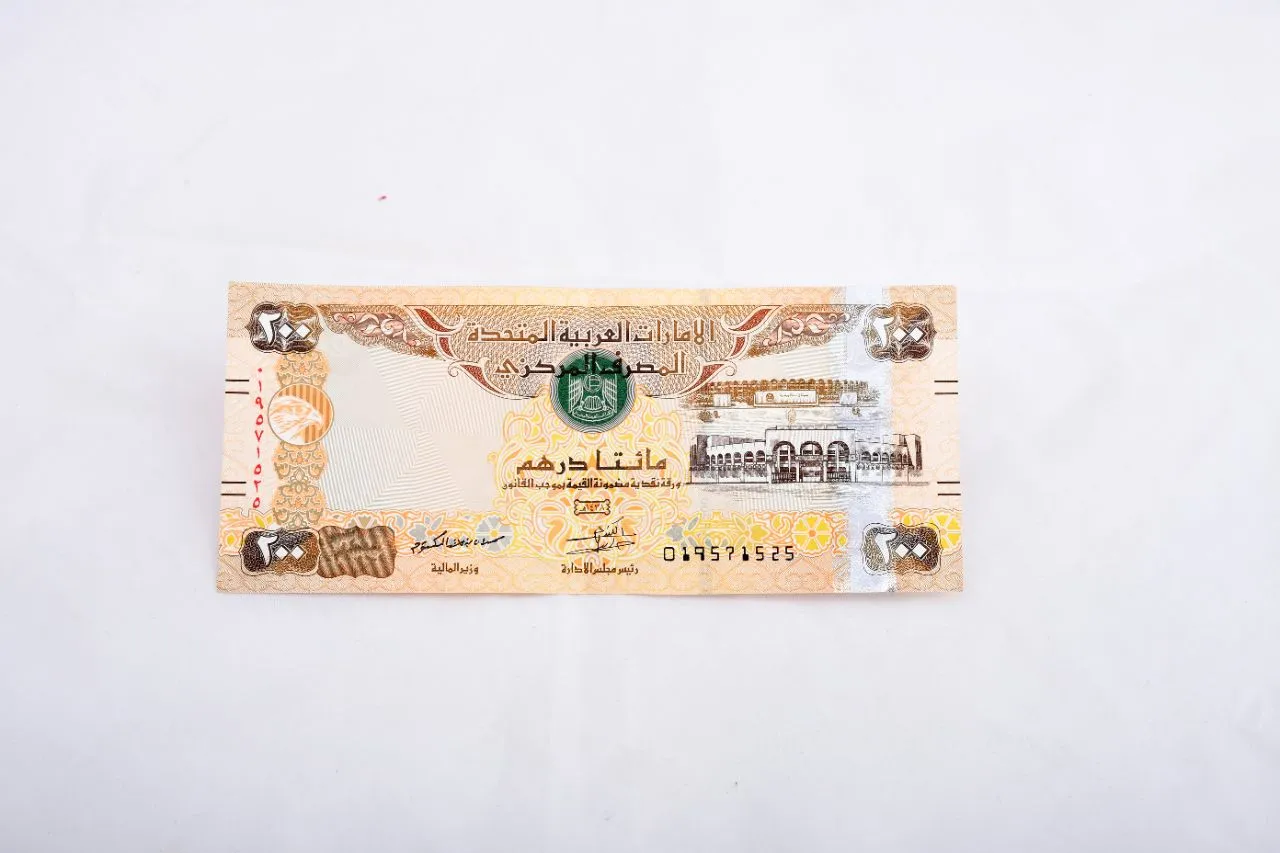
https://asset.coinness.com/en/news/b538930c9b8d9c9f15329b004d01b838.webp
Photo by Atikah Akhtar on Unsplash

BitGo broadens institutional reach in Dubai

Institutional infrastructure is expanding alongside retail access. Crypto custody firm BitGo secured a broker-dealer license from Dubai’s Virtual Assets Regulatory Authority (VARA). The new authorization allows BitGo MENA to deliver regulated trading and intermediation services across the region through an integrated OTC desk and a digital platform supporting spot crypto trading in both dirhams and U.S. dollars.


The UAE’s welcoming attitude toward digital assets is changing how major investors think about wealth. The Bitcoin Historian said on X that The Kanoo Group, which oversees about $20 billion in assets, intends to invest in Bitcoin. Bloomberg has reported that affluent families across the region are gradually diversifying beyond real estate and private enterprises. With around $1 trillion expected to shift to younger generations soon, many heirs are looking to allocate more toward cryptocurrencies, tokenized funds, and tokenized real-world assets (RWAs).


New fund marks progress in tokenized finance

That growing appetite for digital exposure is now being met with new products. Last month Qatar National Bank (QNB) Group joined forces with Standard Chartered and DMZ Finance to launch the first regulated tokenized money market fund in the Dubai International Financial Centre. Using blockchain technology, the QCD Money Market Fund brings traditional financial assets on-chain, creating new yield opportunities for investors within the digital economy. The fund is managed by QNB Group, uses infrastructure provided solely by DMZ Finance, and has Standard Chartered serving as custodian of its assets.


As the UAE deepens its role in global finance, regulators are also working to align with international standards. By 2027, it expects to adopt the OECD’s Crypto-Asset Reporting Framework (CARF), with cross-border data exchanges to begin in 2028. The Ministry of Finance has already signed the Multilateral Competent Authority Agreement to make this happen. The framework promotes automatic sharing of crypto-related tax information among member countries, underscoring the UAE’s commitment to global transparency as it expands its financial footprint.


Recent developments show the jurisdiction striving for growth while strengthening oversight. Exchanges are gaining clarity on what they can offer, institutions are building trading rails, and investors are embracing tokenized products. They signal a market finding its balance between innovation and regulation. The coming years will reveal how well that balance can hold.

 

More to Read
View All
Web3 & Enterprise·

Jan 27, 2024

Sygnum plans Asian expansion following $40M fund raise

Switzerland and Singapore-based crypto bank Sygnum has successfully closed a funding round, securing over $40 million in capital, with plans to expand its service offering in Asia. On the brink of unicorn statusThe funding round was achieved based upon a post-money valuation of $900 million, with Sygnum edging closer to unicorn status. Led by global asset management group Azimut Holdings, the funding surpassed the initial target of $35 million, reinforcing Sygnum's position in the rapidly evolving digital assets space. In a press release, Mathias Imbach, Sygnum's co-founder and CEO, expressed excitement about the successful funding round, highlighting the company's commitment to building trust through regulation and good governance. Imbach stated:”Our core thesis has always been that Future has Heritage, and our strategy to build trust via regulation and good governance has guided us throughout all market cycles. ” Gerald Goh, Sygnum's co-founder and CEO of its Singapore operations, emphasized the importance of staying ahead as clients' needs and activities grow more sophisticated. The fresh funds will enable Sygnum to continuously upgrade and enhance its product and service offerings in response to evolving market demands.Photo by Towfiqu barbhuiya on UnsplashAsian focusThe funds raised in this round will be instrumental in expanding Sygnum's geographical reach into new markets in 2024, within the Asia-Pacific (APAC) region as well as within the European Union. Sygnum has already made in-roads in Asia. Having started out in Switzerland, in 2019 the company set up a base in Singapore, establishing Sygnum Singapore and obtained a capital markets license from the Monetary Authority of Singapore (MAS). Last June, the firm achieved in-principle approval for a Major Payment Institution (MPI) license from MAS. It fulfilled the regulator’s requirements to bring about full approval in October. Goh told Bloomberg that the company envisages achieving growth in Asia and Europe through acquisition.  Developing fully regulated productsThis latest capital injection has also been earmarked to accelerate the development of fully regulated products, including the bank-to-bank platform that currently powers crypto offerings for more than 15 banks and financial institutions worldwide. Sygnum's assets under management have surged to $4 billion, with a client base exceeding 1,700 from over 60 countries. At the end of 2023, the firm reported an annualized revenue run rate (ARRR) exceeding $100 million, marking a significant milestone for the company's financial health and positive cash flow. Sygnum's expansion efforts include collaborations with key players in the industry. In November, the bank furthered its partnership with the Singapore arm of 174-year-old private bank Bordier & Cie, strengthening their initial collaboration that started in Geneva in 2021. Giorgio Medda, CEO of Azimut Holding, highlighted the strategic partnership between Azimut and Sygnum since 2021, emphasizing their joint development of the first tokenization of a private credit portfolio in Europe. Despite the recent challenges in the crypto industry, Sygnum remains optimistic about the future. The broader industry is witnessing a resurgence, with investors and market participants seeking partnerships with trusted and well-managed financial institutions. This sentiment aligns with Sygnum's vision to provide fully regulated solutions and support investors as they increase exposure to the asset class. 

news
Markets·

Oct 23, 2025

Hong Kong to launch spot Solana ETF ahead of U.S.

A spot Solana (SOL) exchange-traded fund (ETF) is set to debut in Hong Kong next week, according to the South China Morning Post. Managed by ChinaAMC (HK), the Hong Kong subsidiary of Chinese financial services company China Asset Management, the product will begin trading on Oct. 27 and will be available against both Hong Kong and U.S. dollars. The Hong Kong listing comes amid growing global interest in Solana-based investment products. While this marks a first for the city, the first country to trade a spot Solana ETF was Canada, where four products from 3iQ, Purpose, Evolve, and CI Financial went live on the Toronto Stock Exchange in April 2025.Photo by GuerrillaBuzz on UnsplashU.S. institutions await regulatory approvalIn the U.S., institutional interest is also high, though a product has yet to be approved. According to Bloomberg senior ETF analyst Eric Balchunas, 23 separate ETP filings for Solana have been submitted in the U.S. This matches Bitcoin, with both assets having the highest number of filings among 35 cryptocurrencies tracked, out of a total of 155 crypto ETP filings overall. The push for exchange-traded products mirrors rising institutional investment in the Solana ecosystem itself. Several firms have recently established corporate SOL treasuries. Forward Industries spent $1.6 billion on its treasury and filed with the U.S. Securities and Exchange Commission (SEC) to raise up to $4 billion from share sales to acquire more SOL. Similarly, Sharps Technology announced a collaboration with Coinbase Global to expand its reserve strategy, and an SEC filing showed that Citadel and its affiliates hold a portion of the outstanding shares in DeFi Development Corp. (DFDV), another SOL treasury firm. Uniswap expands to Solana networkSolana's platform has also seen wider technical integration. On Oct. 16, the decentralized exchange Uniswap began supporting the network, allowing its users to connect Solana wallets and swap SOL tokens. Uniswap stated the move helps address fragmentation issues by supporting both Solana and Ethereum, the two largest DeFi ecosystems. According to DefiLlama data, SOL currently boasts $10.88 billion in total value locked (TVL) in decentralized finance, while ETH TVL amounts to $83 billion. Separately, the Solana team recently promoted the network's technical resilience. Following a recent Amazon Web Services (AWS) outage, the team shared an analysis on X indicating a 97.6 resilience index, noting that only 77 of its 1,295 nodes were affected, suggesting a 6% dependency on AWS. Market performance lags despite growthDespite these developments, the price of SOL, the sixth-largest cryptocurrency by market capitalization, has not reflected the positive sentiment in the short term. Trading at roughly $186, SOL is down 13.74% over the past month, according to Kraken data. The asset remains 36.49% below its all-time high of $293.31, which was reached on Jan. 19, 2025.

news
Policy & Regulation·

Nov 28, 2023

Seoul prosecutors charge eight suspects linked to crypto price manipulation

Seoul prosecutors charge eight suspects linked to crypto price manipulationEight individuals involved in a cryptocurrency fraud, which is separate from a murder case associated with the same token, have been formally charged and referred to court by public prosecutors in South Korea.The Joint Virtual Asset Crime Investigation Unit of the Seoul Southern Prosecutors’ Office has recently disclosed the arrest of two key figures in the scandal related to a cryptocurrency called Puriever (PURE). The unit apprehended the chief executive of the PURE issuer, referred to as “A” for anonymity, and a market manipulator. Both have been charged with fraud. In addition to these arrests, the prosecution has charged six other individuals–including an executive from a cryptocurrency consulting firm, anonymously named “C,” and a broker. These additional suspects have been charged but not arrested.Photo by Adam Śmigielski on Unsplash$16 million from over 6,000 victimsThe prosecution has accused the suspects involved in the PURE case of illicitly inflating the token’s price through deceptive disclosures and market manipulation during April and May 2021. This scheme reportedly enabled them to amass illegal profits totaling KRW 21 billion (close to $16 million) from approximately 6,100 victims. In March of this year, it came to light that the PURE was at the center of a series of criminal activities, including kidnapping and theft, which ultimately led to a murder in Gangnam, Seoul.The prosecution has uncovered that “A” and “C,” key figures in the PURE scandal, transferred 55.2 million PURE to a partner company under the guise of an initiative to reduce air pollution, as falsely stated in their disclosure. The suspects reportedly employed a skilled manipulator to inflate the token’s price artificially. Once the price peaked, they sold off the tokens, capitalizing on the artificially inflated value.Circulation supply manipulationThe case reveals a collective scheme orchestrated by a token issuer, a consulting entity, a broker, and an experienced market manipulator. A key tactic in their scheme involved locking their cryptocurrency wallet to artificially limit the token’s circulation supply. Furthermore, these fraudsters employed a bot to perform wash trading, which boosted the daily trading volume of the token. This strategy created a false impression of high demand and activity in the market.A representative from the prosecution emphasized that the cryptocurrency market is more susceptible to manipulation than the stock market. This vulnerability is attributed to the lack of a monitoring and supervision system in the crypto sector, despite its speculative nature. In response to these challenges, the prosecution has expressed a firm commitment to enhancing its crypto investigation capabilities with the goal of effectively combating criminal activities. These efforts are aimed at fostering a fair and transparent trading environment, safeguarding the integrity of the cryptocurrency market.

news
Loading