Top

Kyobo Life Insurance joins Circle’s Arc testnet amid growing crypto interest in Korea

Web3 & Enterprise·November 03, 2025, 1:37 AM

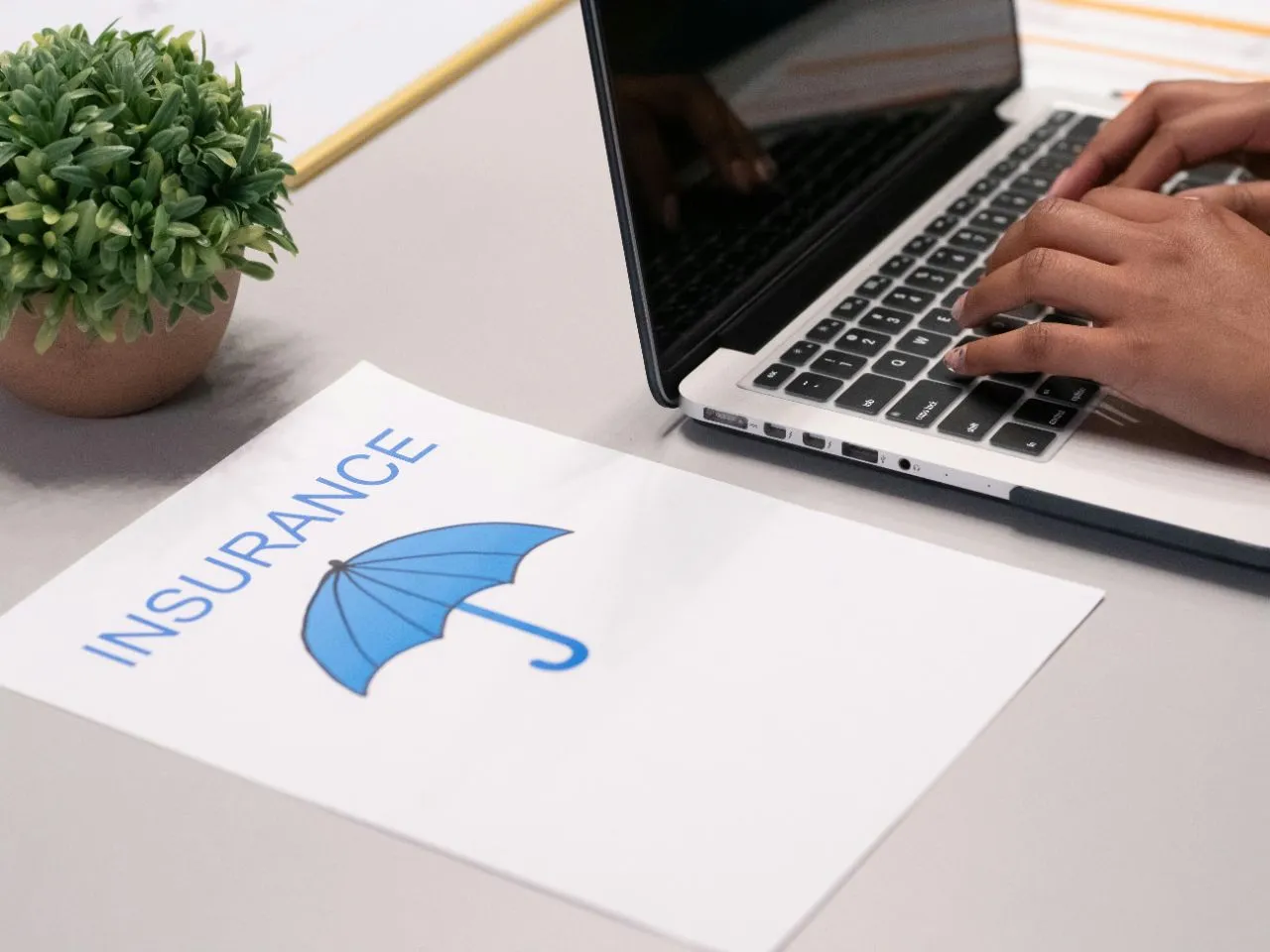
Kyobo Life Insurance, one of South Korea’s largest life insurers, has become a participant in the recently launched public testnet for Circle Internet Group’s Arc. This new open layer-1 blockchain network aims to serve a broad range of use cases, including lending, capital markets, foreign exchange (FX), and global payments.
https://asset.coinness.com/en/news/b659addff1879be52f790bf27e79682b.webp
Photo by Kindel Media on Pexels

Notable global participants in the Arc network

According to a press release from Circle, published on Oct. 28, multiple prominent banks and asset managers are also engaging with the Arc network. Kyobo Life stands as the only South Korean entity involved in the initiative. Other notable global participants include BlackRock, Deutsche Bank, Goldman Sachs, SBI Holdings, and Standard Chartered.


This move comes on the heels of Kyobo Life’s earlier participation in a stablecoin project spearheaded by the Seoul-based Open Blockchain & Decentralized Identifier (DID) Association. This highlights the insurer’s growing interest in exploring business opportunities within the digital assets space.


Korean crypto exchanges step up oversight

As cryptocurrencies gain increasing recognition as a new asset class, South Korean exchanges have become more vigilant in monitoring user activities, partly to curb potential criminal behavior. A report by Money Today revealed that over the past six years, local trading platforms have halted a total of 82.9 billion won ($58.1 billion) in crypto withdrawals. Among these, Bithumb accounted for the largest share, suspending withdrawals totaling 50.5 billion won ($35.4 million) from 2020 to September 2025. Upbit suspended 25.6 billion won ($18 billion) in the same period, while other exchanges like Coinone, Korbit, and Gopax reported more modest suspensions.


These actions are largely in response to the Virtual Asset User Protection Act, which came into effect in July 2024. The Act aims to enhance oversight and safeguard consumers, reflecting the government’s intent to regulate the sector more tightly.


Surge in Korea-Cambodia stablecoin trading

Parallel to these regulatory developments, a dramatic surge in stablecoin trading volume has been observed between South Korea and Cambodia. According to data from the Financial Supervisory Service (FSS) reported by the Seoul Shinmun, transactions between five major South Korean exchanges and Cambodia’s Huione Guarantee skyrocketed to 12.8 billion won ($8.98 million) in 2024, marking a staggering 1,400-fold increase compared to just 9.22 million won ($6,500) in 2023. This rise in activity coincides with recently uncovered criminal cases originating from Cambodia and has raised concerns about illicit practices within the crypto market.


In response to these concerns, crypto exchanges are bolstering their efforts to cooperate with law enforcement. Binance, the world’s largest crypto exchange by trading volume, was recently honored with a commendation by the South Korean Minister of the Interior and Safety for its contributions to enhancing cybercrime investigations and administrative capabilities. This accolade comes amid Binance’s increasing presence in South Korea. Binance, which had acquired Gopax ahead of regulatory approval, has now received clearance from local financial authorities to become the Korean trading platform’s largest shareholder.


Public sentiment on Binance’s acquisition of Gopax

A recent survey conducted by CoinNess and the community-voting app Cratos, which polled 2,000 South Koreans, provided insights into the public’s perception of Binance’s acquisition of Gopax. Among respondents, 38.8% indicated that their decision to use the rebranded platform would depend on the benefits it offered compared to other exchanges, while 23.6% said they were already planning to use it. Together, these figures suggest that 62.4% of participants are open to the platform, although some are conditioned on its advantages. However, 27.5% rejected the platform entirely, and 10.2% stated they do not use local exchanges at all.


As South Korea deepens its role in the global digital asset ecosystem, its growing participation in initiatives like Circle’s Arc network reflects an ambition to align with international finance trends. At the same time, stricter oversight and cross-border monitoring signal a firm commitment to transparency. The balance it strikes between innovation and regulation will define its path in the global crypto arena.

 

More to Read
View All
Policy & Regulation·

Sep 21, 2023

Mt. Gox Extends Repayment Deadline to 2024

Mt. Gox Extends Repayment Deadline to 2024In a development that has captured the attention of the cryptocurrency community, failed Japanese crypto exchange Mt. Gox has officially announced a one-year extension of its repayment deadline.The decision, authorized by the Tokyo District Court, represents a one-year delay from the previously stipulated date of October 31, 2023.Photo by Andre Benz on UnsplashInfamous collapseAt its height, Mt. Gox was the world’s largest cryptocurrency exchange, facilitating over 70% of all cryptocurrency trades. However, its fall from grace began in 2014 when it fell victim to a colossal hack, resulting in the loss of 850,000 Bitcoins. The collapse left approximately 24,000 creditors in its wake, each of them agonizing over a multi-year period for the return of their digital assets.In a letter dated September 21, Rehabilitation Trustee Nobuaki Kobayashi announced the extension of the repayment deadline. This extension applies to the base repayment, early lump-sum repayment, and intermediate repayment, all of which have been rescheduled to October 31, 2024.The rationale behind this delay is twofold. Firstly, to provide creditors with additional time to furnish essential information required for the repayment process. Secondly, it will allow the trustee to coordinate with associated banks, fund transfer service providers, and cryptocurrency exchanges to facilitate the repayments.Potential payout for diligent creditorsA glimmer of hope exists for creditors who have diligently provided the necessary information. Repayments may commence sequentially as early as the close of this year. That said, it should be noted that the specific timing of repayments for each creditor remains uncertain.Kobayashi emphasized that the schedule is subject to change depending on circumstances, and further adjustments are possible. The Mt. Gox Debtor has encouraged creditors who have as yet not provided required information to facilitate payments to do so.Naturally enough, long suffering creditors are frustrated by this latest update. Taking to X (formerly Twitter), one user named “Mt.Gox’ed” wrote: “People will not get their Mt.Gox money back.” . . . “I’ve been tweeting for a long time that infinite delays are coming.”The move evoked a similar response from distressed debt specialist Thomas Braziel, who wrote: “Another delay from the MtGox trustee’s office — COME ON!”Mt. Gox’s journey towards rehabilitation has been arduous and protracted since its declaration of insolvency in 2014. Legal battles, extensive delays, and the need for meticulous coordination have all contributed to this postponement. Nonetheless, creditors are holding onto the hope that, with this extension, the path to recovering their lost assets will become smoother.Crypto market impactThis latest news has drawn considerable attention within the broader crypto sector as it may have implications for the market as a whole. The repayment delay holds the potential to impact Bitcoin prices, given the sheer volume of tokens that will be released when repayments begin. The Mt. Gox estate holds 142,000 BTC, 143,000 BCH, and 69 billion JPY.As per UBS analysts, while this influx of funds could influence the market, it is unlikely to destabilize Bitcoin. Notably, the recovery of approximately 20% of the stolen tokens after the hack reflects a positive step in the ongoing rehabilitation process.

news
Policy & Regulation·

May 17, 2024

Korean FSS Governor meets U.S. SEC Chair Gensler to cooperate on crypto regulations

The governor of South Korea's Financial Supervisory Service (FSS) met with the United States Securities and Exchange Commission (SEC) Chair Gary Gensler, according to Korean media outlet Newsis. The meeting took place during FSS Governor Lee Bok-hyun's business trip to the U.S. The meeting with the SEC chair was pre-arranged earlier this year, as previously reported by crypto media CoinNess.  Governor Lee reportedly had high-ranking meetings with officials from the SEC and Commodity Futures Trading Commission (CFTC) between May 14 and May 16. Photo by Daniel Bernard on UnsplashDuring his meeting with the SEC chair, Governor Lee discussed various financial and cryptocurrency regulatory issues including the recent approval of spot Bitcoin ETFs, and reaffirmed the need for close cooperation between two countries in such oversight efforts. In particular, the two regulators came to an agreement to reinforce cooperation in investigation into unfair trading practices associated with securities and virtual assets. He also met with CFTC Chairman Rostin Behnam to share the recent trends regarding virtual asset legislation in the U.S. and agreed to strengthen information sharing between the two countries. The details of the meeting agendas remain confidential, as mutually agreed upon by the two supervisory organizations.   International financial regulatory cooperation Governor Lee’s latest meetings with U.S. financial regulators followed his attendance at the meeting for the Group of Central Bank Governors and Heads of Supervision (GHOS) held in Basel, Switzerland, on May 13. The GHOS is the oversight body of the Basel Committee on Banking Supervision (BCBS).  During the GHOS meeting, participants reached a consensus on the urgency of swiftly implementing Basel III, a set of bank regulation standards. Two-thirds of member countries are set to partially or completely adopt Basel III by the end of this year.  Furthermore, the member countries agreed to postpone the implementation of the Prudential Treatment of Banks' Exposures to Cryptoassets to Jan.1, 2026, considering the regulatory framework is currently under amendment.  

news
Web3 & Enterprise·

Nov 03, 2023

Korean crypto exchange Upbit adds one-second interval charts

Korean crypto exchange Upbit adds one-second interval chartsSouth Korea’s largest cryptocurrency exchange, Upbit, now offers one-second interval charts for its users.Dunamu, the blockchain and fintech company behind Upbit, announced on Friday (local time) that it has introduced a one-second interval feature to Upbit’s “original” charts. This makes Upbit the first Korean cryptocurrency exchange to offer this functionality.Photo by m. on UnsplashResponding to user demandUpbit has rolled out this one-second interval feature in response to user demand. This addition facilitates a broader range of investment strategies, allowing Upbit users to fine-tune their decisions based on their investment preferences. Now, the time frames available on Upbit are 1 second, 1 minute, 3 minutes, 5 minutes, 10 minutes, 15 minutes, 30 minutes, 1 hour, 4 hours, 1 day, 1 week and 1 month.A representative from Upbit said that they have incorporated the one-second interval feature into their original charts to provide users with quick and easy access to virtual asset price information for their investments. The official added that the company will remain committed to fostering a user-friendly and comfortable trading environment.Available on both web and mobileUsers can access the one-second interval feature on both the web and app versions of Upbit. To utilize this feature, they can select the “1s” time frame on the original charts found under the “Exchange” tab of Upbit.

news
Loading