Top

Hong Kong SFC opens door to global order book integration for digital assets

Policy & Regulation·November 04, 2025, 7:07 AM

At Hong Kong FinTech Week 2025, Securities and Futures Commission (SFC) Chief Executive Julia Leung outlined plans to link Hong Kong’s crypto market with global liquidity. She announced that licensed virtual asset trading platforms (VATPs) will be allowed to share a global order book with their overseas counterparts.


According to a statement published on the SFC’s website, this step will enable local investors to access international markets more efficiently, improving price discovery and competitiveness. Leung added that more initiatives are on the way to connect local brokers directly to global liquidity networks.


This latest connectivity push comes as Hong Kong considers new guardrails for crypto holding companies such as digital asset treasuries (DATs), which hold cryptocurrencies as strategic assets.
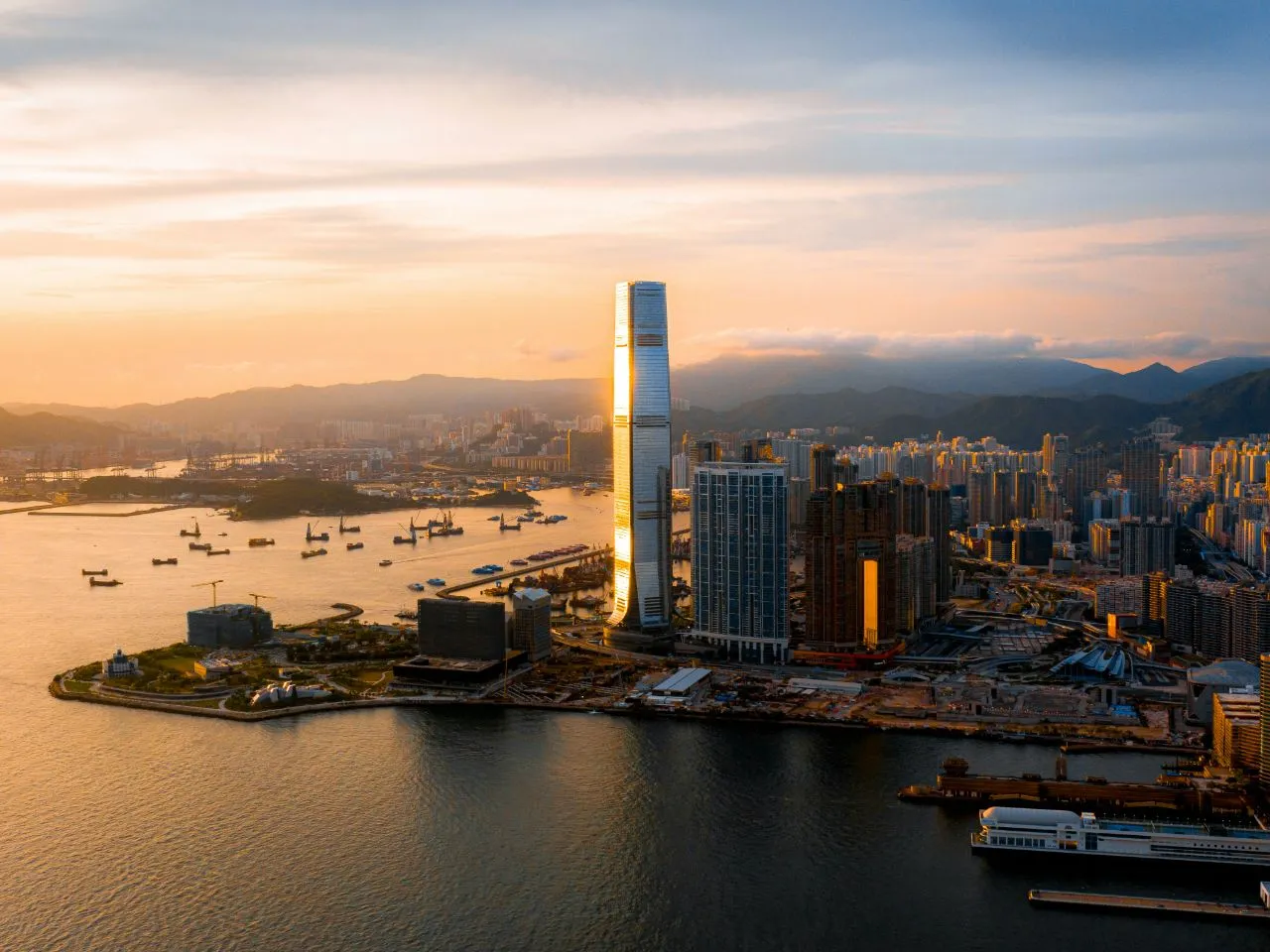
https://asset.coinness.com/en/news/13829c6e0b103b2f0c775773720d8b6c.webp
Photo by Manson Yim on Unsplash

SFC points to regulatory gaps for digital asset treasuries

The state-owned newspaper Wen Wei Po reported that Securities and Futures Commission (SFC) Chairman Kelvin Wong noted the current lack of regulations governing listed companies operating as DATs and the limited understanding of such entities.


Chairman Wong added that firms seeking to list in Hong Kong as DATs would need to persuade both the SFC and the Hong Kong Stock Exchange (HKEX) of their suitability. For companies already listed, he urged investors to remain alert to the potential risks involved.


This regulatory concern over crypto investing companies emerges as Hong Kong simultaneously presses ahead with its ambition to become a leading hub for digital finance.


City advances on e-HKD and tokenization

In line with that ambition, the Hong Kong Monetary Authority (HKMA) unveiled its e-HKD Pilot Programme Phase 2 Report in an Oct. 28 press release. The report outlines the potential benefits of its central bank digital currency (CBDC), the e-HKD, and tokenized deposits, noting that public feedback on both concepts has been broadly positive.


The program's second phase involved 11 pilot projects led by various consortiums. These projects explored retail use cases, emphasizing the e-HKD’s commercial viability and scalability. Key focus areas included the settlement of tokenized assets, programmability, and offline payments. Participants in the program included Aptos Labs, the Boston Consulting Group (BCG), Hang Seng Bank, Standard Chartered, and BlackRock.


Based on the report's findings, the HKMA stated it would initially prioritize the e-HKD’s application in wholesale or large-value payments, leveraging its credit risk–free nature as a central bank liability. Concurrently, the authority plans to continue studying potential retail and corporate applications, aiming to lay the groundwork for broader implementation by the first half of 2026.


Survey shows strong investor appetite

Among the program’s participants, Aptos Labs, Boston Consulting Group (BCG), and Hang Seng Bank reported accelerating interest in tokenized funds. A survey they conducted found that 61% of retail investors in Hong Kong and mainland China planned to double their exposure.


Held between May and June 2025 among more than 500 retail fund investors, the survey tracked sentiment and appetite for tokenized products. Mainland participants showed particularly strong demand for cross-border access.


The findings also detailed differing motivations among Hong Kong investors. Active traders expect to lift tokenized fund allocations from 10% to 26%, attracted by round-the-clock trading and greater flexibility. Wealth transfer planners indicated an expected expansion from 5% to 16%, highlighting programmable fund structures for tailored trusts and transparent oversight. Long-term investors aim to raise exposure from 8% to 25%, citing instant liquidity and the ability to use tokenized assets as loan collateral.


Mainland investors projected their allocations would climb from 11% to 24%, reportedly viewing tokenized funds as a practical route around capital restrictions. The survey noted that programmable features could support dynamic allocation across Hong Kong products, the onshore use of profits, and smoother cross-border transfers.


BCG commented that the survey outcomes align with Hong Kong's measured advance in crypto oversight, pointing to the city’s stablecoin regime that came into force in August. The Hong Kong Monetary Authority (HKMA) has signaled, however, that licensing under that regime will not begin until early next year.


The ongoing development of the e-HKD and the prospective regulation of digital-asset treasuries point to Hong Kong’s broader strategy of integrating digital finance into its mainstream economy. Together, these initiatives underscore a cautious yet steady effort to position the city as a global center for digital finance.


 

More to Read
View All
Policy & Regulation·

Jul 20, 2023

China’s Crypto Crackdown Reveals Capital Control Loopholes

China’s Crypto Crackdown Reveals Capital Control LoopholesChinese authorities have been stepping up their efforts to crack down on cryptocurrency-related crimes, and with that, uncovering how digital currencies are being used to bypass strict capital controls imposed by Beijing.China may be a few years into a crackdown against the use of cryptocurrencies but despite that, their use and particularly their use for illicit purposes continue. That’s according to a report on Wednesday by the South China Morning Post (SCMP).Photo by Christian Lue on UnsplashCombating capital outflowsThe rising trend of capital outflows has prompted Chinese authorities to take action. Two prominent cases illustrate the extent of these illegal activities and the value of assets seized.In Jingmen, a city in Hubei province, police disclosed details of an online gambling case involving digital currencies used to evade regulation. The case has implicated over 50,000 individuals and a turnover of billions of dollars. Although the specific virtual currency was not mentioned, authorities revealed that they had frozen multiple accounts with a combined value of $160 million.Meanwhile, in Shanxi province, police solved a money laundering case linked to 380 million yuan worth of USDT, the US dollar stablecoin issued by Tether. China’s State Administration of Foreign Exchange is responsible for monitoring cross-border capital flows. Accordingly, it has taken steps to curb these illicit activities. Late last month, it fined ten firms in order to maintain order in the forex market.Digital yuan developmentThese recent cryptocurrency cases have exposed loopholes in China’s capital control system. Crypto mining and trading have long been banned by Chinese regulators. As an alternative, China has been actively developing its own central bank digital currency (CBDC), known as the digital yuan or e-CNY. 2023 has seen a raft of measures taken by various regional administrators throughout China to bring about further e-CNY adoption.However, the ban on cryptocurrencies and the launch of the e-CNY have driven many miners and traders underground or to overseas locations such as Hong Kong, which ironically, is vying to become a cryptocurrency hub. The continued depreciation of the yuan against the US dollar has intensified capital outflow pressures.Chinese bonds sell-offInternationally, fund managers have been selling significant amounts of Chinese securities since 2021. That goes against the current regional trend which sees emerging Asian markets experiencing substantial inflows of funds during the same period, according to the Institute of International Finance.That market activity has been in response to Chinese policies and escalating US-China tensions. An Atlantic Council report highlights that international institutional investors have been net sellers of approximately 1 trillion yuan in Chinese bonds since early 2022.China’s efforts to control capital outflows and stabilize the yuan’s value face ongoing challenges, as cryptocurrency-related crimes persist. While the crackdown exposes weaknesses in the country’s capital control system, it also underscores the difficulty authorities will have globally in trying to control digital currency use.

news
Web3 & Enterprise·

Sep 08, 2023

NEAR Foundation and Dongdaemun District of Seoul Forge MOU to Boost Web3 Industry

NEAR Foundation and Dongdaemun District of Seoul Forge MOU to Boost Web3 IndustryThe NEAR Foundation, the organization behind blockchain network NEAR Protocol, announced today its memorandum of understanding (MOU) agreement with Dongdaemun District of Seoul, the South Korean capital, to promote the Web3 industry.Photo by Farrel Nobel on UnsplashMutual support and growthIn this collaborative partnership, both parties aim to establish a framework that fosters mutual support, growth, and development. Their joint efforts will encompass initiatives such as streamlining administrative processes, introducing tax benefits, implementing talent incubation programs, and creating communication channels to ensure a seamless workflow.One-stop administrative hubProjects entering the NEAR ecosystem will have access to a convenient one-stop administrative hub responsible for regulatory approvals. They will also benefit from local tax exemptions for a specific period and receive a dedicated workspace for project operation and development. These supportive measures are anticipated to play a significant role in facilitating their entry into the Web3 sector.NEAR Protocol stands out as a layer-1 blockchain that lowers the barriers to Web3 adoption. This is achieved through its FastAuth feature, which enables users to effortlessly create accounts for any website or application that integrates with the Blockchain Operating System (BOS). BOS is a solution that enables developers to build on any blockchain using familiar programming languages.Business and job opportunitiesLee Pil-hyeong, Head of Dongdaemun District, expressed his enthusiasm for the partnership with the NEAR Foundation, highlighting its potential to offer innovative business opportunities to the younger generation in the district. He emphasized Dongdaemun’s commitment to consistently creating jobs and delivering job support programs.Use cases in public-private sectorsMarieke Flament, CEO of the NEAR Foundation, shared a similar sentiment, expressing her excitement about the chance to nurture the Web3 industry in South Korea, a country renowned for its world-class talent pool. She outlined NEAR’s plans to offer education and support with the goal of cultivating a sustainable ecosystem. Flament believes that NEAR’s collaboration with Dongdaemun will lead to the discovery of valuable use cases in areas where the public and private sectors collaborate.

news
Web3 & Enterprise·

Jun 29, 2023

CoinFLEX Effects Partial Repayment of SmartBCH Debt

CoinFLEX Effects Partial Repayment of SmartBCH DebtCoinFLEX, a Seychelles-based crypto yield platform that operated the BCH to sBCH cross-chain bridge, has taken a significant step towards its restructuring plans by partially repaying its debts to SmartBCH Alliance.Photo by Towfiqu barbhuiya on PexelsBitcoin Cash sidechainAs part of the repayment, SmartBCH, a Bitcoin Cash sidechain compatible with Ethereum, received distributions from CoinFLEX, including approximately 4.28 million rvUSD ($750,000), 652,000 USDC ($652,000), and 6,834 BCH ($1.6 million). Notably, 80% of the received USDC has been swapped into Bitcoin Cash, while the remaining portion has been reserved to cover legal and operational expenses. SmartBCH currently holds a total of 10,758 BCH.The repayment to SmartBCH comes amidst a significant surge in the price of Bitcoin Cash, which has witnessed a remarkable increase of over 110% in the past seven days. This surge has positioned Bitcoin Cash as a top performer among major currencies in the crypto market, according to data from CoinGecko.Bitcoin Cash, along with other Bitcoin forks, has been benefiting from the overall rise in the cryptocurrency market. The increased interest can be attributed to the flurry of spot Bitcoin ETF filings that have taken place recently.The positive developments surrounding CoinFLEX and Bitcoin Cash have also had a ripple effect on associated tokens. $FLEX and $OX, tokens connected to CoinFLEX, have experienced notable increases in value, rising by 53% and 65% respectively over the past week.CoinFLEX itself has been undergoing a significant restructuring process that was approved by the Seychelles Courts on March 6. The exchange initially suspended withdrawals in June 2022, citing extreme market conditions and uncertainty related to a counterparty.CoinFLEX was one of several crypto firms affected by the collapse of the Terra ecosystem in May 2022, resulting in the loss of over $40 billion in investor value within a short period. In September, the company revealed its restructuring proposal, which involved offering over 65% of its equity to creditors and allocating 15% to employees.OPNX rebrandLast March, CoinFLEX rebranded itself as Open Exchange (OPNX) following the approval of its restructuring plan. The founders of CoinFLEX, Mark Lamb and Sudhu Arumugam, are collaborating with Kyle Davies and Su Zhu, the co-founders of the bankrupt crypto hedge fund Three Arrows Capital (3AC), on the new Dubai-based venture.SmartBCH has announced its intention to open an account on OPNX and gradually convert rvUSD into Bitcoin Cash through the exchange. It is worth noting that, as part of the restructuring terms, SmartBCH is entitled to common equity in CoinFLEX and one board seat, although it has not received these benefits at present.Additionally, SmartBCH has burned 33,365.67 sBCH tokens, returning them to the old bridge address. As a result, the total sBCH in circulation on the sidechain now amounts to 67,756.766.To further enhance stability, SmartBCH has entered into an agreement with CoinFLEX to assume responsibility for maintaining the 1:1 peg between sBCH (the sidechain’s native token) and BCH.

news
Loading