Top

Bitget withdraws from Hong Kong crypto market

Web3 & Enterprise·November 15, 2023, 3:12 AM

Seychelles-incorporated cryptocurrency derivatives platform Bitget has made a decision to permanently exit the Hong Kong market, discontinuing its efforts to obtain a virtual asset trading platform (VATP) license.

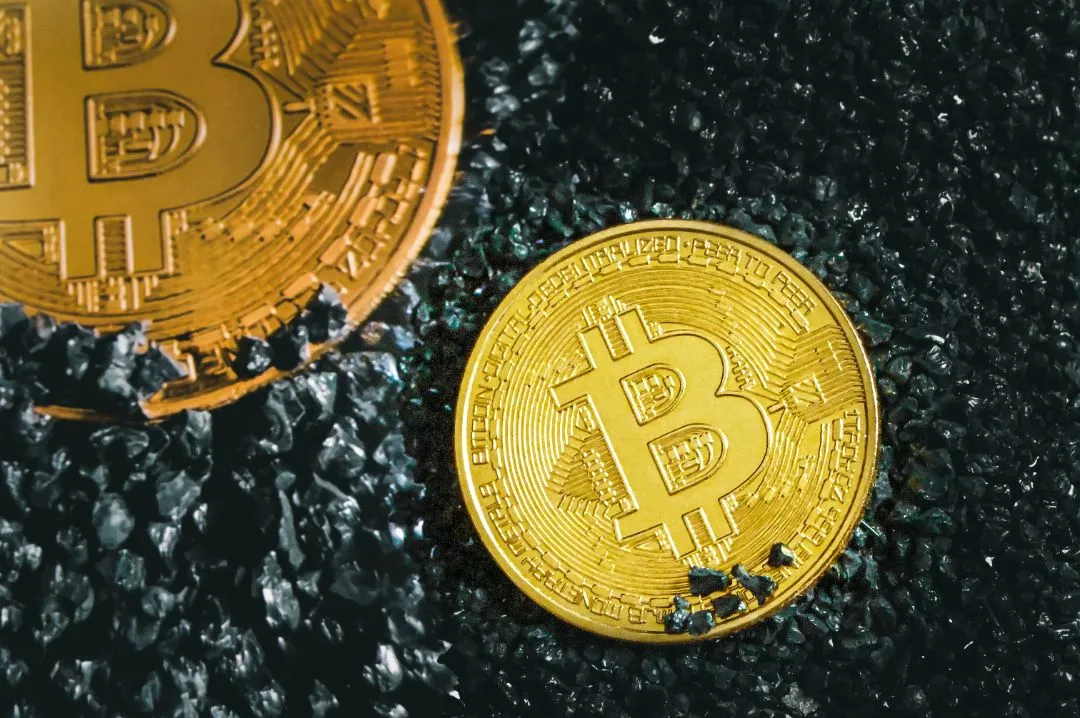
Photo by SHUJA OFFICIAL on Unsplash


BitgetX platform shutdown

The decision comes only months after it had introduced its BitgetX platform to comply with local regulations. The company, which bases its operations out of Singapore, is a well-known entity in the crypto space, renowned as the operator of the 12th-largest cryptocurrency exchange globally in terms of 24-hour trading volume. It made this revelation on Monday, citing what it referred to as “business and market-related considerations.”

In a published statement, the company said:

”With a heavy heart, we regret to inform you that due to business and market related considerations, we have decided not to pursue a Virtual Asset Trading Platform (VATP) license in Hong Kong. As a result of this decision, the BitgetX website (www.BitgetX.hk) will cease its operations effective December 13, 2023. At the same time, Bitgetx.hk will permanently exit the Hong Kong market.”

While outlining that BitgetX will close its doors, the firm urged users to withdraw their assets beforehand. Bitget is among a handful of exchanges that had publicly expressed their intent to secure a license following Hong Kong’s proactive push over the course of the past year to embrace the virtual asset sector.


Broader challenges

The decision to abandon the pursuit of a VATP license echoes the broader challenges faced by the cryptocurrency industry in Hong Kong. Despite the city’s recent enthusiastic regulatory embrace of the virtual asset sector, a number of stumbling blocks remain.

High compliance costs and the lingering aftermath of the JPEX financial scandal have hindered Hong Kong’s aspirations to establish itself as a leading crypto hub. A report back in June identified the major cost implications of acquiring a license in Hong Kong. At the time, it was estimated that the required spend to obtain a VATP license could range from $2.55 million to $25.5 million.

Banking crypto companies has also become a major bottleneck. In June, the Hong Kong Monetary Authority (HKMA) urged banks such as HSBC, Standard Chartered and the Bank of China to bank the crypto sector, having identified a reluctance amongst them to do so.


Limited interest

The forthcoming closure of BitgetX adds to a growing trend of limited interest in Hong Kong’s new licensing scheme. Only five companies, all local, have submitted applications for virtual asset licenses to the Securities and Futures Commission (SFC). This list began publication in response to the JPEX scandal, which significantly damaged public trust in virtual assets.

The challenges faced by the industry go beyond regulatory hurdles. The damaged public trust, coupled with the high-profile exit of JPEX, has contributed to the hesitancy of international crypto platforms in pursuing licenses in Hong Kong. The abrupt withdrawal of Bitget raises questions about the viability of Hong Kong as a central player in the cryptocurrency industry and underscores the complexities faced by exchanges navigating the evolving landscape of the digital asset sector.

More to Read
View All
Web3 & Enterprise·

Jul 01, 2024

Metaplanet boosts Bitcoin holdings during economic uncertainty

Japanese investment firm Metaplanet has increased its Bitcoin holdings, purchasing an additional 20.195 BTC for approximately 200 million yen ($1.2 million), as announced after the Tokyo Stock Exchange closed on Monday. This acquisition brings the firm's total holdings to 161.2677 BTC, valued at over $10.1 million. According to The Block, the recent purchase is part of a broader strategy, initiated with the company's decision to allocate 1 billion yen ($6.3 million) for Bitcoin acquisitions funded by an upcoming bond issuance. This move follows a previous buy in June worth 250 million yen.Photo by Traxer on UnsplashStrategic investment responseMetaplanet's investment strategy mirrors that of U.S.-based MicroStrategy, which has significantly integrated Bitcoin into its treasury assets. MicroStrategy currently holds 226,331 BTC, amounting to more than 1% of the total Bitcoin supply. Citing economic challenges like high government debt and the depreciating yen, Metaplanet views Bitcoin as a hedge against economic instability. Following Metaplanet’s latest acquisition, its stock saw a 1% rise on Monday, with an overall increase of 233% since it began investing in Bitcoin. 

news
Policy & Regulation·

Feb 08, 2024

Thailand makes crypto trading VAT-free to boost digital economy

In a significant move to propel Thailand towards becoming a digital asset hub, the Finance Ministry has announced the exemption of value-added tax (VAT) on digital asset trading. VAT exemptionAccording to the Bangkok Post, the decision became effective on Jan. 1. It aims to foster the growth of the digital asset industry and support the country's growing digital economy. Paopoom Rojanasakul, secretary to the finance minister, underscored the ministry's commitment to promoting digital assets as a viable fundraising tool. By suspending the requirement to pay 7% VAT on income derived from cryptocurrency and digital token trading, authorities seek to encourage investment in the digital asset market. This VAT exemption extends beyond authorized digital asset exchanges to include brokers and dealers under the supervision of the Securities and Exchange Commission (SEC). The move aligns with Thailand's ambition to position itself as the region's premier digital asset hub. Moreover, the Finance Ministry and SEC are actively amending the 2019 Securities and Exchange Act to enhance regulations concerning digital investment tokens, bringing them more in line with securities.Photo by Markus Winkler on UnsplashAttracting offshore digital asset sector investmentThailand's attractiveness to offshore digital asset investors has grown substantially in recent years. The new tax policies are poised to further bolster the country's position in the global digital asset market. Last month, the Thai SEC adjusted the rules governing digital token investments, raising the investment ceiling that had been imposed on retail investors where initial coin offerings (ICOs) relative to infrastructure and real estate are concerned. Furthermore, the Commission has updated criteria for custodial wallet provider businesses, enabling them to extend their services to digital asset business operators, thereby facilitating smoother operations within the digital asset ecosystem. However, Mr. Paopoom emphasized the importance of balancing development with financial stability. While fostering innovation in the digital asset sector, the government remains mindful of safeguarding the integrity of the financial system. Despite these advancements, the SEC has made it clear that it will not permit the trading of spot bitcoin exchange-traded funds (ETFs) in Thailand. This decision contrasts with the recent approval of bitcoin ETFs in the United States and moves towards approving crypto ETFs in Hong Kong, reflecting Thailand's cautious approach to cryptocurrency-related financial products. Nevertheless, Thailand continues to attract global crypto exchanges, with industry giants such as Binance establishing a presence in the country. Last month, Binance announced the launch of crypto exchange services to the general public in Thailand through Gulf Binance, a joint venture with Thailand’s Gulf Innova. The VAT exemption on digital asset trading represents a pivotal step in Thailand's journey towards embracing the digital economy. With supportive regulatory measures and a dynamic market environment, Thailand aims to take its place as a leading player in digital assets.   

news
Policy & Regulation·

May 21, 2023

Pakistan Implements Ban on Cryptocurrency

Pakistan Implements Ban on CryptocurrencyPakistan has moved to ban cryptocurrency once more, with the country’s Minister of State for Finance and Revenue, Aisha Ghaus Pasha disclosing the move last week.According to multiple local media reports within Pakistan, on May 16 Ghaus Pasha stated at a session of the Senate Standing Committee on Finance and Revenue, that cryptocurrencies are banned and “will never be legalized in Pakistan.”Photo by Hamid Roshaan on UnsplashFATF Grey ListGhaus Pasha supported this position by outlining that the Financial Action Task Force (FATF) had set the banning of crypto as a condition for Pakistan’s removal from its “Grey List.”FATF is an initiative of the G7 group of countries, first established in 1989. Its mandate is to develop policies geared towards combating money laundering, and most especially, terrorist financing. The FATF grey list includes those jurisdictions who are deemed to require increased monitoring relative to their efforts to keep money laundering and terrorist financing to an absolute minimum.Pakistan had found itself on the FATF grey list over the course of a number of years. That meant reputational damage on an international basis, together with loss of investor confidence. It also signals the likelihood of weaknesses in a country’s financial system and in its financial controls. The categorization would have had an impact on the country’s ability to access international finance, impacted trade relations, and involved increased compliance costs.Against that background, there may be a certain logic to the Finance Minister’s stance, despite it naturally being distasteful to those of us that support the development of decentralized systems, blockchain, and cryptocurrency. After an extended period on that Grey List, Pakistan was only removed from it in October of last year.Currency devaluationNotwithstanding that, governments in the developing world may have added incentives in banning cryptocurrencies. Their currencies are oftentimes unstable, and the Pakistani rupee is no exception. Cryptocurrencies like bitcoin find their greatest use case in countries that have their currencies devalued or economies that fall into the trap of hyperinflation relative to the sovereign currency.In Pakistan’s case, the rupee plummeted to a record low against the US dollar in January. Naturally, that hurts ordinary citizens and provides the conditions under which people are more likely to investigate decentralized cryptocurrencies. On that basis, we shouldn’t be surprised to learn that the Pakistani government’s decision to ban crypto was publicly supported by Sohail Jawad, Director of the State Bank of Pakistan (SBP).Pakistani banks are naturally following the government and the central bank’s lead, in implementing the ban. One circular obtained by CoinDesk stated: “As per regulatory instructions from the State Bank of Pakistan (SBP), any remittance of foreign exchange directly/indirectly outside Pakistan to overseas foreign exchange trading, margin trading, and CFD trading apps/websites/platforms through any payment channel is not allowed/permitted by SBP and such payments are inherently risky and illegal.”Community reactionNaturally enough, the crypto community internationally and locally, is not enamored by the move. However, people who have been in the space over the last few years are accustomed to ever-changing stances taken by governments as a reaction to a technology that they simply don’t know how to deal with.Waqar Zaka, a Pakistani who works within the Web3 space commented previously on a ban that was implemented in Pakistan in 2017, only later to be found to be unconstitutional. Another Pakistani community member took to Twitter in taking a stand against the decision. Others still immediately considered how they could circumvent the ban.Crypto has always benefited from jurisdictional arbitrage, and while bans are not in any way helpful, in the longer run, they will never stop the roll out and further development of this innovation.

news
Loading