Top

Untangled Finance Launches Tokenized RWA Platform

Web3 & Enterprise·October 12, 2023, 12:16 AM

Untangled Finance has officially launched its tokenized real-world asset (RWA) marketplace on the Celo network, according to a report by CoinDesk.

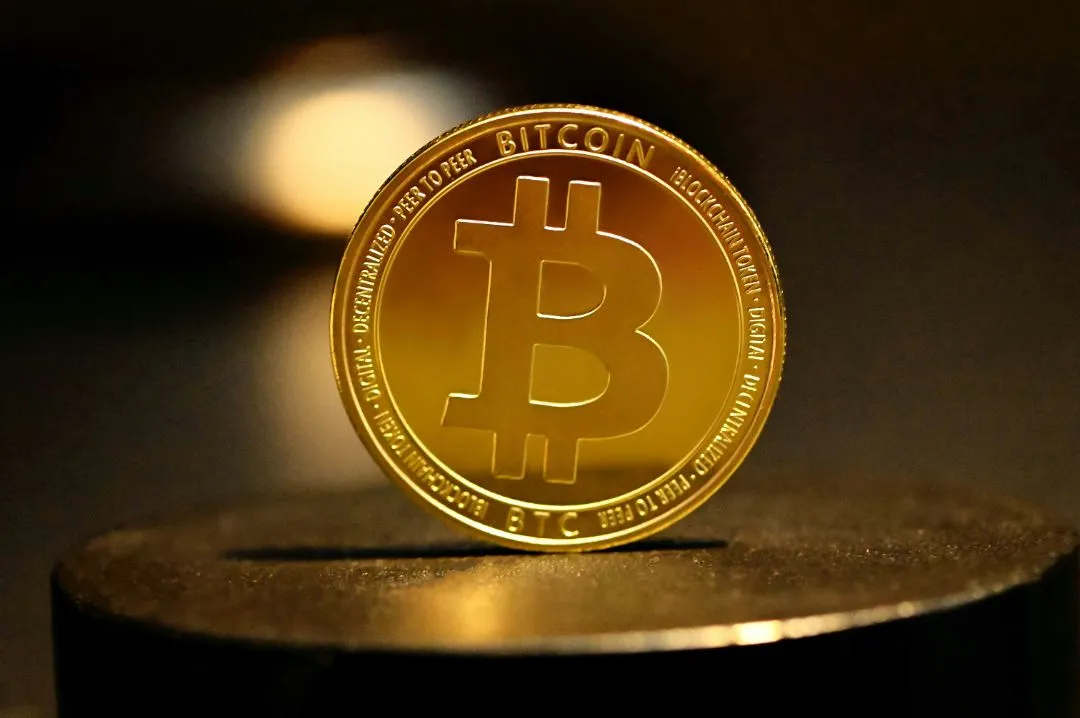
Photo by Blake Wheeler on Unsplash


Vietnamese roots

The platform’s inauguration follows a successful $13.5 million venture capital funding round, with Fasanara Capital, a London-based asset management firm, serving as the lead investor. Untangled is also London-headquartered, with most of its employees from Vietnam.


Private tokenized credit pools

In addition to its investment, Fasanara Capital has initiated two private tokenized credit pools on the Untangled platform, focusing on off-chain operations and underwriting loans.

Untangled’s expansion plans are ambitious, aiming to extend its reach to the Ethereum (ETH) network and the layer 2 scaling solution Polygon (MATIC) via Chainlink’s Cross Chain Interoperability Protocol. This strategic move transforms Untangled into a multi-chain and interoperable RWA credit protocol, catering to a broader spectrum of users and assets.

Untangled Finance’s specific focus lies in the private credit market, a sector valued at over $1 trillion. The platform aims to bridge the gap between traditional private credit and blockchain technology by tokenizing these assets. Currently, decentralized finance (DeFi) platforms account for only $550 million of private credit assets, according to data from rwa.xyz.

To achieve this, Untangled is concentrating on fintech lending, including services like invoice financing and consumer loans based on salary advances. The platform also targets “green assets,” such as working capital or development loans for eco-friendly infrastructure projects like battery swapping stations.

Untangled serves as the infrastructure to host blockchain-based credit pools. Investors, including certified investors, firms, and decentralized autonomous organizations (DAOs), can deposit funds into these pools to lend and earn a yield. In return, depositors receive an ERC-20 token representing their positions in the pool.


Asset tokenization potential

Asset tokenization, the process of representing traditional financial assets on a blockchain, has emerged as a key growth opportunity in the digital asset space. This trend comes as the industry grapples with the aftermath of a challenging bear market and the fallout from high-profile implosions witnessed in recent years.

Tokenization has the potential to transform various real-world assets, such as credit, real estate, or bonds, into blockchain-compatible tokens.

Untangled Finance is attempting to set itself apart from other RWA lending protocols through innovative product features, including a built-in liquidation engine designed to auction off collateral assets if the pool’s health falls below a certain threshold. The platform also employs a credit assessment model to monitor borrowers’ future default risks and offers an auction-based withdrawal mechanism for investors seeking an early exit from the pools.

Francesco Filia, CEO and CIO of Fasanara Capital, commented on the significance of this development, stating:

“We see an upcoming merging of worlds. “On one side, fintech lending which fills the gap in underserved SME and consumer markets and, on the other, the way values are being transferred within the new world of digital assets.”
More to Read
View All
Policy & Regulation·

Nov 02, 2023

Taiwan police uncover $320M crypto money laundering operation

Taiwan police uncover $320M crypto money laundering operationTaiwan police have recently exposed the largest cryptocurrency money laundering case in the nation’s history, involving 320 million USDT (approximately 10.5 billion New Taiwan dollars).Photo by DrawKit Illustrations on UnsplashCross-border laundering operationIt emerged on Tuesday that the Electronic Investigation Team of the Criminal Bureau initiated their probe after uncovering a fraudulent scheme related to a counterfeit Taishin Securities mobile software last year. This led them to a merchant with the surname Qiu, the alleged mastermind behind this operation who was suspected of laundering substantial sums through virtual currency.Qiu is believed to have maintained connections with overseas gambling and fraud groups, engaging in cross-border communication with illicit organizations in countries including Hong Kong, Malaysia and the Philippines.Their investigation revealed that Qiu had been conducting transactions involving 320 million Tether US dollar stablecoins since February of the previous year. In June, law enforcement apprehended Qiu during one of his visits to Taiwan, along with four alleged accomplices.High value goodsDuring the operation, authorities seized high-value assets from Qiu, including a Lamborghini Urus, a Lexus LM and three Audemars Piguet watches, with a combined market value exceeding TWD 13 million. The lavish lifestyle maintained by Qiu, evident from his luxury cars and high-end watches, serves as a stark reminder of the extensive underground economy driven by money laundering.Evidence from the operation suggested Qiu’s involvement in handling illicitly obtained Tether coins worth approximately TWD 70 million. Further investigations uncovered that Qiu regularly sold virtual currency and converted it into cash to effectively obscure the money’s origins, accomplishing the goal of laundering.In piecing the activities of the group together, police determined that victims were instructed to transfer their funds to fictitious accounts. In that way, the money found its way to crypto exchanges and individual crypto traders under the direction and control of the group.Qiu would also retain a 1% profit margin from the laundered amount. Several other individuals were implicated in this extensive operation, including a foreign affairs officer named Liao and two other individuals named Chen and Huang. Each of these individuals is presently under investigation, with varying levels of bail and restrictions imposed.The intricate web of transactions and the substantial amount laundered by Qiu have surpassed previous records held by the Electronic Investigation Team. As investigations continue, law enforcement is determined to uncover the full extent of this operation and trace the entirety of the money flow.Taiwan’s legislators are currently working on producing a regulatory framework for crypto in the country. The only regulatory aspect that is covered right now is oversight relative to anti-money laundering (AML) and know-your-customer (KYC) regulation. In 2018 Yang Chin-long, Taiwan’s central bank Governor, called for a need to regulate crypto on the basis of existing AML rules, with the authorities subsequently following through on that measure.In July 2022, the country’s Financial Supervisory Commission (FSC) penned a letter to the banking sector, banning the purchase of digital assets via credit cards.

news
Policy & Regulation·

Apr 01, 2025

Japan to implement crypto insider trading restrictions

According to a report published on March 31 by Nikkei, a Tokyo-based financial news outlet, the Japanese authorities are gearing up to categorize digital assets as financial products, while in the process broadening the scope of insider trading restrictions. While the publication didn’t cite a particular source, it reported that the Japanese Financial Services Agency (FSA) is expected to file a draft amendment related to the existing Financial Instruments and Exchange Act in 2026.Photo by M.S. Meeuwesen on UnsplashFrom payment to investment productCurrently, Japan’s Payment Services Act categorizes crypto assets as a means of settlement. That categorization looks at these assets from the perspective of a payment tool rather than considering them as investment products. The move is understood to be part of a broader effort to copper-fasten crypto sector oversight. Earlier this month, the Japanese cabinet approved a proposal that seeks to amend the Payment Services Act.  At the time, it had been suggested that the amendment would look to exclude crypto assets from being classified as securities, while also bringing about a reduction in the capital gains tax rate as it is applied to digital assets. It’s likely that crypto assets will find themselves in a distinct category, apart from securities like stocks and bonds. Crypto adoptionActivity related to crypto assets has been growing in Japan. 7.34 million active accounts were found to be responsible for crypto transactions in Japan in January. That amounts to a tripling in such crypto transaction activity over the course of five years. Japan enjoyed greater adoption at a very early stage in the global development of crypto. However, following the Mt. Gox crypto exchange collapse in 2014, which at the time accounted for the loss of 7% of Bitcoin’s supply, regulators responded by clamping down on the sector.  That situation led to greater investor protection for Japanese investors but it presented as a difficulty for Japan-based exchanges to compete globally with other exchange businesses overseas. A conservative stance taken by the FSA has also held back crypto exchange-traded fund (ETF) approval and adoption. Bitcoin ETFs were approved in the United States over a year ago. Earlier this month, Astar Network founder Sota Watanabe outlined that the current ruling party in Japan plans to remove crypto assets from a securities classification, alongside other changes which could potentially lead to the approval of crypto ETFs. The Liberal Democratic Party has also put forward crypto tax reforms that, if implemented, would see a 20% tax rate brought into effect where capital gains on digital assets are concerned.The finer detail with regard to the nature of insider trading restrictions as they will be applied to crypto assets has yet to be revealed. Nikkei speculated that such restrictions would likely be similar to those applied to conventional financial products. Last week, the Asia Web3 Alliance Japan, a crypto advocacy group, put forward a proposal to the U.S. Securities and Exchange Commission (SEC) that, if implemented, would see collaboration between the U.S. regulator and Japan’s FSA, its central bank and the Ministry of Economy, Trade and Industry. The objective of the proposal is to bring about cross-border regulatory clarity related to the further development of the Web3 ecosystem in both Japan and the U.S.

news
Policy & Regulation·

Feb 27, 2025

Local crypto firms in talks with Hong Kong’s SFC on crypto staking

Local crypto firms in Hong Kong are understood to be in “active” talks with the Securities and Futures Commission (SFC), with a view towards bringing about the integration of staking within crypto exchange-traded fund (ETF) products. Haiyang Ru, chief risk officer of HashKey Group, a leading Hong Kong-headquartered digital asset financial services firm, told The Block that the Chinese autonomous territory may shortly see the introduction of staking services relative to crypto derivatives trading products and crypto ETFs. He stated: "We are actively discussing with the SFC the introduction of ETF staking and tokenized money market funds, as well as launching an 'Earn' feature alongside spot trading."Photo by tommao wang on UnsplashFocus on staking in 2025HashKey is one of a number of well-known digital asset firms that is in regular contact with the regulator. Other firms are also paying attention to developments. Alessio Quaglini, co-founder and CEO of Hex Trust, a Hong Kong-based firm that offers regulated institutional digital asset custody and staking services, believes that staking will garner greater attention in 2025. He stated: “Institutions that move into crypto custody will naturally seek yield-generating opportunities for their clients."  OSL, one of the first entities alongside HashKey to be awarded digital assets-related licensing in Hong Kong, has also identified rising customer demand for yield-generating products in the crypto space within the Chinese autonomous territory.  Global competitionThe authorities in Hong Kong are likely to be watching developments overseas also. ETH ETFs in the United States have reeled in $3 billion in capital inflows without staking. Since the launch of these products, many industry commentators have suggested that in the event that staking is approved, big institutions, particularly pension funds and wealth managers, are going to be attracted to the passive yields on these ETFs.  Traditional finance (TradFi) loves yield, and in the case of Ether ETFs that include staking, an annual percentage yield (APY) of up to 5% should be possible. Last month, an S&P Global report suggested that there was growing interest from institutional investors with regard to crypto staking opportunities.  Cryptocurrency ETF issuer 21Shares has applied to the Securities and Exchange Commission (SEC) in the U.S. to include staking within its ETH ETF product. A similar application has been made by crypto asset manager Grayscale relative to its ETH ETF offering. With that activity ongoing in the U.S. and inter-jurisdictional competition in terms of digital asset growth opportunities, it’s likely that Hong Kong will be keen to enable this market offering. Staking ‘unparalleled’ in TradFi markets Earlier this week, the SFC introduced a new roadmap geared towards strengthening the digital assets sector in Hong Kong. One of the initiatives itemized is the enabling of crypto staking.  The explanatory document published by the regulator states that it is examining the introduction of staking with safeguards in respect to digital asset custody, liquidity risks and “ensuring that the operational processes for staking are transparent.” The SFC described crypto staking as a yield generation opportunity that is unparalleled in TradFi markets.

news
Loading