Top

Over Half of Leading Korean Conglomerates Are Venturing Into Web3 and Blockchain

Web3 & Enterprise·October 04, 2023, 5:57 AM

More than half of South Korea’s conglomerates are ushering in the emerging era of Web3 in an attempt to seize new business opportunities presented by a decentralized internet that permits open access and sharing of resources as well as ownership of personal data.

Photo by Abbe Sublett on Unsplash


Surging interest among Korea’s biggest enterprises

According to a survey conducted by local news outlet E Today, 46 of Korea’s top 82 corporations as designated by the Fair Trade Commission (FTC) are pursuing ventures in Web3 and blockchain this year, including those related to non-fungible tokens (NFTs), security tokens, and logistics chains. The survey examined whether the corporations had issued coins, tokens, or NFTs; whether they had corporate divisions or subsidiaries dedicated to blockchain-related projects; and whether they had made investments in blockchain or digital asset-related companies as well as coin and token issuance projects. It was conducted remotely using publicly disclosed information and press releases.

Of the 82 total companies, 48 are under the mutual investment restriction system, which prohibits independent corporations from investing their capital in the form of an exchange. Commercial law prohibits mutual stock holdings between parent companies and their subsidiaries in order to prevent a processive increase in company assets through mutual investments. Of those 48, the survey revealed that 32 are engaged in blockchain and Web3-related projects.

Nearly 60.42% of the mutual investment restriction group and 48.78% of the total survey group were found to have become involved in the field by signing business deals with blockchain and digital asset-related companies or utilizing blockchain technology themselves.

On the other hand, only seven corporations, or 8.54%, had directly issued digital assets or invested in related companies. On the other hand, 26 firms, or 31.71%, invested in NFT-related businesses.


Navigating the path to Web3 adoption

However, although Web3 is gaining traction as the next generation of future innovation, it has not yet become the dominant trend as Web3 platforms have yet to attract a significant user base. This hindrance can be attributed to the ongoing crypto winter and strict financial regulations.

Woo Jong-soo, Director of the Pohang University of Science and Technology’s (POSTECH) Blockchain Research Center and a professor at POSTECH’s Graduate School of Information and Communication, also pointed out that in order for blockchain to exert its influence as an innovative technology, it should be open to the public like Bitcoin. There will be limitations in implementing centralized private blockchains into corporate businesses, he said.

But despite these challenges, major leading companies are still pushing their own Web3 and blockchain projects. “The current situation is not an ideal time for diving into Web3 and blockchain businesses, but everyone is quietly preparing while waiting for regulatory uncertainties to be resolved,” said an anonymous developer working at a major corporation.

Notably, Park Hye-jin, a professor at the Seoul School of Integrated Sciences and Technologies, revealed that she had received separate Web3 business consultation requests from several teams under the same division of a particular corporation and that these teams were essentially unaware of each others’ ventures into the field. The corporation, which ostensibly announced that it had closed its business, also continues to request consultations, she claimed, highlighting the corporate world’s acknowledgment of Web3’s potential.

“Individuals can now monetize and have control over their data, which big tech companies like Facebook and Instagram used to own,” Park explained. “The essence of Web3 is that it is ushering in an era where users have the ability to take initiative.”


More to Read
View All
Web3 & Enterprise·

May 24, 2023

Wemade Signs MOU with Hub71 to Expand WEMIX Ecosystem in the UAE

Wemade Signs MOU with Hub71 to Expand WEMIX Ecosystem in the UAEWemade, a leading blockchain gaming company based in South Korea, has recently entered into a memorandum of understanding (MOU) with Hub71, a global tech hub situated in the United Arab Emirates (UAE).Photo by Mohamad on PexelsGlobal tech hubHub71, established in 2017, serves as a global tech hub that brings together startups, corporates, and investors in the Abu Dhabi Global Market (ADGM), which is also home to Wemade’s branch in the Middle East and North Africa (MENA) region called WEMIX MENA.Hub71 benefits from the support of several influential partners, including Mubadala, the Abu Dhabi Investment Office (ADIO), and ADGM. Mubadala, a sovereign investor, manages a diverse portfolio of assets in the UAE and overseas. ADIO acts as the pivotal government hub promoting investment in Abu Dhabi. Meanwhile, ADGM functions as an international financial center with a regulatory framework based on UK common law.Web3 initiativeIn February, Hub71 launched a dedicated initiative called Hub71+ Digital Assets, aimed at fostering Web3 startups and blockchain technologies in the UAE. The initiative has attracted over $2 billion in capital commitments. Notable partners include Binance, Algorand, Polygon, Mastercard, and Amazon Web Services.As part of this collaborative endeavor, Wemade will participate as a partner by leveraging its native WEMIX token. While WEMIX and startups within its ecosystem will have expedited access to Hub71’s programs, GameFi and DeFi companies in Hub71 will have the opportunity to join the WEMIX ecosystem.Korea and UAE’s investment cooperationEarlier this year, the UAE and South Korea signed an MOU, outlining a $30 billion investment plan in the East Asian nation. This agreement has facilitated the entry of Korean firms into the UAE while also attracting investment opportunities.Wemade aims to expand its WEMIX ecosystem by establishing partnerships with various blockchain projects, both domestically and internationally. The company views the MOU with Hub71 as a significant stepping stone for its expansion in the MENA region.

news
Policy & Regulation·

Dec 20, 2023

Korean government to seize crypto for unpaid child support

Korean government to seize crypto for unpaid child supportStarting next year, the South Korean government is set to begin seizing virtual assets such as bitcoin from parents who are obligated to pay child support but fail to do so.Photo by Bonnie Kittle on UnsplashKorea Credit Bureau to assist in crypto seizuresAccording to a report by local news outlet Dailian, the Child Support Agency (CSA) of the Korean Institute for Healthy Family (KIHF), which operates under the Ministry of Gender Equality and Family, announced on Wednesday (local time) a partnership with the Korea Credit Bureau (KCB). This collaboration will empower the agency to confiscate virtual assets from parents who are delinquent in paying child support.Since 2015, the CSA has been offering emergency child support for approximately a year to low-income single parents who have not received payments from non-custodial parents. In this process, the agency initially pays the child support on behalf of the non-custodial parents and subsequently pursues reimbursement from them. This system ensures that the immediate needs of the children are met while still holding non-custodial parents accountable for their financial responsibilities.Before July 2022, the CSA was required to initiate lawsuits against non-compliant parents to recover child support payments. However, since then, the agency has been authorized to directly pursue reimbursements by following the compulsory national tax collection process.Challenges in enforcing child support paymentsDespite these improved measures, the government still encountered challenges in enforcing child support payments. Some non-compliant parents have resorted to earning income under other people’s names or deliberately concealing their properties, including virtual assets, to evade their child support obligations.Against this backdrop, the recent partnership between the CSA and the KCB is a strategic move to enhance the enforcement of child support payments. This collaboration will grant the CSA access to KCB’s virtual asset management system. With this access, the CSA will be able to efficiently search for and seize the cryptocurrency holdings of non-compliant parents.Jeon Joo-won, the head of the CSA, underlined the significance of the agency’s collaboration with the KCB. She pointed out that utilizing KCB’s financial transaction data will improve the CSA’s enforcement of child support payments. Jeon also emphasized that the mutual support between the two agencies will serve as a foundation for promoting social values, highlighting the broader societal impact of their combined efforts to ensure responsible child support compliance.

news
Markets·

Feb 16, 2024

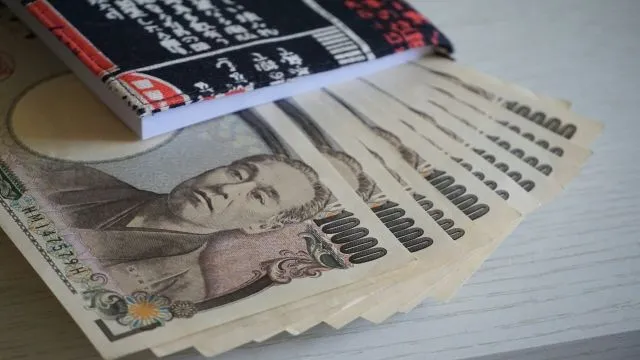
Bitcoin-Yen pair sets new record amid pressure on Japan’s fiat currency

Early on Thursday bitcoin surged to a record high in terms of its valuation in Japanese yen, outpacing its valuations in other leading fiat currencies such as U.S. dollars, euros, British pounds and Australian dollars. Currency devaluationThis increase in yen valuation can be attributed to the recent depreciation of the Japanese currency against the backdrop of continued money printing by the Bank of Japan (BoJ) and resurging inflation, which have collectively weakened sentiment surrounding the yen. Fiat currencies, including the Japanese yen, lack backing by hard assets and derive their value solely from market perceptions. The current rally of bitcoin is indicative of the prevailing market sentiments, with the yen exhibiting particular vulnerability among major fiat currencies. For instance, early market activity on Thursday witnessed bitcoin, often hailed by proponents as digital gold, hitting a fresh all-time high of 7.9 million yen on Tokyo-based cryptocurrency exchange bitFLYER. In contrast, the cryptocurrency's dollar-denominated price hovered above $52,000, still 32% below its peak of $69,000 in November 2021. This price disparity underscores the strain on the Japanese yen, fueled by the Bank of Japan's persistent liquidity easing measures, rising inflationary pressures and indications of economic fragility.Photo by jun rong loo on UnsplashEntering recessionThis recent surge coincides with reports confirming Japan's descent into an economic recession by the end of the previous year, slipping to fourth place behind Germany in terms of the world’s largest economies. While central banks worldwide, including the Federal Reserve, aggressively raised interest rates in attempts to curb inflation, the Bank of Japan maintained near-zero interest rates and continued printing fiat currency. A recession characterized by inflation without corresponding growth prompts investors to seek refuge in safer havens like gold and digital gold. With that, there could be further opportunities for bitcoin to make further in-roads in Japan. In 2023, Japan's core inflation, excluding volatile food and energy components from the consumer price index (CPI), rose by 3.1%, marking its most significant increase since 1982. Consequently, the yen depreciated to a 33-year low against the dollar, declining by 13% and 7.5% against the dollar previously, with an additional 6.4% decrease this year. Bitcoin's persistent premium in Japanese yen terms suggests that it may continue to maintain higher valuations unless the Bank of Japan accelerates its exit from the ultra-loose monetary policy it has been pursuing. That would make yen holdings relatively more attractive compared to other assets. Although a complete regulatory framework for digital assets in Japan is still lacking, the country has recently moved to make tax rules more crypto-friendly. Bitcoin's elevated valuation against the Japanese yen underscores the challenges facing Japan's fiat currency, driven by monetary policy decisions and economic uncertainties.

news
Loading