Top

Japan’s GMO Coin Announces Special SGB Airdrop for XRP Holders

Web3 & Enterprise·September 23, 2023, 12:05 AM

GMO Coin, a prominent cryptocurrency exchange operating as part of the Japanese IT conglomerate GMO Internet Group, has unveiled a unique opportunity for XRP holders. Eligible GMO Coin clients who have previously invested in XRP will receive an exclusive airdrop of Songbird (SGB) tokens.
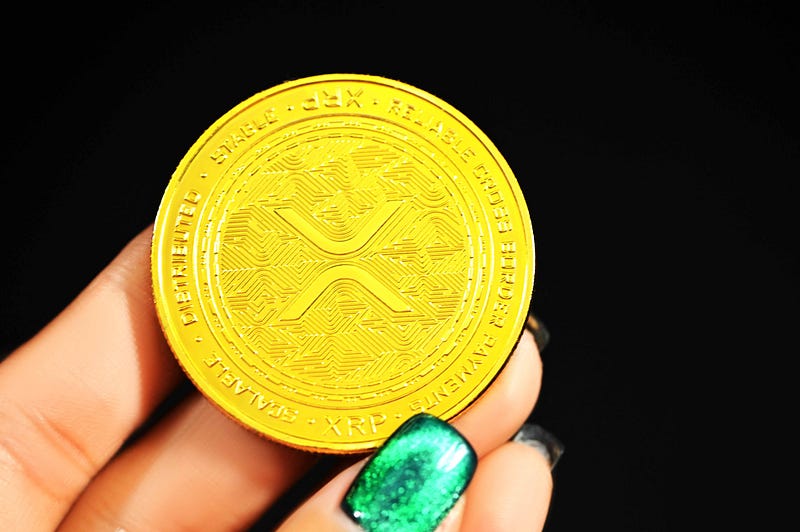
Photo by Kanchanara on Unsplash


SGB token distribution

The distribution of these SGB tokens is slated for completion by September 29, offering a promising opportunity for XRP enthusiasts. To qualify for this airdrop, customers must have held XRP in their GMO Coin accounts at 09:00 on December 12, 2020. The airdrop is also being extended to those utilizing crypto asset lending services on the platform.

To take advantage of the opportunity, eligible clients will need to provide a snapshot of their XRP holdings. While the exact pricing mechanism for the distribution remains undisclosed, it will be revealed at a later date. Presently, SGB is trading at approximately $0.0045, according to Malaysian cryptocurrency data aggregator CoinGecko.

GMO Coin has assured its clients that they are free to manage their XRP holdings as they see fit after submitting the necessary proof. The distributions will ultimately be converted into Japanese yen and made available to clients by the end of the month.


Ripple’s mixed fortunes

This development comes in the wake of a roller-coaster year for XRP holders. Ripple’s native token experienced substantial price fluctuations in response to various developments and events.

One noteworthy instance occurred in mid-July when XRP surged by more than 70%. This surge followed a favorable ruling in a legal dispute between Ripple and the United States Securities and Exchange Commission (SEC).

While regulatory pushback has featured strongly in the US, Ripple has sought to expand its business elsewhere with the Asian region featuring within that strategy. In June, the blockchain-based payments firm obtained in-principle approval from the Monetary Authority of Singapore (MAS) to offer its services within the city-state.

Earlier this month, Ripple struck a deal with SBI Remit Co., a subsidiary of Japanese financial services conglomerate SBI Group, to enable the remittance company to utilize Ripple’s XRP cryptocurrency as a bridge currency, connecting bank accounts in the Philippines, Vietnam, and Indonesia.


Songbird network

The Songbird network serves as a canary blockchain on the Flare layer one network. Essentially, the blockchain plays a crucial role in allowing the facility to enable network architecture testing on the Flare network, including the Flare Time Series Oracle, F-Asset systems, and StateConnector.

GMO Financial Holdings, the parent company behind GMO Coin, bought a 10% stake in AWR Capital, a multi-strategy crypto hedge fund, in April. Following that investment, AWR became a market maker at GMO Coin. The Japanese exchange business is ranked ninth on Forbes Digital Assets’ list of the world’s largest crypto exchanges.

As GMO Coin prepares to distribute SGB tokens to eligible XRP holders, this airdrop marks a great opportunity for relevant stakeholders. It showcases the platform’s willingness to reward its customers and foster engagement within the crypto community.


More to Read
View All
Policy & Regulation·

Oct 16, 2025

U.S. seizes $14B in Bitcoin from crypto scheme linked to Cambodia conglomerate

The U.S. Department of Justice has filed a civil complaint to seize roughly 127,271 Bitcoin linked to an alleged fraud scheme tied to Prince Group, a multinational conglomerate based in Cambodia. That’s according to a press release from the U.S. Attorney’s Office for the Eastern District of New York. The digital assets are currently valued at approximately $14.18 billion and are now in the custody of the U.S. government. Prince Group chairman Chen Zhi, now indicted by U.S. authorities, has been named as the mastermind behind the operation. FBI Assistant Director in Charge Christopher Raia said Chen oversaw an international crypto investment scam connected to a labor trafficking network that defrauded thousands of victims worldwide.Photo by Kanchanara on UnsplashOperations across 30 nationsSince 2015, Chen Zhi has headed the Prince Group, which operates in more than 30 countries. Under his direction, the group allegedly established scam compounds across Cambodia that promoted fraudulent crypto investment scams. The operations targeted victims through social media and messaging platforms with false promises of high returns. According to the allegations, funds were stolen and laundered rather than invested, and perpetrators often built trust over time before carrying out the fraud. Authorities in Vietnam have uncovered a comparable case that did not involve the seizure of cryptocurrency. According to Tech in Asia, Hanoi police confiscated assets worth $34 million from Nguyen Hoa Binh, chairman of the tech company NextTech. The seized property includes 597 gold bars, deeds to 18 properties, and two vehicles. Investigators allege that Binh and nine associates raised funds for the AntEx cryptocurrency project by selling 33.2 billion tokens to 30,000 investors in 2021, collecting around $4.5 million. The defendants are said to have taken part in fraudulent appropriation of assets and accounting violations. Tepid business climate in VietnamThese incidents come as Vietnam’s government works to define its stance on digital assets. According to a Cointelegraph report published earlier this month, the Vietnamese Ministry of Finance said that since the announcement of the country’s five-year digital asset trading pilot plan, no companies have applied to participate. Sharing this update, the vice minister of finance expressed hope that this pilot would launch before 2026. The report points to strict requirements as a likely reason for hesitation. Licensed crypto asset service providers must hold at least 10 trillion dong, about $379 million, in capital. They are also required to back all digital assets with real and tangible assets only, and the framework explicitly prohibits using fiat currencies or securities as backing. These rules leave few options that would attract retail or institutional investors. Gemini eyes Southeast Asia as adoption growsMeanwhile, global firms continue to look to Southeast Asia as activity increases. Dow Jones Newswires reported that Gemini, the American crypto platform founded by the Winklevoss brothers, plans to expand its footprint across the region. In an interview, Saad Ahmed, Gemini’s head of Asia Pacific (APAC), said the company was strengthening its regional operations. A Chainalysis study provides context, showing that the APAC region recorded the fastest growth in on-chain activity compared to other markets in the 12 months ended June. The region saw total crypto transactions rise to $2.36 trillion from $1.4 trillion a year earlier. Although Ahmed did not share investment figures, he said Gemini’s Singapore headquarters has grown to about 65 employees, up from 15 in the final quarter of 2023. He added that the expansion reflects the company’s view of Singapore as a key base for its operations in Asia and globally. Recent criminal discoveries and tightening regulations reveal how Southeast Asia’s crypto scene remains nascent. Governments are stepping up enforcement and shaping new frameworks even as global firms expand across the region, motivated by growing adoption. How policymakers and market players respond to these early tests will define the next phase of digital asset growth in Asia. 

news
Policy & Regulation·

Sep 12, 2025

China funds research on stablecoin risks to financial system

China’s leading science foundation has initiated a research program to examine the effects of stablecoins, reflecting concerns that such digital currencies could pose a risk to the nation’s financial system and its fiat currency. According to the South China Morning Post, the National Natural Science Foundation of China (NSFC) is now offering grants for studies focused on stablecoins and the creation of cross-border monitoring frameworks. The foundation expressed that the unmonitored circulation of private stablecoins, particularly those pegged to the U.S. dollar, could weaken capital controls and present a potential challenge to the yuan. This initiative emerges as governments around the world, from the U.S. to regional financial centers, are actively developing rules for the digital asset sector.Photo by  Christian Lue on UnsplashStrategic research and internal debateThe NSFC will fund the projects with grants valued between 200,000 and 300,000 yuan ($28,042 to $42,063). Researchers are expected to complete their work within a year and deliver policy recommendations on how China can manage the challenges posed by global stablecoins and contribute to digital finance governance. The deadline for applications is Oct. 9. This research program is set against a backdrop of internal discussion in China regarding the possible launch of a yuan-backed stablecoin. While some economists support the idea of boosting the yuan's international profile, Bloomberg noted that former central bank governor Zhou Xiaochuan has advised caution. He recently said the high efficiency of China's current payment systems and warned that financial stability could be threatened by speculation in the stablecoin market. Analysts believe any state-sanctioned yuan stablecoin would likely be confined to offshore markets and tied to the offshore CNH. Global regulatory landscapeChina’s examination of stablecoins is part of a broader global trend of increased regulatory focus on the asset class. In Hong Kong, a new ordinance took effect on Aug. 1, creating a mandatory licensing system for stablecoin issuers under the oversight of the Hong Kong Monetary Authority. Other Asian nations are also taking action. South Korea’s government is reportedly exploring a model for a won-pegged stablecoin involving a consortium of banks and non-bank entities. Separately, Cointelegraph reported that Kyrgyzstan has introduced legislation outlining a regulatory framework for such assets. Developments are also accelerating in the U.S., where the Guiding and Establishing National Innovation for U.S. Stablecoins (GENIUS) Act was signed into law, creating a federal structure for stablecoin oversight. On a commercial level, a Minnesota-based credit union, St. Cloud Financial, intends to introduce its own stablecoin later this year, a move highlighted by Cointelegraph. This token, named Cloud Dollar (CLDUSD), is designed to integrate with the credit union's banking system to facilitate faster and cheaper transactions for its members within a regulated environment.

news
Web3 & Enterprise·

Jul 07, 2023

Korean Blockchain Startups to Showcase Products in KINTEX in November

Korean Blockchain Startups to Showcase Products in KINTEX in NovemberSouth Korean blockchain startups are set to benefit from increased opportunities to participate in exhibitions organized by the Korea International Exhibition Center (KINTEX) in Ilsan, located northwest of Seoul, the nation’s capital.According to a report by local news outlet Dailian, KINTEX recently announced a collaboration with Onoffmix, a social gathering platform, with the aim of expanding exhibitions and bolstering the startup ecosystem.Under the newly signed agreement, KINTEX and Onoffmix will leverage the latter’s startup business network and event platform to encourage startups to take part in more than 20 exhibitions organized and hosted by KINTEX. Onoffmix, boasting a subscriber base of 1.45 million, will serve as a valuable resource in this partnership.Photo by Seungwon Lee on UnsplashGlobal trendThis move aligns with the global trend of increasing startup participation in exhibition shows. One notable example is the Consumer Electronics Show, a prominent annual tech trade show in the United States that features Eureka Park, an event for startups to showcase their products. With 1,340 startups participating this year, Eureka Park has been witnessing consistent growth in participation year after year.Another instance is 4 Years From Now (4YFN), the startup event held during the annual mobile tech show, Mobile World Congress. 4YFN offers opportunities for over 2,000 startups to connect with potential buyers and investors.Startup exhibition in NovemberIn line with this global shift, KINTEX and Onoffmix aim to assist local startups in exhibiting their cutting-edge technologies, establishing connections with industry experts and investors, and participating in conferences and pitching events. One of their first such endeavors is the Digital Media Tech Show (DMTS) scheduled for November. DMTS will showcase innovative products in various tech areas such as metaverses, non-fungible tokens (NFTs), and blockchain. In addition to the exhibition, conferences will be held to facilitate knowledge sharing among startups regarding industry trends, business ideas, and investment opportunities.Lyu Jaewon, the Chief Business Officer at KINTEX, said that this partnership will contribute to the convention center’s expansion of exhibitions and promotion of sustainable growth.Onoffmix CEO Yang Joon-cheol highlighted the company’s commitment to collaborating with KINTEX to expedite the growth of local startups and support their expansion into overseas markets.

news
Loading