Top

Overseas Crypto Holdings Declared to Korean Tax Agency Amount to $98B

Policy & Regulation·September 21, 2023, 7:38 AM

In a recent press release from the South Korean National Tax Service (NTS), it was revealed that this year, a record 5,419 Koreans declared overseas financial assets amounting to KRW 186.4 trillion. This is a notable jump from the previous year, marking a 38.1% rise in the number of declarants and an impressive 191.3% increase in the declared amount.
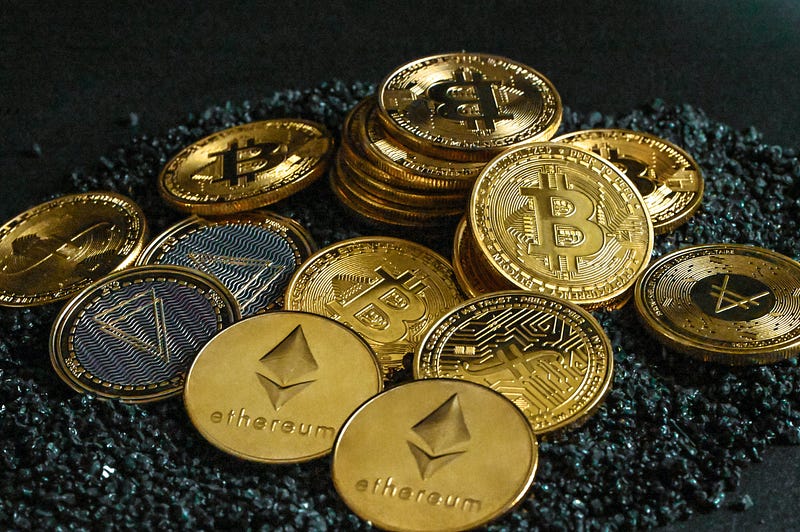
Photo by Traxer on Unsplash


Record-breaking declarations

These are the most significant figures reported since the 2011 inception of the overseas financial account reporting system, which requires Korean individuals and entities to disclose their foreign financial holdings, like savings, stocks, collective investment schemes, and derivatives, if their balance exceeds KRW 500 million.

The NTS attributed the record-breaking figures to foreign crypto accounts, a new addition to this year’s overseas account declaration.


Crypto’s dominance

Virtual assets comprised a staggering 70.2% of the total declared amount, overshadowing all other assets. 1,432 individuals and corporate entities reported crypto holdings amounting to KRW 130.8 trillion (approximately $98 billion).


Decline in non-virtual assets

For non-virtual asset accounts, including deposits, savings, and stocks, the reported figure stood at KRW 55.6 trillion, marking a year-on-year drop of KRW 8.4 trillion, or a 13.1% decline.


Call for compliance

In the future, the NTS plans to leverage data shared between countries to rigorously check for potential non-compliance in reporting overseas financial accounts. Those suspected of omissions can expect strict actions, including fines, criminal charges, public name disclosure, and the collection of related taxes.

After the reporting deadline, filers may be eligible for a penalty reduction of up to 90%. Importantly, tax agencies worldwide, including the NTS, are gearing up to share information like cryptocurrency transaction details under the Crypto Asset Reporting Framework. In light of this, the NTS strongly encourages those who haven’t yet reported but are obligated to to promptly declare their overseas virtual asset accounts.


More to Read
View All
Policy & Regulation·

Apr 10, 2023

Four Pillars for Success in Korean Security Token Market

Four Pillars for Success in Korean Security Token MarketOn Wednesday, blockchain experts in various fields gathered at the 2023 Blockchain Meetup Conference held in Seoul to discuss issues with security tokens and their outlook.©Pexels/Alesia KozikWhat attracted security token businesses’ attention at the meeting was a presentation by Jung Eui-heon from Lambda256, a subsidiary of Korean crypto exchange Upbit’s operator Dunamu. He shared four pillars for success in the Korean security token market.Security tokens gaining traction in KoreaSecurity tokens have been a trending topic in the Korean blockchain industry since the Korean Financial Services Commission (FSC) allowed the issuance and trading of security tokens last February. Furthermore, a 2022 report jointly published by Boston Consulting Group and Singaporean investment platform ADDX predicted that the total size of illiquid tokenized assets worldwide would reach $16 trillion by 2030.Against this backdrop, here are the four keys to successful security token projects that Jung outlined.Technology adaptationFirst, he emphasized the importance of adopting rapidly changing technology. To tackle the issue, he suggested teaming up with advanced tech companies for long-term collaboration. When choosing tech partners, companies should ensure they are sustainable, possess technological prowess, hold credibility on high volume transactions, and maintain the security level of financial institutions, Jung advised.Forging partnershipsThe second point he mentioned was the need to forge partnerships. The FSC’s February guideline requires the issuance and distribution of security tokens to be managed separately. This means that security token projects require collaboration between issuers, distributors, account managers, asset holders, and tech companies.New securities productsJung also noted that discovering new securities products is crucial. Partnering with existing fractional investing companies may help accelerate the security token project initially, but in the long run, enterprises will eventually have to create products in various fields such as gaming, movies, and entertainment.Token liquidityLastly, Jung underlined the token liquidity, which plays a crucial role in determining its prices. Issuers will need to find various distributors and vice versa. Securing liquidity requires the establishment of a technical standard that improves interoperability and compatibility, he highlighted.

news
Web3 & Enterprise·

Jul 22, 2023

Bitmain to Launch Filecoin Token Mining Machines

Bitmain to Launch Filecoin Token Mining MachinesBitmain, the well-known Chinese manufacturer of Bitcoin mining machines, has made a significant announcement that marks its entry into the Filecoin ecosystem.FIL token miningAccording to that announcement made by the company on social media on Friday, the company is set to launch FIL token mining machines, which are expected to have a hash rate of up to 4,300T each and will be available for purchase at $38,888 per unit.Filecoin, created by Protocol Labs, was originally designed as a blockchain-based collaborative digital storage and data redemption solution. As an open-source, public cryptocurrency and digital remittance system, Filecoin has garnered significant attention in the market.Photo by Traxer on UnsplashDelegated stakingAlong with the mining machine development, Bitmain has introduced a delegated staking service with a low monthly fee of 0.5%. This service offers traders an opportunity to earn more through staking with minimal computational energy. Delegated staking allows users to delegate their staking rights to validators or staking pools, enabling them to partake in the rewards generated by these validators.According to a recent report by crypto market intelligence firm Messari, Filecoin’s data storage market continued to grow in Q2, 2023. Active data storage deals grew 64% when compared with the previous quarter. That deal flow resulted in increased revenue from fees, which was up 91%. Further development of the Filecoin protocol resulted in the recent introduction of the Filecoin Virtual Machine (FVM). That runtime environment for smart contracts has enabled new use cases, including liquid staking, decentralized computing, and perpetual storage.Bitmain’s venture into the Filecoin ecosystem not only supports the development of FIL token mining machines but also offers hope for FIL token holders who experienced losses. The FIL unit price peaked at $190 during the 2021 crypto bull market. The company’s involvement has positively influenced Filecoin’s price.Meanwhile Bitmain continues to be a major player in the crypto mining equipment space. 2021 has not been without its blemishes for the company though, as in April the Beijing-based company was fined $3.7 million by the Chinese authorities for a violation of Chinese tax regulations.Bitmain hashrate dominanceEarlier this month, US bitcoin miner TeraWulf purchased 18,500 mining machines from Bitmain, with a view to deploying them at its 43 MW Lake Mariner mining facility in New York State in the US. The deal had a value of $75 million.A recently published report by crypto intelligence firm Coinmetrics outlined that the majority of the Bitcoin hashrate is being processed by Bitmain’s S19 miner model. Three Bitmain miner models are responsible for 76% of the entire Bitcoin network’s hashrate, the report states.

news
Web3 & Enterprise·

Aug 12, 2025

World Mobile & Protelindo team up to launch drone-based network

UK-headquartered decentralized mobile network project World Mobile has teamed up with PT Professional Telekomunikasi Indonesia, better known as Protelindo, to launch a blockchain-based 5G mobile network. Founded in 2003, Protelindo is an Indonesian digital infrastructure firm that specializes in fiber optic networks and telecommunications towers. It owns and operates a large network of these towers in Indonesia, leasing them out to various mobile service operators.  The two firms acquired Combined Space Technologies (CST) earlier this year as a joint venture. CST had been originally founded in Cambridge in the UK, backed by Deutsche Telekom to the tune of $70 million. Successful demos of its proprietary technology had been completed in conjunction with British Telecom (BT) and Deutsche Telekom before World Mobile and Protelindo decided to purchase the company.Photo by Alessio Soggetti on UnsplashWorld Mobile StratosphericIn a press release published on Aug. 8, World Mobile outlined that through CST, the two companies have launched World Mobile Stratospheric.  World Mobile asserts that the establishment of this stratospheric connectivity platform is “unprecedented.” The project implicates the use of fixed-wing drone aircraft, which it proposes to use to host 500,000 simultaneous 5G handset connections while flying at altitudes of up to 20,000 meters. World Mobile Group Chief Business Officer (CBO), Charles Barnett, told Cointelegraph that each drone can provide wireless network coverage over an area of 15,000 square kilometers. Each aircraft will host 450 individually steerable beams in order to deliver the service within a defined geographical area. Low latencyBarnett outlined that the technology can achieve just six milliseconds of total latency with the service having the capability of providing 5G service up to 18 times cheaper per gigabyte by comparison with other similar technologies. It’s thought that the service will compete with space/satellite-based telecoms systems such as Elon Musk’s Starlink. While Starlink has brought internet to corners of the globe that were otherwise underserved, it has been criticized in terms of its interference with astronomy, increased space debris and the potential for atmospheric pollution. Additionally, the low-earth orbit (LEO) satellite-based service has much higher overheads. In comparison with World Mobile Stratopheric’s six millisecond latency, Starlink is much higher at 47 milliseconds. The system delivers directly to the consumer’s device, whereas Starlink is delivered to a satellite dish with significant cost implications for the user. Stratomast, the hydrogen-powered drone aircraft, can stay up for between six and nine days and produces zero emissions. While Starlink and World Mobile Stratospheric may compete, Barnett believes that Starlink is the better choice when delivering service to remote areas that lack any cellular connectivity at all, whereas Stratospheric is the best option in areas with a higher density of mobile users. Micky Watkins, CEO of World Mobile, said that the partnership proves how blockchain can unlock new models for global connectivity. He added:“It aligns infrastructure deployment with community participation and makes decentralized telecom not just possible, but scalable.” Watkins believes that by combining advanced aerospace technology with token-driven economics, the project is building a network that connects more people, faster, in an economically efficient and environmentally sound manner. 

news
Loading