Top

Busan City Houses Two Foreign Financial Firms on the Road to Becoming Blockchain, Fintech Hub

Policy & Regulation·July 31, 2023, 8:03 AM

The city of Busan said Monday that it has chosen two financial companies, UIB Korea and Lina One, as the new occupants of Decacorn-Space — an office space on the 63rd floor of the Busan International Finance Center (BIFC) — in an effort to position the southern port as the nation’s blockchain and fintech hub.

Busan has been running an open call for foreign financial institutions to move into the recently renovated space since June. After a rigorous two-step evaluation process, UIB Korea and Lina One were selected, the city said.

This comes as part of Busan’s efforts to further develop the BIFC and become a major financial powerhouse in Korea.

“We have been relocating public financial institutions, fostering financial experts, and exploring new growth drivers such as fintech, blockchain, and digital innovation,” the city’s mayor Park Heong-joon explained.
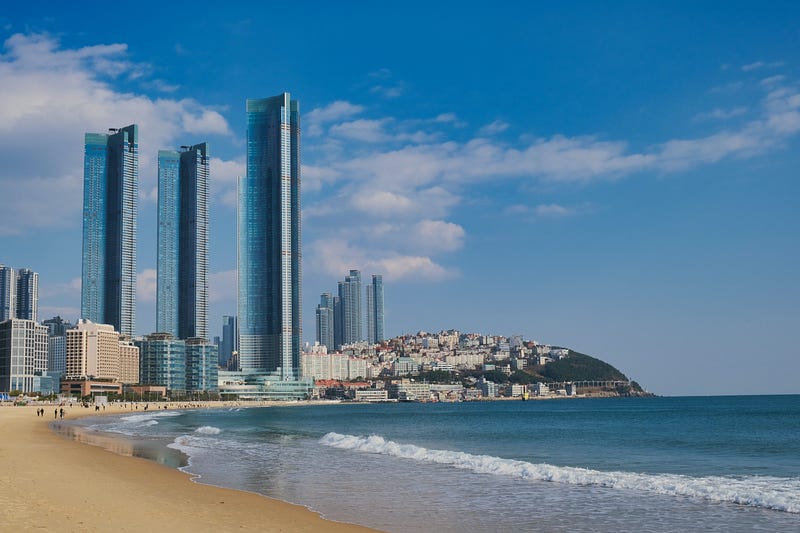
Photo by Minku Kang on Unsplash


About UIB Korea and Lina One

UIB Korea, or UIB Insurance Brokers, is the Korean branch of UK-based UIB Group — a global insurance broker that offers risk management advisory services. In particular, the firm is set to work with other domestic companies such as DB Insurance and Meritz Fire & Marine Insurance to establish a consortium for providing insurance products and consulting services.

Meanwhile, Lina One is the Korean branch of Chubb Group, the world’s largest publicly traded property and casualty insurance company. One of the firm’s major goals is to promote the insurance information technology market in Busan.

Notably, both companies aim to leverage their digital capabilities, experience, and competitiveness to achieve similar goals, which include digitizing insurance for various partners, ranging from maritime and industrial companies to regional banks, fintech companies, and individuals. In turn, their efforts are expected to expand Busan’s network with the larger global financial community and present the city as an ideal spot for international conferences.


On the road to becoming a financial hub

Despite considerable challenges such as the withdrawal of foreign financial institutions from Korea and the impact of COVID-19 on international travel, the city has continuously made efforts in collaboration with the Busan Finance Center to attract international financial institutions through events like investor relations meetings and local networking activities.

To support the successful landing of these companies in Busan, the city will also offer one-stop services such as business model development support and residential settlement consultations.

Once settled, UIB Korea and Lina One are expected to generate significant synergy with partner firms such as local financial holding company BNK Financial Group during the third phase of the development of the BIFC whose objective is to house innovative financial workspace by 2025.

“It is crucial for us to attract more competent domestic and foreign financial institutions that will have a great impact on the city’s financial economy,” Mayor Park emphasized.


More to Read
View All
Web3 & Enterprise·

Feb 27, 2025

Bgin Blockchain files for Nasdaq listing

Bgin Blockchain Limited, a crypto mining equipment manufacturer headquartered in Singapore, filed documentation last Friday with the Securities and Exchange Commission (SEC) with a view towards launching an initial public offering (IPO) in the U.S. The Feb. 21 filing, a Form F-1 registration statement, outlines that the company wishes to go forward with the IPO after the effective date of the filing has been established. Bgin identified itself as an “emerging growth company.”  The registration statement was filed on behalf of Bgin by Hunter Taubman Fischer & Li LLC, in conjunction with the underwriters represented by Robinson & Cole LLP. It proposes to offer the U.S. investing public 59.54 million Class A ordinary shares and 15.69 million Class B shares. As part of its plan, Class A shares would be listed on the Nasdaq stock exchange using “BGIN” as the ticker symbol.Photo by Leslie Lopez Holder on Unsplash$50 million raiseIn a statement published on Renaissance Capital's website, the independent investment bank outlined that Bgin is seeking to raise $50 million in capital through the IPO.  It’s understood that funds raised by way of the IPO will be utilized to ramp up research and development efforts. The bookrunners, responsible for managing the IPO, are Chardan Capital Markets and The Benchmark Company. As yet, no information has been provided with regard to how Bgin will price its share offering. Renaissance described Bgin as a digital asset technology company “with proprietary cryptocurrency mining technologies and a strategic focus on alternative cryptocurrencies.”  The company, founded in 2019, focuses on the design, manufacture and distribution of mining equipment relative to Kaspa (KAS), Alephium (ALPH) and Radiant (RXD) blockchain networks. Bgin supplies 8nm and 12nm ASIC chips dedicated to these alternative blockchain networks, which all depend on the use of a proof-of-work (PoW) consensus mechanism. Additionally, Bgin mines cryptocurrency itself while providing a hosting service for crypto mining, with facilities in the U.S. and Hong Kong. It hosts 4,020 mining rigs for customers, with 3,330 of these located within facilities in Iowa and Nebraska.  Across various subsidiaries Bgin manages 33,862 active mining rigs in the U.S. within its own mining operations. And additional 12,000 non-operational rigs are currently in storage facilities in the U.S. and Hong Kong. Over a 12-month period ending on June 30, 2024, the company recorded revenues of $392 million. In 2023, the firm recorded sales of 68,000 mining rigs. In H1 2024, the company sold over 47,000 mining machines. The filing disclosed that the company’s Hong Kong subsidiary was responsible for considerable crypto mining facilities in mainland China prior to China deeming the activity to be illegal in 2021. Providing full disclosure in the lead-up to its IPO, the firm warned that it continued to operate crypto mining facilities in China for a number of months in violation of that law. It identifies this item as a risk factor as potentially, the firm could be penalized and fined.

news
Web3 & Enterprise·

Jul 07, 2023

Circle Considers Issuing Stablecoin in Japan

Circle Considers Issuing Stablecoin in JapanCircle, the US-headquartered payment services company and stablecoin issuer, is considering issuing a stablecoin in Japan following the implementation of new regulations on stablecoins.Jeremy Allaire, Co-Founder and CEO of Circle, expressed his interest in exploring partnerships in Japan due to the significant potential of the market under the new rules.Photo by Su San Lee on UnsplashGrowing importance of stablecoinsIn an interview with CoinDesk Japan recently, Allaire highlighted the growing importance of stablecoins in cross-border trade, foreign currency transactions, and global commerce. He believes that Japan, with its recently established framework for the use of overseas stablecoins, has positioned itself as a pioneering country in this regard. Allaire described the stablecoin bill as the Japanese government’s and the Financial Services Agency’s most significant achievement.The revised Payment Services Act in Japan recognizes stablecoins backed by legal tender as an “electronic payment method” and allows for their issuance. However, stringent rules are in place for stablecoin issuers.These include the requirement for stablecoins to be pegged to the yen or other legal tender and the guarantee of redeemability at face value for holders. Only licensed financial institutions, such as banks, registered money transfer agents, and trust companies, will be authorized to issue stablecoins.Breaking into AsiaAllaire emphasized Circle’s interest in establishing partnerships within Japan, a country he recently visited. Circle has already obtained a Major Payment Institution (MPI) license in Singapore, enabling the company to offer various digital payment services, cross-border money transfers, and domestic money transfer services.The Japanese market has witnessed major financial institutions exploring stablecoin initiatives. Mitsubishi UFJ Trust and Banking Corporation (MUFJ), for instance, announced its plans to launch its own stablecoin platform named Progmat last month. MUFJ also entered into a partnership with Japanese blockchain interoperability solutions provider, Datachain, recently. It’s thought that the move will facilitate both parties in undertaking further work on stablecoin-related initiatives.Circle’s consideration of issuing a stablecoin in Japan underscores the company’s recognition of the country’s regulatory advancements and the potential for stablecoin adoption. As stablecoins gain further traction globally, Japan’s new framework positions it as an important market for Circle and other players in the industry.It’s not just Japan that highlights the need for further stablecoin development. A new policy proposal was published in Hong Kong earlier this week that made a point of urging the Hong Kong authorities to issue its own Hong Kong dollar-backed stablecoin.The objective of such an initiative would be to compete on an international basis with leading US dollar stablecoins such as Circle’s USDC and USDT/Tether. By being proactive in the Asia-Pacific (APAC) region, Circle could head off rising potential challenges such as that suggested by these stablecoin researchers in Hong Kong.The partnership opportunities in Japan align with Circle’s mission to facilitate efficient and secure digital transactions, and it will be intriguing to observe how the company navigates this emerging landscape in the months to come.

news
Policy & Regulation·

Jan 12, 2024

Turkey nears completion of newly crafted crypto regulations

The Turkish government is on the verge of finalizing comprehensive regulations for the cryptocurrency market. It has been known for a number of months that Turkey had been working towards the production of a regulatory framework for crypto, with the primary objective of securing the country’s removal from the Financial Action Task Force’s (FATF) "grey list." According to revelations from Minister of Treasury and Finance Mehmet Simsek, who participated in an interview with the Anadolu Agency on Wednesday, those regulations are now nearing completion.Photo by Emre on UnsplashFramework in advanced stagesSimsek disclosed key elements of the forthcoming regulations, emphasizing the government's commitment to legally defining critical concepts in the crypto space, licensing trading platforms and aligning with the standards set by FATF. The crypto framework tailored for the Turkish market is in the advanced stages of development, with a meticulous evaluation of its technical aspects underway, noted Simsek. The overarching goal is to mitigate the risks associated with crypto trading, especially for ordinary investors, aligning with international standards to facilitate the country's removal from the FATF's grey list. Licensing and defined termsSimsek outlined the forthcoming guidelines, stating that crypto platforms will be mandated to acquire licenses from Turkey's Capital Markets Board (CMB). A number of months ago, Bora Erdamar, the director of the BlockchainIST Center, an Istanbul-based university research and development center for blockchain technology, had underscored the importance of establishing licensing standards as part of the new crypto framework. Erdamar claimed that would be necessary in order to “prevent abuse of the system.” Erdamar is of the view that any such regulatory framework may include digital security protocols, advanced custody services, compulsory proof of reserves and capital adequacy requirements. It’s understood that the regulations will provide legal definitions for essential terms such as "crypto assets," "crypto wallets," "crypto asset service providers," "crypto asset custody service" and "crypto asset buying and selling platforms." As an example, Simsek clarified the definition of crypto assets as "intangible assets that can be created and stored electronically using distributed ledger technology or a similar technology, distributed over digital networks, and capable of expressing value or rights." While emphasizing the reduction of risks in crypto trading, Simsek clarified that the regulations would not encompass the specific tax regime for virtual assets. The proposed regulations have long been under consideration as Turkish authorities aim to bring clarity to the crypto market. The Minister assured that the crypto legislative proposals would be finalized this month, preceding the FATF evaluation scheduled for February. Notably, between July 2022 and June 2023, Turkey ranked fourth globally in raw crypto transaction volumes, recording approximately $170 billion in activity, trailing behind the United States, India and the United Kingdom, as reported by the blockchain analytics firm Chainalysis. A report by KuCoin last year identified a marked increase in adoption in Turkey.  It’s believed that wayward inflation over recent years relative to the Turkish lira is playing a large part in that trend. In recent weeks the Turkish president took the step of appointing an expert in blockchain and crypto assets to the central bank’s rate-setting committee. 

news
Loading