Top

BC Card Accelerates Launch of NFT Guarantees for Secondhand Luxury Goods Trades

Web3 & Enterprise·August 28, 2023, 6:44 AM

South Korean credit card issuer BC Card announced on Sunday that it has applied for two domestic patents for blockchain technology that will be used to issue digital guarantees for purchases of luxury goods, such as bags, watches, and more. These guarantees will be minted as non-fungible tokens (NFTs) that can later be accessed by buyers or sellers during secondhand trades, which often pose risks and uncertainty regarding product quality or authenticity.


Enhancing trust and security

These NFTs will be based on paper or digital payment receipts — which contain detailed information on purchase receipts, such as product names, payment amounts, purchase dates, and shop information — that a customer receives after purchasing goods at stores that accept BC cards.

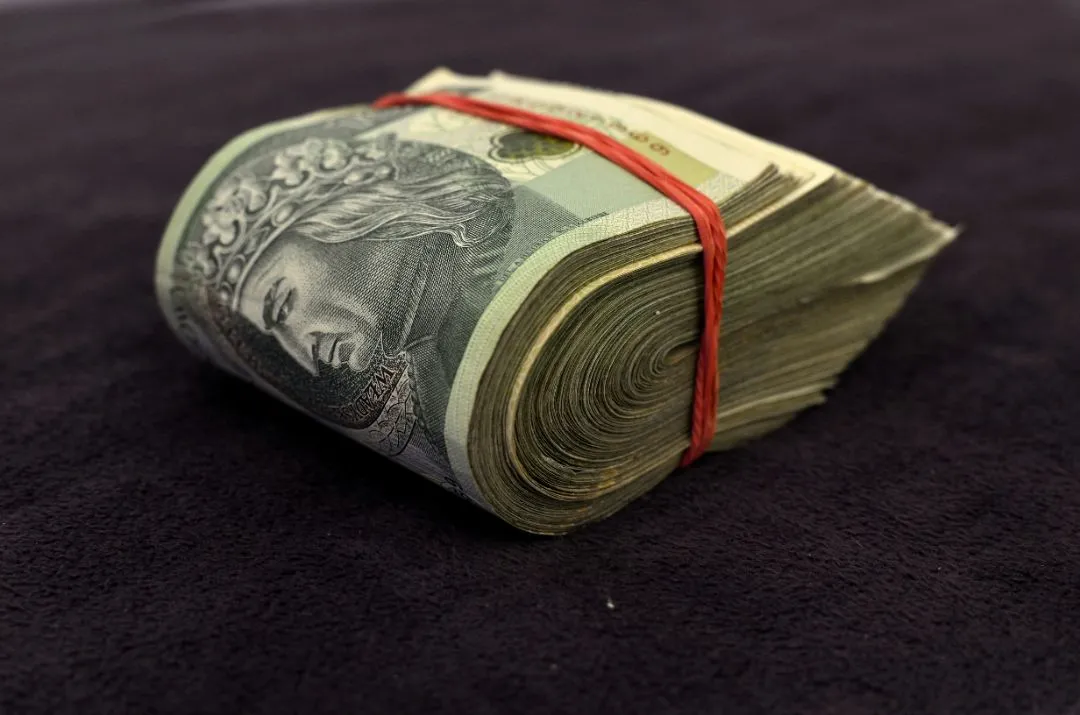
Photo by Towfiqu barbhuiya on Unsplash

Because the guarantees are stored on a blockchain, they are almost impossible to tamper with. BC Card anticipates that this service will offer advantages like boosted safety, convenience, and security for both buyers and sellers who wish to partake in transactions of secondhand luxury goods.

In addition, the data distributed across servers eliminates concerns about data loss. To achieve this, BC Card plans to collaborate with telecommunications provider KT and BC’s subsidiary, VP, which specializes in electronic payment services.

“Through this patent application, we expect to significantly enhance the trustworthiness of secondhand luxury goods transactions in Korea,” said Kwon Sun-moo, Director of the New Financial Research division at BC Card. “After the patents are registered, we plan to collaborate with companies under KT Group like KT Alpha as well as other distribution companies in a business-to-business-to-consumer (B2B2C) system.”


Access through a digital wallet

Customers can take a photo of a receipt with their phones or download it, then upload it to BC Card’s financial platform, Paybook. The photo is then converted into an image that is automatically stored as an NFT on the blockchain network.

Once a seller registers a payment receipt for a product that they bought, then the subsequent NFT guarantee can be accessed or sent through their BC Card digital wallet — a feature that the company plans to launch soon — at any time during future transactions. This offers a convenient solution to the possibility of losing receipts, which traditionally requires manually downloading them again from the card company’s website or app.


Revolutionizing secondhand trade

This new technology could play a significant role in the booming resell and secondhand goods trading market, the company said. According to data from the Korea Internet & Security Agency last year, the domestic secondhand market has grown from a scale of KRW 4 trillion in 2008 to KRW 24 trillion in 2021 and is projected to exceed KRW 30 trillion this year.

“Through the registration of payment receipts, we can analyze consumption patterns and even suggest improvements in spending habits to our customers,” Director Kwon highlighted.

BC Card is also considering offering luxury appraisal and authentication services along with the future launch of the NFT service.

More to Read
View All
Markets·

Aug 28, 2025

Crypto rally drives surge in South Koreans’ offshore disclosures

Fueled by a crypto rally and higher overseas stock balances, South Korea’s National Tax Service (NTS) reported a sharp jump in disclosures of offshore accounts. On Aug. 26, the agency said 6,858 taxpayers declared overseas financial accounts this year, with a combined balance of 94.5 trillion won ($67.6 billion), up 38.3% in filers and 45.6% (29.6 trillion won or $21.2 billion) in value from last year.Photo by Piotr Łaskawski on UnsplashCrypto gains drive offshore filingsWithin that, reports of overseas bank deposits and cryptocurrency accounts rose to 46.4 trillion won ($33.2 billion) this year, more than 12% above 2024. That figure excludes stock accounts, which alone totaled 48.1 trillion won ($34.4 billion). Tax officials attributed the increase largely to the surge in crypto prices and higher balances in overseas stock holdings. The trend is underscored by CoinMarketCap data: the crypto market cap now stands roughly at $3.87 trillion, up 86% from $2.08 trillion a year ago. By asset type, the largest share of filers reported overseas bank deposits (3,197 people), followed by cryptocurrency (2,320) and stocks (1,992). By value, stock accounts dominated with 48.1 trillion won ($34.4 billion), compared with 23.5 trillion won ($16.8 billion) in bank deposits and 11.1 trillion won ($7.94 billion) in cryptocurrencies. Korean law requires residents and domestic corporations to disclose foreign financial accounts if their combined balance exceeds 500 million won ($358,000) on any month-end date during the year. Reports must be filed with the local tax office by June of the following year. The NTS said it will step up enforcement against suspected non-filers, using cross-border information-exchange data to verify offshore holdings. Penalties will include administrative fines, penalty notices, criminal referrals, public naming of violators and the collection of back taxes. The agency added that it is preparing to share crypto transaction data under the OECD’s Crypto-Asset Reporting Framework (CARF) and urged anyone subject to the rules to promptly file amended or late reports for overseas crypto accounts. The recent bullish sentiment in crypto, which fueled the uptick in foreign financial disclosures, has also been driving public interest in digital assets and boosting expectations for altcoins. A survey by CoinNess and Kratos conducted between Aug. 18 and 22 with 2,000 respondents found that 38.5% expect a limited bull run in a handful of altcoins, either with strong real-world use cases or serving as the underlying assets of launched ETFs. Another 28.5% predicted gains would remain centered on Bitcoin and Ethereum, while 20.7% anticipated a broader altcoin season reminiscent of past cycles. The remaining 12.3% forecast the end of the rally and the start of a downturn. Won stablecoins: policy and risksPolicy momentum around stablecoins is also picking up in South Korea. The Financial Services Commission (FSC) plans to introduce a bill in October governing won-pegged stablecoins as part of the second phase of the Virtual Asset User Protection Act. The legislation is expected to set rules for issuance, collateral management and internal controls. Amid these changes, companies are showing growing interest in launching won-based stablecoins. Kaia, an EVM-compatible, layer-1 blockchain, recently signed a memorandum of understanding (MOU) with blockchain solutions provider Open Asset to collaborate on projects tied to Korean won–backed stablecoins. The partnership will focus on issuance, distribution, service launches and developing practical use cases. Circle President Heath Tarbert has recently joined calls for a won-backed stablecoin. In an interview with The Korea Economic Daily, he underscored South Korea’s world-class payments infrastructure and said a digital won could help the country play a leading role in blockchain finance. Blockchain transactions, he noted, operate differently from traditional payment rails, making some form of digital currency, whether a stablecoin or a central bank digital currency (CBDC), a necessity. Meanwhile, at a recent meeting with top executives from the country’s four major financial groups, Tarbert ruled out collaborations on won-denominated stablecoins. Instead, he promoted Circle’s dollar-pegged stablecoins and suggested exploring joint initiatives centered around them. Not everyone sees stablecoins as a net positive. NICE Investors Service, a local credit rating agency, warned in a recent report that if banks issue won-based stablecoins, their interest income could suffer. The agency said adoption would likely weigh on banks, benefit securities firms and leave credit card companies largely unaffected. It added that a large shift of funds into stablecoins could shrink banks’ deposit base and weaken their intermediary role. Still, banks that issue stablecoins directly could soften the blow by tapping new fee-based revenue streams. 

news
Policy & Regulation·

Oct 18, 2023

Genesis Ordered to Comply with Subpoena in Terraform Labs Case

Genesis Ordered to Comply with Subpoena in Terraform Labs CaseGenesis, the troubled crypto lender and trading company, has been issued a compelling directive by a New York court. The court has mandated Genesis to comply with a subpoena within five days, following a failure to respond to previous requests by the October 9 deadline, relative to a case involving Singapore’s Terraform Labs.Photo by Michael Discenza on UnsplashTerraUSD collapse falloutThese requests are related to the 2022 collapse of the TerraUSD stablecoin, a cryptocurrency which was supposed to maintain a peg to the US dollar’s value until it lost that peg and collapsed. At the time, the demise of TerraUSD reverberated throughout the cryptocurrency markets.In response to this collapse, the US Securities and Exchange Commission (SEC) initiated a legal action against Terraform Labs, the company responsible for the token, and its co-founder Do Kwon, alleging that investors had been misled. Both Do Kwon and Terraform subsequently tried unsuccessfully to have the case dismissed.As part of the progression of this case, the SEC sought to question Do Kwon and gain access to company records held by the Singapore-headquartered firm. The defendants were ultimately unsuccessful in arguing their case in that instance on jurisdictional grounds.Failure to respondJudge Jed Rakoff, in a court order filed on Friday, highlighted Genesis’s non-compliance with the subpoenas, stating:“As of today, the Genesis Entities have failed to produce any documents in response to the Subpoenas.”These subpoenas were issued by the defendants to seek specific information from Genesis Global Capital, Genesis Global Holdco, and Genesis Global Trading on September 12.The court order does not specify the nature of the information sought. It is worth noting that Genesis extended substantial loans to the now-defunct hedge fund Three Arrows Capital (3AC), which was heavily exposed to the TerraUSD stablecoin. In January 2023, three Genesis entities filed for bankruptcy, and its trading arm ceased its US spot market operations in September.In addition to the challenge posed by Genesis’ non-compliance, Judge Rakoff is also wrestling with obtaining information from Do Kwon in connection with the legal proceedings. Kwon’s legal representatives have argued that he cannot physically come to the US as he is serving a jail sentence in Montenegro for possession of a counterfeit passport.However, Judge Rakoff has expressed his determination to ensure Kwon’s availability for cross-questioning and stated that Kwon will not be allowed to provide any declarations in the case without being subject to cross-examination.Citadel under scrutinyIn a related development, it emerged last week that Terraform Labs is accusing American market maker Citadel Securities of having sabotaged its TerraUSD stablecoin. As part of the Singaporean company’s pursuit of justice, it has called upon the United States District Court in the Southern District of Florida to force Citadel to furnish specific documents that relate to their trading activities during the period within which TerraUSD collapsed.Should it fail in that endeavor, Terraform has said that it will look to have the matter heard in Judge Rakoff’s court in New York.This legal development concerning Genesis marks a crucial juncture in the ongoing investigation into the TerraUSD stablecoin’s collapse and the actions of the entities involved, with Genesis now facing increased pressure to cooperate fully with the legal process.

news
Markets·

May 01, 2025

Crypto fraud hits 20% of Korean investors, global trend shows seniors most vulnerable

A recent survey in South Korea found that 20.3% of crypto investors have fallen victim to financial losses. Conducted by the Korea Financial Consumers Protection Foundation in late December, the survey polled 2,500 adults aged 19-69, with respondents able to select multiple loss categories. Investors in their 60s were most vulnerable, reporting a 25.3% loss rate. Exchange-related problems constituted the majority of incidents (72.8%), followed by online chat room scams (44.7%) and investment fraud (35.5%).Photo by Growtika on UnsplashExchange failures lead lossesAmong exchange-related losses, 40.6% of users couldn't sell assets due to system failures, while 11.5% lost digital assets through exchange hacking. Overall, exchange technical issues accounted for 52.1% of reported losses, with another 20.7% losing assets when exchanges closed completely. Chat group scam victims experienced various forms of fraud: 23.2% paid for worthless or false information, while 21.5% suffered financial losses through market manipulation or proxy trading schemes. Investment scams included fake crypto projects or fraudulent firms (18.0%), deceptive exchanges (10.3%), and other scams (7.2%). Most victims (75.1%) reported losses under 10 million won (approximately $6,945), with 34.6% losing less than 1 million won. Due to these relatively small amounts, 67.7% took no action following their losses. Of the 32.3% who sought help through various channels, 73.9% were unable to fully recover their funds. Problem worsening across Asia and beyondThis problem extends beyond South Korea. In neighboring Japan, police reported 19,038 crypto fraud cases in 2023, with damages totaling 45.26 billion yen (about $300 million), according to Chainalysis, citing Japanese National Police Agency data. These figures surpass 2022 numbers, indicating continued growth in fraudulent activities. A recent case highlighted by the Fukushima Minyu Shimbun involved a Soma City woman in her 50s who lost approximately 116.6 million yen ($780,000) to scammers impersonating police officers. The fraud began with a fake customer service call, followed by deceptive claims about fraudulent accounts and threats of arrest, which led her to create cryptocurrency accounts and transfer funds before eventually reporting the scam. Elderly at highest risk as fraud surgesThe FBI's Internet Crime Complaint Center's 2024 report further confirms this trend, documenting 149,686 crypto fraud complaints in the U.S. with $9.3 billion in reported losses—66% higher than in 2023. Notably, people over 60 were the most affected demographic, consistent with the Korean study's findings.

news
Loading