Top

Hong Kong Regulator Explores Tokenization to Transform Bond Market

Policy & Regulation·August 26, 2023, 2:02 AM

The Hong Kong Monetary Authority (HKMA), the local regulator within the Chinese autonomous territory, unveiled the outcomes of its Project Evergreen study on Friday. Within the report, it indicated an interest in harnessing tokenization in order to improve aspects of the bond market.

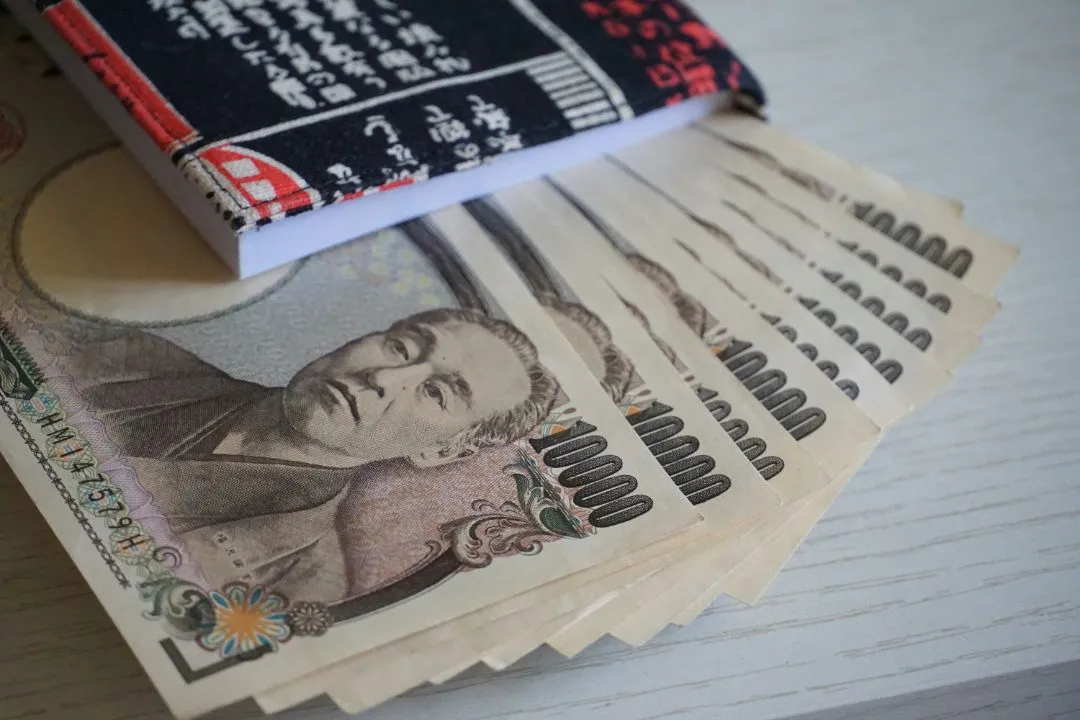
Photo by Jimmy Chan on Pexels


Bond market impact assessment

In this comprehensive report, the regulator delved into the intricate world of bond tokenization, offering an in-depth assessment of its potential impact on the market. The 24-page report covers a range of insights, spanning use cases and benefits to the challenges encountered during the study. The overarching sentiment emerging from the study paints tokenization as a compelling avenue for enhancing the bond market’s functionality.

Eddie Yue, the Chief Executive of HKMA, emphasized that the study underscored the latent potential of integrating distributed ledger technology (DLT) into real capital market transactions, all within the framework of Hong Kong’s existing legal structure. In addition, the research revealed the prospect of DLT elevating efficiency, transparency, and liquidity within bond markets.


Highlighting efficiencies

The report highlighted that the digital nature of tokenized bonds has the power to render paper certificates obsolete, ushering in an era of streamlined processes and diminished errors. Moreover, the study emphasized the capacity for various stakeholders to seamlessly interact via a shared DLT platform, fostering an environment of collaboration. Real-time data synchronization would ensure heightened transparency, a crucial factor in modern financial markets.

Furthermore, the report identifies that a standout feature of tokenization lies in atomic delivery versus payment (DvP) settlements for bond transfers. This innovation serves to significantly expedite the settlement process while bolstering the case for end-to-end DLT adoption.

That said, the report acknowledges the nascent state of bond tokenization. Yue emphasized that a plethora of challenges must be overcome before mass adoption becomes viable. The HKMA official underscored the necessity for regulatory frameworks to evolve alongside technology adoption.

These insights arrive at a time when Hong Kong is carving its niche as a haven for crypto and decentralized finance endeavors. A multitude of enterprises are believed to be queuing up for a coveted Hong Kong crypto license, underscoring the city’s rising stature in the digital finance sphere.

July saw Hong Kong’s announcement of a partnership with Saudi Arabia, focusing on tokenization and payments. Additionally, the HKMA is actively exploring the establishment of a regulatory framework for the digital Hong Kong dollar and stablecoins, heralding a commitment to the distributed ledger technology (DLT) application. An imminent seminar with industry stakeholders is planned, aimed at introducing DLT technology and fostering its adoption.

Arthur Chan, HKMA Assistant Chief Executive, anticipates wider DLT integration, envisioning reduced settlement times for bond issuances and instantaneous settlement through tokenized cash and smart contracts. He acknowledges the evolving nature of DLT platforms, acknowledging the need for further research and development. However, Chan envisions a future where tokenization extends beyond bonds, potentially encompassing securities, real estate, and mortgage products.


More to Read
View All
Web3 & Enterprise·

Nov 01, 2023

OKX maintains robust asset reserves with 103% BTC backing

OKX maintains robust asset reserves with 103% BTC backingSeychelles-incorporated cryptocurrency exchange OKX has recently released its 12th asset reserve certificate, with its latest report revealing that the company maintains reserves of 103% for its top coins, which include Bitcoin (BTC), Ethereum (ETH), Ripple (XRP), Tether (USDT) and USD Coin (USDC). The measure is meant to reassure users that their funds are well-backed and, in fact, more than covered by the exchange’s reserves.Photo by rc.xyz NFT gallery on UnsplashBitcoin, Ether reserve surplusesOKX provided details on its latest asset reserve status via a blog post published to its website on Monday. Alongside providing the relevant asset reserve data, the exchange celebrated its first complete year of having utilized a proof-of-reserve-based system.For BTC, OKX holds a substantial reserve of 140,484 BTC, effectively exceeding the 136,227 BTC held in user accounts. Similarly, ETH reserves stand at 1.46 million ETH, providing a surplus over the 1.42 million ETH owed to OKX users.The exchange also demonstrated its considerable holdings in stablecoins, with over $5 billion in USDT reserves and over $327 million in USDC reserves. In an interview with CoinDesk recently, OKX Chief Marketing Officer (CMO) Haider Rafique, referred to the need to provide a mechanism to reassure platform users. He stated:“Customers often express concerns in person about centralized exchanges, highlighting issues with security, solvency and downtimes, even if they don’t always voice these concerns digitally.”Use of zero-knowledge technologyIn April, OKX upgraded its proof of reserve system, opting for the use of zero-knowledge scalable transparent argument of knowledge (zk-STARK) technology. This approach allows OKX platform users to independently verify exchange solvency, confirming their assets are backed by OKX reserves. A zero-knowledge proof demonstrates the truth of a statement without sharing the statement’s contents. Therefore, no account balances are made public to other service users, maintaining user privacy.Regular transparency is now crucial for exchanges like OKX, as it aims to provide users with the certainty that their funds are genuinely available for withdrawal at any given time. After the FTX insolvency incident, verifiable proof of reserves has become paramount in reassuring users about the safety of their investments.Trend towards improved standardsIn the wake of several high-profile crypto platform failures in 2022, many exchanges are making greater efforts towards reassuring users that their funds are safe and accounted for. This has given rise to the popularity of proof of reserve systems.On that basis, OKX hasn’t been alone in implementing a proof of reserves-based system. In July another Seychelles-incorporated crypto platform, Bitget, announced that it could demonstrate the debt-free status of its business through its proof of reserves system.Nic Carter, Partner at crypto venture capital and private equity firm Castle Island Ventures, has carried out some research into the various proof of reserve systems employed by a number of global crypto platforms. While accepting that the approach is not foolproof, Carter maintains that it’s still a move in the right direction. “The way PoR works is, if enough exchanges do it, the few exchanges that don’t do it end up sticking out like a sore thumb,” he states.

news
Web3 & Enterprise·

Mar 12, 2024

Korean crypto exchange Upbit launches BTC-ETH Duo Index

Dunamu, the operator of South Korea’s leading crypto exchange Upbit, announced today that it launched a new crypto price tracking service, Bitcoin-Ethereum Duo Index (Duo Index). The news was reported by the local media outlet Etoday.  The service tracks the two most prominent tokens, Bitcoin and Ethereum, each being the top performer and the runner-up in terms of market capitalization in the crypto asset market. It is a strategy index that equally weights Bitcoin and Ethereum, with their holding ratio updated to 1:1 every month. The weightings of the two cryptocurrencies in the index are subject to an adjustment factor, which is based on their prices. The BTC-ETC Duo Index is currently available on the Upbit Cryptocurrency Index (UBCI) website. Photo by Markus Winkler on UnsplashThe Federal Reserve’s approval of spot Bitcoin ETFs in January has drawn significant attention from many investors, driving up the prices not only of Bitcoin but also Ethereum. Dunamu explained that this heightened interest surrounding Bitcoin and Ethereum is the reason behind its launch of the Duo Index. New tool to boost crypto portfolio’s performance Referencing the Duo Index can help investors estimate their own crypto assets portfolios and boost their performances based on the indicators it offers, including the winning rate of the two coins combined.   The current winning rate of the Duo Index stands at over 58%, which is three percentage points higher than that of the Upbit Market Index (UBMI), which tracks not only Bitcoin and Ethereum but also other altcoins. The high winning rate of the Duo Index demonstrates the bullish sentiment surrounding the two top coins. A Dunamu official stated that the company will continue to keep up with the crypto market trend and further release other strategy indices that would serve the emerging needs of the investors.  

news
Policy & Regulation·

Sep 30, 2024

MiCA may force crypto firms into Middle East relocation

The European Union (EU) introduced its Markets in Crypto Assets (MiCA) regulation in June of last year, refining the EU bloc’s stance relative to digital assets. However, one crypto sector entrepreneur believes that the regulatory framework may force crypto startups to relocate to the Middle East. In an interview with Cointelegraph, Anastasija Plotnikova, co-founder and CEO of Fideum, a blockchain infrastructure company geared towards institutions, outlined that the application of this regulatory framework by EU member states may have some unintended consequences.Photo by Christian Lue on UnsplashCentralization concernsWhile Plotnikova welcomes the legitimization of crypto through regulation as a net positive for the sector, she warns that this particular regulatory framework could lead to consolidation among crypto firms. That would mean a reduction in the overall number of Web3 enterprises in Europe and as a consequence, increased risk of centralization in an industry that is supposed to be all about decentralization. Whilst the regulatory framework was introduced last year, it's not due to go into full effect until Dec. 30, 2024. Plotnikova believes that the framework doesn’t give crypto startups the wriggle room to scale whereas in the case of larger entities with much more assets under management, they will find it much easier to scale. French multinational financial services company Societe Generale, an entity with around $160 billion worth of assets under management and 126,000 employees, stands out as an example. It recently announced that SG Forge, a subsidiary company, would partner with Austrian crypto exchange Bitpanda to issue and list its EUR ConVertible (EURCV) euro-denominated stablecoin. Another European TradFi behemoth, Landesbank, Germany’s largest federal bank, announced earlier this year that it will launch crypto custody services. Global competitionSpeaking to the publication on the margins of the European Blockchain Convention in Barcelona earlier this week, Plotnikova stated: “I'm afraid it will lead to consolidation between European and American companies, and they will just move somewhere to the Middle East. The European Union had has done amazing things in harmonising legislation, but enforcement comes down to local and national authorities and they vary greatly.” There’s no doubt that various world centers and regions have been competing to varying extents to become innovative hubs relative to the development of blockchain-based enterprises. Plotnikova alluded to Europe losing out to the Middle East in this instance and principal among those nations in the region vying for a share of the business has been the United Arab Emirates (UAE).  The UAE itself, together with individual emirates such as Abu Dhabi and Dubai, has been putting in place a regulatory framework relative to crypto that has been broadly praised by the crypto sector. As recently as earlier last week, the Dubai regulator continues to fine tune its regulatory framework, tightening up requirements related to the marketing of crypto products and services. A recent report by Chainalysis found that the Middle East region accounted for 7.5% of global crypto trading volume, with the UAE and Saudi Arabia having been found to demonstrate a strong interest in decentralized platforms. 

news
Loading