Top

Maple Finance Secures $5 Million to Fund Asia Expansion

Web3 & Enterprise·August 24, 2023, 1:12 AM

Maple Finance, a crypto capital network focused on institutional business, has recently concluded a funding round that raised $5 million, with a view towards using the funds to finance an expansion into the Asian market.

Maple Finance operates as a platform that empowers lending pool delegates and credit professionals to establish their own credit facilities on the blockchain. These facilities cater to different borrowers who can draw from these pools.

Notably, Icebreaker Finance initiated a $300 million lending pool on Maple to assist Bitcoin miners in 2022. Maple Finance functions as the infrastructure atop which these lending pools are built, with pool delegates and lenders independently evaluating and verifying their risk.
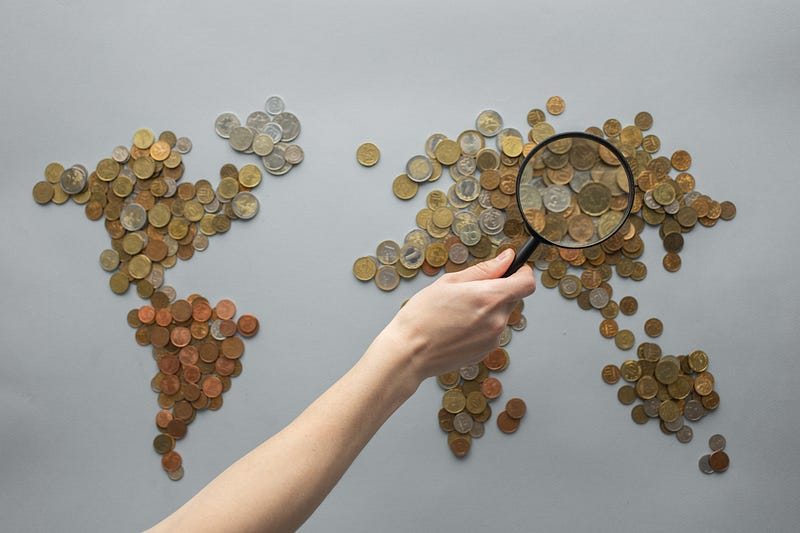
Photo by Monstera on Pexels


Maple Direct lending

The capital infusion was led by Blocktower Capital and Tioga Capital, with participation from supporters including GSR Ventures, Cherry Crypto, Veris Ventures, and Spartan Capital. This funding will not only facilitate Maple Finance’s expansion endeavors but will also fuel the growth of its newly introduced pure-play lending division, Maple Direct.

Maple Finance has spotted an opportunity that has opened up due to the collapse of lending giants like Genesis Lending, BlockFi, Voyager, and Celsius in the institutional lending space. In addition to its role as a platform for facilitating third-party pool creation, Maple Direct was launched in June. It offers overcollateralized loans secured by Bitcoin, Ethereum, and staked Ethereum as collateral.

Sydney Powell, the firm’s Co-Founder and CEO explained that Maple Direct is designed to offer an over-collateralized lending product transparently on-chain, providing a differentiated approach in the market. Unlike other platforms, borrowed collateral isn’t rehypothecated for yield generation; instead, it is securely held with a qualified custodian. This strategy positions Maple Finance to cater to market demand while minimizing risk.


Strategic expansion

Powell told TechCrunch: “I think now is the time to do that because all the other competition exited, and so that’s created this opportunity for us to step in and offer a product.” He expanded further on how the company is thinking strategically, relative to the expansion of the services it is now offering: “Other players try to focus on just trying to build the technology, kind of like Uber and Airbnb. What we’ve tried to do is to act as an underwriter so we need to show credit expertise. I think it gives us a little bit more control over the outcome and it’s a little bit closer to Apple in that it’s more vertically integrated.”


Pushing into Asia

The newly raised funds are earmarked for global expansion, with a particular focus on the Asia-Pacific (APAC) region. This is a strategic move, considering that several jurisdictions in APAC, such as Singapore and Hong Kong, have adopted pro-crypto regulations.

“In Asia, you have regulatory clarity, or rather, regulatory support, both coming out of Hong Kong and Singapore in terms of new legislation that’s come through, and you already have a very heavy trading focus over there,” Powell stated.

Maple’s product development is ongoing. Earlier this month, the company launched a Treasury Bill Pool that provides accredited investors with access to US Treasury Bills with what it claims is a “risk-free rate” of return, given that the pool generates a yield of 4.67%.


More to Read
View All
Policy & Regulation·

Jan 13, 2025

Bybit suspends services in India amid regulatory blowback

It’s been a tough couple of months for global crypto exchange, Bybit. Having had to leave the Malaysian market due to regulatory issues, the firm is now being forced to shutter its service in India for similar reasons.Photo by Naveed Ahmed on UnsplashWithdrawing services on January 12The exchange announced its withdrawal from the Indian market via a statement published to its website on Jan. 10. The service for Indian residents has been ceased from 08:00 UTC on Sunday, Jan. 12.  Account opening and crypto trading has been disabled. Furthermore, the ability to place market orders through other exchange products offered by the company has also been disabled. The ability for customers to withdraw fiat currency and digital assets remains in place. Achieving full complianceWhile the company is leaving the market, it has stated that its services are temporarily suspended in India. It cited a need to “operate in full compliance” as the firm’s primary objective relative to the Indian market. Elaborating on this, it stated:”We have taken this measure while we continue to work closely with the regulator to finalize our registration as a Virtual Digital Asset Service Provider in India, which we expect to secure in the coming weeks.” Malaysian market issueThe situation mirrors a similar set of circumstances that Bybit finds itself in relative to the Malaysian market. On Dec. 27, the Malaysian Securities Commission published a statement outlining details of an enforcement action it had taken against Bybit and the firm’s CEO, Ben Zhou.  In that instance, Bybit was directed to disable its service offering within the Malaysian market. The company indicated that it would return to the market once it had secured the necessary licensing. India hasn’t proven to be the most crypto-friendly jurisdiction to date. Indian crypto influencer R.K. Gupta took to the X social media platform, claiming that the government was at fault for Bybit having to withdraw from the Indian market. He stated: “Our country’s flawed policies are ruining crypto, while others aim for reserve currency status. Govt targeting exchanges, and now Bybit might stop services in India.” In December 2023, India’s Financial Intelligence Unit (FIU) took action to prevent unregistered overseas exchanges from operating within the Indian market. It issued compliance show-cause notices to nine exchanges at the time. Shortly afterwards, Apple India blocked access to these exchanges on the Indian Apple App Store.  While Bybit wasn’t amongst them, it is now being brought into line by Indian regulators. Back in September, it emerged that the FIU was considering requests to allow four offshore cryptocurrency exchanges to resume activity within the Indian market. Having been deemed to have come into compliance, Binance and KuCoin resumed activities in India in August 2024. Aside from Malaysia and India, Bybit has also encountered regulatory difficulties in Europe. Last August, it left the French market due to regulatory problems. In May 2022, the Autorité des Marchés Financiers (AMF), the French financial markets authority, blacklisted Bybit, warning investors that it wasn’t a registered digital asset service provider.  As part of that market withdrawal, Bybit collaborated with partner Coinhouse, a regulated French crypto-asset platform. Accounts holding assets above the value of 10 USDC were transferred to Coinhouse.

news
Web3 & Enterprise·

Jul 26, 2023

Bitget Achieves 20M Users With Wallet Integration Driving Trading Volume

Bitget Achieves 20M Users With Wallet Integration Driving Trading VolumeSeychelles-based cryptocurrency derivatives exchange, Bitget, has experienced remarkable growth in the first half of 2023 surpassing 20 million users, driven by the successful integration of its recently acquired self-custodial wallet service, now renamed Bitget Wallet.Photo by Mike Hindle on UnsplashTop four exchangeThe wallet integration has propelled Bitget into the ranks of the four largest cryptocurrency exchanges by trading volume.According to a second-quarter report by Beijing-headquartered crypto research firm TokenInsight, the top four exchanges collectively account for 85% of the total market trading volume. Binance dominates the market with a 52% share, followed by OKX (15.13%), Bybit (10.6%), and Bitget (8.1%), securing its position among the industry’s leading players.$60 billion spot trading volumeBitget’s Q2 report, released on July 18, revealed that the platform’s spot trading volume surpassed $60 billion, with futures trading reaching a staggering $606 billion. Notably, research by blockchain analytics firm Nansen showcased Bitget as the only exchange to witness an increase in futures trading volumes in the six months following the collapse of FTX.The exchange attributes part of its impressive Q2 performance to the introduction of copy trading, a feature enabling users to emulate the trading strategies of select traders. This innovation proved highly successful, attracting 29,700 new elite traders and 169,800 followers, generating $33 million in profits by mid-2023.Bitget, aligning with leading exchanges like Binance, has released its proof-of-reserves to assure users that it maintains reserves exceeding 100% of all assets on the platform, including Bitcoin (BTC), Ether, Tether, and USD Coin. At the time of publication, the exchange’s current reserve ratio, calculated by dividing the platform’s assets by users’ assets, stood at an impressive 223%. According to that data, the crypto platform is claiming a debt-free status for the business.Regional expansionAs part of its expansion strategy, Bitget has obtained virtual asset service provider registration in Poland and Lithuania in 2023, solidifying its presence in Europe. Additionally, the exchange has announced plans to establish a hub for its operations in that region.Last week, it announced that it was also targeting the Middle East and North Africa (MENA) as part of its expansion plans. To support that effort, it has opened an office in Dubai in the United Arab Emirates (UAE) and hired 60 employees with plans on hiring up to 60 more over the course of the next two years.Crypto loans have been an area that has seen major failures within the sector over the last couple of years. However, this isn’t holding Bitget back from getting involved. Earlier this month, it announced the launch of its crypto loans product, which is aimed at market participants who are seeking alternative funding solutions, backed by digital assets.With Bitget’s rebranding efforts following the BitKeep acquisition and its exceptional growth in user numbers and trading volumes, the exchange is making a concerted effort to position itself so as to effect a global expansion strategy. As the market evolves further, it will be interesting to see how the crypto trading market settles, given that there are now a number of firms in the space actively vying for that business.

news
Web3 & Enterprise·

Aug 22, 2025

Circle President visits Seoul for stablecoin talks with exchanges and central bank

Circle President Heath Tarbert, who oversees the issuer of the USDC stablecoin, arrived in Seoul on Aug. 21 for a series of meetings with South Korean cryptocurrency and blockchain industry leaders, as well as the governor of the country’s central bank. Citing industry sources, local outlet Newsis reported Tarbert visited three major exchanges, Upbit, Bithumb and Coinone, shortly after landing, spending roughly an hour at each. Discussions centered on recent developments in Korea’s digital asset ecosystem.Photo by Daniel Bernard on UnsplashGathering insight from exchangesThe trip underscores Circle’s growing interest in South Korea, one of the world’s largest crypto markets by trading volume despite its heavy tilt toward retail investors. Circle is reportedly seeking on-the-ground insight from local trading platforms. An executive from a research firm said the market offers an attractive foothold for global players looking to deepen networks. Previous reports indicated Circle has also begun informally recruiting in South Korea to support initiatives tailored to the local market, and the company is also weighing a direct investment in a domestic crypto firm. Homing in on stablecoinsStablecoins are expected to dominate the agenda with exchanges. USDC is the world’s second-largest stablecoin by market share, behind Tether’s USDT, and all three exchanges already support USDC trading. Upbit and Bithumb have meanwhile indicated their plans to develop Korean won–pegged tokens, recently filing trademark applications for their projects. Given Circle’s position in the sector, one exchange official said local platforms may look to the U.S.-based company as a benchmark, adding that practical knowledge-sharing could be the most meaningful outcome of Tarbert’s visit. Tarbert also attended a dinner with Simon Seojoon Kim, CEO of crypto venture firm Hashed, whose teams span Seoul, Singapore, Bengaluru, Silicon Valley and Abu Dhabi. Circle and Hashed have been in frequent contact, and the gathering offered another forum to exchange views on recent market developments. Talks with the central bank governorOn the policy front, Tarbert met with Bank of Korea (BOK) Governor Rhee Chang-yong at Circle’s request before the dinner. Rhee has signaled openness to the introduction of won-backed stablecoins, while emphasizing prudential safeguards and noting differences with some lawmakers on potential issuers. The BOK head has previously warned that allowing non-bank entities to issue won-backed stablecoins could pose risks, such as circumventing capital rules. The South Korean central bank is working with other agencies to develop a framework that ensures the stability and utility of stablecoins while preventing their use to bypass foreign exchange controls. The meeting between Tarbert and Governor Rhee likely covered regulatory parameters for cross-border remittances using stablecoins and avenues for public-private collaboration to foster a compliant won-stablecoin market. On the following day, Tarbert is slated to meet executives from four major financial groups: Shinhan Financial Group, Hana Financial Group, KB Financial Group and Woori Bank. Kakao Group, the company behind the KakaoTalk messaging app, is also on the itinerary. Representatives from its mobile payment platform, KakaoPay, are expected to take part in the discussions. The talks come as Kakao recently formed a task force to navigate Korea’s evolving stablecoin rules. Separately, Circle listed on the New York Stock Exchange (NYSE) earlier this year under the ticker “CRCL.” The initial public offering (IPO) priced at $31 a share and opened at $69, raising nearly $1.1 billion. As of Aug. 21, the stock closed at $131.80. 

news
Loading