Top

Rotonda and Bithumb META to Co-Host Next Block 2023 Conference for Web3 Collaborations

Web3 & Enterprise·August 11, 2023, 9:09 AM

Rotonda, a subsidiary of Korean crypto exchange Bithumb and the operator of the Web3 Burrito Wallet, and Bithumb META, the exchange’s metaverse subsidiary, said Friday they will jointly host the Next Block 2023 conference. The conference’s main objective is to explore new business collaboration opportunities in building a new ecosystem for accelerating Web3 projects.

“We are pleased to offer a space for interaction where virtual asset exchanges, wallets, and NFT marketplaces — which constitute the core infrastructure of the Web3 industry — can work together to set the stage for an innovative future of blockchain business,” a representative from Burrito Wallet said.
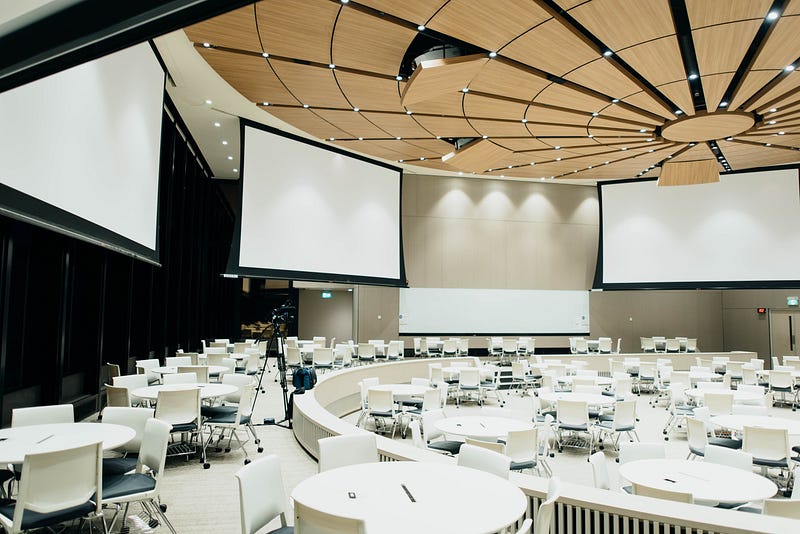
Photo by CHUTTERSNAP on Unsplash


Exploring Web3 and industry insights

The inaugural Next Block conference is scheduled for September 4 at Amoris Hall in Yeoksam GS Tower located in Seoul.

Bithumb is the main sponsor of the conference, and more than 15 companies from various sectors including decentralized finance (DeFi), Play-to-Earn (P2E) gaming, venture capital, and securities are set to attend. A total of ten companies will pitch business ideas, deliver keynote speeches, and participate in panel and networking sessions. Topics to be covered for the event include transitioning to Web3 and discovering new opportunities and paradigms through blockchain.

Junbo Yang, investment manager at Hong Kong’s HashKey Capital, and Kim Do-hyung, CEO of blockchain-based investment banking platform Finhaven, will deliver the keynote speeches, discussing the various perspectives of investment and security tokens. Companies like Property Heroes, Oasis, Mineral Hub, and more will participate in the panel discussions.


Key business opportunities

In particular, the companies that give business pitches will have the chance to present their business models directly to venture capitalists and key industry figures. They can subsequently gain access to broader networking and promotional possibilities.
More to Read
View All
Web3 & Enterprise·

Sep 29, 2023

Nomura Subsidiary Achieves In-Principle Approval in Abu Dhabi

Nomura Subsidiary Achieves In-Principle Approval in Abu DhabiThe digital assets subsidiary of Japanese financial services conglomerate Nomura has been granted in-principle approval by the Abu Dhabi Global Market (ADGM) to offer broker-dealer and asset/fund management services for both digital and traditional assets.Photo by Belinda Fewings on UnsplashPreliminary license to tradeThe development is a shot in the arm for Laser Digital Asset Management while serving to highlight Abu Dhabi’s growing prominence as a global center for digital assets, attracting prominent players such as Binance and Kraken.Led by CEO Jez Mohideen, Laser Digital is now on the path toward securing full financial services authorization in Abu Dhabi, subject to meeting undisclosed conditions specified in the approval. The company is enthusiastic about the ADGM’s transparent and comprehensive regulatory framework.Speaking to that, Mohideen stated: “We are thrilled to be part of their comprehensive and clear regulatory framework, which is creating a global hub for digital assets.”International free zoneThe ADGM, an international financial free zone situated in Abu Dhabi, covers nearly 15 square kilometers across two islands. It hosts a registration authority, regulatory authority, and a court system functioning under common law principles. This favorable regulatory ecosystem has been instrumental in attracting digital asset firms to establish a presence in the UAE’s capital.Laser Digital’s approval follows a series of recent cryptocurrency-related approvals in Abu Dhabi. Zodia Markets, backed by UK bank Standard Chartered, was recently granted permission to operate as a crypto broker, adding to the growing list of companies making strides in the region.Binance, one of the world’s largest cryptocurrency exchanges, received in-principle approval from the ADGM in April 2022 and subsequently obtained full financial services permission in November of the same year. Kraken, along with firms like UAE-based M2 and Bahrain-based Rain, have also received permissions to operate within the ADGM in recent years.Building on Dubai achievementLaser Digital’s approval in Abu Dhabi comes on the heels of its earlier achievement of obtaining an operating license from Dubai’s Virtual Asset Regulatory Authority (VARA). Alongside these regulatory milestones, Laser Digital introduced an institutional Bitcoin Adoption Fund in August. Despite its relatively short existence since its establishment in September 2022, the firm has made significant strides.Nomura’s engagement extends beyond Laser Digital, as it is also part of the Komainu joint venture alongside cryptocurrency firms CoinShares and Ledger. Komainu secured its operating license from Dubai’s VARA in August, contributing to the expanding community of crypto-focused businesses in the region.It is worth noting the UAE’s diversified approach to cryptocurrency regulation, offering five distinct regulatory regimes for cryptocurrencies, including the ADGM and VARA. Legal experts from White & Case have recently assessed these regulatory frameworks, highlighting the UAE’s commitment to fostering a progressive and well-regulated environment for digital assets.Nomura’s Laser Digital is well-positioned to play a pivotal role in the digital asset sector in Abu Dhabi, given that it’s leveraging the favorable regulatory environment of the ADGM and the UAE’s dedication to becoming a global digital asset hub.

news
Markets·

May 20, 2025

South Korea’s crypto market hits $968.5B in H2 2024 as Bitcoin rally lifts activity

South Korea’s cryptocurrency market experienced notable growth in the second half of 2024, as total trading volume climbed to 1.35 quadrillion won ($968.5 billion). This marks a 24% increase compared to the 1.09 quadrillion won ($782.7 billion) recorded in the first half of the year. The data was released on May 20 by the Financial Intelligence Unit (FIU), which operates under the Financial Supervisory Service (FSS).Photo by Daniel Bernard on UnsplashTrading volume and market cap surgeThe average daily trading volume rose by 22%, reaching 7.3 trillion won ($5.26 billion), with a significant surge observed after October. According to the financial authority’s report, this sustained momentum was driven by a broader bullish trend in the global crypto market, led by Bitcoin hitting all-time highs. Growing institutional interest following the launch of multiple spot Bitcoin ETFs in the U.S. and increasingly favorable crypto-related policies have further fueled the rise in asset prices. To evaluate the state of the domestic crypto market, the FIU conducted a survey of 25 virtual asset service providers (VASPs) during the second half of 2024. The survey covered 17 exchanges as well as eight entities providing either custodial or wallet services. By the end of 2024, South Korea’s total crypto market cap had surged to 107.7 trillion won ($77.55 billion), representing a 91% increase from 56.5 trillion won ($40.68 billion) in June. In contrast, the global crypto market grew by 60% over the same period, reaching a total of $3.59 trillion. However, the Korean market experienced a sharp decline in assets held by custodial and wallet service providers, which fell by 89% to 1.5 trillion won ($1.08 billion). This drop was largely attributed to a rise in business closures. Additionally, the number of users on these platforms plummeted by 99%, falling to just 1,300 customers who had completed Know Your Customer (KYC) verification. Performance and token preferencesDespite these setbacks, the 25 VASPs reported combined revenues of 1.22 trillion won ($878.5 million), marking a 15% increase. Operating profit also rose by 27% to 744.6 billion won ($536.2 million). However, capital adequacy weakened, with the capital-to-asset ratio falling by 12 percentage points to 36.5%. Meanwhile, Korean won deposits—cash held on platforms for trading—more than doubled, surging 114% to 10.7 trillion won ($7.7 billion). The number of employees at crypto exchanges increased by 18%, reaching 1,862, while staff dedicated to anti-money laundering (AML) efforts rose by 46% to 207 individuals. On average, fiat-to-crypto exchanges offered trading in 224 different tokens, an increase of 28 compared to the previous half-year. Among the top 10 cryptocurrencies by market cap in Korea, six—Bitcoin (BTC), Ethereum (ETH), Ripple (XRP), Solana (SOL), Dogecoin (DOGE) and Cardano (ADA)—also appeared in the global top 10. Collectively, these accounted for 71% of Korea’s total crypto market cap. However, the remaining four differed: Korean investors favored Ethereum Classic (ETC), Shiba Inu (SHIB), Stellar (XLM) and Bitcoin Cash (BCH), whereas global investors leaned toward Tether (USDT), Binance Coin (BNB), USD Coin (USDC) and TRON (TRX). User base growth and demographic trendsThe number of KYC-verified users eligible to trade reached 9.7 million in the second half of 2024, representing a 25% increase from the previous period. Individual users accounted for the vast majority, while corporate users made up less than 0.01% of the total. By age group, users in their 30s accounted for the largest share at 29%, followed by those in their 40s (27%), 20s and younger (19%), 50s (18%) and 60s and older (7%). The majority of users—66%, or roughly 6.37 million people—held less than 500,000 won ($360) in digital assets. In contrast, 12% of users held over 10 million won ($7,180), while 2.3% had portfolios exceeding 100 million won ($71,820). 

news
Policy & Regulation·

Jun 16, 2023

SEC Opposes Motion to Dismiss Terraform Labs Lawsuit

SEC Opposes Motion to Dismiss Terraform Labs LawsuitLawyers representing the United States Securities and Exchange Commission (SEC) have responded to a motion to dismiss the lawsuit filed by Dentons, the lawyers representing Singapore-based Terraform Labs and its Founder Do Kwon.Photo by Miguel Á. Padriñán on PexelsCourt filingAccording to its arguments, set out in a court filing lodged to the District Court of the Southern District of New York on Thursday, the SEC’s counsel claims that the additional documents provided by Dentons lack sufficient grounds for dismissing the case.It claims that the internal SEC emails presented by Dentons are irrelevant to the current lawsuit. The SEC asserts that the parameters of an “investment contract” are clearly defined by the Howey test and argue that TerraUSD ($UST) should be classified as a security.The reliance by US regulators on the Howey test, a legal test case that implicated citrus grove contracts that date back to 1946, has proven to be controversial. Naturally, there could have been no consideration of the digital innovation that digital assets present today almost eighty years ago. Notwithstanding that, the SEC maintains that the principle factors of what constitutes an investment contract are covered by the case regardless.During the court hearing held on June 15, Dentons submitted supplementary documents to strengthen their motion to dismiss the lawsuit. The primary focus of the hearing was to determine whether the digital assets developed by Terraform Labs should be categorized as securities based on the criteria of an “investment contract.”Dentons maintains that the algorithmic stablecoin, $UST, should not be considered a security and emphasizes its practical purpose rather than its classification as an investment contract. To support their motion, Dentons included additional documents such as the US House Financial Services Committee hearing on digital asset regulation and stablecoin issuance, the SEC’s request for a restraining order against Binance.US, and the Hinman emails from the SEC vs. Ripple lawsuit.Judge to decideThe defense lawyers highlighted what they perceive as a “regulatory gap” in classifying crypto assets as securities, particularly as the US Congress engages in discussions about regulatory frameworks for digital assets and stablecoin issuance. Furthermore, they argued that the SEC is exceeding the scope of securities laws and relying on internal emails related to “investment contracts” to determine the security status.A decision on the motion to dismiss will be arrived at by July 14. Judge Jed Rakoff, who is presiding over the case, will be responsible for that, once he’s weighed up the merits of the arguments presented by both parties.It is noteworthy that Dentons has previously represented Kwon in challenging the US SEC’s subpoena during the investigation of the Mirror Protocol in 2021, as well as in a class-action lawsuit in the Singapore High Court in 2022. The law firm also provides representation to Terraform Labs in other legal matters.In a separate development, the Basic Court in Podgorica, Montenegro, has granted bail for Kwon and former Terra Chief Technology Officer Han Chang-joon. However, Kwon has recently been taken into custody for extradition in Montenegro while the court deliberates on South Korea’s extradition request for the Terra founder.As the legal proceedings continue, the outcome of the motion to dismiss will have significant implications for the ongoing dispute between Terraform Labs, Do Kwon, and the SEC.

news
Loading