Top

QCP Capital: Bitcoin Has $34K Price Potential

Markets·August 16, 2023, 2:35 AM

Bitcoin’s potential for a significant price rally toward $34,000 has been discussed recently by analysts at QCP Capital, the Singapore-headquartered crypto asset trading firm. Despite Bitcoin’s recent lack of major volatility catalysts, QCP’s analysis suggests that a classic support rebound might trigger the return of the highest Bitcoin prices in over a year.
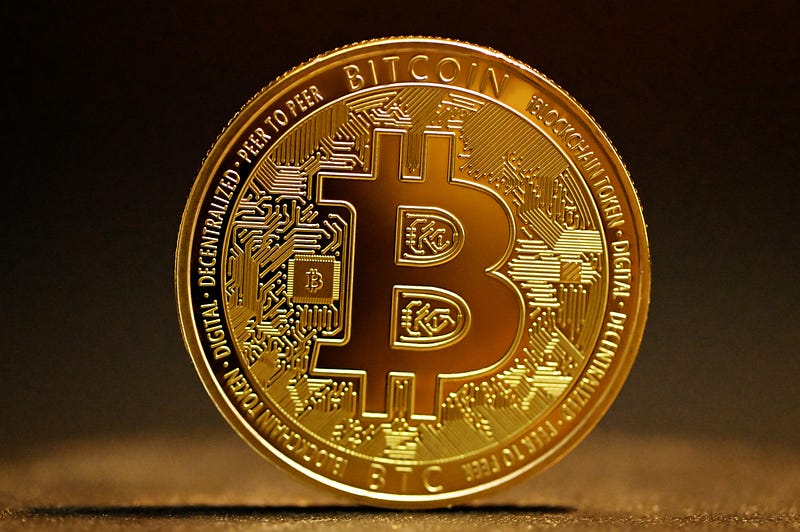
Photo by Kanchanara on Unsplash


Crucial price action time-frame

According to QCP Capital’s latest market update on Tuesday, the upcoming weeks are poised to be crucial for Bitcoin’s price action. The cryptocurrency has been range-bound for months, leaving market observers speculating about the emergence of a new market trend.

QCP Capital highlights September as a pivotal month due to the completion of a rising wedge pattern that started during the end of the 2022 bear market. This pattern has guided Bitcoin’s price movement, with the wedge reaching its first termination point at the beginning of September. The specific level of interest is $29,300, which aligns with the current focal point of the Bitcoin spot price.


Rally potential

The analysis ponders whether there will be a sharp rally that pushes the price to the $34,000 resistance level. This scenario has occurred three times this year, as the price kissed the support trendline. The report acknowledges that it might take a few more quiet weeks before the outcome becomes clear. The analysts expressed their intention to buy back their end of September short calls and anticipate going long on end of December volatility in due course.

QCP Capital’s perspective aligns with other optimistic views on Bitcoin’s short-term price strength. Some projections even suggest that the 2023 Bitcoin bull market might return by October, although the market sentiment is varied, with some cautioning about the possibility of new lows before a broader recovery.


Macroeconomic trends

Turning to macroeconomic trends, QCP Capital indicates that significant change is not on the immediate horizon, echoing the status quo in the crypto space. Comparing the current situation to the compressed trading environment of the crypto winter in 2018 and 2019, the analysis suggests that a macroeconomic shift would be required to reinvigorate the market, similar to what has happened in the past.

Bitcoin’s volatility has reached historic lows, as illustrated by data just published by on-chain market intelligence firm, Glassnode. While a game-changing macro environment shift isn’t imminent, there are short-term catalysts on the crypto calendar for the upcoming months.

These include events like Mt. Gox creditor payouts, the GBTC vs. Securities and Exchange Commission (SEC) lawsuit, potential SEC decisions on Blackrock/Fidelity’s Bitcoin spot ETF applications, and potential news related to centralized crypto exchanges and stablecoins.

The September deadline for comments on the initial Bitcoin spot price exchange-traded fund (ETF) applications is particularly noteworthy, as it’s widely seen as a turning point for the industry. Europe’s first Bitcoin spot ETF, which began trading on Tuesday, is being custodied by Fidelity Investments, marking another step in the maturation of the cryptocurrency market.
More to Read
View All
Web3 & Enterprise·

Jul 12, 2023

Circle CEO Sees Role for Yuan-Backed Stablecoins in Hong Kong

Circle CEO Sees Role for Yuan-Backed Stablecoins in Hong KongJeremy Allaire, the Co-Founder and CEO of Circle, the USDC stablecoin operator, expressed his acceptance of mainland China’s ban on cryptocurrencies. However, he remains optimistic about the development of Web3 technology in Hong Kong and the city’s monetary authority’s move towards regulating stablecoins.Photo by Mitchell Luo on UnsplashYuan internationalizationAllaire believes that Hong Kong must embrace digital assets to remain relevant in the global financial market. While he acknowledges that China is unlikely to open up its markets to cryptocurrencies, he sees potential for stablecoins to contribute to Beijing’s goal of yuan internationalization.During an interview with the South China Morning Post (SCMP), Allaire highlighted that major financial markets worldwide are embracing digital assets and that the biggest financial institutions are adopting them. He mentioned that there is Chinese government support for stablecoins, but he clarified that it doesn’t imply opening up crypto trading on the mainland. Allaire emphasized that stablecoins could be a more immediate solution to the Chinese government’s aim of internationalizing the yuan compared to the central bank digital currency (CBDC) e-CNY.Allaire cited the example of a stablecoin pegged to the offshore yuan (CNH) as a potential tool to facilitate the RMB’s use in global trade and commerce. He mentioned the existence of CNH Coin, a stablecoin team that also offers HKD Coin, pegged to the Hong Kong dollar.Virtual asset hubHong Kong is positioning itself as a global virtual asset hub by focusing on the regulation of stablecoins. The Hong Kong Monetary Authority (HKMA) has committed to implementing stablecoin regulations by 2024, recognizing the potential impact of such assets on financial markets. Additionally, the Securities and Futures Commission (SFC) is working on complementary regulations for stablecoins following the recent implementation of licensing rules for sellers of other cryptocurrencies.Circle’s USDC, the second-largest US dollar-backed stablecoin by market capitalization after Tether (USDT), is considered a “stored-value instrument” in the United States. Allaire expressed Circle’s encouragement regarding the HKMA’s plans and highlighted the positive motivation to expand their business in Hong Kong.While central banks worldwide have expressed concerns about stablecoins’ impact on financial stability, the HKMA has proposed that the value of reserve assets should match the outstanding stablecoins at all times. The HKMA has also been researching the possibility of a digital Hong Kong dollar and is part of a cross-border trial for the e-CNY using a blockchain known as the mBridge.CBDCs alongside stablecoinsRegarding the future role of stablecoins in a well-regulated environment alongside CBDCs, Allaire believes that CBDCs and private coins are complementary. He sees CBDCs as an upgrade to central banks’ systems and views the private sector’s work on innovation in distributed ledger technology as distinct and valuable.Allaire noted that Circle conducts significant business activity in Asia, particularly in Hong Kong, which is its largest non-US market, employing around 125 individuals.While mainland China maintains its ban on cryptocurrencies, Allaire remains optimistic about Hong Kong’s regulatory stance on stablecoins and believes they could contribute to the internationalization of the yuan. Allaire emphasized the importance of digital assets in the global financial market and expressed Circle’s support for Hong Kong’s initiatives.

news
Web3 & Enterprise·

Nov 09, 2023

Chinese tech firm pours $15 million into Bitcoin fund

Chinese tech firm pours $15 million into Bitcoin fundLinekong Interactive, a Beijing-based gaming and film production company listed on the Stock Exchange of Hong Kong (HKEX), has made a strategic move by earmarking $15 million for investment in projects designed to build on the Bitcoin network.Photo by Dmytro Demidko on UnsplashThe ‘BTC Next’ fundWang Fang, the founder of Linekong, took to X (formerly Twitter) on Wednesday to announce the establishment of the “BTC Next” fund. The fund’s primary goal is to fast-track the development of emerging projects within the Bitcoin ecosystem, spanning a wide range of areas, including asset issuance protocols, trading markets, expansion initiatives, virtual machines, NFT’s real-world asset (RWA) and GameFi.As part of its initial efforts, Linekong Interactive plans to actively engage in research and investment activities within the Bitcoin network’s ecological assets. The firm will also make its investment portfolios publicly available, enabling transparent visibility into its chosen projects within the Bitcoin ecosystem.Building on BitcoinThe idea of building out Web3 offerings on the Bitcoin network is one that has attracted considerable debate in recent years. Traditionally, Bitcoin has been recognized for its limited programmability in comparison to newer blockchains like Ethereum.Many see that as a feature and benefit. For the most part, Bitcoin has remained largely unchanged since its inception in 2008. A myriad of alternative blockchain projects started to emerge due to the frustrations of developers in wanting to have greater programmability options.However, the past year has seen significant developments within the Bitcoin ecosystem, thanks to the introduction of novel data storage methods known as Ordinals, Inscriptions and BRC-20 Bitcoin tokens modeled on Ethereum’s ERC-20 standard.Growing momentumIn May, Singapore’s OmniBOLT, a project that develops solutions on Bitcoin’s layer-2 network environment, outlined that it will support BRC-20 tokens on Lightning Network. In the same month, crypto exchange OKX announced its support for Bitcoin Ordinals and BRC-20 tokens.Established in 2007 as an online gaming company in Beijing, Linekong Interactive made its debut on the Hong Kong Stock Exchange in 2014. Wang Fang, prior to founding Linekong, served as the Vice President of Software Development at Kingsoft Software, a prominent Chinese information technology conglomerate.In 2018, Wang Fang stepped down as CEO of Linekong to dedicate his focus to blockchain technology. During this period, he initiated multiple projects implicating NFTs, DeFi and Bitcoin mining. In 2022, following an invitation from Linekong’s board of directors, he returned as CEO with the objective of achieving a more seamless integration of Linekong products with the emerging world of Web3.One community member provided a nuanced take on why there has been less development on Bitcoin on X today, stating:“It turns out you can actually do a lot of cool things within the constraints of #bitcoin’s code, but VCs [venture capitalists] weren’t interested in funding these things because they couldn’t cash out on the sale of unregistered security tokens. Fiat incentives at work.”Linekong Interactive’s $15 million investment in the Bitcoin ecosystem reflects a growing trend of interest in expanding the capabilities and applications of the Bitcoin network in spite of the incentives that venture capital firms may have followed in the overarching crypto space in the past.

news
Policy & Regulation·

Oct 31, 2023

Terraform Labs Co-Founder Daniel Shin Denies Wrongdoing in LUNA Collapse

Terraform Labs Co-Founder Daniel Shin Denies Wrongdoing in LUNA CollapseShin Hyun-seong, popularly known as Daniel Shin, has refuted accusations against him related to the $40 billion collapse of the stablecoin TerraUSD and its companion token, LUNA, according to a report by local news outlet Newspim. He presented this defense during his initial trial at the Seoul Southern District Court on October 30 (local time).Shin co-founded Terraform Labs, the company responsible for issuing TerraUSD and LUNA. His co-founder, Do Kwon, is currently serving a four-month prison sentence in Montenegro for passport forgery.Photo by Tingey Injury Law Firm on UnsplashProsecution’s allegationsKorean prosecutors allege that since 2018, Shin and his colleagues have concealed the fabricated nature of the “Terra project.” By manipulating trades and releasing misleading information, they purportedly misled investors into thinking the project was successful. It’s believed they sold off their tokens before the LUNA crash in May 2022, earning KRW 462.9 billion ($343.3 million) from these activities. They are suspected of personally taking KRW 376.9 billion from this amount.Prosecutors are focusing on Shin as the potential orchestrator of the LUNA crash. They speculate he began selling LUNA tokens around when Terraform Labs launched the Anchor Protocol in March 2021. This DeFi protocol increased the popularity and value of LUNA tokens. Before the crash, Shin is alleged to have gained at least KRW 154.1 billion.Defense argumentHowever, Shin’s legal team countered by asserting that Shin had cut ties with Kwon in 2020. They argued the decline of TerraUSD and LUNA was due to Kwon’s mishandling of the Anchor Protocol and an external attack, neither associated with Shin. Regarding the exploit, Terraform Labs has pursued legal action in the United States Southern District of Florida, claiming that American market maker Citadel Securities played a part in undermining TerraUSD in May 2022.Defending Shin, his lawyers emphasized that at the inception of the Terra project, there were no legal guidelines specifically for cryptocurrency transactions. Additionally, unlike Do Kwon who kept fleeing abroad, Shin willingly came back to Korea and has been cooperating with the investigation. They also noted he received only 32% of the 70 million LUNA tokens initially promised. Regarding classification, they stated LUNA isn’t legally recognized as a security.Shin’s lawyers further argued the prosecution hasn’t clearly identified victims or adequately outlined the components of fraud in this case. They said the prosecution’s case hinges on viewing LUNA as a security. However, Shin’s legal representatives maintained that under the Korean Capital Markets Act, LUNA isn’t a security, making its trades non-fraudulent.To counter a US court ruling the prosecution presented — that a token is a security — Shin’s defense highlighted that the verdict is from a lower court and remains contested. Earlier, prosecutors had cited a ruling from the United States Southern District Court of New York, which classified the XRP tokens sold to institutional investors as securities.

news
Loading