Top

Ripple and the Republic of Palau Collaborate to Mint First PSC Stablecoin

Policy & Regulation·July 27, 2023, 12:10 AM

In a groundbreaking partnership, the Republic of Palau has teamed up with Ripple Labs to introduce its inaugural stablecoin, the Palau Stablecoin (PSC).

This occasion was shared by Jay Hunter Anson, the Director of Palau’s Digital Residency Program and a member of Palau’s Ministry of Finance, who took to Twitter on Wednesday to shed light on the collaboration between the Palau National Treasury and Ripple Labs.

The event unfolded at the National Capitol in Ngerulmud, Palau, where representatives from both the Palau National Treasury and Ripple gathered to celebrate the successful launch of the Palau Stablecoin. Anson emphasized that this marks a significant step in their joint exploration of the stablecoin’s potential use cases within the Micronesian island nation.
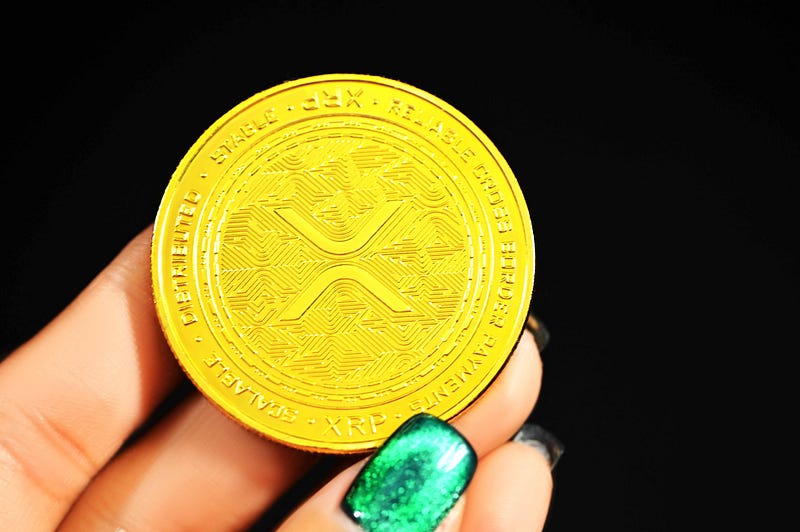
Photo by Kanchanara on Unsplash


Reducing payment costs

Palau’s Ministry of Finance initiated the Stablecoin project to address specific needs within the nation’s financial landscape. By sponsoring this project, the ministry aims to reduce payment costs within the Republic of Palau and enhance access to financial services, especially for underserved communities and various socio-economic groups, utilizing digital solutions.

Notably, the Palau Stablecoin operates on the XRP Ledger (XRPL), demonstrating Ripple’s technology as the backbone of this financial initiative.

Anson’s tweets also shed light on the meticulous approach taken in developing the Palau Stablecoin. Controlled and limited PSC pilot tests have been conducted to assess the effectiveness and efficiency of the solution co-designed with Ripple. These pilot experiments provide valuable insights into the stability and usability of the Palau Stablecoin before its potential public release.


Extensive testing

Already, the Palau Stablecoin pilot program has seen volunteer users actively participating in the testing phase. Videos shared by Anson on Twitter showcased smooth transactions at partner vendors in Palau, promptly confirming the transaction receipts.

The successful implementation of the Palau Stablecoin pilot program has drawn attention from the XRP community, and anticipation is building for the official joint press release scheduled for July 27, Thursday morning in Ngerulmud, Palau, as Anson revealed.

The collaboration between Ripple and the Republic of Palau was initiated at the end of 2021, with launch originally scheduled to take place in 2022. Ripple has claimed to be in dialogue with in excess of twenty governments relative to enabling central bank digital currency (CBDC) issuance.

Given that the island state lacks a functioning central bank and the US dollar is recognized as the primary medium of exchange throughout the country, the creation of a USD-backed stablecoin is a significant achievement resulting from the national stablecoin initiative. The president described this as a “step towards our own central bank digital currency.”

There has been plenty of activity in Micronesian nations relative to cryptocurrency in recent times. Tonga is understood to be considering introducing bitcoin as legal tender. The Marshall Islands is considering issuing a CBDC although it is being discouraged by the International Monetary Fund (IMF) in that endeavor. Meanwhile, the government of Vanuatu announced its support for the Satoshi Island project.

With a strategic focus on addressing financial needs and enhancing accessibility within Palau, this partnership sets the stage for a new era of digital financial solutions for the Micronesian nation.

More to Read
View All
Web3 & Enterprise·

Oct 11, 2023

Report by Xangle and Tiger Research Explores Indonesia’s Web3 Potential

Report by Xangle and Tiger Research Explores Indonesia’s Web3 PotentialIn partnership with South Korean crypto data platform Xangle, Web3 consulting firm Tiger Research has released a report focusing on the Web3 market in Indonesia. This collaborative project also featured contributions from Jakarta-based blockchain game provider Avarik Saga and Hong Kong-headquartered metaverse company Animoca Brands.In the process of crafting this paper, teams from Tiger Research, Xangle, Avarik Saga, and Animoca Brands spent a week in Indonesia, conducting interviews with local experts.Photo by Nick Agus Arya on UnsplashPositive factorsThe report assesses Indonesia’s Web3 market as having significant potential. It highlights factors such as the country’s status as the world’s fourth-largest population, a youthful demographic with a median age of 30, political stability, and favorable policies towards Web3 technologies. The Indonesian government has adopted a favorable approach to the Web3 industry, providing a range of incentives to boost the growth of the Web3 gaming sector. Additionally, they have taken the initiative to establish a dedicated committee for the blockchain sector within the Indonesia Financial Services Authority (OJK).Crypto exchanges driving growthAs per the report, the Indonesian market is primarily propelled by cryptocurrency exchanges, with over 30 exchanges currently in operation. These exchanges serve a customer base of approximately 10 million individuals, which accounts for around 4% of the country’s population. This is comparable to the number of investors on the Indonesia stock exchange.Several challengesMeanwhile, the paper also highlighted several areas where the world’s largest archipelagic state faces challenges. One of these challenges is its non-fungible token (NFT) market, which has seen a consistent decline in recent months, hitting an all-time low. It was found that most individuals prefer global NFT marketplaces over local ones. Furthermore, concerning the development of the Web3 ecosystem, the shortage of blockchain developers has prompted startups to seek development services overseas.

news
Web3 & Enterprise·

May 02, 2023

Binance Labs Invests in GOMBLE

Binance’s venture capital arm, Binance Labs, has made an investment in South Korean blockchain games developer, GOMBLE. Binance Labs is a division of the global crypto exchange entity that identifies, invests, and empowers viable blockchain entrepreneurs, startups and communities. In a blog post published by the company late last month, Binance Labs outlined that it has participated in funding GOMBLE at a seed funding round stage. GOMBLE  is an affiliate of South Korea-based 111Percent, a casual mobile game publisher. Sustainable blockchain gamingFor its part, GOMBLE’s objective is to enable the global casual gamer community to experience blockchain games through reward mechanisms that are sustainable. An additional focus for the project is advancing NFT interoperability, through the development of mobile-based blockchain.The start-up plans to use the funding in order to develop and release its first mobile game, RumbyStars. Furthermore, it will continue to pursue a games-as-a-service (GaaS) model, with funding also being used to expand that GaaS-based platform.While blockchain-based gaming had something of an initial breakthrough through the emergence of Axie Infinity, that success was secured with a focus on blockchain rather than gaming, attracting participation via a play-to-earn approach from those already focused primarily on blockchain. Subsequently, many have questioned the sustainability of this approach from the perspectives of gameplay and the tokenomics that support it. A $25 billion market opportunityGOMBLE is focusing on addressing these two factors through its approach. Casual games in the Web2 sphere have seen an uptick in popularity. The casual games sector has the potential to reach a $25 billion market volume within four years. Bringing that Web3 focus on enjoyable game play to Web3 gaming extends that opportunity to blockchain-based gaming.Additionally, GOMBLE is working towards mistakes made with blockchain based gaming tokenomics in the past. It will focus on more balanced tokenomics using its $CRT token for governance. $CRT can be earned by players through a tournament prize system. From the other perspective, it can be spent on NFT purchases, tournament passes and in buying in-game items.This is how Yi He, Head of Binance Labs interprets GOMBLE’s approach: “Blockchain gaming needs to move away from the concept of ‘earning’ to what truly captures the hearts of billions of gamers: entertaining gameplay. GOMBLE’s experienced team and focus on building engaging, social, and sustainable blockchain games with flexible governance offers a pathway for delivering the value of Web3 to existing casual gamers, thus welcoming new users to the BNB Chain ecosystem.” RumbyStarsThe blockchain gaming start-up is planning for a soft release of its first game, RumbyStars within SouthEast Asia in Q2, 2023. Following that limited regional launch, the project will then broaden the offering to North America, South America, East Asia and Europe.Gomble’s CEO Jihoon Byun said that “Unlike existing blockchain games that focus on core games, GOMBLE aims to target the global market with easy and fun casual games that even non-gamers can enjoy. Starting with RumbyStars, GOMBLE is focused on building to provide users around the world with a pleasant experience and a greater diversity of games in the future.”In order to execute on the roadmap the project has set out for itself, it will recruit more development and design manpower. Furthermore, investment will be made in infrastructure in order to enable real-time service.

news
Policy & Regulation·

Jun 27, 2025

Hong Kong releases ‘LEAP’ framework for digital assets

The Financial Services and the Treasury Bureau (FSTB), a policy bureau attached to the government of the special administrative region of Hong Kong, has released a new digital assets policy statement, incorporating its “LEAP” framework for the digital assets industry within the city. The document, outlining the government’s objectives and guiding principles relative to the digital assets sector, builds on its first policy statement for the industry which it published in October 2022.Photo by Harry Shum on PexelsA ‘LEAP’ towards an integrated digital assets ecosystemThe FSTB suggests that this new policy statement builds upon foundational initiatives pioneered through the initial policy statement, asserting that “Hong Kong is poised to 'LEAP' towards a trusted, sustainable, and deeply integrated [Digital Assets] ecosystem embedded within the real economy.” The government agency also suggested that this “Policy Statement 2.0” also builds on the “ASPIRe” digital asset regulatory roadmap introduced by the Securities and Futures Commission (SFC) in February, outlining the next phase of digital asset sector development in Hong Kong. Strengthening global hub statusThe government has set out to home in on strategic measures to bring about greater liquidity in digital asset markets and diversify digital asset product offerings, while strengthening the Chinese autonomous territory’s position as a global hub for the digital asset sector. “LEAP” is an acronym for the proposed initiatives that underpin the new framework, including: - Legal and regulatory streamlining- Expanding the suite of tokenized products- Advancing use cases and cross-sectoral collaboration- People and partnership development The framework focuses heavily on the tokenization of real-world assets (RWA), with particular emphasis on bond tokenization. In February 2023, Hong Kong pioneered the issuance of the world’s first-ever tokenized government green bond. Building on that, it now seeks to bring about the regularization of the issuance of tokenized government bonds. The Hong Kong government would also like to see tokenization efforts expanding into “a broader range of assets and financial instruments.” It cited sectors such as precious metals, non-ferrous metals and renewable energy as candidates for tokenization. Promoting tokenized ETFsThe authorities are also encouraging tokenized exchange-traded funds (ETFs), with plans to introduce a stamp duty waiver for these products as an incentive. Additionally, the Hong Kong government is interested in nurturing the development of secondary market trading of such tokenized ETF products, whether that’s through digital asset trading platforms or other channels. The framework considers the further development of stablecoins. The city’s new licensing regimen for stablecoin issuers commences on Aug. 1. The FSTB maintains that stablecoins have the potential “to transform payments, supply chain management, and capital market activities by offering a cost-effective and efficient alternative to traditional systems.” In order to capitalize on this potential, the Hong Kong government, together with the city’s regulators, intends to enable licensed stablecoin issuers in the city “to explore and implement different stablecoin use cases.” Cyberport, a Hong Kong business park and digital technology incubator that hosts in excess of 1,650 startups, will also extend its support through its incubation ecosystem to further the objectives set out in the Hong Kong government’s new digital assets policy statement.

news
Loading