Top

Netmarble’s Blockchain Platform Plans Tokenomics Overhaul for MBX Token

Web3 & Enterprise·June 27, 2023, 2:12 AM

Netmarble, a South Korean gaming company, announced today that its blockchain subsidiary MARBLEX revealed a plan to revamp the tokenomics of its native MBX token.


Fate of 670 million MBX

As part of this overhaul, MARBLEX will conduct a vote to determine whether to burn 670 million MBX tokens, which do not belong to the distribution plan. The total number of issued MBX tokens amounts to 1 billion.

The vote will be held on its Discord channel and the decentralized governance platform Snapshot. Participants eligible to vote are holders of Marbleship NFTs and MBX tokens. The final decision will be reached on July 10. If consensus is reached to burn the tokens, the specific burn schedule will be disclosed at a later date.

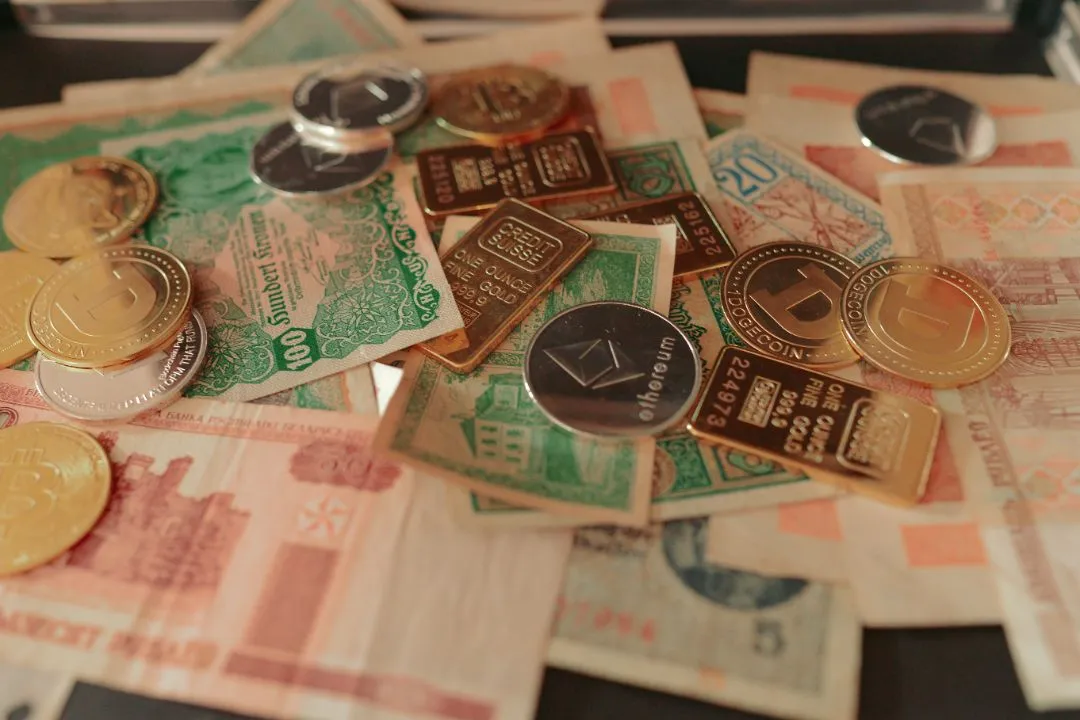
Photo by Sergio Vilches on Unsplash


Enhancing MBX utility

Starting from the third quarter of this year, MARBLEX plans to introduce an improved token burn policy and system. The aim is to expand the utility of the MBX token and establish an ecosystem that is sustainable, transparent, and reliable.

MARBLEX is a gaming blockchain ecosystem that offers users the opportunity to play games while earning and trading cryptocurrencies. The platform currently supports games such as A3: Still Alive, a battle royale MMORPG; Ni no Kuni: Cross Worlds, a fantasy MMORPG; and The King of Fighters ARENA, a fighting game.

According to Coinmarketcap, the MBX token is listed on six centralized cryptocurrency exchanges (Bithumb, Huobi, Bybit, Gate.io, MEXC, and Indodax) and Klayswap, a Klaytn-based decentralized exchange. Klaytn is an open source public blockchain developed by Korean social media giant Kakao Corp.

More to Read
View All
Web3 & Enterprise·

Jan 17, 2024

Binance Thailand launches exchange services to the public

Binance, in collaboration with Gulf Innova, a subsidiary of Gulf Energy Development, has officially opened its joint venture crypto exchange, Binance Thailand, for public trading. Challenging the market incumbentThis move had been eight months in the making, signaling Binance's entry into the Thai crypto exchange market, following an announcement in 2023 that it intended to extend its offering to Thailand. While Binance is the largest global crypto exchange platform, in Thailand it will be challenging the dominance of an incumbent exchange. Bitkub is based in Bangkok, currently holding around 77% of the market share, with a daily volume of approximately $30 million, primarily trading the Thai baht and Tether USDT pair.Photo by Sara Dubler on UnsplashRegulatory approvalThe launch comes after Binance received regulatory approval from the local Securities and Exchange Commission (SEC) in 2023. Initially introduced on an "invitation-only" basis, the exchange is now accessible to all eligible users, with Binance having followed through on its plans to expand its presence in the region. In a statement released on Tuesday, Binance TH announced the implementation of a dedicated order book tailored for Thai baht trading pairs. Users can seamlessly deposit and withdraw local currency through integration with domestic banking systems. Binance has managed to push its service offering forward in Thailand despite regulatory concerns. In the aftermath of the company’s $4.3 billion settlement in relation to securities law violations with the authorities in the United States in November, concerns had been expressed that the charges brought against the firm in the U.S. would challenge the feasibility of the Binance TH venture. At present, the platform focuses solely on spot trading, with a Binance spokesperson revealing ambitious long-term plans for additional services pending regulatory approvals. Nirun Fuwattananukul, CEO of Gulf Binance, expressed gratitude, stating:"We are deeply humbled to finally announce the launch of our local platform to the general public in Thailand. Over the past year, we have been working closely with Thai regulators, putting substantial effort into detailed planning." Binance TH facilitates digital asset exchange services, collaborating with local banks in Thailand in enabling its service offering. The exchange has also partnered with Binance Kazakhstan for brokerage services, operating under the supervision of Thailand’s SEC. Richard Teng, CEO of Binance, emphasized the strategic significance of the venture, stating:“This is a strategic step forward, setting the stage for Thailand’s impending role as a key player in the global digital finance landscape.” No access for foreignersOne limitation of the service pertains to foreign nationals. There is a restriction on access for foreigners residing in Thailand, as Binance TH requires a Thai National Digital ID to complete Know Your Customer procedures. Despite regulatory challenges and tax implications on overseas income from stock and crypto traders announced by the government in September 2023, Binance remains optimistic about the future of crypto trading in Thailand. The exchange released its themes for 2024 report on Jan. 15, outlining key growth areas such as the Bitcoin ecosystem, ownership economy applications, artificial intelligence, real-world assets, on-chain liquidity and institutional adoption.

news
Policy & Regulation·

Jun 18, 2025

Authorities promote Thailand as crypto hub through five-year tax break

Thailand’s Ministry of Finance has announced a new tax measure that will mean tax exemptions on crypto trading gains over a five-year period in an effort to promote the Southeast Asian country as a global crypto hub. According to a statement published to a government website publicizing the introduction of the measure, Deputy Finance Minister Julapun Amornvivat said that the tax break will apply to market participants in Thailand who trade digital assets through exchanges, brokers and dealers licensed under the Digital Assets Business B.E. 2561 legislation, from Jan. 1, 2025 through Dec. 31, 2029. The deputy minister believes that the new measure will put Thailand on the right footing in developing the crypto sector, while that sectoral development will be monitored all the while by the Thai regulator, the Securities and Exchange Commission (SEC).  Amornvivat is conscious of a need to balance nurturing the crypto sector with full compliance in terms of anti-money laundering (AML) policies, in line with international practice as set out by the Financial Action Task Force (FATF).Photo by Kaboompics.com on PexelsGreater transparencyThe deputy minister also confirmed upcoming changes that would lead to greater transparency. He stated:”The Revenue Department is in the process of implementing the OECD’s Crypto-Asset Reporting Framework (CARF), which is an exchange of digital asset data with countries around the world, which will make digital asset transactions more transparent.” Taking to X, Amornvivat claimed that the policy aligns with OECD standards, and said it "is another important step in raising the economic potential of [Thailand] and is an opportunity for Thai entrepreneurs to grow on the world stage." This is not the first time the Thai authorities have looked at crypto-related taxation. Back in March the government approved a tax break targeting investors who generated capital gains from holding investment tokens. At that time, it was outlined that the government wanted to incentivize the use of investment tokens for fundraising purposes. In the medium term, Amornvivat believes that these measures will lead to growth in the overall Thai economy and an increase in tax revenue by approximately one billion baht ($30.6 million). Bitkub, Thailand’s largest crypto exchange, didn’t waste any time in responding to the development. On X, it advised its user base that “the wait is over,” with tax-free trading now possible on the platform. Competing global centersAssad Dar, a founder of Dubai-based Web3 gaming startups OYA Play and MoonGaming, took to social media to draw attention to the development in the context of initiatives being taken elsewhere to drive crypto. He described Thailand’s five-year tax break as a “big move,” while considering incentives offered in places like Dubai and Pakistan recently. He added:”Each place is trying to support crypto in its own way.” While competition around the world heats up to attract more crypto-related development and business activity, some fear getting left behind. Indian crypto influencer Rananjay Singh noted this latest development in Thailand while pointing out that crypto market participants in India still have to pay 30% tax on crypto-related capital gains as well as 1% tax deducted at source (TDS). 

news
Policy & Regulation·

May 31, 2023

Bank of Japan Publishes Results of CBDC PoC

Bank of Japan Publishes Results of CBDC PoCThe Bank of Japan (BoJ) recently concluded the second phase of its central bank digital currency (CBDC) proof of concept (PoC) project, which began in April. The results of this phase were published on Monday, and they shed light on key aspects such as the comparison between account-based and token-based CBDCs and the management of holding limits for users with multiple accounts.Photo by Manuel Cosentino on UnsplashToken-based CBDCsThe experiments conducted by the central bank covered a wide range of topics. Among the most intriguing findings were the advantages and disadvantages of token-based CBDCs and how to effectively impose holding limits for users with multiple CBDC balances.Token-based CBDCs have garnered interest from various central banks, with some adopting the UTXO token model used by Bitcoin without the use of a distributed ledger. A UTXO or unspent transaction output, defines where a blockchain transaction starts and finishes. The Bank of Japan explored this model and analyzed its pros and cons.In the initial proof of concept, both account-based and token-based CBDCs were examined, considering scenarios where the central bank managed the ledger or shared it with intermediaries like banks. In the token-based model, fixed token denominations were used, similar to physical cash in countries like India, and a centralized ledger was employed. However, in the recent phase, the central bank utilized flexible value tokens similar to UTXO and shared ledger functions with intermediaries.The Bank of Japan favored the flexible value token model due to its ability to handle multiple requests simultaneously. However, it acknowledged that this model may require more technical resources compared to the account-based approach. Challenges may arise when implementing additional functions, such as holding limits, while maintaining optimal performance. The European Central Bank (ECB) also noted in a recent report that most payment providers are accustomed to account-based payments and would incur costs to adapt to token-based systems.Another significant aspect explored by the BoJ was how to impose holding limits when users have multiple CBDC balances through different intermediaries. The challenge lies in determining if the overall holding limit has been breached without compromising user privacy.Homomorphic encryptionOne possible solution discussed in the report is the use of homomorphic encryption, which enables computations to be performed on encrypted data without it first needing to be decrypted. That allows for the necessary checks without intermediaries accessing the specific data being checked. Although this solution may slightly increase processing time, it could introduce a higher risk of data inconsistencies.Alternatively, a simpler approach proposed by the central bank is to establish a per-account holding limit and a limit on the number of accounts a single user can hold, rather than imposing global limits. Ideally, users with multiple accounts would have a higher per-account holding limit compared to those with fewer accounts.Phase 3 underwayWith the next pilot phase already underway, the BoJ aims to test the end-to-end process flow and identify challenges related to integrating with external systems. Additionally, they are creating a CBDC Forum to gather input from the private sector, ensuring a collaborative approach to CBDC development.While investigation and research into CBDCs continues, the BoJ has said that it will make a final decision on CBDC implementation by 2026.

news
Loading