Top

Academia, Industry Collaborate on Crypto Accounting Research in Korea

Web3 & Enterprise·June 21, 2023, 8:14 AM

The Korean Accounting Association (KAA) and Samil PwC, the South Korean member firm of global accounting company PwC, have joined forces to conduct collaborative research on accounting for cryptocurrency assets, according to a report by local news outlet Maeil Business Newspaper.
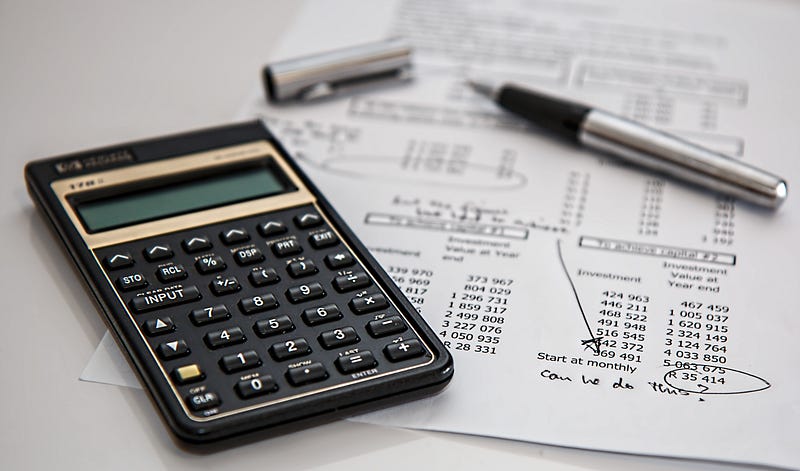
Photo by Pixabay on Pexels


Collaborative efforts

Under this newly formed partnership, the KAA’s crypto asset committee will work closely with Samil PwC to explore a wide range of crypto assets, facilitate the development of financial statements pertaining to these assets for businesses, and implement accounting policies that align with the characteristics of cryptocurrencies.

Leading the crypto asset committee is Roh Hee-chun from Soongsil University, while Partner Lee Jae-hyeok from Samil PwC will participate in the study. Until 2028, this collaboration is poised to yield insights and findings on crypto asset accounting.


First seminar

The committee is set to hold its first seminar on June 27, serving as a platform for knowledge exchange and fostering deeper understanding among industry professionals. Furthermore, the accountants involved anticipate publishing a paper in an academic journal next year.

PwC’s Assurance Leader Oh Kee-won emphasized the accounting firm’s commitment to leveraging its extensive resources in order to produce outcomes that positively impact society.

Meanwhile, KAA President-elect Kim Gap-soon highlighted the relative novelty of crypto asset accounting, acknowledging that there is much ground to be covered. The association aims to establish a solid foundation that offers optimal guidance in the field of crypto asset accounting.

More to Read
View All
Web3 & Enterprise·

Sep 02, 2023

TRYB Emerges as Turkish Alternative to Dollar-Pegged Stablecoins

TRYB Emerges as Turkish Alternative to Dollar-Pegged StablecoinsIn a market typically dominated by dollar-backed stablecoins like Tether (USDT) and USD Coin (USDC), a new player has emerged in Turkey to operate alongside those dominant stablecoins.According to a report by CoinDesk on Friday, BiLira’s TRYB stablecoin, pegged to the Turkish lira (TRY), has rapidly climbed the ranks to become the world’s second-largest non-US dollar-pegged stablecoin. It currently trails Tether’s euro-pegged EURt, which according to Coingecko data, currently holds a market cap of $221 million. In just three weeks, TRYB has skyrocketed, quadrupling its market cap to $136.10 million.Photo by Oleksandr P on PexelsMarket cap volatilityHowever, TRYB's market cap had fallen off a cliff on Friday, dropping from $135 million earlier in the day to $40 million. TRYB, an Ethereum-based stablecoin, offers a unique proposition in that it is pegged to the Turkish lira, allowing users to exchange 1 TRYB for 1 TRY. The stablecoin offering, which is administered by Istanbul-based BiLira, is underpinned by 100% fiat reserves held in Turkish banks.The Turkish lira has earned its reputation as one of the most volatile fiat currencies globally, often experiencing fluctuations against the US dollar. Over the course of the last five years, the currency has lost 94% of its value when benchmarked against the performance of the US dollar.In response to this volatility, TRYB has found its purpose as a medium of exchange. It can act as a gateway to transition user’s Turkish lira into cryptocurrencies and vice versa. This trend aligns with the global use of stablecoins as the foundation of crypto trading pairs, providing traders with a stable asset while sidestepping fiat currency’s unpredictability.Exiting the liraThe US Federal Reserve acknowledged the significance of stablecoins in December 2022, highlighting their role in facilitating crypto trades, serving as collateral for crypto loans, and minimizing inefficiencies tied to fiat-to-crypto conversions. In fact, stablecoins account for over 80% of the trading volume on centralized exchanges, attesting to their pivotal role in the crypto ecosystem.It’s likely that the Lira-pegged stablecoin will act as a means to access other cryptocurrencies and US dollar-pegged stablecoins like USDT and USDC, rather than be considered as a rival or replacement. That’s by virtue of the ongoing difficulties of the Turkish sovereign currency which it tracks. So long as the lira continues to erode in terms of buying power, it’s likely that citizens will be looking for avenues to escape from that erosion of value.Increased interest in cryptoGiven this monetary backdrop in Turkey, it shouldn’t surprise anyone to learn that interest in crypto is on the rise. In a recent report published by Seychelles-based cryptocurrency exchange KuCoin earlier this week, a significant increase in the number of crypto investors in Turkey over the course of the past eighteen months has been identified.The report found that 52% of the adult Turkish population have participated in crypto-related investments. Over the past 18 months, the number of Turkish adults embracing crypto has risen to that 52% level from 40%.

news
Web3 & Enterprise·

May 12, 2025

Grab partners with Solana ecosystem DePIN project to enhance mapping

NATIX Network, an open geospatial intelligence network built upon proprietary AI technology, has partnered with Southeast Asian superapp Grab to collaborate on autonomous driving technology and mapping. NATIX is a decentralized physical infrastructure network (DePIN) project that exists within the Solana ecosystem. Singapore-headquartered Grab offers a broad range of services via its app, including ride-hailing, package delivery and food delivery. Additionally, the firm offers mobile payments and insurance products.Photo by Afif Ramdhasuma on UnsplashReshaping the mapping industryIn a blog post published to its website on May 6, NATIX outlined that the strategic partnership has been formed with a view towards reshaping the mapping industry. It explained that the objective in this regard would be to combine Grab’s camera hardware and its AI-based map-making software stack with NATIX’s decentralized blockchain-powered mapping data.  Due to the nature of the services that it has offered in Southeast Asia since it was founded in 2012, Grab has, through necessity, become involved in mapping to enhance its service delivery. As a consequence, it has developed a suite of cameras including its KartaCam, a small action camera which can be mounted on bike helmets or car windshields, and a 360-degree standalone camera, KartaCam 2, with built-in sensors, AI image optimization and GPS capabilities. ‘Internet of Cameras’For its part, NATIX claims to have built the world’s largest on-street camera network. As part of the collaboration, NATIX will use Grab’s hardware and software technology to expand its “Internet of Cameras.” Posting on LinkedIn, GrabMaps set out its thoughts on the partnership, stating:”By combining GrabMaps' AI-powered mapping technology with NATIX's decentralised data network, we're enabling real-time, high-fidelity map updates across the globe. As part of this collaboration, NATIX will launch VX360, a device built on Grab's hardware platform that allows Tesla drivers to collect and share 360° vehicle imagery.” Appearing on the Unleashing DePIN podcast recently, NATIX Co-Founder and CEO Alireza Ghods outlined that NATIX will launch VX360, a proprietary device built by leveraging Grab’s existing hardware. He explained that this collaboration saves NATIX in terms of overall project cost and months of R&D, all of which enables it to get to market faster.VX360 enables Tesla drivers to capture and share 360-degree imagery.  Future potentialGhods spoke to the additional future potential that the collaboration holds: “The interesting part is that they have other types of devices as well, they have a dashcam, a 360 camera, and our plan is to definitely integrate all of this into our map making and data collection pipeline.” This is not the first partnership that GrabMaps has established related to mapping. Previously it formed collaborations with Microsoft’s Bing Maps, navigation and mapping app Mappls and location data specialist Loqate.  Ghods believes that NATIX can go one better than centralized mapping projects like TomTom and Google Street View. He told Cointelegraph that “a blockchain-based incentivization system provides better results in terms of frequency, participation, and coverage.” The NATIX co-founder asserted that such data can be gathered at a fraction of the cost via users’ devices.

news
Web3 & Enterprise·

Oct 14, 2025

Circle sticks with dollar, euro stablecoins as Hong Kong’s crypto scene matures

Financial technology firm Circle is taking a measured approach in Hong Kong, favoring focus over expansion. In an interview with the Hong Kong Economic Journal, cited by local financial content provider AAStocks, Yam Ki Chan, the company’s vice president for Asia Pacific, said there are no current plans to issue a stablecoin pegged to the Hong Kong dollar. Still, he noted the company’s openness to partnering with local initiatives, adding that Circle has been in discussions with several firms to share its expertise and insights. The firm hopes the Chinese special administrative region will evolve into a launchpad for stablecoins tied to the local currency alongside other major currencies. Chan said Circle is doubling down on its two core products, the U.S. dollar stablecoin USDC and the euro stablecoin EURC. He pointed out that USDC has been catching on across the region, with more local corporations and professional investors starting to use it. His comments come after the Stablecoins Ordinance came into force on Aug. 1 in the city, setting up a mandatory licensing system for issuers under the Hong Kong Monetary Authority (HKMA). The regulator has said it does not plan to hand out the first licenses until early next year.Photo by tommao wang on UnsplashMoving assets on-chainWhile Circle continues to focus on stablecoins, other firms are finding new ways to bring traditional assets on-chain. DL Holdings, a Hong Kong-headquartered one-stop financial services group, is moving ahead with plans to tokenize about $40 million worth of its non-voting Class B membership interest in ONE Carmel, its luxury real estate investment project in California’s San Francisco Bay Area. The initiative, the firm’s first step into real-world asset (RWA) tokenization, will use blockchain-based smart contracts to automate distributions, transfers, and investor rights, allowing the company to pay out dividends to shareholders and give on-chain investors a chance to participate in ONE Carmel. Insurance is another testbed for blockchain. Anthea Holding Limited, a crypto-fintech licensed by the Bermuda Monetary Authority, raised $22 million in a Series A led by Yunfeng Financial. The proceeds will fund what Anthea says is the world’s first life insurance policy denominated in Ethereum (ETH). Yunfeng Financial, listed in Hong Kong, has close ties to Alibaba founder Jack Ma. Mainland firms deepen crypto exposureMainland companies are stepping into crypto investments. Hangzhou-based Jiuzi Holdings, a Nasdaq-listed operator of new energy vehicle stores, said it completed a private placement transaction settled in 100 Bitcoin. The company plans to allocate the proceeds to building a digital-asset custody platform and developing encrypted storage systems. Separately, China Renaissance is seeking to raise around $600 million for a publicly listed vehicle designed to invest in BNB, the cryptocurrency tied to Binance, according to Bloomberg. Venture firm YZi Labs, formerly Binance Labs, is expected to join the effort. In an August filing, the Beijing-based investment bank said it would commit about $100 million of its own capital to BNB. If completed, the proceeds would establish a U.S.-based crypto treasury company to hold and manage BNB reserves. Back in Hong Kong, momentum in the digital asset sector is now reaching the capital markets. HashKey Group, the financial services firm behind a licensed crypto exchange, has confidentially filed for an initial public offering in the city. Bloomberg reported the plan, citing a source familiar with the matter. The listing could take place as early as this year and raise up to $500 million. Market bounces back on softer trade rhetoricAmid these developments, crypto prices have rebounded from sharp losses linked to trade tensions between Washington and Beijing. The market had tumbled after U.S. President Donald Trump threatened to impose additional 100% tariffs on China. Sentiment shifted when Trump softened his stance on Truth Social, writing, “Don’t worry about China, it will all be fine!” and “The U.S.A. wants to help China, not hurt it!!!” Bitcoin reflected that whiplash. The token dropped to $103,893.3 on Oct. 10 during what Investing.com described as the largest single-day liquidation in crypto history at nearly $19 billion in positions. It has since recovered to $112,608.31 as of publication time. 

news
Loading