Top

Crypto.com Scores MPI License in Singapore

Policy & Regulation·June 02, 2023, 1:32 AM

In a significant move for the Web3 industry, the Monetary Authority of Singapore (MAS) has granted online crypto trading platform, Crypto.com, a Major Payment Institution (MPI) license. This regulatory development showcases Singapore’s commitment to welcoming innovation and embracing the potential of the Web3 sector.
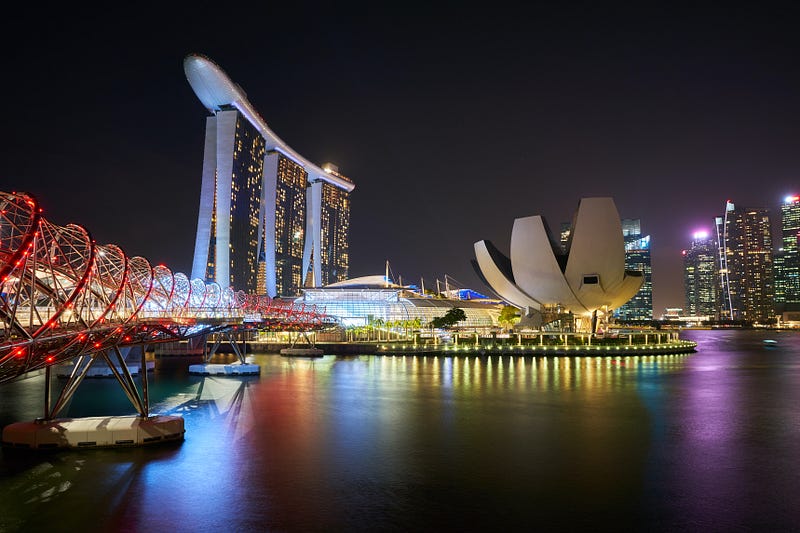
Photo by Timo Volz on Pexels


Licensing milestone

Crypto.com made the exciting announcement on Thursday, revealing that it has received the MPI license from the MAS, the country’s central bank and financial regulator. With this license in hand, Crypto.com can now provide its Digital Payment Token (DPT) services to residents of Singapore.

This achievement follows the in-principle approvals granted to Crypto.com by the MAS in June of the previous year, further highlighting the company’s adherence to regulatory standards and its dedication to operating within the guidelines set by financial authorities.


Community reaction

The news of the license has garnered positive reactions within the crypto community. Many members see the Singaporean government’s decision as a significant endorsement of the Web3 industry. ‘Aravind,’ a Twitter user, expressed this sentiment, stating, “Singapore government giving out a license is itself a massive plus for the Web3 Industry,” adding that it's probable the process to obtain the license has been hard fought, and likely two years in the making.

Interestingly, another community member drew comparisons between Crypto.com’s successes and the challenges faced by global crypto exchange, Binance. While Binance has encountered difficulties in various jurisdictions, Crypto.com has been praised for its steady progress and forward-looking approach.

Yet another Twitter user chimed in along similar lines, stating: “Whilst Binance seems to be losing ground, Crypto.com seems to be slowly doing things right and building for the future.”

Binance has recently faced setbacks, such as its diminishing presence in the Australian and Canadian markets and trading restrictions imposed in certain European countries. Reports have even surfaced suggesting that Binance plans to lay off 20% of its staff in June.

However, it’s important to note that Binance has not given up, as evidenced by its recent expansion into Thailand, where it established a regulatory-compliant platform. The exchange has also taken steps to ensure compliance in Japan through the creation of another regulatory-compliant platform.


Additional licenses

Crypto.com has set up its headquarters in Singapore, and it is in good company there with leading crypto firms Kraken and Coinbase also maintaining offices in the city state. The company has taken a truly global strategy, having marketed heavily in recent years. It maintains offices in nine other locations, including Miami, Dublin, London, Seoul, Malta, Sofia, Hong Kong and Shenzhen, as well as Kadıköy in Turkey.

The crypto trading platform has received a Minimal Viable Product (MVP) preparatory license from the Virtual Assets Regulatory Authority (VARA) in Dubai, alongside firms like Komainu, Hex Trust, and GC Exchange. The company has also successfully pursued digital asset licensing in France, Australia, and the United Kingdom.

Crypto.com’s acquisition of the MPI license in Singapore marks a significant milestone for the company and the broader Web3 industry. With Singapore embracing innovation and offering a favorable regulatory environment, Crypto.com is well-positioned to continue its growth and contribute to the advancement of the digital payment token ecosystem.


More to Read
View All
Policy & Regulation·

Nov 22, 2023

Upbit procures ISO 22301 certification

Upbit procures ISO 22301 certificationDunamu, the blockchain and fintech firm that operates South Korea’s largest crypto exchange Upbit, announced Wednesday (local time) that Upbit has obtained the ISO 22301 certification, an international standard for security and resilience that evaluates a company’s business continuity management system (BCMS) based on its ability to protect against and respond to disruptive events. The firm disclosed that it acquired the certification from the U.S. International Accreditation Service (IAS) on Nov. 6.Photo by John Salzarulo on UnsplashNavigating risk managementMore specifically, the ISO 22301 certification evaluates a company’s ability to maintain uninterrupted and stable business operations through the prevention, response and recovery in the event of accidents, man-made or natural disasters and more. It offers several benefits for companies, such as proof of compliance with legal requirements, which serves as a marketing advantage, and the prevention of large-scale damage.To obtain the certification, companies must prepare in advance for unexpected disruptions by analyzing the level of impact that such events can have on business operations and the amount of time needed to recover, then put relevant policies in place to facilitate recovery. To maintain the certification, enterprises must also undergo an annual follow-up audit and a renewal audit every three years.Commitment to business resilience“We obtained the certification to protect user assets and provide safe services that do not stop in the face of external influences,” Dunamu said, emphasizing its commitment to enhancing service reliability and protecting investors. “We will not stop our efforts to become the most trusted cryptocurrency exchange.”Upbit has previously acquired other ISO certifications, such as the ISO 27001 for information security; the ISO 27017 for information security in cloud computing; and the ISO 27701 for privacy management. The exchange also obtained ISMS-P in 2021, a certificate administered by Korea’s Ministry of Science and ICT and Personal Information Protection Commission for information security and personal information management.

news
Web3 & Enterprise·

Apr 28, 2023

Amber Group Targets Trust in Web3 Via Thoughtworks Partnership

Amber Group Targets Trust in Web3 Via Thoughtworks PartnershipSingapore-based Amber Group, a leading digital asset service provider in crypto-related infrastructure, products and trading, has announced a partnership with global technology consultancy Thoughtworks.© Pexels/Palu MalerbaAI-led product offeringThe strategic partnership has been formed between the two entities in an effort to develop innovative security solutions that can enhance transparency and trust in Web3. It’s envisaged that in meeting this objective, product development will rely heavily on artificial intelligence-based technology.In a press release on Wednesday, Amber Group’s Head of Web3 Security, Dr. Chiachih Wu, said that the partnership allows the firm to provide its clients with “even more comprehensive and cutting-edge security solutions, such as automated software testing and AI-powered vulnerability detection.”Leveraging software design and security expertiseSong Zhang, Global Service Lines Lead at Thoughtworks believes that in order to advance the development of a next-gen internet, Web3 has to use “sophisticated engineering practices and scientific methods to address crucial issues caused by decentralization.” Zhang cites issues such as compliance, privacy and security. He believes that through the collaboration both firms can contribute to leverage their respective software design and security expertise, and in that way, tackle these challenges.“By using new technology and tools, we aim to create applications and new standards that promote the construction of a healthy, transparent, open, inclusive and responsible Web3 ecosystem,” he stated.Strategic realignmentThis is not the first strategic departure Amber Group has taken recently. Earlier this month the Singapore-based firm was said to be mulling over the sale of its Japanese crypto lending subsidiary. It’s understood that the proposed move would help the company to streamline its operations and focus on its core markets.Launched in 2018 as a joint venture with Japanese financial services conglomerate SBI Group, the Amber Japan crypto lending business had failed to gain traction in a difficult Japanese market.The firm acts as a liquidity provider, miner and validator on over 70 digital asset exchanges, applications and networks. Earlier this year it took the decision to cut headcount, in the process reducing staffing at its Hong Kong office by 40. Last December the firm shuttered WhaleFin, its crypto exchange business.The collapse of crypto exchange FTX in November 2022 had a knock-on effect on some of the firm’s products and customers. 10% of its trading capital was held with FTX when the exchange collapsed. Additionally, a number of the firm’s products would have experienced significant drawdowns without the company taking action. In response, Amber raised $300 million in a Series C funding round to overcome that challenge.Those events are likely to have been key in terms of the company subsequently taking a strategic approach of focusing on core business operations and partnerships like this one that it has just announced with Thoughtworks. Undeterred by the challenges, the company still focuses on becoming a category leader in the industry.

news
Web3 & Enterprise·

May 29, 2023

Temasek Cuts Pay Following FTX Autopsy

Temasek Cuts Pay Following FTX AutopsySingaporean state-owned investment firm, Temasek Holdings, has announced a reduction in compensation for executives responsible for the company’s investment in the now-defunct cryptocurrency exchange FTX. Temasek, once the second-largest outside investor in FTX, faced scrutiny after the collapse of the exchange.Photo by Emilio Takas on UnsplashNo misconduct findingOn May 29, Temasek released a statement confirming the completion of its internal review of the $275 million investment loss incurred from FTX. The review determined that there was “no misconduct” within the company. However, both the investment team and senior management took “collective accountability” and experienced a reduction in their compensation.While acknowledging the inherent risks associated with any investment, Temasek emphasized the importance of continuing to invest in new sectors and emerging technologies to understand their potential impact on the business and financial models of existing portfolios. They recognized the need to adapt to an ever-changing world and explore avenues that could drive future value.It’s worth noting that the $275 million loss from the FTX investment constituted only 0.09% of Temasek’s portfolio value, which stood at over $293 billion at the time of the collapse.Temasek maintained that it conducted extensive due diligence before investing in FTX, emphasizing its commitment to a thorough review process. Chairman Lim Boon Heng stated in a May 29 interview with Bloomberg that there was fraudulent conduct intentionally hidden from investors, including Temasek. The negative outcome of the investment has been disappointing for the company and has had a significant impact on its reputation.Reputational damageSingapore Deputy Prime Minister Lawrence Wong echoed similar sentiments, highlighting the financial loss and reputational damage caused by the FTX collapse during a parliamentary meeting in November 2022.During the due diligence process, Temasek reviewed FTX’s financial statements, assessed regulatory risks related to financial service providers in the cryptocurrency market, and sought legal advice. The company also engaged with individuals who had firsthand knowledge of FTX, including employees, investors, and industry participants.In recent news, Temasek addressed and dismissed rumors about a $10 million investment in Array, a developer of algorithmic currency systems based on smart contracts and artificial intelligence. The company clarified that such reports were incorrect, refuting the circulating news articles and tweets.Temasek’s internal review process is certainly a move towards transparency and accountability. It indicates a willingness towards addressing the matter. That said, there are FTX creditor groups who fervently disagree with Temasek’s analysis.Class action lawsuitEarlier this year a number of FTX creditors filed a class action lawsuit against a number of venture capital (VC) firms, including Temasek. The FTX customers maintain that Temasek and others played a role in a conspiracy to defraud them. Venture capital firms have countered with the view that they themselves were victims as a consequence of the FTX collapse, suffering multi-million dollar losses.The fact remains that VCs get much further involved than merely handing over a check. They get involved with marketing, operations, and many other facets of the businesses of their portfolio companies. Meanwhile, other creditors suggest that Temasek has a responsibility to do right by the 1.4 million FTX creditors (a disproportionate number of them being Singapore-based) and to invest in a restructured FTX business, an option that represents the best opportunity for FTX customers to recover their funds.Temasek may have reached certain conclusions by way of their internal report on the matter but this is not likely to be the final analysis relative to its involvement in the fall of FTX.

news
Loading