Top

Ongoing access to crypto market in Russia despite sanctions

Policy & Regulation·March 07, 2025, 1:30 AM

Russians will continue to have access to crypto markets despite the application of sanctions, according to a senior Russian official.


Impossible to completely block market

That’s the view of Anton Gorelkin, the deputy head of the State Duma committee on information policy. In a report published by Russian state-owned news agency TASS on March 6, Gorelkin is quoted as stating:


"It should be recognized that it is impossible to completely block this market for Russia."


Gorelkin added that crypto remains one of the mechanisms through which international sanctions being applied to Russia can be circumvented. Russian firms have increasingly been using Bitcoin and crypto in international trade to circumvent sanctions.


The Russian official’s comments come as Russian crypto exchange Garantex has been forced to suspend its services. Last month, the Council of the European Union (EU) had added the exchange to its latest Russian sanctions package.


This was part of the EU’s sixteenth sanctions package against Russia since the conflict in Ukraine began. It’s the first time that a crypto exchange has been included within any such sanctions. The EU did so on the assertion that Garantex is “closely associated with EU-sanctioned Russian banks.” 
https://asset.coinness.com/en/news/aaed75487d5ac527f5dd234eacece720.webp
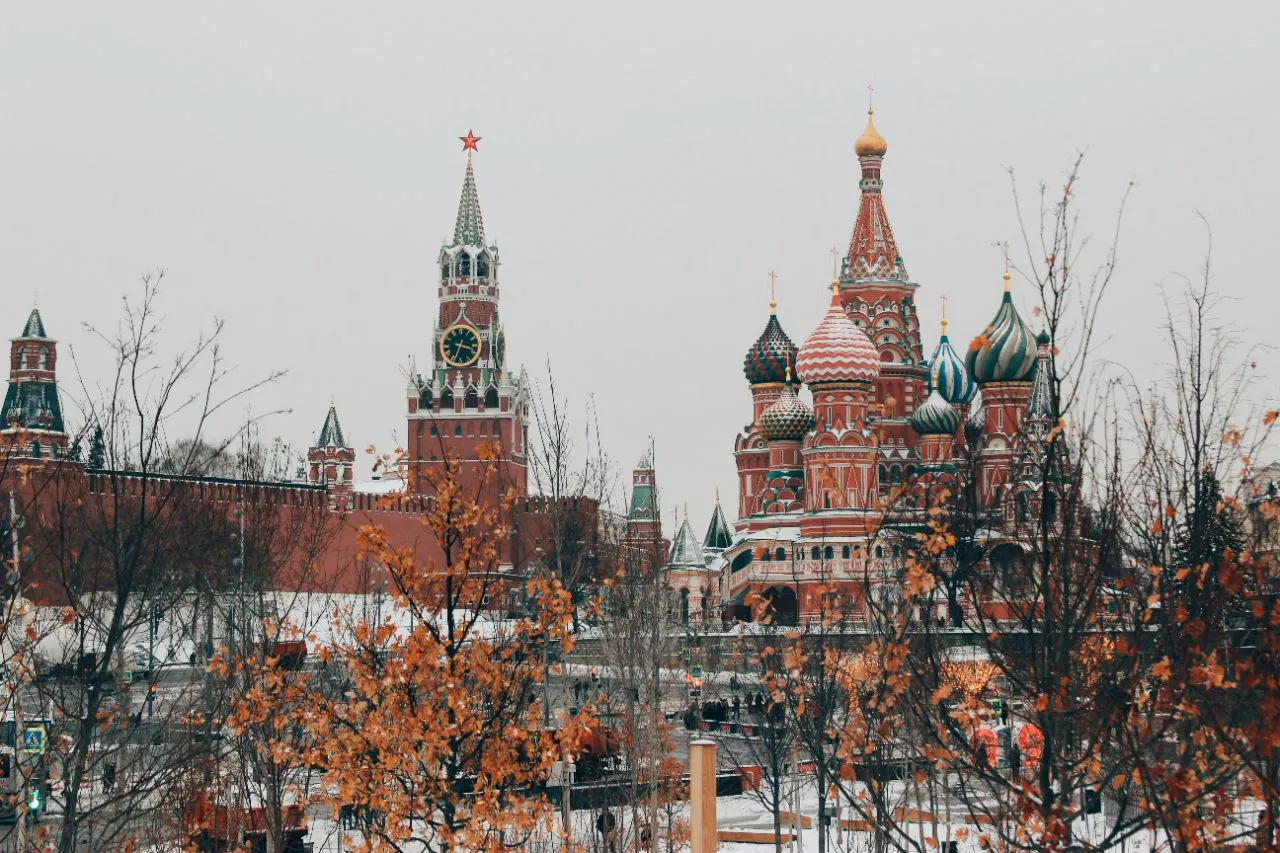
Photo by Michael Parulava on Unsplash

Tether ‘enters war’ against Russian crypto market

The crypto exchange took the decision to suspend its services following an action taken by leading stablecoin issuer, Tether. Taking to Telegram, the exchange stated:


“We have bad news, Tether has entered the war against the Russian crypto market and blocked our wallets worth more than 2.5 billion rubles [$27 million].” The exchange took the opportunity to warn its users that “all USDT in Russian wallets is currently under threat.”


Garantex added that it has been the first to be hit with such a measure, but that it won’t be the last. The firm said that it “will fight, and [it] will not give up.” 


Tether has been under the spotlight of regulators and governments globally in recent years. In response, it appears to have incorporated the freezing of funds subject to sanctions more recently, with closer cooperation with law enforcement and government agencies. Last year, the company outlined that it planned to freeze funds held in addresses related to countries or companies subject to sanctions.


Last September, Tether claimed to have played a role in an operation carried out by the Dutch authorities and U.S. Secret Service that led to the takedown of two crypto exchanges, Cryptex and PM2BTC, who were alleged to have been involved in money laundering.


Garantex had already been subject to U.S. sanctions since April 2022. At the time, the U.S. authorities described the exchange as a "ransomware-enabling virtual currency exchange." The firm was originally established in Estonia in 2019.


Commenting on the development, Gorelkin stated:


 "To the investors who underestimated this risk, my condolences." 


He also asserted that the latest round of sanctions will not be the last in attempts to apply pressure on Russian cryptocurrency firms and crypto sector infrastructure within Russia. While he believes that crypto remains a tool to get around sanctions, he stated that “USDT can be safely deleted from this list.”

More to Read
View All
Policy & Regulation·

Jan 06, 2024

Chinese state publication calls for crackdown on crypto

China’s Legal Daily, a publication that falls under the supervision of the Chinese Communist Party’s (CCP) Central Commission for Political and Legal Affairs, has sounded an alarm regarding cryptocurrencies, raising concerns about their use as potential avenues for corruption. In the newspaper’s New Year’s Day edition, it quoted legal scholars, who had convened at the annual China Integrity and Legal Research Association meeting, who underscored the urgency of addressing the emerging threat posed by digital assets.Photo by Max van den Oetelaar on Unsplash‘Hidden channels’ for briberyIn particular, it focused on views expressed by Associate Professor Zhao Xuejun from Hebei University Law School. Zhao Xuejun warned against the use of virtual currency and electronic gift cards as “hidden channels” for bribery. Notably, these forms of payment, often stored in “cold storage” devices, offer a convenient means for transporting funds abroad, the academic claimed. This development aligns with recent warnings from state agencies, including the Supreme People’s Procuratorate and the State Administration of Foreign Exchange, cautioning against the use of stablecoin Tether in yuan-related foreign exchange transactions, deeming such actions illegal. Anonymity and traceability concernsProfessor Mo Hongxian from Wuhan University Law School explicitly mentioned Bitcoin, highlighting the challenges associated with virtual currencies, such as their anonymity and difficulty in traceability, which can facilitate illegal activities. Despite lacking official recognition in China, Professor Hongxian stressed the need for judicial attention to transactions involving virtual currencies. Although China maintains a cryptocurrency ban, it actively explores blockchain technology for identity verification. The country’s central bank digital currency, e-CNY, still in the pilot stage, has witnessed significant development. Despite its limited geographic distribution, the digital yuan recorded transactions totaling nearly $250 billion in China as of June 2023, with international use noted in commodities sales. Varying degrees of enforcementChina has demonstrated that it can at times take a very hard line on restricting cryptocurrency trading and related activities, while at others, it seems to tolerate such activity or turn a blind eye. Last month China’s Supreme Procuratorate provided details on the nature of the prosecution of over-the-counter (OTC) crypto trader and RenrenBit founder, Zhao Dong. Zhao was handed down a seven year sentence for carrying out illicit crypto business operations. By contrast, an investigation carried out by the Wall Street Journal last year found that business has been thriving for the world’s largest cryptocurrency exchange Binance in China, despite the ban. Other crypto-related activity has been uncovered, flouting capital controls. BitMEX founder Arthur Hayes suggested recently that all wealthy Chinese individuals have access to banking in Hong Kong, allowing them to access, trade and use cryptocurrency. As part of the CCP’s intensified anti-corruption efforts, the focus on cryptocurrency’s potential role in financial crimes underscores the evolving landscape as use of digital currency unfolds. The Legal Daily article emphasizes the need for vigilance and regulatory measures to counteract the perceived threat of corruption facilitated by cryptocurrencies and electronic payment methods.  

news
Markets·

Jun 30, 2023

Survey Reveals 45.9% of Korean Crypto Investors Reporting Losses

Survey Reveals 45.9% of Korean Crypto Investors Reporting LossesAccording to a recent survey, more than half of South Korean adults have experience of owning cryptocurrency. Most of them bought crypto for investment purposes, with 33% of respondents making gains and 45.9% losing money.Photo by RDNE Stock project on Pexels2,500 respondentsThe Korea Financial Consumers Protection Foundation, a public research and education institute, conducted an online survey to assess the prevalence and trends of cryptocurrency ownership among South Koreans. The study, conducted between March 3 and March 24, 2023, encompassed 2,500 participants between the ages of 20 and 69 residing in Seoul, its suburbs, and the six major metropolitan areas. The results shed light on the crypto landscape, including ownership patterns, investment purposes, asset holdings, funding sources, and the future intentions of respondents.Crypto ownership trendsAccording to the survey, 30% of the participants currently own cryptocurrency, while 23% revealed they had previously owned crypto assets but no longer possess them, indicating that more than half of the respondents have had exposure to cryptocurrencies at some point in their lives.Among current crypto holders, 74.5% stated that they had acquired their first digital assets between 2020 and 2022, which suggests a surge in crypto purchases during the COVID pandemic period.Purpose of holding cryptoRegarding the purpose of holding crypto, 80.9% of respondents who either currently own or have previous experience owning cryptocurrency (representing approximately 43% of all participants) cited investment as their primary motivation. Furthermore, 17.4% viewed crypto as a trading instrument, while 17.8% held it for specific service utilization. (Individuals were allowed to choose multiple options.) From this result, the authors estimated that around 24.2% of all respondents currently hold crypto for investment purposes.The survey revealed the distribution of virtual asset holdings among respondents, with the values quoted in Korean Won (KRW). Among the participants, 21.5% owned less than 1 million KRW ($760), while 45.8% held more than 1 million KRW ($760) but less than 10 million KRW ($7,600). Additionally, 28.8% possessed between 10 million KRW ($7,600) and 100 million KRW ($76,000), and 3.9% held more than 100 million KRW ($76,000) in crypto assets.Funding sourcesWhen asked about the sources of funds used to purchase virtual assets, 82.5% of individuals with previous crypto ownership experiences mentioned utilizing spare funds from deposits or other sources. Meanwhile, 17.7% disclosed that they had liquidated other assets, such as stocks or real estate, to invest in cryptocurrencies. (Individuals were allowed to choose multiple options.) In addition, 7.8% of respondents acknowledged borrowing from acquaintances, with a higher rate of 11.8% among those in their 20s. The proportion of respondents who borrowed from loans was 6.2%.Among those who borrowed funds to invest in crypto, 47.6% are currently facing difficulties in repaying their loans, while 28.6% experienced repayment challenges in the past. This data suggests that a significant portion of individuals who borrowed to purchase cryptocurrencies encounter difficulties in loan repayment.Regarding the financial institutions from which respondents borrowed, 57.1% borrowed from the banking sector, while the remaining 42.9% obtained funds from non-banking entities. Encouragingly, no respondents reported borrowing from loan sharks.Cumulative returnsRegarding the cumulative returns on crypto assets, 33% of respondents who currently hold crypto reported gains, with an average cumulative return of 25%. Conversely, 45.9% reported losses, experiencing an average cumulative loss of 41.5%.When liquidating their crypto assets, 24.7% of traders made a profit, while 47.9% incurred losses. The data reveals that the proportion of individuals who suffered losses in their crypto investments was nearly twice as high as those who reported gains. Furthermore, higher age groups exhibited a higher percentage of losses compared to younger respondents. Among those who profited, the average return was 38.4%, while those who suffered losses reported an average loss of 37.5%.Future intentionsThe survey also inquired about the future intentions of respondents regarding their crypto holdings. Among current crypto holders, 80.8% expressed their intention to continue holding crypto assets. On the other hand, among those who do not currently own any crypto assets, 72.8% stated that they do not plan to purchase cryptocurrencies in the future.

news
Web3 & Enterprise·

Jun 02, 2023

Gate.io Shrugs Off Withdrawal Concerns Amid Multichain Crisis

Gate.io Shrugs Off Withdrawal Concerns Amid Multichain CrisisGate.io, a prominent cryptocurrency exchange, has refuted rumors circulating within the crypto community about withdrawal issues on its platform. On Wednesday, the exchange reassured users that its operations remain unaffected by recent events.Photo by Keller Chewning on UnsplashGate.io confirms smooth operationsGate.io is one of the oldest Chinese Bitcoin exchanges. It moved its corporate headquarters to the Cayman Islands once the Chinese authorities took a hardline stance on cryptocurrencies a few years ago. It also maintains offices in Seoul, South Korea, and is currently preparing to launch a bespoke Hong Kong-based platform.According to the exchange, withdrawals are functioning properly, and the overall operations of the exchange are healthy. It explicitly stated, “There are no issues with our operations or withdrawals as rumored.”Multichain concernsSpeculation emerged on social media on May 24 when Arkham Intelligence reported that members of the separate blockchain project Multichain had transferred $3 million worth of the $MULTI token to Gate.io. Arkham also mentioned other transactions involving Multichain-related tokens, some of which were subsequently suspended for deposit on the leading exchange, Binance.While Arkham did not directly suggest any risks to Gate.io itself, the combination of market activity and other events led to rumors. ‘Coinsumption,’ a Twitter account with nearly 31,000 followers, suggested on May 31 that Gate.io might be facing insolvency problems and advised users to withdraw their funds from the exchange.The ongoing issues with Multichain may well be unrelated to Gate.io. Multichain’s team members recently stated that they are unable to contact their CEO or access project servers. The project has experienced transaction delays over the past few days.Native token price impactGate.io’s native token ($GT) has reportedly been affected by these rumors, as its value has declined by 6.59% over the past 24 hours. In contrast, Bitcoin has only experienced a 1.4% decrease.The $GT token losses can be attributed, in part, to a period of several hours during which the token’s price dropped from $4.92 to $4.49. In isolation, this change represents an 8.7% loss, although there have been partial recoveries and other fluctuations to offset the decline. At the time of publication, the $GT token unit price stood at $4.36.Despite the recent challenges, Gate.io continues to demonstrate significant trading volume. On the most recent day, the exchange recorded approximately $525 million in trading volume, solidifying its position as one of the largest centralized exchanges with sub-billion daily trading volumes.The almost ten-year-old exchange is among several cryptocurrency exchanges preparing to comply with upcoming regulations in Hong Kong. It aims to operate alongside other platforms, such as CoinEx, OKX, Huobi, and BitMEX, as they adapt to the regulatory framework being implemented in the region.Gate.io has dispelled rumors of withdrawal issues, assuring users that its operations are functioning normally. Notwithstanding that, as with everything in the crypto space, the facts and circumstances can change in an instant. Therefore, it’s a topic that is worthwhile watching as further news emerges relative to ongoing issues on the Multichain project.

news
Loading