Top

RBI Official Encourages Indian Banks to Adopt Blockchain

Policy & Regulation·June 01, 2023, 12:00 AM

In a recent conference organized by the Reserve Bank of India (RBI), Deputy Governor Mahesh Kumar Jain highlighted the importance of adopting innovative technologies like artificial intelligence (AI) and blockchain to ensure sustainable growth and stability in the country’s banking sector.

Speaking at the RBI-hosted event for directors of Indian banks last week, Jain emphasized the need for effective corporate governance, governance structure, and risk management strategies to tackle future challenges arising from technological disruptions, evolving customer expectations, and cybersecurity threats.
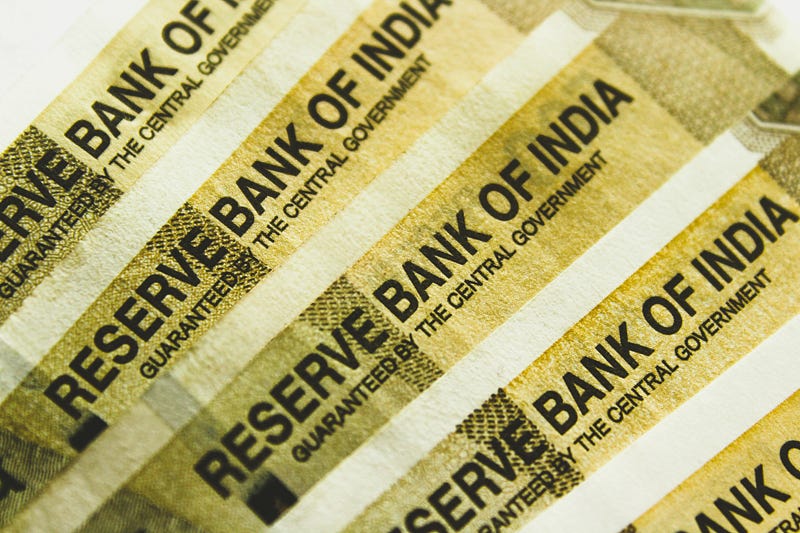
Photo by rupixen.com on Unsplash


Leveraging AI and blockchain

The recommendation to leverage AI and blockchain technologies aligns with India’s digital transformation goals and the desire to enhance customer experiences while investing in cybersecurity measures. Jain advised Indian banks to prepare for the future by focusing on digital transformation, exploring innovative technologies like AI and blockchain, and seeking collaborative opportunities with other industry players. He also emphasized the importance of upskilling the workforce to meet the demands of the digital era.


Inconsistent approach

This proposal comes at a time when the Indian government’s stance on cryptocurrencies remains ambiguous. While India has been exploring the introduction of a central bank digital currency (CBDC), the Cryptocurrency and Regulation of Official Digital Currency Bill, 2021, which aimed to establish regulations for digital currencies, has not been legislated.

According to the RBI’s annual report, which was published on Tuesday, the central bank is progressing with its retail central bank digital currency (CBDC) pilot program, with plans to expand the number of banks involved, the use cases, and the number of locations. It had expanded the scope of the project to involve one million citizens, but it’s looking to broaden that user base also. In contrast, the country’s approach to decentralized cryptocurrency has been contradictory, sometimes banning it and at other times, allowing it.

It is noteworthy that India’s neighbor, Pakistan, has also recently announced plans to train one million IT graduates in AI by 2027, with potential applications in weather prediction, agriculture supply chain optimization, and health services transformation.

The RBI’s recommendation to adopt AI and blockchain technologies reflects the growing recognition of their potential benefits for the banking sector.


Embracing tech innovation in banking

By embracing these technologies, Indian banks can enhance efficiency, automate processes, and strengthen security measures. The adoption of AI and blockchain has the potential to transform various aspects of banking, including risk management, fraud detection, customer service, and transaction processing.

While India continues to navigate the regulatory landscape surrounding cryptocurrencies, the central bank’s focus on AI and blockchain signals its commitment to embracing technological advancements and preparing the banking sector for the future. As India’s financial ecosystem evolves, the adoption of these technologies can empower banks to offer innovative services, streamline operations, and provide secure and efficient financial solutions to customers.

The RBI’s emphasis on digital transformation, AI, and blockchain paves the way for Indian banks to explore new avenues for growth and resilience. As the country progresses on its digital journey, the adoption of emerging technologies will play a pivotal role in shaping the future of the banking sector and contributing to India’s overall economic development.


More to Read
View All
Policy & Regulation·

May 19, 2023

BOK Staffers Assess Crypto Market Vulnerabilities and Their Implications

BOK Staffers Assess Crypto Market Vulnerabilities and Their ImplicationsOn Thursday, the Bank of Korea’s (BOK) staff members published an assessment of the vulnerabilities in the cryptocurrency market and their potential implications. Here is the summary of the report.Photo by D Tan on Unsplash2022 crypto winterThroughout 2022, the worldwide crypto market faced a series of adverse occurrences, such as significant drops in the prices of major crypto-assets and the collapse of prominent crypto companies. These events shed light on the vulnerabilities that had accumulated during the rapid growth of the market.The first major event occurred in May 2022 when the algorithmic stablecoin TerraUSD experienced a sharp decline, resulting in substantial losses and bankruptcies for numerous retail investors and crypto firms. This incident significantly eroded confidence in the overall crypto market. The subsequent bankruptcies of prominent crypto lender Celsius and hedge fund Three Arrows Capital (3AC) further highlighted the realization of risks commonly associated with traditional financial markets, such as multiple collateral loans and maturity and liquidity mismatches, within the crypto market.In November 2022, the well-known crypto exchange FTX filed for bankruptcy, demonstrating that the activities of a large crypto company can propagate risks through moral hazard and excessive profit-seeking behavior when it operates outside the realm of regulatory oversight.Similarities with TradFiThese negative events that unfolded in the global crypto market in 2022 share similarities with issues previously observed in financial markets, such as unsustainable business models, liquidity risk, leverage, and lack of transparency in financial conditions. These parallels suggest that if the crypto markets were subjected to comparable levels of regulation as traditional financial markets, it is plausible that the triggering of these risks could have been avoided altogether, or at the very least, the resulting damage could have been mitigated to some extent.Implications for the Korean marketAt present, it is deemed unlikely that events akin to those witnessed in overseas crypto markets will transpire in the Korean market. The Korean crypto-asset market has primarily evolved through exchanges, with limited influence from other enterprises such as crypto issuers and decentralized lending platforms. In addition, Korean crypto exchanges are subject to regulation under the Act on Reporting and Using Specified Financial Transaction Information. This mandates the separation of customer deposits from exchange assets and the strict management of custodial crypto-assets through secure wallets. Additionally, Korean exchanges are prohibited from listing their own tokens on their platforms.However, there remains a dearth of information regarding the business structures of crypto companies that offer services similar to those in the traditional financial industry. This lack of information poses challenges in accurately assessing risk and providing adequate investor protection. Meanwhile, there is a potential for a deeper integration between the crypto market and users’ daily lives, particularly through major technology companies, gaming companies, and security tokens.SuggestionsIt is vital to ensure that crypto-assets are regulated based on the principle of “same activity, same risk, same regulation” through the ongoing development of crypto-asset-related legislation. The Financial Stability Board, an international body monitoring the global financial system, explained this principle in a 2022 paper: “Where crypto-assets and intermediaries perform an equivalent economic function to one performed by instruments and intermediaries of the traditional financial sector, they should be subject to equivalent regulation.”Additionally, it is necessary to stay aligned with major countries in terms of the speed and comprehensiveness of regulatory measures to prevent regulatory discrepancies across borders due to the global nature of crypto risks.Enhancing the effectiveness and efficiency of regulation requires the establishment and maintenance of a close cooperation system between authorities. This collaborative effort should encompass various aspects, including monitoring, information gathering, and supervision of the crypto-asset market. Notably, the widespread adoption of stablecoins can affect the stability of the overall financial system, including monetary systems and payment and settlement systems. Hence, it is necessary to strengthen the involvement of central banks in the monitoring and supervision framework for crypto-assets, including stablecoins, as demonstrated by legislative approaches adopted by major economies like the EU. Furthermore, imposing disclosure requirements, external audits, and documentation submission obligations on crypto-asset operators is advisable.

news
Web3 & Enterprise·

Jul 26, 2023

Bitget Achieves 20M Users With Wallet Integration Driving Trading Volume

Bitget Achieves 20M Users With Wallet Integration Driving Trading VolumeSeychelles-based cryptocurrency derivatives exchange, Bitget, has experienced remarkable growth in the first half of 2023 surpassing 20 million users, driven by the successful integration of its recently acquired self-custodial wallet service, now renamed Bitget Wallet.Photo by Mike Hindle on UnsplashTop four exchangeThe wallet integration has propelled Bitget into the ranks of the four largest cryptocurrency exchanges by trading volume.According to a second-quarter report by Beijing-headquartered crypto research firm TokenInsight, the top four exchanges collectively account for 85% of the total market trading volume. Binance dominates the market with a 52% share, followed by OKX (15.13%), Bybit (10.6%), and Bitget (8.1%), securing its position among the industry’s leading players.$60 billion spot trading volumeBitget’s Q2 report, released on July 18, revealed that the platform’s spot trading volume surpassed $60 billion, with futures trading reaching a staggering $606 billion. Notably, research by blockchain analytics firm Nansen showcased Bitget as the only exchange to witness an increase in futures trading volumes in the six months following the collapse of FTX.The exchange attributes part of its impressive Q2 performance to the introduction of copy trading, a feature enabling users to emulate the trading strategies of select traders. This innovation proved highly successful, attracting 29,700 new elite traders and 169,800 followers, generating $33 million in profits by mid-2023.Bitget, aligning with leading exchanges like Binance, has released its proof-of-reserves to assure users that it maintains reserves exceeding 100% of all assets on the platform, including Bitcoin (BTC), Ether, Tether, and USD Coin. At the time of publication, the exchange’s current reserve ratio, calculated by dividing the platform’s assets by users’ assets, stood at an impressive 223%. According to that data, the crypto platform is claiming a debt-free status for the business.Regional expansionAs part of its expansion strategy, Bitget has obtained virtual asset service provider registration in Poland and Lithuania in 2023, solidifying its presence in Europe. Additionally, the exchange has announced plans to establish a hub for its operations in that region.Last week, it announced that it was also targeting the Middle East and North Africa (MENA) as part of its expansion plans. To support that effort, it has opened an office in Dubai in the United Arab Emirates (UAE) and hired 60 employees with plans on hiring up to 60 more over the course of the next two years.Crypto loans have been an area that has seen major failures within the sector over the last couple of years. However, this isn’t holding Bitget back from getting involved. Earlier this month, it announced the launch of its crypto loans product, which is aimed at market participants who are seeking alternative funding solutions, backed by digital assets.With Bitget’s rebranding efforts following the BitKeep acquisition and its exceptional growth in user numbers and trading volumes, the exchange is making a concerted effort to position itself so as to effect a global expansion strategy. As the market evolves further, it will be interesting to see how the crypto trading market settles, given that there are now a number of firms in the space actively vying for that business.

news
Policy & Regulation·

Feb 03, 2024

Bybit joins quest for VATP license in Hong Kong

Leading cryptocurrency exchange platform Bybit has joined a growing list of competing platforms by applying for a Virtual Asset Trading Platform Operator (VATP) license with the Hong Kong Securities and Exchange Commission (SFC). The application, submitted through the Bybit affiliate business entity Spark Fintech Limited on Jan. 31, is currently under review along with 13 similar VATP applications.Photo by Simon Zhu on UnsplashStrategic licensing playIn the dynamic landscape of cryptocurrency regulations, obtaining a VATP license in Hong Kong is a strategic move. Currently, only two crypto exchanges, OSL and HashKey Exchange, are licensed by the SFC in Hong Kong. OSL secured its license on Dec. 15, 2020, while HashKey Exchange was licensed on Nov. 9, 2022. Under a partnership agreement with OSL, Interactive Brokers has been enabled in its ability to commence trading in Hong Kong. Exchanges who have followed through on the license application process include OKX, Gate.io, and KuCoin, among others. It’s not something that is being taken on without these platforms weighing up the long term potential due to the cost implications. It emerged last year that companies were spending up to $25 million in their efforts to obtain licensing in Hong Kong. VATP vs. VASP licensingThe VATP license holds significance as it allows Hong Kong-based firms to cater to retail customers in contrast to the Virtual Asset Service Provider (VASP) license, which restricts companies to serving professional investors. In Hong Kong, investors must have portfolios valued at a minimum of eight million Hong Kong dollars ($1.03 million) to qualify for professional investor status. Hong Kong has positioned itself as a leading destination for crypto companies, particularly in 2023, owing to its favorable regulatory approach compared to mainland China's stringent crackdown on digital assets. The SFC has introduced crypto-oriented regulations, opening doors for both institutional and retail investors to participate in the crypto market. This regulatory environment has contributed to the city-state's emergence as a hub for crypto activities. Dubai-headquartered Bybit's move to seek a VATP license aligns with the growing trend of crypto companies finding a home in Hong Kong. In a statement, Ben Zhou, the founder and CEO of Bybit, emphasized the city's strategic location and established financial infrastructure as ideal for their operations and serving institutional clients across the Asia Pacific region. Institutional offeringAs part of its strategy to grow its institutional customer base, the company revamped its institutional market offering last October. With that institutional business in mind, it has also formed strategic partnerships, including collaborating with Talos, an institutional digital asset trading technology provider, and joining forces with Copper to offer custodial and settlement services for institutional clients through Copper's ClearLoop service. Bybit, launched in 2018 by Zhou, boasts a substantial user base, serving over 22 million registered users in 160 countries globally. Claiming a daily trading volume of $16.53 billion, Bybit holds the fifth-highest score among spot exchanges worldwide and is the second-ranked derivatives exchange, trailing only behind Binance, according to CoinMarketCap data. The exchange has consistently ranked in the top positions for futures and perpetuals trading throughout the last calendar year.   

news
Loading