Top

LINE Xenesis Introduces AVA, an Entertainment NFT Platform

Web3 & Enterprise·May 11, 2023, 12:31 AM

LINE Xenesis, a blockchain affiliate of Tokyo-based messaging app provider LINE Corp, announced on Wednesday the launch of AVA, an entertainment non-fungible token (NFT) platform aimed at both Japanese and international users.
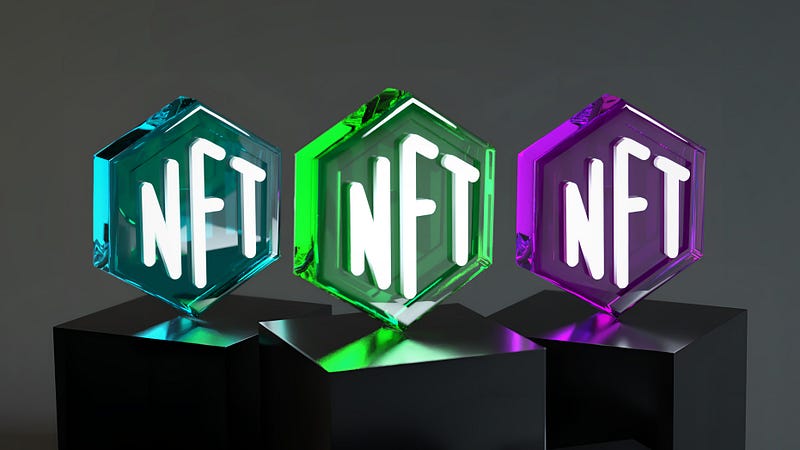
Photo by Choong Deng Xiang on Unsplash


DOSI services

Following the integration of LINE BITMAX Wallet into DOSI Wallet in March, LINE Xenesis has been striving to provide DOSI services for its users in Japan. DOSI Wallet enables users to manage a range of digital assets, including NFTs. As of April, the company has rolled out two new services: DOSI Citizen, a membership program, and AlphaCrewz, an app allowing users to create 3D avatars utilizing NFTs.


NFTs known as Crystals

Launched on May 9, AVA is the third service designed to engage LINE Xenesis users in Japan. The platform employs NFTs, known as Crystals, to connect artists and fans, which are divided into three categories: normal, rare, and unique, each offering different benefits.


TREASURE

Before AVA’s debut, a March 27 airdrop event featuring the world-renowned South Korean boy band TREASURE attracted over 7,000 participants. With the launch of AVA, 7,000 TREASURE Crystals have been made available for purchase.

TREASURE Crystal holders can enjoy four perks: storing exclusive videos in Crystals, receiving autographed trading cards and polaroid pictures, earning a portion of Crystal revenues for promoting TREASURE locally and on buses, and having the opportunity to submit inquiries and requests directly to the group. For the last benefit, TREASURE will respond to the most popular questions, as decided by user votes, with voting influence determined by the type of Crystal held.


ATEEZ

The second NFT collection on AVA will highlight another K-pop boy group ATEEZ, with ATEEZ Crystals available for purchase from May 16 to 31. An airdrop event with registration open until May 15 will precede the sales, giving users who complete missions a chance to win one of 600 normal ATEEZ Crystals. AVA will also host an event where ATEEZ members will answer eight selected questions submitted by fans.

This fall, AVA will introduce a virtual space called Playground, enabling users to trade Crystals with each other and interact with artists through various activities.

Additionally, participants in the ATEEZ airdrop event who fulfill tasks on social media will have a chance to enter a lucky draw for one of 30 exclusive ATEEZ photo card sets.

More to Read
View All
Web3 & Enterprise·

Apr 14, 2023

Sei Labs Raises $50M to Fuel Asian Expansion

Sei Labs, the development firm behind the layer one Sei blockchain, has recently secured a total of $50 million in strategic funding rounds. The funding was raised from investors such as Jump, Distributed Global, Multicoin, Asymmetric, Flow Traders, Hypersphere, and Bixin Ventures.This funding will be used to accelerate Sei Labs’ growth and expand its presence in the Asia-Pacific region. The firm is seeking to position Sei as the fastest Layer one blockchain for trading, while driving the development of the digital asset ecosystem worldwide. Asia-Pacific market demandAccording to the firm, there’s a growing demand for innovative blockchain solutions in the Asia-Pacific region and it aims to solidify its presence in that market. Sei Labs’ mission is to build the best infrastructure for trading by offering chain-level optimizations for decentralized exchanges and trading apps that aim at performance and scalability.The project has been growing rapidly during its development phase, with over 120 teams already deploying on Sei ahead of the mainnet launch. This indicates strong developer support. Furthermore, Sei’s latest public testnet, which went live on March 13th, has already attracted over 3.6 million unique users and processed over 35 million transactions in less than a month, showcasing the robustness and scalability of the Sei blockchain.Sei Labs aims to tap into the vast market opportunities in the Asia-Pacific region and provide cutting-edge trading infrastructure to meet the needs of the rapidly evolving digital asset landscape. With the additional funding and strategic partnerships in place, Sei Labs is well-positioned to further enhance its offerings and drive its expansion plans in the Asia-Pacific region. Bitget investmentOne of the strategic partners that Sei Labs has locked in is Seychelles-based Bitget, a leading crypto derivatives exchange platform. Bitget has invested $20 million in the company, and the two companies will collaborate to build a new decentralized exchange (DEX) that will integrate with Bitget’s existing trading platform. This new DEX will be built on Sei’s high-performance Layer 1 blockchain, offering users fast, secure, and low-cost trading.Bitget’s investment in Sei Labs will also help to strengthen the company’s ecosystem, which aims to provide users with a comprehensive suite of services for trading and managing digital assets. Bitget is committed to supporting Sei Labs’ mission to build the best infrastructure for trading, and the collaboration between the two companies is expected to bring new and innovative products to market. Foresight Ventures partnershipAnother strategic partner that Sei Labs has locked in is Foresight Ventures, a venture capital firm that focuses on investing in innovative technology companies. Foresight has invested $10 million in Sei Labs, and the two companies will collaborate to drive the development of the digital asset ecosystem worldwide.The investment from Foresight will help Sei Labs to accelerate the adoption of its blockchain technology and expand its global reach. The collaboration between the two companies will also enable Sei Labs to benefit from Foresight’s expertise in technology investments and its global network of contacts.Sei Labs’ success in securing $50 million in strategic funding rounds highlights the growing interest in blockchain technology and its potential to disrupt traditional industries. Sei Labs is well-positioned to take advantage of this trend and become a dominant player in the blockchain industry. The company’s efforts will pave the way for more innovative solutions that will drive the global digital asset ecosystem forward.

news
Policy & Regulation·

Apr 19, 2023

Korea’s FSC Opposes Other Agencies’ Involvement in Virtual Asset Bill

Korea’s FSC Opposes Other Agencies’ Involvement in Virtual Asset BillAhead of the National Assembly’s passage of the virtual asset bill, the Korean Financial Services Commission (FSC) has repeatedly opposed the involvement of the Bank of Korea (BOK) and the Financial Supervisory Service (FSS) in regulating cryptocurrencies, according to the Korean newspaper Kukmin Ilbo.©Pexels/LukasFSC’s oppositionIn a document submitted to the National Assembly’s National Policy Committee, the FSC opposed stipulating the BOK’s right to request documents in the virtual asset bill. The agency argued that the bill is indirectly related to the BOK’s monetary and credit policy and that explicitly mentioning monetary and credit policy in the bill could lead to the misinterpretation of virtual assets as possessing the characteristics of currencies.The FSC also objected to stipulating the FSS’s right to inspect crypto enterprises. According to law, the purpose of the FSC is to inspect and supervise financial institutions. Explicitly stating the FSS’s right to inspect crypto enterprises could cause confusion to the public that they are financial entities.However, there are growing concerns about the FSC’s perceived intention to dominate virtual asset jurisdiction.At a small meeting held under the National Policy Committee last month, Lawmaker Yoon Han-hong of the ruling People Power Party expressed the view that the FSC should consider incorporating the BOK and the FSS in the virtual asset bill for crypto regulations. During the meeting, the FSC objected to the inclusion of a stipulation that excludes central bank digital currencies (CBDCs) from the definition of virtual assets. Meanwhile, the BOK agreed to include such a stipulation.Allowing class action suitsAccording to an internal document obtained by Kukmin Ilbo, the FSC also intends to allow class action suits for crypto investors. It seeks to add cryptocurrencies to a bill proposed for class action suits, which also deal with securities. Class action suits provide a means for victims to receive redress in cases where a representative is successful in winning the lawsuit against the offender.The FSC stated that it will follow the majority on the issue of whether the purpose of the virtual asset bill should include the phrase “to contribute to the development of the nation’s economy,” although it left a cautionary note that some might raise objections to this, considering the speculative nature of virtual assets.

news
Web3 & Enterprise·

Jan 18, 2024

Socket's Bungee resumes operations following exploit

Socket, a cross-chain infrastructure protocol, and its interoperability bridging platform, Bungee, have restarted operations following a temporary pause prompted by an exploit that led to the apparent theft of $3.3 million.Photo by Anna Tarazevich on PexelsSecurity incidentTaking to the company’s Discord, Socket team hospitality lead Taylor Melvin clarified that it had “experienced a security incident which affected wallets with infinite approvals to Socket contracts.” The incident, which occurred on Tuesday, involved an unknown attacker draining millions worth of stablecoins and other tokens from the Bungee bridging aggregator. The attackers targeted wallets with infinite approvals to Socket contracts, exploiting authorizations for blockchain-based tools that allow applications to access tokens in a user's wallet. Security researcher "@speekaway" was the first to flag the exploit on Tuesday. The attacker's wallet, connected to the exploit, held nearly $3 million in ether (ETH) and $300,000 worth of other tokens. By 2:47 p.m. ET, the attack seemed to have ceased, with the researcher recommending users to revoke approvals for Socket to safeguard their assets. Pausing contractsIn response to the security breach, Socket announced the pause of affected contracts on Tuesday at 3:15 p.m. ET. The project's team promptly identified and addressed the issue, taking swift action to mitigate the exploit's impact. @speekaway chimed back in once contracts had been paused, writing:”Think this pause fixed it, very likely no more attacks are possible. So if you are currently freaking out about revoking you can probably relax.” Normal service returnsAs Socket paused activity during the incident, preventing further propagation of the attack, developers worked to fix the issue. Early Wednesday, Socket developers announced that the problem had been resolved, and normal activities had resumed. The team also stated that plans for compensation were in progress. Cross-chain bridges, like Socket's Bungee, facilitate token transfers between different blockchains but remain susceptible to exploitation. Blockchain security and data analytics company PeckShield confirmed that at least $3.3 million had been lost, highlighting the need for enhanced security measures in the rapidly evolving blockchain ecosystem. The exploit involved the exploitation of a recently added route, which has since been disabled. The attacker targeted users who had over-approved Socket, draining funds up to the limit of their approval. This incident follows the $81 million hack of Orbit Chain, a cross-chain bridge connecting Ethereum to other networks, earlier in January. Cross-chain tools' complexity contributes to the frequency of such attacks, emphasizing the importance of understanding the security measures in place when utilizing these bridges. In a message to CoinDesk, Sergey Nazarov, co-founder of Chainlink, emphasized the need for users to scrutinize the security of their chosen bridge, considering the various levels of cross-chain security. With the complexities involved, users are encouraged to be vigilant and informed about the security spectrum of the bridges they employ. Socket was founded by Indian duo Rishabh Khurana and Vaibhav Chellani. In September, the company raised $5 million, with funding coming from Framework Ventures and Coinbase Ventures. 

news
Loading