Top

Ripple Exec: Clear Regs Helped Japanese Market Withstand Crypto Winter

Policy & Regulation·April 26, 2023, 1:39 AM

Emi Yoshikawa, the Vice President of Strategy & Operations at business-focused crypto solutions provider Ripple, has attributed the Japanese cryptocurrency market’s ability to withstand the recent crypto winter to well-defined regulations.
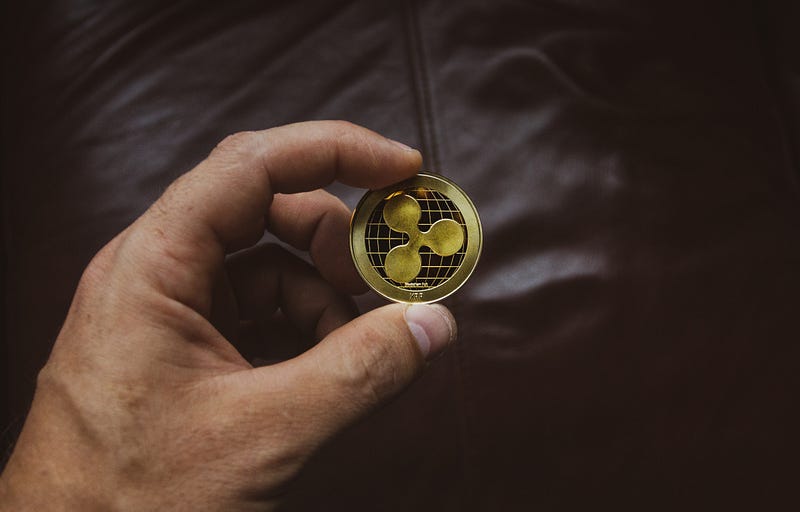
Ripple coin
©Pexels/Worldspectrum


Security breach at Mt.Gox

In a recent interview with Korean blockchain media outlet Digital Asset, Yoshikawa noted that Japan implemented regulations on cryptocurrencies earlier than other countries, in part due to the 2014 security breach at the Tokyo-based Bitcoin exchange Mt.Gox that resulted in investor losses.

The Mt.Gox exploit prompted revisions to the Payment Services Act, which now recognizes cryptocurrencies as a means of payment. Furthermore, the Financial Instruments and Exchange Act was revised in 2020 to give security tokens the same status as stocks. The Japanese government is also exploring the possibility of allowing the domestic circulation of foreign stablecoins.

Although it took several years for companies to enter the market after the regulatory framework was established, the security token market has since expanded, with more businesses now participating.

Yoshikawa credited the Japanese crypto market’s resilience during the recent global crypto winter to clear regulatory guidelines. The recognition of cryptocurrencies as financial instruments enabled the regulation of not only spot trading but also derivatives trading. Japanese exchanges are also required to hold customer funds separately in trust firms, ensuring investor protection. This regulatory environment allowed companies and investors to confidently enter the crypto industry last year.


FTX Japan

FTX Japan’s return of customer assets and resumption of withdrawals in February showcased the effectiveness of these clear regulatory guidelines. Among subsidiaries of the now-defunct crypto exchange FTX, FTX Japan is the only one to have returned customer assets thus far, Yoshikawa emphasized.

While crypto regulations in some areas, such as taxation, remain insufficient, both the Japanese government and entrepreneurs agree that the Web3 industry should develop in a way that benefits the nation’s economy.


Ripple’s projects in Japan

Yoshikawa said that Ripple views the Japanese market as one of its key markets. In 2016, the company formed a joint venture, SBI Ripple Asia, with Japanese financial group SBI Holdings. Through this partnership, Ripple collaborated with several Japanese financial institutions to launch RippleNet and provide liquidity to the payment service.

Japan’s largest remittance technology firm, SBI Remit, has adopted RippleNet and Ripple’s own remittance system On-Demand Liquidity (ODL) to facilitate real-time payments between Japan and Southeast Asian nations. Yoshikawa underlined that Ripple is committed to supporting Southeast Asian workers in Japan who need swift and cost-effective international payments.


More to Read
View All
Policy & Regulation·

Aug 23, 2023

Indian Crypto Exchange CoinDCX Implements Workforce Reduction

Indian Crypto Exchange CoinDCX Implements Workforce ReductionIndian cryptocurrency exchange CoinDCX has recently taken the step of reducing its workforce by approximately 12%.The strategic move was announced by way of a statement from CoinDCX founders Sumit Gupta and Neeraj Khandelwal, published to the firm’s website on Tuesday. The cutback is being made in response to the prolonged bear market and the consequences of India’s Tax Deducted at Source (TDS) policy on domestic exchanges.Photo by Hardik Joshi on UnsplashMacroeconomic and crypto market headwindsGupta and Khandelwal described the decision that they’ve taken as being challenging, although they outlined that it was taken with a view toward steering the business to profitability and sustainability amidst trying macroeconomic conditions in the crypto sector.The company has encountered significant headwinds due to the overall tough conditions in the crypto market. These challenges have resulted in decreased trading volumes and revenues for CoinDCX. In light of these circumstances, the company has determined that resizing specific teams within the organization is necessary in order to secure the viability and long-term growth of the operation.71 jobs cutApproximately 71 employees are being affected by the workforce reduction, out of CoinDCX’s total workforce of around 590 based in Mumbai. To mitigate the impact on these employees, the company has implemented a support package aimed at providing comprehensive assistance during this transition.This package includes severance pay equivalent to the full notice period, an extra month of salary, compensation for variable pay and incentives, encashment of unused leave days, extension of health insurance and wellness benefits, and access to counseling support.In spite of the necessity for workforce reduction, CoinDCX’s outlook on the Indian market remains optimistic. The company remains steadfast in its commitment to driving crypto and Web3 adoption to a target of 50 million individuals by 2025.No further reduction plansThe founders emphasized that this reduction is a unique, targeted action and that they have no further plans for team reductions. They claim to have engaged in thorough discussions with senior leaders within the company to ascertain the best path forward, with a commitment to overcoming challenges and reinforcing the company’s foundation.In spite of this setback CoinDCX maintains that its vision is intact, encompassing a presence not only in the Indian market but also further afield.Industry trendCoinDCX’s current struggle has been mirrored by a plethora of leading crypto exchanges over the course of recent months. In July, it emerged that Seychelles-based Kucoin was cutting jobs although the firm’s CEO asserted that it wasn’t a layoff plan and more so a reevaluation of the organization’s structure.Earlier that month, Thai digital asset exchange Bitkub cut its headcount in an effort to manage costs during this period of challenging market conditions. Recently, leading global crypto exchange Binance announced one thousand job losses while stating that more jobs may be cut in the future.The decision made by CoinDCX underscores the broader struggles that startups and businesses within the crypto space face. With the bear market’s impact and regulatory pressures, companies are being compelled to make difficult choices in pursuit of long-term sustainability.

news
Policy & Regulation·

Dec 05, 2024

Indian government claims Binance isn’t tax compliant

According to India’s Finance Ministry, Binance and a number of other virtual asset service providers (VASPs) are not tax-compliant in India. Cases of tax evasion detectedNews of this matter emerged via written answers, published on Dec. 2, provided in response to parliamentary questions which had been put to India’s Finance Minister, Pankaj Chaudhary. The minister confirmed that a “few cases of evasion of Goods and Services Tax (GST) by cryptocurrency exchanges and investors” had been detected. The document goes on to list 17 crypto entities who are currently being investigated on that basis, with Binance being the most well-known among them. Notable Indian exchanges listed include WazirX, CoinDCX and CoinSwitch. Chaudhary included details of cases booked against these exchanges. In Binance’s case, it was required to pay 722 crore Indian rupees, which amounts to around $85.2 million. While Binance doesn’t appear to have incurred penalties, in the case of WazirX, the exchange had an assessed tax shortfall of 40.51 crore Indian rupees ($4.78 million), but after fees and interest, it was provided with a demand for 49.19 crore Indian rupees ($5.8 million). CoinDCX and CoinSwitch were also assessed with a demand for 20.86 crore Indian rupees ($2.46 million) and 19.38 crore Indian rupees ($2.28 million), inclusive of penalties and interest. In the case of WazirX, CoinDCX and CoinSwitch, the exchanges have had to pay an additional 21%, 24% and 37% respectively in fees and interest over and above their original tax liabilities.Photo by Naveed Ahmed on UnsplashPrevious tax and regulatory issuesTo date, the Finance Ministry has recovered 122.3 crore rupees ($14.4 million) as part of these investigations. Binance has as yet not paid the funds demanded by the authorities. It emerged in August that India’s Directorate General of Goods and Services Tax Intelligence (DGGI) had imposed an $86 million tax demand on the company, with Binance contesting the assessment. The global crypto exchange platform had previously paid a $2.5 million fine for having engaged with Indian customers despite not having been approved by the authorities to trade within the country. After a number of months during which it didn’t trade within the Indian market, in August Binance regularized its standing and gained approval to trade. In a request for comment on the matter from Cointelegraph, a Binance representative stated: “We continue to work closely with regulatory authorities and attend necessary hearings to address any concerns and questions. Binance remains responsive and cooperative and is committed to addressing all necessary tax inquiries.” The company recently hired UK-based accounting and business advisory firm Grant Thornton to assist with accounting, tax and audit preparedness. In the case of WazirX, a spokesperson said that “GST law on cryptocurrencies was not clear in India,” and that on this basis, the company found itself being assessed for non-payment of the applicable taxes.

news
Policy & Regulation·

May 11, 2023

A Korean Lawmaker’s Crypto Holdings Worth $4.5M Spark Controversy

A Korean Lawmaker’s Crypto Holdings Worth $4.5M Spark ControversySouth Korean lawmaker Kim Nam-kuk, a member of the opposition party Democratic Party of Korea (DPK), has recently come under scrutiny due to his reported possession of 800,000 WEMIX tokens from January to February last year, as reported by the Maeil Business Newspaper. These tokens were worth approximately 6 billion KRW or $4.5 million at the time. While Korean lawmakers are obligated to disclose their wealth, virtual assets are an exception. The disclosure of Kim’s ownership of these tokens has ignited controversy, as it unveiled a wealth magnitude significantly greater than previously understood.Photo by Karolina Grabowska on PexelsTravel Rule regulationA central issue in the unfolding dispute is the source of Kim’s investment in the WEMIX tokens. It has been reported that he purchased a significant amount of these tokens between January and February last year and withdrew the entire sum between February and March before the crypto exchange implemented measures to comply with the Travel Rule regulation. This rule requires that financial authorities be informed of transactions over 10 million KRW ($7,500). After the crypto exchange reported the transactions to the Financial Intelligence Unit of the Financial Services Commission, the government agency requested a warrant to search Kim’s account due to the transactions’ abnormality. However, the court dismissed the request.Jeonse deposit to LG Display sharesIn response to the controversy, Kim took to a YouTube channel on Tuesday to explain his WEMIX token investments. He stated that he had retrieved 600 million KRW ($450,000) after his jeonse contract expired and used the money to purchase LG Display shares. Jeonse a housing rental system in Korea where tenants put up a lump-sum refundable deposit on a rental space for a two-year stay. Kim claims that these LG Display shares later rose in value to 985.7 million KRW ($744,000) in January 2021 and that he used this sum to purchase the tokens.Account balance and WEMIX tokensDespite his explanation, there are still questions surrounding Kim’s sudden increase in his bank account balance. His account balance reportedly increased from 100 million KRW ($76,000) at the end of 2020 to 1.12 billion KRW ($850,000) by the end of 2021, which raised suspicions. If Kim had directed all the money withdrawn from the LG Display shares to WEMIX tokens, it is unclear where the additional $774,000 in his account came from. Kim has reportedly explained to his party’s leadership that he retrieved the principal amount of his investment due to the increase in the WEMIX token price. However, this explanation has not satisfied some critics.Insufficient explanationIn an attempt to address these concerns, Kim shared part of his bank transaction records on Monday. However, this disclosure has fallen short of addressing all the questions that have been raised, such as the precise amount invested in the tokens and their purchase prices. There is still significant public scrutiny and skepticism surrounding Kim’s explanation for his crypto holdings, and it remains to be seen if further disclosures will be made.Kim apologized to the Korean public via Facebook for any disappointment caused, especially amid challenging economic conditions. However, he denied accusations of using undisclosed information or unlawfully acquiring wealth. Kim maintained that all transactions were transparently made using only his own wallets through his real-name bank accounts.Potential insider trading and conflict of interestNevertheless, the public’s acceptance of his explanation is yet to be seen, as questions about his $4.5 million virtual assets persist, particularly given his reported total wealth of around $1.1 million. There are concerns surrounding the possibility of insider trading. Furthermore, Kim’s participation in proposing a bill to defer tax implementation on digital assets has triggered suspicions of a potential conflict of interest.Call for an impartial third partyRecent updates indicate that the prosecution is considering requesting a warrant against Kim in relation to the controversy surrounding his crypto holdings. The Anti-Corruption and Civil Rights Commission is also examining if his participation in proposing the bill constitutes a conflict of interest. It is evident that an impartial third party will need to investigate and analyze all relevant information to resolve this dispute. Until a thorough and unbiased investigation takes place, the public’s concerns and questions are likely to continue.

news
Loading