Top

Dubai Increases Monitoring of Crypto License Holders

Policy & Regulation·April 11, 2023, 1:59 AM

Dubai is scrutinizing crypto license holders and license seekers more closely as a direct consequence of the collapse of Bahamas-based cryptocurrency exchange FTX, last year.

On Wednesday Bloomberg cited people familiar with the matter who told it that Dubai’s Virtual Assets Regulatory Authority (VARA) has recently requested more information on the ownership structure, governance, and auditing procedures of applicants like global crypto exchange, Binance.
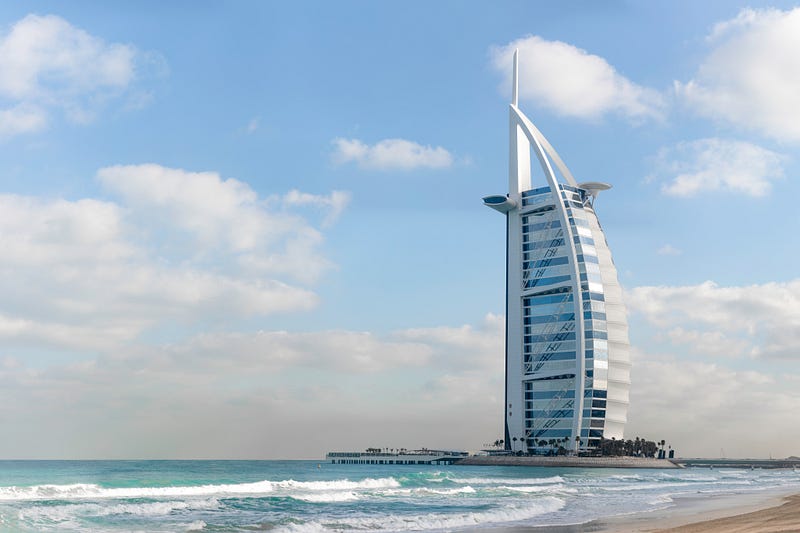
a view on Burj Al Arab
©Pexels/Aleksandar Pasaric


Closer scrutiny

All international companies seeking permits are being asked for similar information. This stricter approach is a potential problem for Binance CEO Changpeng Zhao (CZ), who lives in Dubai and has made it a central point of expansion in the Middle East. The Emirate is attempting to balance fostering innovation with proper oversight of an industry that has been the subject of high-profile scandals in the past year.

According to Sam Blatteis, CEO of The MENA Catalysts, which provides government-relations advice to fintech multinationals expanding in the Persian Gulf, “VARA wants to turn Dubai into a capital for the digital-assets economy while safeguarding its business ties with Western jurisdictions like Europe that are adopting more muscular crypto regulations.”


CFTC lawsuit

In March, the US Commodity Futures Trading Commission sued Binance and CZ for allegedly violating derivatives regulations, claiming the firm had inadequate compliance procedures. Binance expressed disappointment with the lawsuit.

The company claimed at the time that it had provided all necessary information to VARA regarding its ownership structure and external auditor, as well as answering any other queries on a proactive basis. VARA officials are also seeking information on the ownership, auditing, and board procedures at the global group level of Binance.


Steering clear of FATF

Due to its size and complexity, addressing these queries is taking longer. Binance’s complicated corporate structure includes several holding companies, three of which are named in the CFTC lawsuit, and multiple local entities. In February, a senior executive said Binance was attempting to hire an auditor for its entire balance sheet.

Dubai is trying to get off the “gray list” of global money laundering and terrorist financing watchdog the Financial Action Task Force (FATF). To that end, it has cracked down on unlicensed over-the-counter (OTC) crypto exchanges, according to anonymous sources. Dubai belongs within the United Arab Emirates (UAE), with the foreign ministry of the UAE declining to provide any comment on the matter to Bloomberg. Komainu, Hex Trust, GC Exchange and Crypto.com are the four companies, in addition to Binance, that are licensed in the UAE, with the former three having only Preparatory Minimum Viable Product (PMVP) permits.

Hex Trust said that providing additional information on ownership, auditing and board procedures didn’t prolong the application process for its Operational MVP license. Laurent Girouille, the head of Komainu’s regional office in Dubai, said the regulatory requirements were stringent. Meanwhile, Binance is awaiting the launch of Binance FZE, which is audited by Mazars and has a board of directors, while it upgrades to an Operational MVP license before applying for a Full Market Product permit.


More to Read
View All
Web3 & Enterprise·

Aug 18, 2023

Galaxia Metaverse and ZIKTALK to Expand Blockchain and Web3 Initiatives

Galaxia Metaverse and ZIKTALK to Expand Blockchain and Web3 InitiativesSouth Korean blockchain company Galaxia Metaverse said Friday it has signed a memorandum of understanding (MOU) with the Web3 social media platform ZIKTALK. The two companies plan to collaborate for the expansion of and boosted connectivity between Galaxia’s blockchain wallet and ZIKTALK’s social media services.Photo by GuerrillaBuzz on UnsplashEncouraging engagementZIKTALK is a Web3 short-form video platform that rewards users based on their activities in the app. Video creators and viewers can receive ZIK tokens as rewards for watching or sharing videos, inviting friends, gaining followers, leaving comments, and more. Currently, the platform has around 1.4 million users primarily in Southeast Asian countries such as the Philippines, Indonesia, and Vietnam.Galaxia Metaverse’s main service, Galaxia Wallet (GXA Wallet), is a digital blockchain wallet that supports major mainnets such as Ethereum, Binance, Polygon, and Klaytn. Its utility token Galaxia (GXA), which can be stored in the Wallet, is rewarded through staking and can be used for purchasing NFTs. Wallet holders can also receive rewards when they use MetaGalaxia, a curation-based NFT marketplace, and acquire GXA when they use a coffee delivery application created by WeMakePrice O, the food delivery platform of e-commerce firm WeMakePrice.Together, Galaxia and ZIKTALK aim to expand their blockchain ecosystems to allow users to utilize their wallets and tokens in a safer and more convenient manner. This includes implementing more services such as token registration and wallet connection so that ZIKTALK users can use Galaxia Wallet more efficiently.“The majority of ZIKTALK users, which mainly consists of young people in their 20s and 30s who enjoy short-form content, represent the demographic that would benefit most from using Galaxia Wallet,” Galaxia said in a statement.Global growth and partnershipsMeanwhile, Galaxia has been actively expanding its blockchain ecosystem this year both domestically and internationally, collaborating with industry leaders such as Korean online marketplace Coupang and Singaporean blockchain-based mobility enterprise MVL Foundation.

news
Policy & Regulation·

Jun 02, 2023

Crypto.com Scores MPI License in Singapore

Crypto.com Scores MPI License in SingaporeIn a significant move for the Web3 industry, the Monetary Authority of Singapore (MAS) has granted online crypto trading platform, Crypto.com, a Major Payment Institution (MPI) license. This regulatory development showcases Singapore’s commitment to welcoming innovation and embracing the potential of the Web3 sector.Photo by Timo Volz on PexelsLicensing milestoneCrypto.com made the exciting announcement on Thursday, revealing that it has received the MPI license from the MAS, the country’s central bank and financial regulator. With this license in hand, Crypto.com can now provide its Digital Payment Token (DPT) services to residents of Singapore.This achievement follows the in-principle approvals granted to Crypto.com by the MAS in June of the previous year, further highlighting the company’s adherence to regulatory standards and its dedication to operating within the guidelines set by financial authorities.Community reactionThe news of the license has garnered positive reactions within the crypto community. Many members see the Singaporean government’s decision as a significant endorsement of the Web3 industry. ‘Aravind,’ a Twitter user, expressed this sentiment, stating, “Singapore government giving out a license is itself a massive plus for the Web3 Industry,” adding that it's probable the process to obtain the license has been hard fought, and likely two years in the making.Interestingly, another community member drew comparisons between Crypto.com’s successes and the challenges faced by global crypto exchange, Binance. While Binance has encountered difficulties in various jurisdictions, Crypto.com has been praised for its steady progress and forward-looking approach.Yet another Twitter user chimed in along similar lines, stating: “Whilst Binance seems to be losing ground, Crypto.com seems to be slowly doing things right and building for the future.”Binance has recently faced setbacks, such as its diminishing presence in the Australian and Canadian markets and trading restrictions imposed in certain European countries. Reports have even surfaced suggesting that Binance plans to lay off 20% of its staff in June.However, it’s important to note that Binance has not given up, as evidenced by its recent expansion into Thailand, where it established a regulatory-compliant platform. The exchange has also taken steps to ensure compliance in Japan through the creation of another regulatory-compliant platform.Additional licensesCrypto.com has set up its headquarters in Singapore, and it is in good company there with leading crypto firms Kraken and Coinbase also maintaining offices in the city state. The company has taken a truly global strategy, having marketed heavily in recent years. It maintains offices in nine other locations, including Miami, Dublin, London, Seoul, Malta, Sofia, Hong Kong and Shenzhen, as well as Kadıköy in Turkey.The crypto trading platform has received a Minimal Viable Product (MVP) preparatory license from the Virtual Assets Regulatory Authority (VARA) in Dubai, alongside firms like Komainu, Hex Trust, and GC Exchange. The company has also successfully pursued digital asset licensing in France, Australia, and the United Kingdom.Crypto.com’s acquisition of the MPI license in Singapore marks a significant milestone for the company and the broader Web3 industry. With Singapore embracing innovation and offering a favorable regulatory environment, Crypto.com is well-positioned to continue its growth and contribute to the advancement of the digital payment token ecosystem.

news
Policy & Regulation·

May 30, 2023

bitFlyer Moves to Comply With Travel Rule

bitFlyer Moves to Comply With Travel RulebitFlyer, a Tokyo-based Bitcoin exchange and marketplace, has taken steps to comply with the travel rule, an anti-money laundering measure promoted by Paris-based global financial crime watchdog, the Financial Action Task Force (FATF).The rule necessitates the exchange to pass on customer data to a recipient exchange where the crypto transaction involves a value of greater than $3,000.Photo by Ivan Babydov on PexelsImplementing TRUST technologyThe company announced on Tuesday that these measures, which went into effect in the afternoon local time, include restrictions on transfers from the exchange to platforms that do not comply with the Travel Rule Universal Solution Technology (TRUST). This technology was initiated by Coinbase, the US-based crypto exchange, to ensure that firms adhere to FATF’s requirements. The mechanism is a product of the collaboration of Coinbase alongside leading crypto exchanges such as Kraken, Gemini, BitMEX, Bittrex, Okcoin, and others.To enforce these measures, bitFlyer has established notification requirements for receiving and sending crypto to TRUST-compliant platforms in a list of 21 countries. The list includes Japan, Israel, Gibraltar, Hong Kong, the Bahamas, and Switzerland. Additionally, bitFlyer has limited transfers to compliant platforms in these countries to TRUST-compatible crypto assets such as bitcoin (BTC), ether (ETH), and several ERC-20 tokens.On the other hand, transfers to and from countries not on the list, as well as transfers to private self-custodied wallets, can be conducted using any crypto asset available on the bitFlyer platform.Compliance with Japanese legislationWhile the exchange refers to travel rule compliance relative to 21 countries, it’s unlikely to be a coincidence that the Japan-headquartered company has implemented this compliance measure a couple of days before Japan is set to introduce a FATF travel rule compliance requirement which comes into effect on June 1.These measures align with Japan’s recent commitment to implementing FATF’s travel rule, which requires the sharing of crypto transaction information between platforms. The watchdog had urged advanced economies in the G7 to take the lead in combating money laundering through digital assets.Increasing regulatory demandsIt is worth noting that bitFlyer’s US unit recently faced a fine from US financial regulator, the New York State Department of Financial Services (NYDFS), due to its failure to meet cybersecurity requirements. The incident highlighted the increasing scrutiny and regulatory demands placed on crypto exchanges to ensure the security and compliance of their operations.By aligning itself with the FATF Travel Rule and implementing these restrictions, bitFlyer aims to enhance its anti-money laundering efforts and contribute to global efforts to combat financial crimes in the crypto space, helping to steer itself clear of potential issues with global regulators.As the crypto industry continues to evolve, regulatory frameworks and standards are being established to address concerns regarding money laundering and illicit activities. Compliance with such regulations is essential for crypto exchanges to foster trust among users, attract institutional investors, and contribute to the overall maturation and legitimacy of the crypto ecosystem.

news
Loading