Top

PDAX gears up for trading surge amidst Binance market exit

Markets·December 15, 2023, 12:48 AM

The Philippine Digital Asset Exchange (PDAX), an order book exchange, is planning to take full advantage of Binance’s regulatory issues in the Philippines, with the expectation of an uptick in trading volume as a direct consequence.
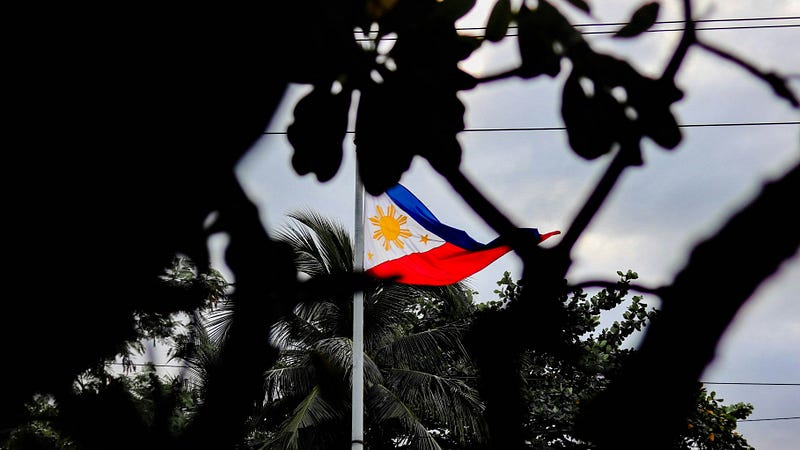
Photo by iSawRed on Unsplash


Market opportunity

According to a Filipino English-language broadsheet publication, The Daily Tribune, PDAX CEO Nichel Gaba sees the exit of Binance, flagged by the Securities and Exchange Commission (SEC) as an unauthorized exchange in the Philippines, as a pivotal moment for local virtual asset service providers (VASPs) to expand their market presence. Gaba envisions that the anticipated migration of traders from Binance could propel the country’s cryptocurrency trading volume to an estimated $6 billion by 2024.

Data from the Bangko Sentral ng Pilipinas (BSP) demonstrates that there are currently 17 VASPs in the Philippines, with 10 operational and seven inactive. As one of the operational ones, PDAX is preparing for the expected growth in the local sector.

The SEC in the Philippines has been actively working towards imposing a ban on Binance, citing various issues both locally and internationally. Gaba predicts that this development will prompt a substantial number of Filipino cryptocurrency traders to seek alternative, legitimate trading platforms. Gaba stated:

“Now that Binance is being banned, there are a lot of users wondering where they can go and the best option for them is to go to a licensed exchange like PDAX. Our strategy as a company is to focus on being the best alternative.”


Binance ban countdown

According to local news outlet BitPinas, the head of the Philippines SEC, Kelvin Lee, clarified that Binance and any other unregistered exchange issued with an advisory have three months before they are banned from the country.

Addressing the confusion surrounding the ban during a panel discussion on Wednesday, Lee stated that the ban would be in effect three months from the issuance date of Nov. 29. In that way, time has been allowed for feedback and potential extensions.

While the original recommendation was for a shorter transition period, Lee extended it, considering the upcoming Christmas holiday, stating, “Not to make it hard for Filipino investors during that time.”


Two additional exchanges banned

In addition to Binance, Lee mentioned that OctaFX and MiTrade, along with other exchanges that have received advisories for unregistered operations, will also face bans after three months. The local SEC disclosed having a sizable list of unregistered exchanges that will gradually emerge.

Responding to criticisms of the ban, given that some users find Binance to be “cheaper” than other registered exchanges, Lee emphasized the importance of compliance costs and consumer protection. He urged local investors to “invest in registered entities” among the 17 VASPs registered in the country that offer fiat-to-crypto services.

The BSP-regulated VASPs are expected to process crypto assets worth approximately $3 billion by the end of the year. However, this estimate does not take into account unregulated transactions occurring outside of VASP channels.


More to Read
View All
Web3 & Enterprise·

Oct 20, 2023

Korbit Joins Zero-Fee Crypto Trading Trend in South Korea

Korbit Joins Zero-Fee Crypto Trading Trend in South KoreaSouth Korean cryptocurrency exchange Korbit reduced trading fees to zero on October 20 (local time) for all of the cryptocurrencies supported on the platform. This move follows in the footsteps of Bithumb, another Korean exchange that introduced zero-fee trading earlier this month.Photo by Jeremy Perkins on UnsplashNo extra registration requiredKorbit users can now benefit from zero-fee trading immediately, with no special registration required. This arrangement will continue indefinitely until further notice.Market maker incentives continueKorbit’s market maker incentive program will remain in place. Under this program, users earn 0.01% of the transaction value whenever they place an order.Oh Se-jin, CEO of Korbit, underscored the exchange’s commitment to enhancing user satisfaction. He pointed out several initiatives they’ve undertaken, including enhancing the login system, raising the daily Korean won (KRW) deposit and withdrawal limits, and eliminating transaction fees. He further noted that by removing trading fees, they aim to alleviate the cost pressures of crypto trading for their users and breathe new life into the market.

news
Policy & Regulation·

Jan 20, 2024

Regulator lifts investment cap for real estate-backed tokens in Thailand

The Securities and Exchange Commission (SEC) in Thailand has made a significant adjustment to the rules governing digital token investments. The SEC has decided to eliminate the investment ceiling previously imposed on retail investors participating in initial coin offerings (ICOs) tied to real estate and infrastructure.Photo by Colton Duke on UnsplashFostering digital economy growth and developmentThe announcement, specifying the revised criteria, was officially published in the Royal Gazette, with the measure taking effect on Tuesday. This move allows retail investors greater access to ICOs involving tokens backed by real estate or linked to real estate revenues. The SEC emphasized that, in addition to ensuring appropriate investor protection, its role extends to encouraging the utilization of technology and innovation in fundraising. The objective is to foster sustainable growth in the capital market and support the development of the digital economy. Prior to this adjustment, retail investors faced a restriction of a 300,000 baht ($8,450) investment limit per offering concerning digital tokens backed by infrastructure or real estate. The SEC's decision to remove this limitation aligns with the goal of managing product risks effectively while promoting a more inclusive environment for retail investors in the realm of digital token investments. Facilitating custodial walletsFurthermore, the SEC is currently undertaking a review of criteria to facilitate the establishment of custodial wallet provider businesses for digital asset operators with common major shareholders. This initiative aims to enhance the regulatory framework and provide guidelines for businesses involved in digital asset storage. Custodial wallets will be permitted in Thailand if operated by publicly traded companies with experience in digital asset storage. All Thai citizens will have a touch point with digital wallets shortly under a government program, a $14 billion digital handout scheme, which has been approved to distribute digital currency to the public through digital wallets. DASP approvalsAs part of its supervisory role, the SEC will also be responsible for granting permissions to digital asset service providers (DASPs) to expand into new business lines. Digital asset operators seeking to diversify their operations are required to obtain approval from the SEC before proceeding. This measure is intended to ensure the effective oversight of such businesses and maintain the credibility of the digital asset industry by preventing illegal operations. It’s likely no coincidence that tokenized real estate is being embraced in Thailand, given the background of Thailand’s recently installed Prime Minister, Srettha Thavisin. In 2021, Thavisin’s company played a role in funding crypto-friendly investment management firm XSpring Capital to the tune of $225 million. His firm also introduced a real estate-backed ICO in conjunction with XSpring. While Thailand’s SEC is moving forward with tokenized real estate, it doesn’t feel the same way about exchange-traded funds (ETFs). In the wake of the recent approval of spot bitcoin ETFs in the United States, the Thai SEC responded by stating that it currently has no plans to allow asset managers to launch similar products within the Thai market. 

news
Web3 & Enterprise·

Aug 11, 2023

Netmarble’s MARBLEX Bolsters Partnership with Bisonai to Elevate MBX Ecosystem

Netmarble’s MARBLEX Bolsters Partnership with Bisonai to Elevate MBX EcosystemSouth Korean gaming company Netmarble said today that its blockchain subsidiary, MARBLEX, is reinforcing its strategic partnership with blockchain infrastructure company Bisonai to help bolster the MARBLEX gaming finance (GameFi) ecosystem.Revolutionizing gaming with blockchainNetmarble released the MARBLEX Playground in February of this year, which aims to optimize game enjoyment and benefits for players by incorporating NFTs, GameFi, decentralized finance (DeFi), and more that collectively run on a blockchain ecosystem revolving around its governance token, MBX.Photo by ELLA DON on UnsplashAs a company that specializes in building blockchain products for its clients in a wide range of sectors, including gaming, Web3, NFTs, and DeFi, Bisonai has directly contributed to the development of MARBLEX’s MBX ecosystem. In particular, it played a significant role in building MBX Marketplace — a platform for unrestricted NFT transactions within the ecosystem — which went live in November of last year, as well as MBX Explorer, a token scanning site.Following this venture, Bisonai is planning to provide further technical consultations and solutions for the blockchain infrastructure that will be potentially required within the MARBLEX ecosystem.Advancing transparency and accessibility of MBXMeanwhile, MARBLEX disclosed plans on June 27 to overhaul the token system within the MBX ecosystem. As part of its commitment to improving transparency, it announced that it burned approximately 670 million MBX that have not been designated for use within the ecosystem out of its total supply of one billion MBX.The MBX token also received a landmark whitelist approval in Japan last month, becoming the first token from a Korean blockchain gaming project to do so.

news
Loading