Top

Coinone’s recent addition of USDT/KRW trading pair expected to reduce Kimchi premium

Markets·December 01, 2023, 9:01 AM

Coinone, a major South Korean cryptocurrency exchange, listed USDT, a stablecoin pegged to the US dollar on the platform’s Korean won-denominated market on Thursday (local time). Its listing price was KRW 1,289.

Tether Limited, the company behind USDT, asserts that their stablecoin is “backed 100% by Tether’s reserves.” These reserves comprise a variety of real-world assets such as U.S. Treasuries, overnight reverse repurchase agreements, corporate bonds and precious metals. According to CoinMarketCap, USDT’s market capitalization stands at $89 billion, ranking it third in the cryptocurrency market, just behind Bitcoin and Ethereum.
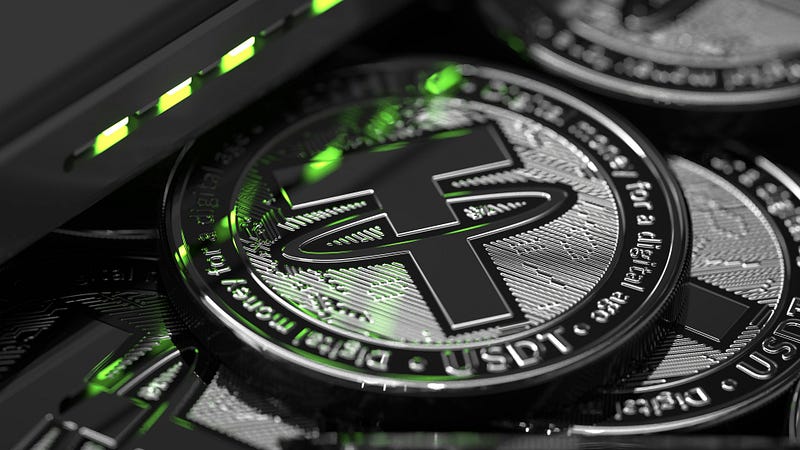
Photo by DrawKit Illustrations on Unsplash


First to list USDT/KRW trading pair

Despite the significance of USDT in the cryptocurrency market, Korean exchange users have faced the limitation of not being able to purchase the stablecoin using Korean won, although these exchanges did offer markets denominated in USDT. This limitation has prompted Koreans to turn to foreign cryptocurrency services for acquiring USDT. With Coinone’s latest move, the platform has become the first to facilitate USDT/KRW trading among the nation’s five fiat-to-crypto Korean exchanges — Upbit, Bithumb, Coinone, Korbit and Gopax.

Regarding this development, Kwon O-hoon, Managing Partner at the law firm Cha and Kwon, told local news outlet Decenter that there seem to be no particular legal concerns with the crypto exchange’s engagement in USDT transactions. This perspective stems from the absence of stablecoin regulations in the country.


Reducing the Kimchi premium

According to Decenter, crypto experts anticipate that the introduction of USDT/KRW trading will help in reducing the Kimchi premium, a term referring to the discrepancy in cryptocurrency prices on South Korean exchanges compared to those in foreign exchanges.

For instance, according to data from CoinNess, the average price of BTC on Korean exchanges is around KRW 51,177,250. This is about 2.34% higher than its average price on foreign exchanges, which stands at KRW 50,005,909. This difference means that users on Korean exchanges need to pay an additional KRW 1,171,340 to buy one BTC, compared to what they would pay on international platforms.

However, the newly added trading pair will streamline transactions between exchanges, making it simpler for investors to engage in arbitrage. This ease of transfer is expected to lead to more balanced pricing across different markets, reducing the Kimchi premium.

In light of this development, Jo Dong-hyeon, CEO of blockchain company Undefined Labs, said various institutions and blockchain projects will likely find USDT increasingly useful as a store of value, given USDT facilitates easy transfers between different exchanges.
More to Read
View All
Policy & Regulation·

Feb 28, 2025

First stablecoins gain DFSA approval in Dubai

The Dubai Financial Services Authority (DFSA), the financial regulatory agency of the Dubai International Financial Center (DIFC), a special economic zone, has approved two stablecoins under its crypto regulatory framework. The two stablecoins, USD Coin (USDC) and EURC, are both issued by blockchain-focused financial services firm Circle. While USDC is a U.S. dollar-backed stablecoin, EURC is a euro-backed stablecoin. In a press release published on the Circle website on Feb. 24, the company announced details regarding the approval. The stablecoins are the first to be recognized and approved by the DFSA.Photo by Christoph Schulz on UnsplashStablecoin integrationThe development means that firms based in the DIFC are now free to integrate either stablecoin into digital asset applications and products focused on areas such as payments and treasury management. A number of Circle executives took to social media to comment on the development. Circle Co-founder and CEO Jeremy Allaire outlined on X that the approval means that financial institutions in Dubai “are now able to transact in markets with USDC and EURC.” In legally recognizing the two stablecoins, Allaire pointed out that the DFSA had joined regulators in the European Union (EU) and Canada.  Last Summer, Allaire announced that Circle’s stablecoins complied with the EU’s Markets in Crypto Assets (MiCA) regulation. In December, Circle became the first stablecoin issuer to meet Canadian listing regulations. Dante Disparte, Circle’s chief strategy officer and head of global policy, pointed out that a trend is emerging requiring the pre-clearing of stablecoins prior to them entering into circulation or gaining regulatory approval. “In always-on finance, reciprocity is key,” he added.  Meanwhile, the firm’s EU Strategy & Policy Director, Patrick Hansen, underscored the significance of the approval. Hansen pointed to the fact that the DIFC is home to 6,000 registered entities, including 800 authorized financial firms. An ‘edge’ over TetherEugene Cheung, Chief Institutional Business Officer at Hong Kong-based digital asset platform OSL, said that the approval was “massive for institutional adoption,” while giving Circle an “edge” over Tether within the $157 billion stablecoin market. While Circle has always taken a regulatory-compliant approach, competitor Tether has struggled with compliance. In Europe, 10 companies have been approved to issue stablecoins under MiCA regulations, but Tether is not among them. This has led to a number of exchanges delisting Tether’s USDT in Europe. The DIFC was first established in 2004. The economic free-zone caters to firms operating within the Middle East, South Asian and African regions. The number of businesses registered within the free zone has increased by 25% since 2023. In November 2022, the DIFC recognized Bitcoin (BTC), Ethereum (ETH) and Litecoin (LTC). The following year, it added Toncoin (TON) and Ripple’s XRP, together with ZETA, the native token of the ZetaChain network. In 2024, the DFSA amended its crypto regulations to allow foreign funds to invest in recognized crypto tokens, while enabling domestic qualified investor funds to invest in unrecognized tokens.Although the regulatory approach taken by the authorities in Dubai accommodates stablecoins, algorithmic stablecoins are prohibited.

news
Web3 & Enterprise·

Sep 21, 2023

Xangle and CertiK Team Up to Promote Mass Adoption of Web3

Xangle and CertiK Team Up to Promote Mass Adoption of Web3CrossAngle, the operator of the virtual asset data analysis platform Xangle, announced on Wednesday that it has teamed up with CertiK, a global blockchain security ranking platform, to promote the mass adoption of Web3 technologies and contribute to the formation of a secure and transparent blockchain ecosystem.Photo by Shubham’s Web3 on UnsplashStrengthening security and data insightsCertiK is a security-focused ranking platform for analyzing and monitoring blockchain protocols and DeFi projects. Through this new partnership, Xangle will gain access to Skynet, CertiK’s Web3 security analysis platform that monitors and visualizes on-chain and off-chain data with cutting-edge technology, along with other API data. In turn, CertiK will receive access to Xangle’s cryptocurrency reference price API and on-chain data analyses.CertiK’s industry analysis reports will also be regularly featured on Xangle’s research platform. Xangle’s research reports are well-regarded throughout the industry and have been featured on local and international financial information platforms such as Bloomberg Terminal, CoinMarketCap, Yonhap Infomax, and FnGuide.Positive outlooks“We are delighted to partner with CertiK, a global leader in Web3 security. We are already anticipating great synergy with our strong capabilities in on-chain data analysis,” said Jake Lim, Chief Business Development Officer (CBDO) of Xangle. “We believe that this collaboration between our two companies will accelerate the mass adoption of Web3 technologies.”Jason Jiang, Chief Business Officer (CBO) of CertiK, added that the partnership is expected to not only enhance security and transparency in the blockchain ecosystem but also help set new industry standards.This partnership between CertiK and Xangle reflects the growing importance of security and data analysis in the rapidly evolving Web3 landscape, as both companies work together to drive its widespread adoption.

news
Policy & Regulation·

Mar 11, 2024

The 3rd Busan Blockchain Regulation-free Zone Steering Committee holds meeting

The local government of Busan, the second-largest city in South Korea, announced in a press release that it held the 3rd Busan Blockchain Regulation-free Zone Steering Committee (Committee) meeting at the Busan Eurasia Platform, a community center located near Busan Station.  The meeting took place last Thursday at 15:00 (KST), attended by 12 Committee members, including Busan’s Vice Mayor for Economic Affairs Kim Kwang-hee, Busan Technopark Chairman Kim Hyung-gyun, Busan International Finance Agency Chairman Lee Myung-ho and Busan Information Industry Promotion Agency Chairman Kim Tae-yeol.Photo by Finn on UnsplashThe meeting was intended to discuss strategies to revitalize the blockchain regulation-free zone (blockchain zone) and to attract new blockchain businesses to the region. Busan has been recently struggling with developing and attracting blockchain technology companies to the region, which has cast doubt on the city’s ability to retain its status as the regulatory sandbox zone.   New 24 members, new commitment to invigorating blockchain zone Established in October last year, the 3rd Committee comprises 24 new members who have expertise in blockchain technology. The Committee aims to raise awareness of the blockchain zone’s potential and foster the blockchain industry within the region.  Kim Sang-min, Vice CEO of healthcare company Erom, was appointed Committee Chairman at the meeting. Known as an expert in the blockchain ecosystem, Kim currently serves as a blockchain policy advisor for Busan and has experience in taking the lead in establishing the Busan Digital Asset Exchange (BDX) last year.  More meetings in store to become a blockchain hub The meeting focused on creating subcommittees in an effort to facilitate the Committee’s seamless operation. Moreover, members reached a consensus on holding meetings at any time when warranted, in both online and in-person formats.  During the meeting, Busan Vice Mayor Kim said the newly launched Committee will contribute to identifying innovative businesses with great potential that require both cutting-edge blockchain technologies and a regulatory sandbox environment. 

news
Loading