Top

Two Asian nations turn down spot bitcoin ETFs

Policy & Regulation·January 19, 2024, 2:50 AM

In a contrasting move to the recent approval of several spot bitcoin exchange-traded funds (ETFs) by the U.S. Securities and Exchange Commission (SEC), regulators in both Singapore and Thailand have turned down permission to list spot bitcoin ETFs.
https://asset.coinness.com/en/news/5c20fe2ebeb33d6997e51486fa52cb42.webp
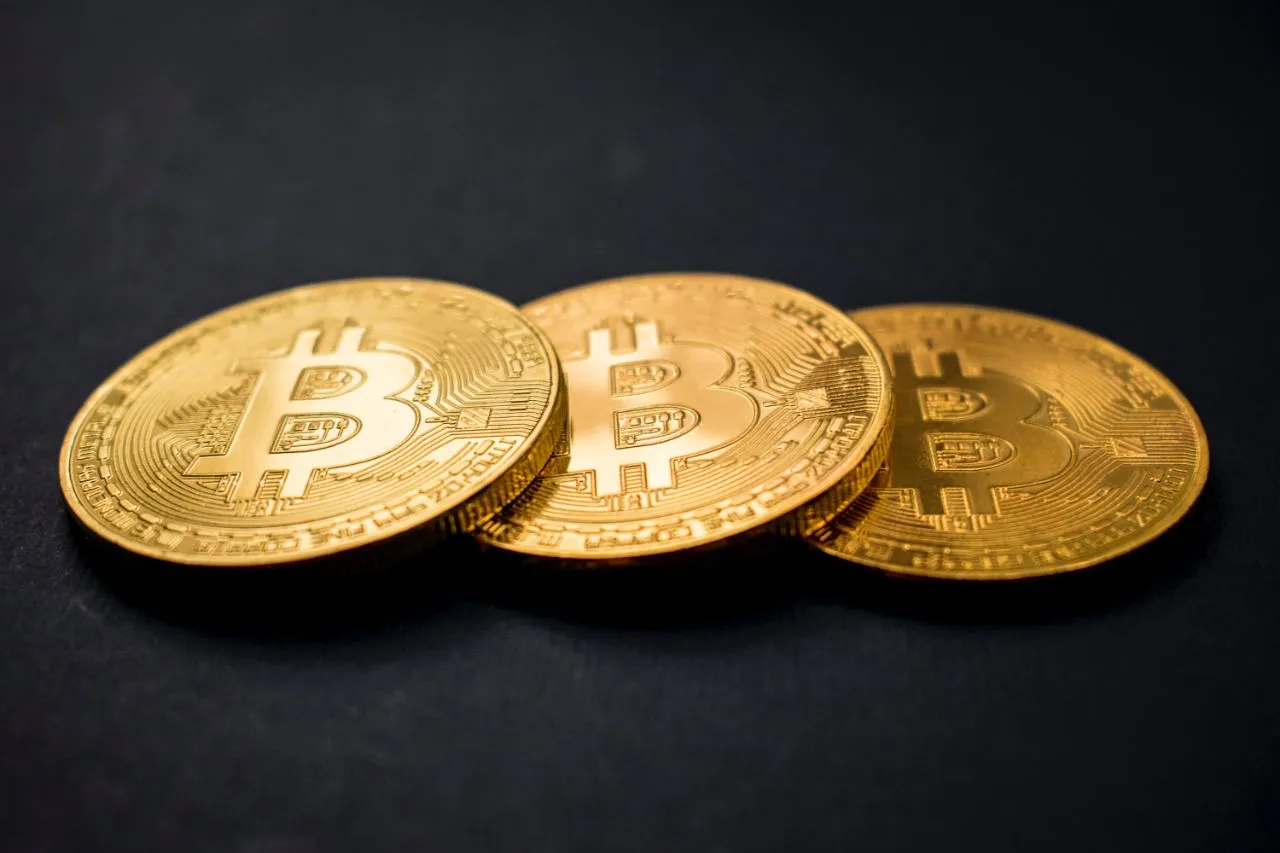
Photo by Dmytro Demidko on Unsplash

Bitcoin not a qualified asset

According to local news media on Wednesday, Singapore's Monetary Authority (MAS) has announced its decision not to permit the listing of spot ETFs in the country. The MAS argues that cryptocurrencies, including bitcoin, do not meet the criteria for qualified assets within the context of ETFs.


This regulatory divergence means that retail investors in Singapore won't see the introduction of spot bitcoin ETFs domestically. However, they still have an avenue to trade such ETFs as they can turn to local brokerages for access to overseas markets. Despite this allowance, the MAS emphasizes the need for these retail investors to exercise caution due to the inherent high volatility and speculative nature of cryptocurrency trading.


A spokesperson from the regulatory authority clarified that while collected investment schemes (CIS), falling under the Securities and Futures Act regulation, include ETFs, they do not encompass bitcoin or any other cryptocurrency.


Future potential

While MAS may be turning down spot bitcoin ETFs at this point, there’s potential for a change of heart in the future. The FIMA Bill is currently working its way through the city-state’s legislative process. If enacted, it would give broader regulatory oversight of crypto to MAS. Lasanka Perera, CEO of Independent Reserve Singapore, recently suggested that the bill could make an ETF more likely.


Thailand says no

Meanwhile, Thailand’s Securities and Exchange Commission (SEC) has stated that it currently does not plan to allow asset management firms to launch spot bitcoin ETFs in the country.


Thai securities brokerage firms have been encouraging investors to consider investing directly in U.S. spot bitcoin ETFs. The Thai SEC clarified that while it closely monitors these developments, there is no immediate policy to allow spot bitcoin ETFs in Thailand. The regulator emphasizes that Thai investors can still engage in digital asset investments through domestic exchanges licensed by the SEC under the Digital Assets Decree.


India, too, doesn’t appear to have been looking favorably on the potential for such products. The governor of the Reserve Bank of India (RBI) said last week that “the way we look at crypto remains unchanged, irrespective of who does what.”


Asian optimism

In the wake of ETF approval in the U.S., many industry commentators had suggested that Asia would respond positively. Australian venture capitalist Mark Carnegie has suggested that the developing bull market would be “an Asian story.”


Yat Siu, co-founder of Hong Kong’s Animoca Brands, expressed the view that U.S. ETF approval would have a substantially positive impact within the Asian region. Hong Kong appears to be the most positive in the region in its outlook with regard to embracing spot bitcoin ETFs. Immediately following approval in the U.S., a Hong Kong legislator spoke out to encourage a proactive response relative to launch of similar products within the Chinese autonomous territory.


Meanwhile, recent news reports indicate that spot bitcoin ETFs experienced substantial trading volume, accumulating $10 billion just three days after their approval in the U.S. 

More to Read
View All
Web3 & Enterprise·

Jun 28, 2023

Korbit and SK Planet Team Up to Promote NFT Membership Program

Korbit and SK Planet Team Up to Promote NFT Membership ProgramKorbit, one of South Korea’s prominent cryptocurrency exchanges, has teamed up with SK Planet, a technology affiliate of the major conglomerate SK Group, in an effort to attract new users to Road to Rich, a non-fungible token (NFT) membership program.Photo by Mo on UnsplashWin up to 0.1 BTCUnder this collaboration, Korbit users will have the opportunity to win up to 0.1 BTC by completing assigned tasks. From those participating, 511 fortunate individuals will be selected as winners. The breakdown of prizes is as follows: 500 participants will earn 0.001 BTC each as third place winners; 10 second place winners will receive 0.01 BTC each; and the single top winner will be awarded the grand prize of 0.1 BTC.Quests, rewards, and rabbit NFTsRoad to Rich was introduced earlier this month by OK Cashbag, a popular customer rewards system offered by SK Planet. Road to Rich offers users daily quests involving rabbit character NFTs. Successful completion of these tasks allows users to gain various benefits, such as OK Cashbag points, which can be used at hypermarkets, restaurant chains, and other partner businesses. To participate in Road to Rich, users need to install the UPTN Station, a decentralized wallet developed by SK Planet, which allows storage, retrieval, and transfer of NFTs.According to a report by local news outlet Newspim, Oh Se-jin, CEO of Korbit, expressed the crypto exchange’s excitement about participating in the expansion of SK Planet’s Web3 ecosystem. Oh said that Korbit is committed to collaborating with SK Planet to deliver more convenient and valuable services to customers in the Web3 space.

news
Web3 & Enterprise·

Nov 28, 2023

Data Labs leverages blockchain technology for data-based travel itinerary app

Data Labs leverages blockchain technology for data-based travel itinerary appFounded in 2021, Data Labs is changing the landscape of travel by leveraging blockchain and NFT technology to offer a wallet service called “MyInfo Market,” where users can store and control their own data, according to an article published by Korean news outlet Data News.In particular, MyInfo Market can be used in tandem with the company’s travel app Yeohaengdaelo, which utilizes users’ travel-related data to recommend travel destinations and organize and share itineraries. Users can directly manage their personal preference information on MyInfo Market and selectively submit the information necessary to receive rewards. “It’s not just a travel itinerary app, it’s also a way for individuals to earn money using their own data,” said Kim Jong-hyun, CEO of Data Labs.Photo by Eva Darron on UnsplashSeamless travel experienceYeohaengdaelo integrates Naver Blog, Instagram and KakaoTalk services into one app, aimed at relieving the stress that comes with travel preparation, Kim explained. It utilizes data such as the region a user is traveling to, their travel companions and information on facilities, as well as their travel preferences and patterns. The app also provides real-life services such as discounts at designated restaurants near the travel site.Building trust and valueThe company explained that it intends to maintain a cyclical data ecosystem where users can willingly provide their data to get travel recommendations and receive suitable compensation for that information in return. Because the ecosystem is blockchain-based, it provides a safe method of personal information management.Since the launch of Yeohaengdaelo in July, Data Labs has been developing a business model that can secure a solid user base and revenue for affiliated businesses. It expects to reach 55,000 members next year and 2.14 million members by 2028. The company also expects to use the business model as a basis for generating KRW 500 million (approximately $386,000) in revenue next year by linking marketing channels, issuing discount coupons for kids’ amenities and providing data royalties.In the future, Data Labs plans to expand Yeohaengdaelo to include not only travel preparation services but also information on various discounts that users can receive based on the location they are in. Efforts like this will be necessary to provide unique user experiences, the company said.Data Labs is also currently receiving support through Y&Archer’s tourism acceleration program. Y&Archer is a Korean investment and acceleration firm known for its AC Program, which discovers, accelerates and supports startups through various projects.“In the past, companies profited from personal data, but Yeohaengdaelo allows individuals to monetize their data. Our goal is to create a world where individuals can regain the rights (to their own data) and be at the center of Web3 content,” Kim said.

news
Web3 & Enterprise·

May 27, 2025

Chinese food company adds Bitcoin to balance sheet

DDC Enterprise, a Chinese company headquartered in Hong Kong and listed on the New York Stock Exchange (NYSE), has become the latest corporation to add Bitcoin (BTC) to its balance sheet.Photo by Michael Förtsch on UnsplashInitial 21 BTC purchaseThe plant-based food products company which operates under the “DayDayCook” brand published a press release via Business Wire last Friday announcing its first Bitcoin purchase. It’s likely that there was a symbolic element to the firm’s first Bitcoin purchase, given that it bought 21 BTC while Bitcoin has a supply cap of 21 million BTC. The company completed the transaction via share exchange with an investor group, issuing 254,333 class A ordinary shares while acquiring the 21 BTC at a market price of $2,283,667. DDC outlined that it plans to make two further purchases over the coming days of 79 BTC, at which point the firm’s corporate treasury will hold 100 BTC. Targeting 5,000 BTCThe company has a much more ambitious Bitcoin accumulation plan, however. Over the course of the next three years, it is targeting the establishment of a Bitcoin treasury holding 5,000 BTC. At current market pricing, that would amount to a Bitcoin treasury of around half a billion dollars in value. In the near term, the firm is targeting the acquisition of 500 BTC by the end of this year. DDC Founder and CEO Norma Chu described the development as a “pivotal moment” in the company’s evolution. She said that this plan reflects DDC’s “confidence in Bitcoin as a store of value,” while demonstrating the firm’s interest in pursuing innovation. “We are fully committed to ensuring the success of this strategy, which aligns with our vision to drive long-term value for our shareholders,” she added. Web3 innovationAccording to a DDC website, the company has innovative plans that go beyond just a Bitcoin treasury. It plans to deepen community engagement through the use of NFT loyalty programs and immersive Web3 experiences. It also plans to leverage blockchain transparency in its efforts to build greater community engagement. The website sets out a vision whereby DDC can blend its culinary heritage with next-generation technologies.  The company suggests that real-world asset (RWA) tokenization has the potential to revolutionize consumer engagement, while offering the possibility of enabling fractional ownership of product lines. It has set out a roadmap where it outlines having established a digital platform in 2012, going on to engage in content creation and content commerce over the course of a decade.  The firm carried out an initial public offering (IPO) in 2023 and from 2025 onwards, aside from its Bitcoin treasury strategy, it plans to integrate RWA tokenization and Web3 technology into its business, while also adopting AI technologies to enhance supply chain efficiency. DDC is one of a growing list of corporations to adopt Bitcoin as a strategic asset over the course of the past 18 months. Earlier this month, another Chinese company, Nasdaq-listed Jiuzi Holdings, an electric vehicle (EV) retailer, announced that it had adopted a plan to acquire 1,000 BTC. Hong Kong-listed game developer Boyaa Interactive holds 3,350 BTC.

news
Loading