Top

Korean and U.S. regulators to discuss recognizing NFTs as virtual assets in May

Policy & Regulation·February 27, 2024, 6:40 AM

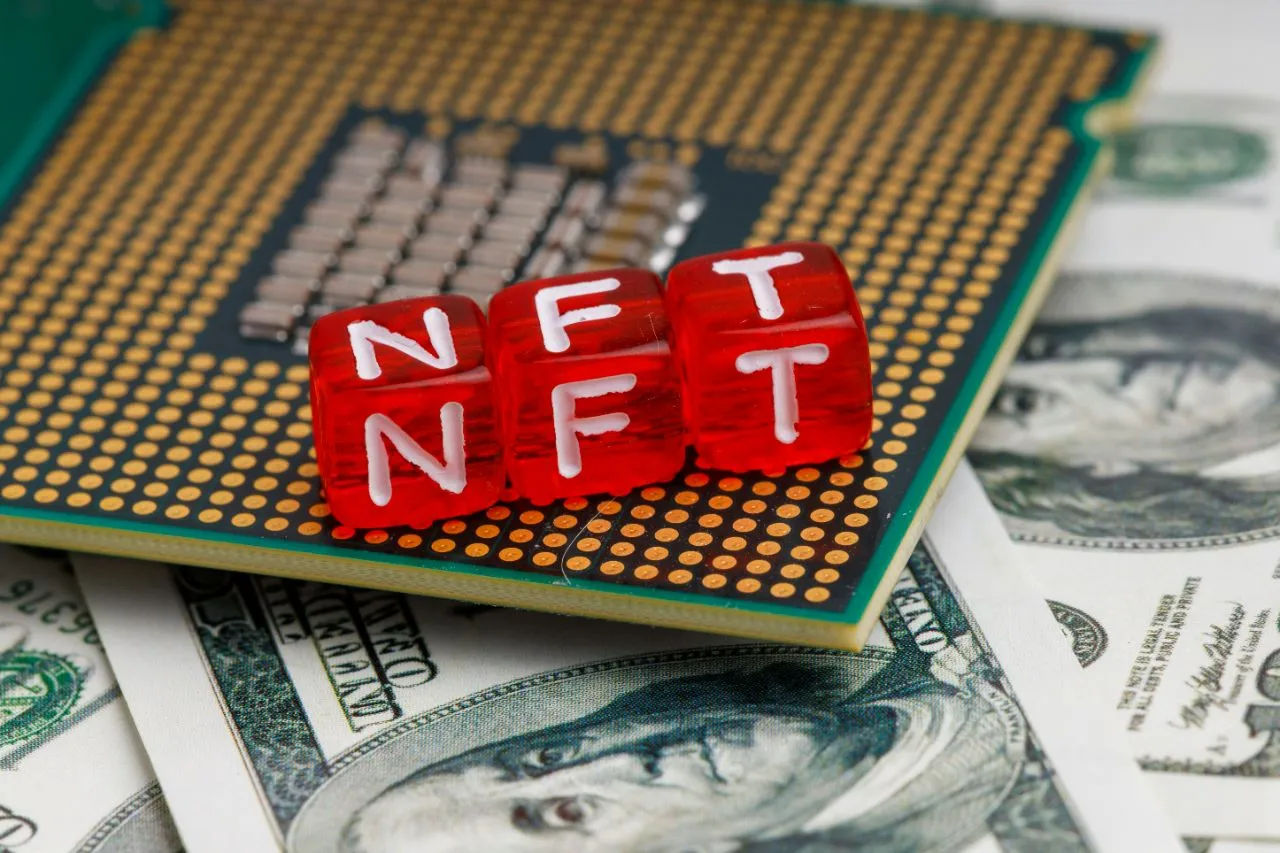
Lee Bok-hyun, the governor of South Korea’s Financial Supervisory Service (FSS), is set to have a meeting with Gary Gensler, the chair of the U.S. Securities and Exchange Commission (SEC), in May. The purpose of their meeting is to discuss whether to classify non-fungible tokens (NFTs) as virtual assets. Currently, NFTs are not seen as virtual assets in Korea, but there is a high likelihood of them being acknowledged as such following the meeting in May, local financial media outlet Edaily reported.
https://asset.coinness.com/en/news/0166cb79790b6439ea2fd67963c8600a.webp
Photo by Andrey Metelev on Unsplash

Lack of definition for NFTs

An NFT is a digital certificate of authenticity that is not fungible or replicable. NFTs tokenize content or assets of various types – from images, music, videos, games and artworks to real-estates – by assigning a unique token ID to them. Many see 2018 as the year NFT technology was first introduced. 


Despite its wide range of applications, no legal definition has been made for NFTs. Some view NFTs as technology, and others as virtual assets or securities. The Korean government decided not to recognize NFTs as virtual assets under the Virtual Asset Protection Act (Virtual Asset Act), effective in July. Behind this decision is a perception that NFTs are less likely to pose significant risks to the market, as a large portion of NFTs are now traded by collectors seeking to expand their private collections. 


However, NFTs are increasingly seen as speculative destinations by many investors over time, as prices of virtual assets including BTC surge. This shift backs the local movement to recognize NFTs as well as spot bitcoin ETFs as virtual assets.


Opposition from NFT businesses

Blockchain industry insiders say defining NFTs is of utmost importance, noting that classifying NFTs as virtual assets headfirst could deal a heavy blow to businesses in this sector. One finance insider mentioned that defining NFTs comes down to understanding their purposes and how they are utilized. If NFTs are primarily used for speculative purposes or as currency, they could be recognized as virtual assets, the person said. 


The biggest resistance is coming from NFT-related businesses. That is because recognizing NFTs as virtual assets would require these businesses to obtain a virtual asset service provider (VASP) license from the financial authority, which takes significant costs and workforce in the process.


A CEO of a blockchain startup, who preferred to remain anonymous, expressed concerns about the possibility of NFTs becoming virtual assets, saying that such recognition would enable NFT transaction tracing, potentially leading to severe violations of human rights.


While many industry insiders expect that the financial authorities will bring NFTs under the forthcoming Virtual Asset Act, the FSS stated that no decisions have been made regarding details of the upcoming meeting with the U.S. SEC. 

More to Read
View All
Web3 & Enterprise·

May 15, 2023

Taiwan’s Comma3 Ventures Raises $45M Crypto Fund

Taiwan’s Comma3 Ventures Raises $45M Crypto FundTaiwan-based Comma3 Ventures, a venture capital firm focused on Web3, has closed funding on a $45 million Web3 fund.The raise was achieved through the participation of a diverse range of institutional investors, high net worth individuals and family offices based in Taiwan and Singapore.In a press release published on Friday, the company stated that the funds raised will be allocated to blockchain infrastructure projects at an early stage of development, focusing on dApps, zero-knowledge proof technology, cross chain bridging projects, as well as layer one and layer two blockchain networks.Photo by Frolda on UnsplashSingapore tiesWhile Taiwan-based, the venture capital has strong ties with Singapore, given that Nicole Liu, one of the firm’s general partners, was formerly an investment manager with Jubilee Capital Management.Liu leads the firm alongside fellow general partners, Ivan Li and Denny Yang. Among the previous projects the trio have invested in are Zilliqa, a smart contract blockchain network that focuses on throughput and scalability, Ethereum layer two side-chain network Polygon, South Korean enterprise blockchain Klaytn, blockchain-based esport game producer Thetan Arena, and a project called Highstreet which seeks to re-imagine retail in the metaverse.Earlier this month, Cetus, a decentralized exchange (DEX) and concentrated liquidity protocol built on the Sui and Aptos blockchains, secured funding from Comma3 Ventures, alongside AC Capital, Adaverse, Animoca Brands, Coin98 Ventures, IDG Capital, KuCoin Ventures, Leland Ventures, NGC Ventures and OKX.Funding 80 to 100 Web3 start-upsAccording to Comma3 Ventures, crypto start-ups that have the potential to scale within the Web3 space within niches such as DeFi and GameFi, will be prioritized for funding. With a spend of $45 million at its disposal, the venture capital firm intends to target around eighty to one hundred start-ups, with a capital funding variance of between $250,000 to $1 million depending on the particular project.In a press release Liu stated: “We regard ourselves as an early-stage investor, so team background and previous experience are very important for us. And on the other hand, we are looking for entrepreneurs who really know what blockchain and Web3 are and how to rebuild their businesses empowered by decentralization technology and token economics. We are dedicating ourselves to investing in and supporting early-stage blockchain infrastructure such as L1&L2, cross-chain, and ZK, as well as DAPPs with the potential to bring traffic to Web3, such as DeFi, GameFi, and creator economies.”In a 2021 podcast, Ivan Li explained that his first allocations in the crypto space were to Bitcoin and Ethereum. Those successful investments were reinvested and allocated to blockchain, data analysis and cyber security projects. From 2021 onwards, Li explained that institutions in the TradFi space in Taipei started to approach him with an interest in trying to get exposure to crypto. That led to him forming Red Building Capital in 2018. Comma3 Ventures followed in 2022.

news
Policy & Regulation·

Oct 12, 2023

Crypto.com Complies with UK FCA’s New Digital Asset Rules

Crypto.com Complies with UK FCA’s New Digital Asset RulesWhile some Asian crypto platforms are struggling to comply with the United Kingdom’s Financial Conduct Authority (FCA) regarding new marketing-related rules that took effect on October 8, Singapore’s Crypto.com has confirmed its successful compliance. The firm is registered as FORIS DAX UK LIMITED on the FCA website.Photo by Paul Fiedler on UnsplashContinuing support for UK customersAs a result, UK customers can continue to access Crypto.com’s products and services without disruption. The company emphasized its commitment to strengthening its platform and presence in the UK market. Crypto.com stated that it fully supports measures aimed at enhancing consumer safety and security in the cryptocurrency industry. The company also expressed its ongoing cooperation with UK and international regulators to foster consumer confidence in the crypto sector.Effective from October 8, the FCA’s updated guidelines mandate that all crypto firms marketing their services to UK consumers must register with the FCA and adhere to relevant standards concerning risk disclosures and marketing practices.Regulatory compliance challengesWhile Crypto.com has managed to remain compliant, that’s not the case for all large and well-known crypto platforms. The FCA recently expanded its scrutiny of digital currency exchanges by adding Huobi and KuCoin to its list of unapproved and unregistered firms.The FCA alerted clients to the fact that these service providers were offering various crypto services in the UK without obtaining regulatory approval. This development follows a recent warning from the FCA, which highlighted several other crypto-focused companies.Binance’s compliance difficulties2023 has seen global crypto platform Binance struggle with regulatory compliance in various markets worldwide. In some jurisdictions where it has either decided to withdraw from the market or been asked to leave, the firm has taken the approach of still maintaining exposure to that market by establishing a partnership with a locally registered firm.In the UK, Binance has partnered with Rebuildingsociety.com, a peer-to-peer lending platform. However, its local partner has fallen foul of the UK's FCA. On Tuesday, the UK regulator issued a notice clarifying that Rebuildingsociety.com was not authorized to “approve the content of any financial promotion for a Qualifying Cryptoasset for communication by an unauthorized person.”Dubai-headquartered crypto exchange Bybit is another crypto business that has struggled with the FCA's new regulatory requirements. Last month the exchange denied reports that it was preparing to leave the UK market due to the new strict marketing rules. The following week the exchange confirmed that it would be leaving the UK market, ahead of the introduction of the new crypto marketing regulations.Crypto.com had received registration approval from the FCA in August 2022. At the time, CEO Kris Marsazalek stated:“We are committed to the UK market and we look forward to developing our platform and presence in the UK further by expanding our offering to customers, while continuing to work with regulators.”In June, the firm acquired a Major Payment Institution (MPI) license in its home market of Singapore from the Monetary Authority of Singapore (MAS). Around the same timeframe, the firm received a minimum viable product (MVP) license from the Virtual Assets Regulatory Authority (VARA) in Dubai.

news
Web3 & Enterprise·

Jan 10, 2025

Backpack acquires FTX EU

Backpack Exchange, a crypto exchange that joined the Japan Virtual Currency Exchange Association (JVCEA) last December, has recently acquired FTX EU, the European arm of the failed crypto exchange business FTX. According to a press release, the business comes with a European MiFID II license, with the acquisition having been approved by the Cypriot regulator, the Cyprus Securities and Exchange Commission (CySEC). Furthermore, a Delaware bankruptcy court in the United States, which is dealing with the FTX bankruptcy, has also rubber-stamped the acquisition. Backpack Exchange was co-founded by CEO Armani Ferrante, alongside other former FTX executives. According to the firm’s LinkedIn page, it has established its headquarters in Japan. The company also has links to Dubai, having acquired a Virtual Asset Service Provider (VASP) license for its Backpack Wallet product from  Dubai’s Virtual Assets Regulatory Authority (VARA) in 2023.Photo by Christian Lue on UnsplashRebuilding trust As a consequence of having acquired FTX’s European arm, Backpack Exchange will now assume responsibility for the distribution of court-approved FTX bankruptcy claims to FTX EU users. In the company’s press release, Ferrante spoke of the importance of the distribution process in rebuilding trust. He stated: "Customer restitution is a crucial step to rebuild trust and confidence in the industry, and Backpack is committed to returning FTX EU customers’ funds as fast and as safely as possible." In response to a query from FTX creditor activist Sunil Kavuri on X, Ferrante outlined that FTX EU users “will only be able to claim their euro claims funds directly from Backpack EU.” Ferrante clarified that FTX EU customers who had pending crypto withdrawals at the time of the bankruptcy will have their crypto claims dealt with via the FTX bankruptcy estate. In a Series A financing round early last year, Backpack was valued at $120 million. Through FTX EU, it now acquires a MiFID II license, further facilitating the global expansion of the company. With FTX EU now forming Backpack’s EU arm, the company will offer crypto-derivative products, including perpetual futures. This product offering is scheduled to go live in Q1 2025. Bankruptcy process controversy The bankruptcy of FTX EU has been controversial, starting off with the European entity being illegally filed into a U.S. bankruptcy process. In early 2024, the FTX Debtors suggested that the entity was worthless. It later wanted to buy out the entity itself, outbidding a third-party bidder. A short time afterwards, the FTX Debtors reached a settlement with the former FTX EU team. It’s understood that Backpack has acquired FTX EU for $32 million.  The FTX Debtors’ attempt to buy the business itself has cast a cloud over the bankruptcy process. When it first emerged that the business had been sold, there was some speculation as to if this would mean a rebooted FTX within the European market, but Backpack’s acquisition confirms that this was not to be the outcome.  Japan could have offered another opportunity to reboot the business, but instead, FTX Japan was acquired by bitFlyer and absorbed into its existing business. With regard to the main FTX business entity, the FTX Debtors told the bankruptcy court that there was no interest in the business from buyers. 

news
Loading