Top

The 3rd Busan Blockchain Regulation-free Zone Steering Committee holds meeting

Policy & Regulation·March 11, 2024, 5:11 AM

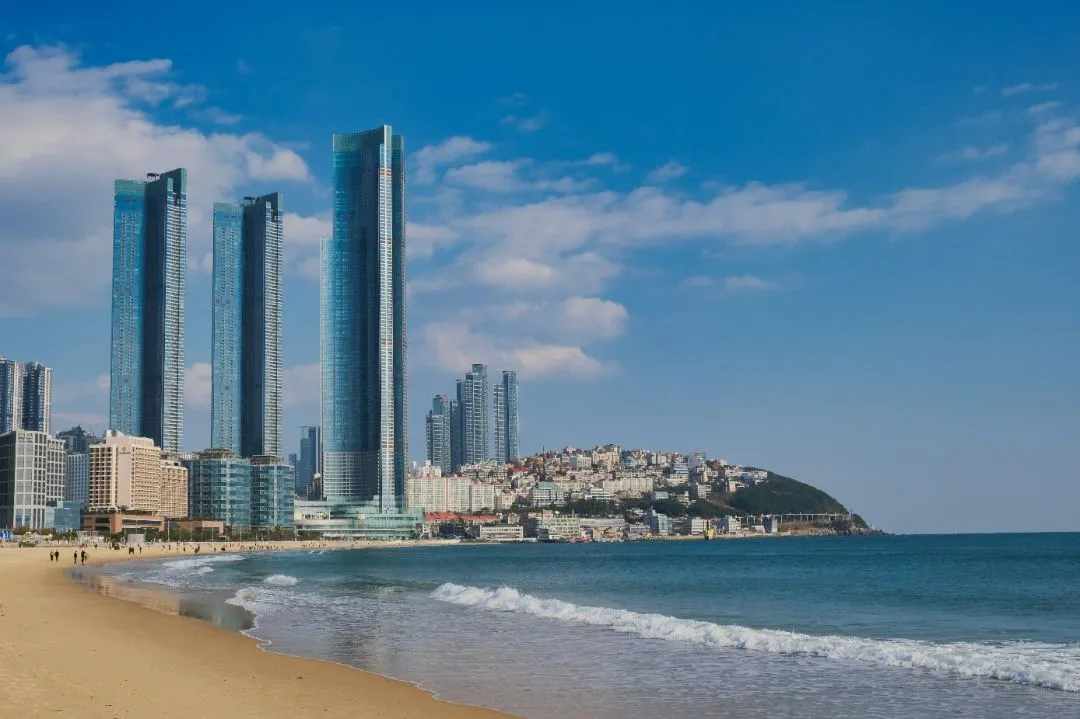
The local government of Busan, the second-largest city in South Korea, announced in a press release that it held the 3rd Busan Blockchain Regulation-free Zone Steering Committee (Committee) meeting at the Busan Eurasia Platform, a community center located near Busan Station. 


The meeting took place last Thursday at 15:00 (KST), attended by 12 Committee members, including Busan’s Vice Mayor for Economic Affairs Kim Kwang-hee, Busan Technopark Chairman Kim Hyung-gyun, Busan International Finance Agency Chairman Lee Myung-ho and Busan Information Industry Promotion Agency Chairman Kim Tae-yeol.

https://asset.coinness.com/en/news/9837ed6ad69b37feef42efd4101c1492.webp
Photo by Finn on Unsplash

The meeting was intended to discuss strategies to revitalize the blockchain regulation-free zone (blockchain zone) and to attract new blockchain businesses to the region. Busan has been recently struggling with developing and attracting blockchain technology companies to the region, which has cast doubt on the city’s ability to retain its status as the regulatory sandbox zone.  


New 24 members, new commitment to invigorating blockchain zone 

Established in October last year, the 3rd Committee comprises 24 new members who have expertise in blockchain technology. The Committee aims to raise awareness of the blockchain zone’s potential and foster the blockchain industry within the region. 


Kim Sang-min, Vice CEO of healthcare company Erom, was appointed Committee Chairman at the meeting. Known as an expert in the blockchain ecosystem, Kim currently serves as a blockchain policy advisor for Busan and has experience in taking the lead in establishing the Busan Digital Asset Exchange (BDX) last year. 


More meetings in store to become a blockchain hub 

The meeting focused on creating subcommittees in an effort to facilitate the Committee’s seamless operation. Moreover, members reached a consensus on holding meetings at any time when warranted, in both online and in-person formats. 


During the meeting, Busan Vice Mayor Kim said the newly launched Committee will contribute to identifying innovative businesses with great potential that require both cutting-edge blockchain technologies and a regulatory sandbox environment.
 

More to Read
View All
Web3 & Enterprise·

May 30, 2024

Marketnode secures Series A funding led by HSBC and Temasek to enhance digital market infrastructure

Singapore-based Marketnode has successfully completed its Series A investment round, receiving backing from global banking leader HSBC and its existing shareholder, Temasek. While the precise funding amount remains undisclosed, the firm plans to utilize the capital to expand its financial market infrastructure. Marketnode aims to develop neutral infrastructure for digital fixed-income and structured products, initially focusing on the Asia-Pacific region. This initiative is part of a broader strategy to create a comprehensive multi-asset ecosystem.Photo by Markus Winkler on UnsplashStrategic collaborations and future projectsRehan Ahmed, President of Marketnode, highlighted the strategic alliance with HSBC as a pivotal move towards establishing the next generation of trusted and neutral market infrastructure. The investment will also accelerate the launch of Fundnode, a new investment fund infrastructure powered by distributed ledger technology. Additionally, the collaboration will support future offerings of tokenized assets. Marketnode has been engaging with HSBC since 2020, including participation in Singapore's Project Guardian and various digital bond initiatives led by the Monetary Authority of Singapore. Regulatory landscape in SingaporeSimultaneously, Singapore continues to tighten regulations within its crypto sector. Following its stringent licensing framework, the Singaporean authorities recently announced an expansion in the scope of companies regulated under its payment services rules. This measure aims to enhance supervision of digital asset firms, focusing on anti-money laundering efforts and user protection. 

news
Policy & Regulation·

Sep 19, 2023

JPEX Exchange Scandal Sees Crypto Regulation Under Scrutiny in Hong Kong

JPEX Exchange Scandal Sees Crypto Regulation Under Scrutiny in Hong KongWhile Hong Kong has been developing steadily as a crypto sector hub, the focus in the Chinese autonomous territory has turned towards regulation after a recent scandal involving an unlicensed cryptocurrency exchange.Photo by Ihor Saveliev on UnsplashOngoing investigationYesterday we reported on some arrests relative to problems experienced at crypto exchange JPEX. The fallout continues on Tuesday, with the Hong Kong police now understood to have arrested eight individuals, including social media influencers who promoted the exchange and JPEX employees, on allegations of fraud. This illicit activity in and around the JPEX exchange has affected over 1,600 investors, implicating more than $150 million in assets.JPEX, in response to mounting pressure, announced the suspension of trading on its platform. In a statement, the exchange mentioned ongoing negotiations with third-party market makers to address liquidity shortages. However, JPEX also accused an unidentified third-party market maker of maliciously freezing funds, further complicating the situation.Politicians and regulators speak outResponding to the incident via a press conference on Tuesday, Hong Kong’s Chief Executive, John Lee, emphasized the significance of investing in virtual assets through licensed platforms. Lee stated:“This incident highlights the importance that when investors want to invest in virtual assets, then they must invest on platforms that are licensed.” He also pledged that the Securities and Futures Commission (SFC) would closely monitor the situation to ensure investor protection.Elizabeth Wong, the Head of the SFC’s fintech unit, revealed that an investigation was underway to determine whether JPEX had violated anti-money laundering laws. The SFC had already declared JPEX unlicensed, prompting numerous complaints from investors who were unable to withdraw their virtual assets or experienced unexplained reductions in their balances.Assets frozenHong Kong authorities have taken decisive action against those involved in the scandal. They have frozen bank accounts valued at 15 million Hong Kong dollars ($1 million) and seized three properties valued at 44 million Hong Kong dollars. The police have reported receiving 1,641 complaints related to JPEX, involving a staggering $1.2 billion Hong Kong dollars. By last Wednesday, the SFC had received in excess of 1,000 complaints and at that point, they notified the general public.The JPEX scandal has drawn attention to the need for stronger cryptocurrency regulations in Hong Kong, a region that has become attractive to cryptocurrency firms since mainland China banned cryptocurrency transactions in 2021. In mainland China, trading cryptocurrencies on foreign exchanges from within the country remains illegal.Hong Kong’s response to cryptocurrency regulation has evolved. Beginning on June 1, the SFC started accepting applications from cryptocurrency exchanges, allowing licensed operators to serve retail investors, provided they understand the associated risks. Previously, only professional investors had access to such exchanges. Currently, only two exchanges in Hong Kong, OSL Exchange and Hashkey Exchange, have received approval to operate.As Hong Kong reevaluates its approach to cryptocurrency regulation, the crypto sector will hope that it strikes a balance between fostering innovation and protecting investors from fraud and market manipulation.

news
Web3 & Enterprise·

May 10, 2023

OmniBOLT to Support BRC-20 Tokens on Lightning

OmniBOLT to Support BRC-20 Tokens on LightningSingapore’s OmniBOLT, a project that’s developing technological solutions within bitcoin’s layer two network environment, has outlined that it will support BRC-20 tokens on Lightning Network.Before we consider precisely what OnmiBOLT's decision to support BRC-20 tokens means, let’s cover the backstory.Photo by Sander Weeteling on UnsplashBRC-20BRC-20 is an experimental token standard which was created by an anonymous developer with the handle “Domo”, and username ‘@domodata’ on Twitter. A token standard governs how and where a cryptocurrency can be used. The approach has been pioneered by developers on the Ethereum blockchain who created the ERC-20 standard a number of years ago, relative to the Ethereum network.A bitcoin evolutionIn this instance, BRC-20 is a fungible token standard designed for the bitcoin blockchain. Bitcoin development is very slow and conservative, and deliberately so, in an effort to put network security first. However, it has had two major upgrades over the course of the last few years, namely SegWit and Taproot.Many in crypto have been critical of the bitcoin project on the basis of it being a pet rock that lacked features and the flexibility to use it in other ways aside from as a store of value or means of exchange. However, those protocol upgrades have led to further development that is expanding bitcoin’s use case and versatility.SegWit and Taproot enabled the development of Bitcoin Ordinals in January 2023. Ordinals provide a means to create Bitcoin non-fungible tokens (NFTs), by attaching data to individual satoshis, the smallest denomination of Bitcoin. NFTs created this way are immutable as they’re not created on side chains but on the bitcoin blockchain itself.In a fast moving scenario, the development of Ordinals led two months later to the emergence of the BRC-20 standard. BRC-20 tokens can be stored on the bitcoin base-chain, built with the assistance of Ordinals. BRC-20 is an exciting development as it stands to enable smart contract capabilities relative to bitcoin.Solving the bitcoin fee issueMany see this development as a solution for the longer term fees issue that the bitcoin blockchain will have to overcome. Bitcoin miners are compensated in mining rewards but the level of rewards is being cut in half every four years. The concern is that in the longer term, there may not be enough revenue for miners to continue to secure the network effectively.With the development of Bitcoin Ordinals, more fees are generated, and so this is seen as a means through which the network can sustain itself over the longer term.Mempool backlogSo what’s not to like? The issue that has arisen over the past few days is that bitcoin transaction fees have hit a two year high. Over the past few days, there have been in excess of 400,000 unconfirmed bitcoin network transactions sitting in the mempool. The mempool is a mechanism within the bitcoin protocol that stores the data relative to a queue of transactions that are waiting to be confirmed.Relieving pressure on bitcoinThat brings us back to the significance of the Singaporean team of developers at OmniBOLT deciding to support BRC-20 tokens on the lightning network. That move can relieve the pressure on the bitcoin mainnet. The project is being backed by Waterdrip Capital, Danhua Capital, Redline DAO and others.Bitcoin has been a boring protocol and many have celebrated that fact as a feature and benefit for a network that serves a couple of vitally important use cases exceptionally well. However, development never stops and it’s fascinating to see another side to the protocol unfold, and all the while, it’s not entirely clear where it will end.

news
Loading