Top

Korean banks cooperate with Polish counterparts in digital finance and blockchain

Policy & Regulation·March 26, 2024, 3:51 AM

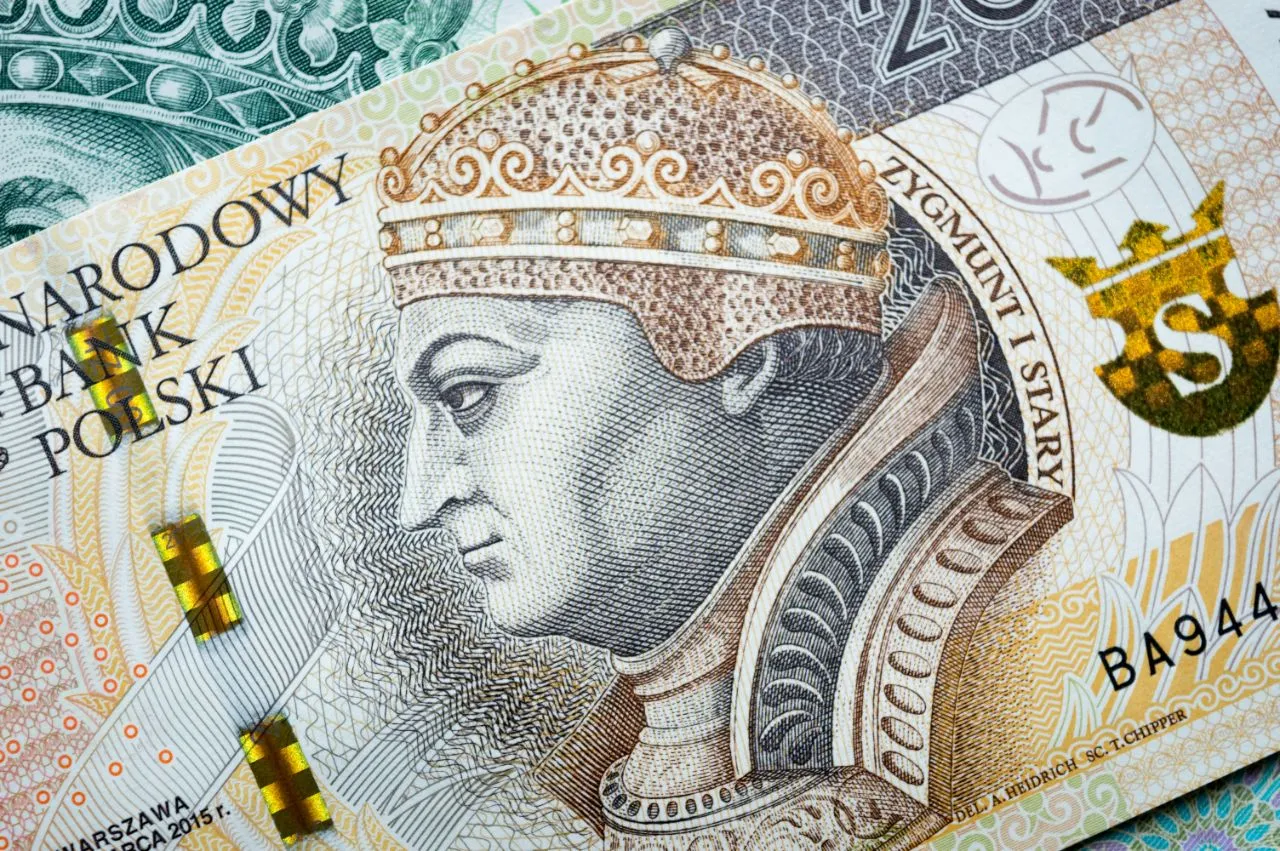
The Korea Federation of Banks (KFB) Chairman Cho Yong-byoung paid a visit to Poland yesterday to sign a memorandum of understanding (MOU) on financial cooperation between South Korea and Poland, Korean news media The Korea Economic Daily reported. The MOU was signed by Chairman Cho and the Polish Bank Association (ZBP) President, Tadeusz Białek.


The partnership aims to strengthen bilateral financial collaboration, which will be backed by holding joint financial conferences, sharing information on financial regulations and training financial experts. 

https://asset.coinness.com/en/news/dc56fd07b6f3e124cc4378bbfc1a5175.webp
Photo by Lukasz Radziejewski on Unsplash

Joint seminar on digital finance, blockchain and AI 

Following the MOU signing ceremony, the two associations conducted a joint seminar on digital finance, economy and the banking industry. The event was attended by Korea's Financial Services Commission (FSC) Chairperson Kim Joo-hyun, representatives of KFB members, President Białek and executives of Polish banks. 


Among the mainly discussed topics were Korea's digital financial landscape and its digital banking industry, along with the Polish economy and its banking industry. In particular, the participants focused on innovative changes in the financial industry brought by cutting-edge technology such as blockchain, AI and big data. 


During the conference, Chairman Cho expressed his commitment to bolstering the bilateral partnership, stating that the Korean banking industry will support local companies in expanding their businesses in Poland. 


More to Read
View All
Markets·

Dec 15, 2023

PDAX gears up for trading surge amidst Binance market exit

PDAX gears up for trading surge amidst Binance market exitThe Philippine Digital Asset Exchange (PDAX), an order book exchange, is planning to take full advantage of Binance’s regulatory issues in the Philippines, with the expectation of an uptick in trading volume as a direct consequence.Photo by iSawRed on UnsplashMarket opportunityAccording to a Filipino English-language broadsheet publication, The Daily Tribune, PDAX CEO Nichel Gaba sees the exit of Binance, flagged by the Securities and Exchange Commission (SEC) as an unauthorized exchange in the Philippines, as a pivotal moment for local virtual asset service providers (VASPs) to expand their market presence. Gaba envisions that the anticipated migration of traders from Binance could propel the country’s cryptocurrency trading volume to an estimated $6 billion by 2024.Data from the Bangko Sentral ng Pilipinas (BSP) demonstrates that there are currently 17 VASPs in the Philippines, with 10 operational and seven inactive. As one of the operational ones, PDAX is preparing for the expected growth in the local sector.The SEC in the Philippines has been actively working towards imposing a ban on Binance, citing various issues both locally and internationally. Gaba predicts that this development will prompt a substantial number of Filipino cryptocurrency traders to seek alternative, legitimate trading platforms. Gaba stated:“Now that Binance is being banned, there are a lot of users wondering where they can go and the best option for them is to go to a licensed exchange like PDAX. Our strategy as a company is to focus on being the best alternative.”Binance ban countdownAccording to local news outlet BitPinas, the head of the Philippines SEC, Kelvin Lee, clarified that Binance and any other unregistered exchange issued with an advisory have three months before they are banned from the country.Addressing the confusion surrounding the ban during a panel discussion on Wednesday, Lee stated that the ban would be in effect three months from the issuance date of Nov. 29. In that way, time has been allowed for feedback and potential extensions.While the original recommendation was for a shorter transition period, Lee extended it, considering the upcoming Christmas holiday, stating, “Not to make it hard for Filipino investors during that time.”Two additional exchanges bannedIn addition to Binance, Lee mentioned that OctaFX and MiTrade, along with other exchanges that have received advisories for unregistered operations, will also face bans after three months. The local SEC disclosed having a sizable list of unregistered exchanges that will gradually emerge.Responding to criticisms of the ban, given that some users find Binance to be “cheaper” than other registered exchanges, Lee emphasized the importance of compliance costs and consumer protection. He urged local investors to “invest in registered entities” among the 17 VASPs registered in the country that offer fiat-to-crypto services.The BSP-regulated VASPs are expected to process crypto assets worth approximately $3 billion by the end of the year. However, this estimate does not take into account unregulated transactions occurring outside of VASP channels.

news
Policy & Regulation·

Nov 22, 2023

Crypto Travel Rule solutions provider CODE obtains ISO 37301 certification

Crypto Travel Rule solutions provider CODE obtains ISO 37301 certificationCODE, a Travel Rule solutions provider and joint venture co-founded by Korean cryptocurrency exchanges Bithumb, Coinone and Korbit, announced on Wednesday (local time) that it has obtained the ISO 37301 certification for compliance management systems (CMS) from the Korea Compliance Initiative (KCI).Photo by Héctor J. Rivas on UnsplashBoosting complianceISO 37301 is an international standard that outlines the requirements and guidelines for an organization in establishing, developing, implementing, evaluating, maintaining and improving a CMS. It provides a framework for organizations to ensure that they are following all relevant and applicable laws, regulations, codes of conduct and more to exercise good governance, transparency and accountability.CODE has taken the initiative to bolster its CMS to provide more secure and reliable Travel Rule solutions by analyzing and managing compliance risks. The firm’s CEO Lee Sung-mi is responsible for overseeing these efforts as the recently appointed head of compliance. Through these measures, the company explained that it has been capable of building a system to comply with strict international standards.The Travel Rule under the Financial Action Task Force’s (FATF) Recommendation #16 outlines that virtual asset service providers (VASPs) must share certain personal information about customers — including names and account numbers — when facilitating crypto transactions that exceed a certain amount.CODE is also running mandatory training sessions and various programs for all employees to ensure adherence to compliance requirements. In particular, the firm operates a system to monitor Travel Rule compliance risks that may arise during cryptocurrency deposits and withdrawals.“Beyond establishing a robust compliance management culture as a Travel Rule solution provider, we will continue to work with our corporate members to ensure that this culture can be more widely adopted across the crypto industry,” said Lee Sung-mi.Contributing to anti-money launderingCODE has also recently teamed up with global blockchain analytics and crypto compliance solutions provider Elliptic to help Korean VASPs adapt to the evolving international regulatory landscape for anti-money laundering (AML) and the crypto Travel Rule.

news
Policy & Regulation·

Jul 13, 2023

Kaspersky Says Crypto Phishing on the Rise in the Philippines

Kaspersky Says Crypto Phishing on the Rise in the PhilippinesThe Philippines witnessed a significant increase in detected cryptocurrency-related attacks last year while Vietnam recorded the highest level in Southeast Asia, according to cybersecurity firm Kaspersky.Photo by Markus Spiske on UnsplashEase of crypto accessVietnam topped the list with over 64,000 detections. Meanwhile, the Philippines recorded 24,737 cases of crypto-phishing attacks in 2022, up from 9,164 cases in 2021, making it the second-highest number in Southeast Asia.Adrian Hia, Managing Director for Asia Pacific at Kaspersky, attributed the rise to the ease of accessing cryptocurrency in the Philippines. He explained that as users increasingly turn to mobile devices, they are inadvertently exposing themselves to potential breaches, as malware can be installed through various touch points.Research published by Malaysian crypto data aggregator, CoinGecko, earlier this month, also points to the Philippines as having the second highest level of interest in crypto in Southeast Asia, after Singapore.Targeting popular platformsCybercriminals commonly target accounts of popular online gaming platforms and crypto wallets using advanced stealers or “stalkerware” that allow them to spy on individuals through their mobile devices, Kaspersky stated. The firm’s monitoring data revealed that malware is spreading through legitimate channels such as official marketplaces and advertisements in popular apps.Across Southeast Asia, the total number of crypto-phishing detections decreased to 147,649 in 2022 from 164,330 in 2021, according to Kaspersky. However, only Singapore (down 74%), Thailand (down 51%), and Vietnam (down 15%) observed declines in detections. Besides the Philippines, crypto-related attacks also increased in Indonesia (from 19,584 in 2021 to 24,642 in 2022) and Malaysia (from 16,071 to 16,767).Kaspersky discovered an average of 400,003 new malicious files per day in 2022, representing an increase of 20,000 files per day compared to the previous year. Hia emphasized that scammers are relentless in their efforts to steal cryptocurrency due to its increasing popularity and adoption, particularly in Southeast Asia. He urged cryptocurrency adopters in the region to stay informed about the latest tricks used by crypto phishers to protect their digital assets.Email-based attacksRoman Dedenok, a spam analysis expert at Kaspersky, revealed that crypto phishers often employ email-based attacks to target crypto users. He explained that scammers entice victims with the prospect of participating in a cryptocurrency giveaway, offering popular digital assets such as Bitcoin, Ethereum, Litecoin, Tron, or Ripple.The scammers provide a three-point guide to claim the free cryptocurrency along with a link to the “promotion” website. Clicking on the link leads users to a phishing site where they are prompted to specify the wallet to which they want the funds transferred.In response to the growing cybersecurity concerns, Kaspersky is engaging in discussions with government institutions worldwide. In the Philippines, while the central bank does not directly regulate cryptocurrency, it has established guidelines for virtual asset service providers. The Chairman of the Securities and Exchange Commission (SEC) in the Philippines, Emilio Aquino, recently delayed publication of a regulatory framework for crypto, on the basis of having “to make sure people don’t get burned.”Entities involved with virtual assets are required to obtain a license from the Bangko Sentral ng Pilipinas, the central bank of the Philippines, to comply with regulations.

news
Loading