Top

Japan to fine-tune crypto regulations to protect investors

Policy & Regulation·November 08, 2024, 3:28 AM

Japan's Financial Services Agency (FSA) is proposing new legislation in an effort to prevent the assets of Japanese investors held on crypto exchanges from being transferred overseas.


According to local news outlet Jiji Press, the Japanese regulator recently put forward the idea of drafting such a bill. It’s thought that the move suggests that the Japanese regulators have learned from the collapses of cryptocurrency exchanges Mt. Gox and FTX. 

https://asset.coinness.com/en/news/94aa449947d60aef7864b237fb96e2e5.webp
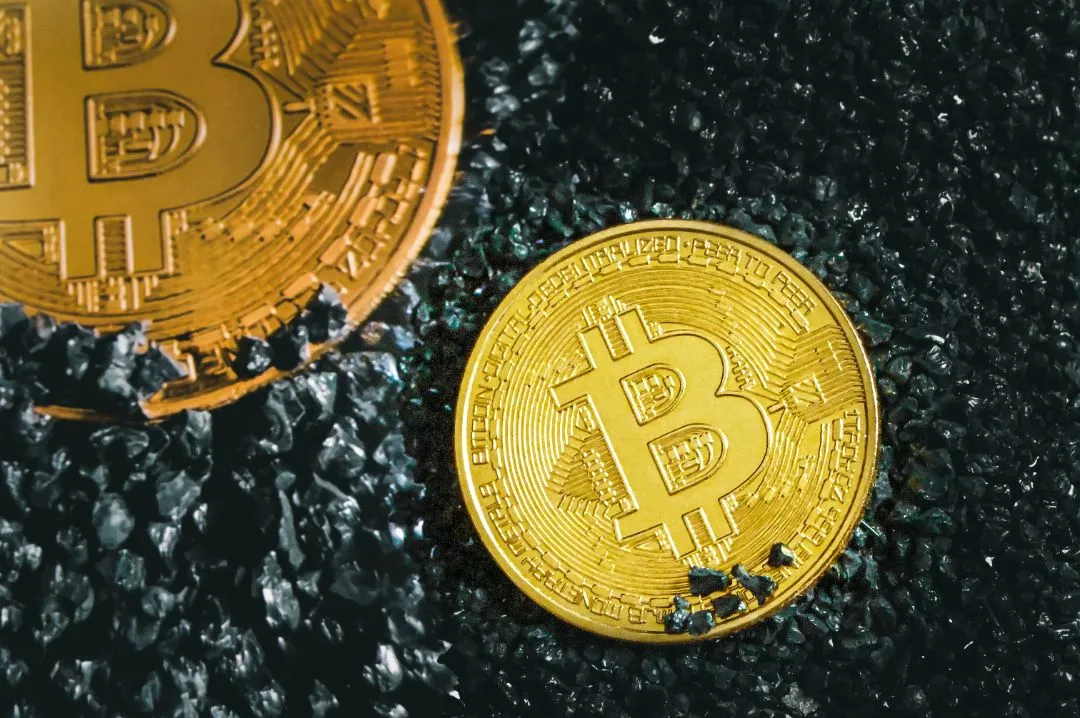
Photo by Jaison Lin on Unsplash

Learning from past failures

While Japan already had a higher standard of regulation in place prior to the FTX collapse, likely as a consequence of the authorities having experienced the downfall of Mt. Gox in February 2014, there is still room for improvement. 


While funds had been ring-fenced for FTX Japan users, those who accessed services advertised in Japan through the FTX app were deemed to have been accessing a service which fell under an international jurisdiction, denying them the same protections otherwise offered to FTX Japan platform users as a consequence of the regulations that had been put in place.


Incorporating a holding order

Japanese media outlet Nikkei described this latest move by the Japanese FSA as follows:


“The Financial Services Agency is moving towards creating a new ‘holding order’ in the Payment Services Act, which regulates cryptocurrency exchanges, that will order them not to take domestic assets entrusted to them by customers overseas.”


Consequently, the regulator is looking to add this as the latest proposed amendment to the Payment Services Act. Back in September it emerged that amendments to that existing legislation were being looked at with a view towards making it easier for businesses to incorporate digital assets into their service offerings.


The regulator has also been mulling over the reclassification of crypto as a financial instrument by amending the Payment Services Act accordingly. Additionally, a more generous tax policy is being proposed. Currently, the Japanese authorities impose a tax rate of up to 55% on cryptocurrency-related revenues. Corporate holders of digital assets have to apply a 30% tax rate, irrespective of income or profits.


With that, a 20% tax rate is being considered. The matter became a political issue prior to the East Asian nation’s recent elections, with the leader of the Democratic Party for the People (DPP) backing the application of a 20% crypto tax rate.


The application of a holding order has applied previously to companies that have been registered under the Financial Instruments and Exchange Act. This proposed amendment would see it applied to virtual asset trading platforms as part of the Payment Services Act.


Guarding against bankruptcy losses

If applied, the amendment would prevent loss of Japanese investor funds in circumstances where a crypto exchange platform goes into bankruptcy. Legal precedent set in the FTX bankruptcy in the United States means that if a user’s funds go into a non-individually segregated hot wallet belonging to an exchange, any property rights, even if explicitly outlined in the terms of service, are lost. 


A company can make a case to go into bankruptcy in any international jurisdiction, which means that this precedent has potential implications for all market participants. The proposed amendment from the Japanese FSA would serve to protect investors from such an eventuality.

More to Read
View All
Markets·

Jul 10, 2023

Research Finds Over 90% of Korean Cryptos Prone to Pump-and-Dump Schemes

Research Finds Over 90% of Korean Cryptos Prone to Pump-and-Dump SchemesThe Korea Institute of Finance (KIF) has released a report revealing that 91.3% of South Korean-issued cryptocurrencies, known as “kimchi coins,” are prone to pump-and-dump (P&D) schemes. These schemes involve intentionally spreading false information on social media platforms to manipulate token prices. This is done with the intention of selling the tokens at artificially inflated prices.Photo by Maxim Hopman on UnsplashP&D prevalenceThese manipulative practices were frequently observed during the rapid growth of the cryptocurrency market from 2020 to 2022. Previous research papers indicate that P&D schemes commonly occur on multiple crypto exchanges and typically unfold within a time frame of 10 minutes. It has been observed that cryptocurrencies with lower liquidity and smaller market capitalization are particularly vulnerable to becoming prime targets for these schemes.Korean market and global marketThe Korean cryptocurrency market stands out with its significant number of cryptocurrencies listed on a single exchange, including kimchi coins. This distinction becomes evident when comparing it to the global market. In the Korean market, the top 10 global cryptocurrencies, ranked by their market capitalization, account for 59% of the total market share. Meanwhile, in the global market, they represent 84.9%. This contrast indicates that the Korean market has a larger proportion of alternative coins, also known as altcoins, which are more susceptible to pump-and-dump schemes and other manipulative activities.According to a survey conducted by the Financial Services Commission in the second half of 2022, there were a total of 625 listed coins (excluding duplicate listings), with 389 (62.24%) of them being listed on a single exchange. Among these single-exchange listed cryptos, 223 were kimchi coins, which is equivalent to 57%.OHLCV data analysisIn this KIF paper, research analyst Baik Yeon-ju delved into abnormal price patterns within the Korean cryptocurrency market. She analyzed the hourly Open-High-Low-Close-Volume (OHLCV) data of kimchi coins in October 2021. The study revealed that out of a total of 16,560 hourly price and volume observations, approximately 4.7% exhibited characteristics consistent with P&D schemes. Baik noted that 91.3% (21 of the 23) observed kimchi coins witnessed such movements.Legislative effortsMeanwhile, it is encouraging that the South Korean National Assembly passed the Virtual Asset User Protection Bill during its plenary session on June 30. This legislation, set to go effective in July next year, aims to provide protection for customers’ assets in the virtual asset space. The act not only establishes regulations to combat unfair trading practices but also enforces penalties for non-compliance.Call for further measuresHowever, Baik suggested that policies should be further strengthened to enhance investor protection within the crypto market. In order to achieve this, she proposed the implementation of a monitoring system for virtual asset service operators (VASPs) and the allocation of inspection and investigation personnel, as well as technical resources. It is also necessary to address potential conflicts that may arise with the Act on Real Name Financial Transactions and Confidentiality, particularly if the data required from VASPs falls under the classification of financial transaction information and personal information.Furthermore, considering the lack of transparency surrounding many altcoins regarding their projects and exchange listings, Baik suggests that the upcoming second virtual asset bill should tackle this issue by regulating the issuance and disclosure of these cryptocurrencies. Additionally, she highlighted the importance of conducting research based on empirical data to detect abnormal transactions. This approach enables the recognition of existing issues and the acquisition of concrete evidence, which serves as a credible basis for policymakers to enact relevant legislation.

news
Policy & Regulation·

May 03, 2024

Thai regulator takes action against deceptive crypto ads

In an effort to safeguard crypto investors from falling prey to misleading advertisements, the Securities and Exchange Commission (SEC) of Thailand has intensified its scrutiny of promotional campaigns within the crypto sphere.  Broker agent eventsOn April 29, the Bangkok Post reported that the SEC has raised concerns regarding the potential violation of local regulations through introducing broker agent (IBA) events. These events, the SEC clarified, may breach regulations as IBAs are only permitted to promote digital token services to deter speculation on cryptocurrencies, categorized as high-risk assets. IBAs, acting as local conduits for partner digital asset exchanges, typically earn commissions by onboarding clients within a specific market. Such practices are common for exchanges or brokers that don't directly operate in certain markets. Deputy Secretary-General Anek Yooyuen conveyed the commission's unease over crypto exchanges offering preferential treatment to onboard users. Yooyuen stated: "When operators organise sales promotions by offering rewards to entice people to use the service, this could encourage use of the service without considering the investment risks. This is especially the case for cryptocurrencies.”Photo by Than Diep on UnsplashWarning of consequencesHe cautioned that failure to adhere to these guidelines would result in “punishment according to the law.” While cryptocurrency exchanges are legal in Thailand, they must secure local approval. Notably, last month, Thailand even greenlit asset management firms to launch private funds, offering Bitcoin exchange-traded funds (ETFs) exclusively to institutional and ultra-high-net-worth investors. Nonetheless, the country recently prohibited the sale of cryptocurrency lending products and mandated that exchanges prominently display risk warning messages. International regulatory trendThis move by the Thai SEC mirrors actions taken by regulators in other major crypto markets. For instance, the United Kingdom's Financial Conduct Authority (FCA) issued 450 alerts for illegal crypto ads in 2023 alone. Similarly, Spain’s principal securities market regulator, the National Stock Market Commission, denounced fraudulent crypto asset promotions in November 2023, emphasizing companies’ obligations to adhere to local laws. Thai advertising guidelines mandate businesses and advertisers to substantiate the “facts” presented in their campaigns, failing which could lead to legal repercussions. A recent incident provides a case in point. Hackers hijacked advertisements on Etherscan, redirecting users to phishing sites aimed at draining crypto wallets. Scam Sniffer, a blockchain investigation firm, attributed the widespread phishing campaign to the inadequate oversight by advertisement aggregators. The company made the following statement on the matter: “Etherscan aggregates ads from platforms like Coinzilla and Persona, where insufficient filtering could lead to exposure to phishing attempts.” The wallet drainer scam involves enticing users to counterfeit websites and coercing them to link their crypto wallets, enabling scammers to siphon funds into their own wallets without user authentication or consent. This is not the first time that the authorities in Thailand have homed in on crypto-related advertising. In August 2023, the southeast Asian country’s Ministry of Digital Economy and Society (MDES) outlined that it had engaged with social media firm Meta, owner of Facebook, informing it that its response to the proliferation of fraudulent platform ads relative to crypto had been inadequate. 

news
Web3 & Enterprise·

Dec 02, 2023

Alchemy Pay extends market reach through two new industry alliances

Of all the crypto startups bootstrapping their way forward in 2023, few have forged as many industry partnerships as Singapore-based fiat-crypto payment solutions provider Alchemy Pay. This week brought two more collaborative developments for the fledgling company.Photo by Erika Fletcher on Unsplash Trust Wallet partnershipAlchemy Pay has entered into a strategic alliance with Trust Wallet, a self-custody and multi-coin wallet project headquartered in San Francisco, boasting over 70 million users. The collaboration empowers users to seamlessly engage in crypto transactions with various fiat payments directly within Trust Wallet.According to a press release published by the company on Wednesday, the integration not only enhances the user experience but also provides more on and off-ramp solutions. With that, it potentially lowers the entry barrier for retail users and aids acceleration of the adoption of Web3.Trust Wallet users can now convert between crypto and fiat using a multitude of international and local payment methods which are enabled by Alchemy Pay from within the wallet. The platform supports over 30 fiat currencies and accommodates transactions involving numerous cryptocurrencies across more than 100 blockchains.Robert McCracken, the Ecosystem Lead at Alchemy Pay, expressed pride in the partnership, emphasizing the commitment to ensuring a smooth, compliant and secure user onboarding process for fiat on-ramp and crypto off-ramp. The collaboration aims to make comprehensive on and off-ramp support available to the global user community.Nate Zou, Trust Wallet’s Product Lead, was similarly enthused, stating:“We’re excited to offer more fiat solutions for our users by working with Alchemy Pay, making crypto more accessible than ever. This opens up new buying options for our global user base and introduces lower fees and more convenient payment methods while maintaining full ownership of their assets.” Enabling UK and Euro paymentsNot resting on that single collaboration, in a separate development Alchemy Pay has introduced new payment options, including the euro instant solution, Single Euro Payments Area (SEPA) Instant and the U.K. fast money transfer option, Faster Payments. According to details of these additions published to the Alchemy website on Thursday, the aim is to simplify the process of purchasing cryptocurrencies like Bitcoin, with transfers being processed in seconds to within a few minutes.SEPA Instant allows European Alchemy Pay customers to buy cryptocurrency up to 5,000 euros ($5,460), while Faster Payments, available in 30 European countries and the U.K. after Know Your Customer checks, has a transfer limit of up to 5,000 British pounds ($6,320). These options complement existing local payment channels, such as the Polish Blik payment system, Bancontact, Skrill and others.The announcement emphasized that this expansion of payment channels throughout Europe signifies Alchemy Pay’s growing influence and market reach.Notably, the platform recently acquired licenses in the United States, including Iowa and Arkansas. It has stated that other such state license applications are in the works, with the company expecting further licensing awards to be announced in the coming weeks. The firm also expanded its operations in Indonesia and Lithuania in February 2023.As Alchemy Pay actively broadens its payment services worldwide, the partnership with Trust Wallet and the enabling of Euro area and UK payments contributes to its mission of making crypto transactions more accessible and user-friendly on a global scale.

news
Loading