Top

Japan’s PM holds off on supporting Bitcoin as reserve asset

Policy & Regulation·December 30, 2024, 1:26 AM

Despite interest expressed by a Japanese lawmaker earlier this month for Japan to establish a strategic Bitcoin reserve, the country’s prime minister has declined to offer support for the idea.

https://asset.coinness.com/en/news/1840aaec1a35ca06d167d2c3b80c964a.webp
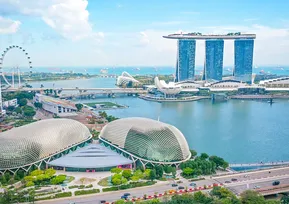
Photo by Su San Lee on Unsplash

Insufficient information

Japanese crypto media outlet CoinPost reported on Dec. 26 that the country’s prime minister, Shigeru Ishiba, refrained from endorsing the notion of a Japanese strategic Bitcoin reserve on the basis that he and his government lack sufficient information on the subject. With that, Ishiba feels that it’s “difficult for the government to express its views” on the matter.


The Japanese prime minister was prompted to offer his views on the subject having been queried by Japanese Member of Parliament (MP), Satoshi Hamada. During a question and answer session earlier this month, Hamada cited the United States and Brazil as examples of states that are currently considering the addition of Bitcoin as a reserve asset. 


The Japanese lawmaker suggested that policymakers in those countries were leaning towards the consideration of Bitcoin as a hedge against economic risks, and that on that basis, he believed that the Japanese government should give the use of Bitcoin as a national reserve asset consideration. Hamada stated:


“I think Japan should follow the example of the United States and consider turning some of its foreign exchange reserves into crypto assets such as Bitcoin.”


Ishiba has responded by stating that his government lacks sufficient information relative to this “movement of introducing Bitcoin reserves that the United States and other countries are proceeding with.”


Additionally, the Japanese government maintains that stability and liquidity are of paramount importance when it comes to the country’s foreign exchange reserves. With those factors in mind, it believes that Bitcoin is incompatible due to its price volatility.


Unsustainable debt levels 

Some proponents of Bitcoin suggest that it offers a way forward for countries that have developed an unsustainable level of debt. In an X post published on Dec. 27, Thomas Jeegers, chief financial officer (CFO) at Swiss Bitcoin-only app enterprise Relai, set out a case for Bitcoin on that basis. Jeegers outlined that the United States has a debt of $36 trillion, accounting for 120% of gross domestic product (GDP). 


He describes the Japanese scenario as being considerably worse, where the country’s debt accounts for 200% of GDP. Jeegers forecasts that the trajectory is unsustainable, with debt having grown “far beyond manageable levels.” The Relai CFO warns that the financial world is at breaking point and “it’s not a matter of 'if' but 'when' the system buckles under its own weight.”


Earlier this month, investment manager VanEck published a report claiming that a strategic Bitcoin reserve could facilitate the U.S. in reducing its national debt by up to 36% by 2050.


Like Japan, Russia has also decided against a strategic Bitcoin reserve. Although Finance Minister Anton Siluanov pointed towards Bitcoin’s unit price volatility being an issue, he is open to reassessing the matter in the future.


More to Read
View All
Web3 & Enterprise·

Aug 25, 2023

NFT Seoul Conference 2023 to Picture the Future of Digital Innovation

NFT Seoul Conference 2023 to Picture the Future of Digital InnovationArt Token, a South Korean company that operates non-fungible token (NFT) marketplace 2R2, has made an announcement regarding the upcoming NFT Seoul Conference 2023, scheduled to take place at COEX on September 1. This conference is poised to provide insights into the future trajectory of the ever-evolving digital landscape.According to a local news outlet, the event is co-hosted by Art Token, along with The Korea Herald, an English-language newspaper in Korea, and Soongsil University. Noteworthy support is also coming from Crypto.com, a crypto exchange headquartered in Singapore.Photo by Riza Gabriela on UnsplashNFTs as economic vehiclesHong Ji-sook, CEO of Art Token, shared the motivation behind orchestrating this NFT-focused conference. According to her, the event focuses on the future of NFTs, which are anticipated to serve as economic vehicles in the emerging Web3 digital ecosystem. Hong added that the conference is designed to provide strategic responses to the burgeoning concepts in the expansive digital realm such as decentralization, decentralized autonomous organizations (DAOs), and crypto rewards.Highlighting the pivotal role of NFTs in embracing necessary digital innovations across the domains of art and finance, she emphasized that the conference agenda will showcase sessions and programs that foster a dynamic exchange of ideas. This collaborative environment is anticipated to pave the way for novel opportunities and solutions that hold relevance across blockchain technology, the tech industry, and the artistic landscape.Web3, NFT art, and security tokensThe in-person conference will be structured around three main themes: Web3, NFT art, and security token offerings (STOs). The keynote speakers will delve into the future trends of NFTs and their potential in the Web3 era. They will also analyze the utilization and significance of NFTs in the realm of art. Lastly, the presenters will assess the current state of the Korean security token market and discuss the diverse industrial applications of security tokens. Meanwhile, visitors will have a chance to glean insights from other separate sessions that shed light on the evolving global landscape.

news
Policy & Regulation·

Feb 29, 2024

HashKey OTC scores in-principle approval in Singapore

HashKey OTC, the over-the-counter (OTC) trading arm of the Hong Kong-headquartered HashKey Group, has reached a regulatory milestone with the acquisition of a major payment license in Singapore.Photo by Mike Enerio on UnsplashEnabling digital asset service offeringIn a recent announcement via the firm’s official blog, HashKey Group revealed that HashKey OTC has secured in-principle approval from the Monetary Authority of Singapore (MAS) for its Major Payment Institution (MPI) license application. This approval positions HashKey OTC to offer regulated digital payment token services in Singapore, representing a significant stride in the firm’s efforts towards regulatory compliance. CEO of HashKey OTC, Li Liang, emphasized the company's steadfast commitment to regulatory adherence, considering it a pivotal step towards providing comprehensive and regulated over-the-counter trading solutions for its clients. Liang highlighted the significance of the in-principle approval, expressing the company's vision to furnish a wide array of digital payment tokens and fiat currencies in a regulated environment. The approval has generated optimism within the global crypto market community, particularly amidst prevailing uncertainties surrounding crypto regulations worldwide. Expansion initiativesHashKey OTC's attainment of the MPI license aligns with its strategic expansion initiatives, building upon its earlier success in securing a capital markets services license for fund management in Singapore. This achievement reflects the company's desire to operate within legal frameworks while delivering innovative crypto solutions to its clientele. Furthermore, HashKey OTC's regulatory triumph mirrors the broader regulatory landscape in Singapore, where crypto firms navigate stringent requirements to establish credibility and trust within the market. MPI approvalsThe exchange's milestone mirrors similar successes achieved by other industry players. Recent months have seen a raft of digital asset industry enterprises achieve a similar milestone. In January, American digital asset custodian BitGo acquired in-principle MPI approval. Last November, Taipei-headquartered crypto exchange business XREX achieved a similar outcome. Other entities who had been successful in pursuing MPI licensing earlier in 2023 include crypto exchange Upbit Singapore, crypto trading firm GSR, American crypto exchange platform Coinbase and enterprise blockchain firm Ripple. Despite Singapore's reputation as a crypto-friendly jurisdiction, recent decisions by MAS have demonstrated a cautious approach towards certain crypto products. While spot bitcoin exchange-traded funds (ETFs) received approval in the United States, MAS has opted against permitting the listing of such ETF products for retail investors, citing concerns over the asset's volatility and suitability for retail investment. HashKey is one of only two entities to have secured similar licenses in Hong Kong. Last month, affiliate company HashKey Capital, a Singapore-based crypto fund manager, launched a series of indices designed to track cryptocurrencies in a collaboration with FTSE Russell. Also in January, the Hong Kong business partnered with crypto derivatives platform OKX with the objective of advancing compliant virtual asset innovation. HashKey OTC's acquisition of a major payment license in Singapore, amid a backdrop of similar businesses pursuing similar licensing in various jurisdictions recently, signifies a significant advancement in regulatory compliance within the crypto industry. The approval underscores the exchange's desire to provide regulated over-the-counter trading solutions while navigating the evolving regulatory landscape in Singapore and beyond.

news
Web3 & Enterprise·

Nov 21, 2023

Foblgate adds Bithumb Burrito Wallet as newest registrable external wallet

Foblgate adds Bithumb Burrito Wallet as newest registrable external walletSouth Korean cryptocurrency exchange Foblgate announced on Tuesday (local time) that it now allows users to register Bithumb Burrito Wallet — a Web3 digital wallet operated by Bithumb subsidiary Rotonda — as one of the external wallets that can be used for managing and trading crypto assets on their Foblgate account.Photo by Shubham’s Web3 on UnsplashRegulatory requirementsIn accordance with the Travel Rule under the Act on Reporting and Using Specified Financial Transaction Information, any given user who wants to transfer cryptocurrencies worth more than KRW 1 million (approximately $775) via a personal wallet must register that wallet beforehand. The Travel Rule refers to the Financial Action Task Force’s (FATF) Recommendation #16, which outlines that VASPs must share certain personal information about customers — including names and account numbers — when facilitating crypto transactions that exceed a certain amount. This is aimed at preventing money laundering and other illicit activities.Broadening external wallet supportFoblgate currently supports a number of other external wallets including MetaMask, Blockchain.com, MyEtherWallet and Klip. With the addition of Burrito Wallet, users now have a wider range of options for storing and trading their assets.“We will continue to support external wallets to enhance user convenience,” said Foblgate CEO Ahn Hyun-joon. “We vow to continue our efforts to meet the various needs of our users and provide a safe and convenient environment for carrying out transactions.”The exchange has published a guide for how to register and authenticate external wallets — including Burrito Wallet — on its official website.

news
Loading