Top

Coinbase Effects International Expansion By Extending Singapore Offering

Web3 & Enterprise·May 18, 2023, 11:59 PM

In further proof of Coinbase’s recently-adopted strategy of focusing on global expansion, the company has just extended the range of its product offering to Singaporean customers.
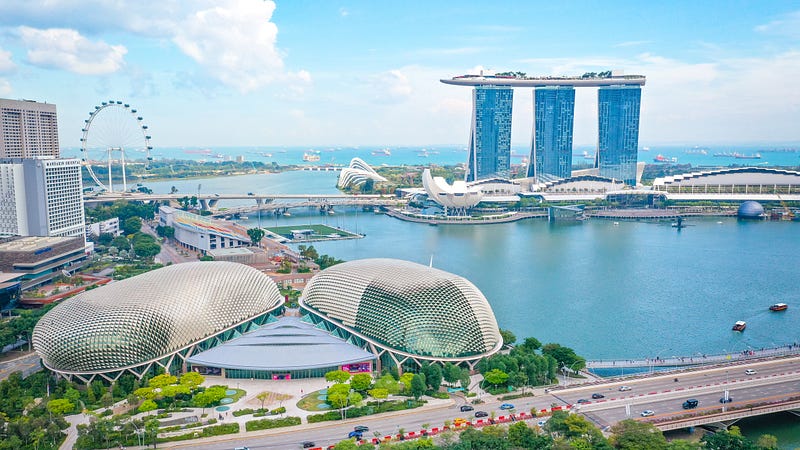
Photo by Meriç Dağlı on Unsplash


No Fees on USDC

The move was announced by way of a blog post published to the company’s website on Tuesday. The expansion entails the introduction of fee-less purchases of the USDC stablecoin for users who buy it with the Singaporean dollar (SGD). Furthermore, it is enabling Singaporean customers to earn rewards on the USDC that they hold on the platform. USDC trading pairs are being added that will allow users to trade USDC directly with over two hundred digital assets.


Taking staking overseas

Additionally, Coinbase Global is rolling out staking to the Singaporean market. Users will be empowered with the ability to stake the following digital assets: ETH, SOL, ADA, ATOM, and XTZ.

It’s interesting that Coinbase feels enabled in rolling out a digital asset staking service in this overseas market. In March of this year, the company received a Wells Notice — a formal notice informing the recipient that there are firm plans to bring enforcement actions against it — from the Securities and Exchange Commission (SEC) in the United States. The notice was sent in relation to digital assets covered under Coinbase’s staking product offering, Coinbase Earn.

In highlighting the issue, the company bemoaned the fact that the SEC had gone down the route of issuing a Wells Notice without it expressing a single specific concern about any specific digital asset offered by the platform in advance of taking the action.


Global strategy

Coinbase Founder and CEO Brian Armstrong has been outspoken in criticizing the regulatory approach to crypto in the United States. He expressed that at the time of having received the Wells Notice earlier this year, and again last week, when he and key Coinbase executives visited Abu Dhabi and Dubai in the United Arab Emirates.

On the day of SEC Chair Gary Gensler’s appearance before the House Financial Services Committee on Capitol Hill in Washington, D.C. a few weeks ago, Armstrong signaled that unless there was a more accommodating regulatory approach taken to crypto in the US, Coinbase would increasingly be looking to expand operations overseas.

A short time later, it emerged that the company had obtained a license to trade in Bermuda. At last week’s Dubai Fintech Summit, Armstrong applauded the regulatory approach taken by the UAE and indicated that the company is interested in opening a base in Abu Dhabi.


Positive survey results

Against this background, it’s not surprising to hear that Coinbase has expanded its service offering in Singapore, another aspiring global hub for crypto business. As part of reviewing and updating its business offering in the city state, Coinbase carried out a survey of prospective customers in Singapore. It found that 25% of Singaporeans consider crypto as the future of finance, on a par with findings in the US, and higher than the 17% reported in the UK.

Among its other findings, security concerns and price volatility of digital assets are still a barrier to entry for many. Of those who are already crypto-native, they tend to trade higher trade amounts, and with greater frequency, if from higher income backgrounds.


More to Read
View All
Policy & Regulation·

Jun 16, 2023

SEC Opposes Motion to Dismiss Terraform Labs Lawsuit

SEC Opposes Motion to Dismiss Terraform Labs LawsuitLawyers representing the United States Securities and Exchange Commission (SEC) have responded to a motion to dismiss the lawsuit filed by Dentons, the lawyers representing Singapore-based Terraform Labs and its Founder Do Kwon.Photo by Miguel Á. Padriñán on PexelsCourt filingAccording to its arguments, set out in a court filing lodged to the District Court of the Southern District of New York on Thursday, the SEC’s counsel claims that the additional documents provided by Dentons lack sufficient grounds for dismissing the case.It claims that the internal SEC emails presented by Dentons are irrelevant to the current lawsuit. The SEC asserts that the parameters of an “investment contract” are clearly defined by the Howey test and argue that TerraUSD ($UST) should be classified as a security.The reliance by US regulators on the Howey test, a legal test case that implicated citrus grove contracts that date back to 1946, has proven to be controversial. Naturally, there could have been no consideration of the digital innovation that digital assets present today almost eighty years ago. Notwithstanding that, the SEC maintains that the principle factors of what constitutes an investment contract are covered by the case regardless.During the court hearing held on June 15, Dentons submitted supplementary documents to strengthen their motion to dismiss the lawsuit. The primary focus of the hearing was to determine whether the digital assets developed by Terraform Labs should be categorized as securities based on the criteria of an “investment contract.”Dentons maintains that the algorithmic stablecoin, $UST, should not be considered a security and emphasizes its practical purpose rather than its classification as an investment contract. To support their motion, Dentons included additional documents such as the US House Financial Services Committee hearing on digital asset regulation and stablecoin issuance, the SEC’s request for a restraining order against Binance.US, and the Hinman emails from the SEC vs. Ripple lawsuit.Judge to decideThe defense lawyers highlighted what they perceive as a “regulatory gap” in classifying crypto assets as securities, particularly as the US Congress engages in discussions about regulatory frameworks for digital assets and stablecoin issuance. Furthermore, they argued that the SEC is exceeding the scope of securities laws and relying on internal emails related to “investment contracts” to determine the security status.A decision on the motion to dismiss will be arrived at by July 14. Judge Jed Rakoff, who is presiding over the case, will be responsible for that, once he’s weighed up the merits of the arguments presented by both parties.It is noteworthy that Dentons has previously represented Kwon in challenging the US SEC’s subpoena during the investigation of the Mirror Protocol in 2021, as well as in a class-action lawsuit in the Singapore High Court in 2022. The law firm also provides representation to Terraform Labs in other legal matters.In a separate development, the Basic Court in Podgorica, Montenegro, has granted bail for Kwon and former Terra Chief Technology Officer Han Chang-joon. However, Kwon has recently been taken into custody for extradition in Montenegro while the court deliberates on South Korea’s extradition request for the Terra founder.As the legal proceedings continue, the outcome of the motion to dismiss will have significant implications for the ongoing dispute between Terraform Labs, Do Kwon, and the SEC.

news
Policy & Regulation·

Jan 07, 2025

Regulatory approach sees Singapore move closer to crypto hub status

Crypto licensing developments in Singapore over the course of 2024, allied with feedback from industry insiders, suggest that the city-state has furthered its development as a crypto industry hub in the Asia-Pacific (APAC) region.Photo by Mike Enerio on UnsplashDoubling up on licensing issuanceAccording to a report published by Lianhe Zaobao, a Chinese language newspaper in Singapore, the Monetary Authority of Singapore (MAS), had issued twice the number of Major Payment Institution (MPI) licenses in 2024 by comparison with the previous year. Four licenses were issued in 2023 to Crypto.com, Coinbase, Ripple and Blockchain.com. That compares with 13 licenses issued in 2024 to companies such as GSR, BitGo, Anchorage, Upbit and OKX. This uptick in licensing signals a regulatory regime that is innovation-friendly, resulting in Singapore becoming a key destination for startup companies in the crypto and Web3 space. Risk-adjusted regulatory approachAccording to William Croisettier, chief growth officer at ZKCandy, Singapore is primed to continue its development as a leading crypto hub for Web3 businesses within the APAC region. ZKCandy is a gaming-focused hyperchain within the zkSync ecosystem that has developed due to a collaboration between the Ethereum layer-2 zkSync network and Southeast Asia’s largest gaming developer, iCandy. Croisettier spoke to Cointelegraph on the matter recently, stating: “The country adopts a risk-adjusted approach to crypto regulation, focusing on the biggest digital currencies to protect investors. Singapore also makes it easy for new crypto firms to interact with local banking partners, a provision considered a luxury in other parts of the world.” Mouloukou Sanoh, co-founder and CEO of Dubai-based Mansa Finance, a DeFi platform that provides liquidity to cross-border payment companies, has also spoken positively about Singapore’s status within the crypto sector. Sanoh stated: “With its clear regulations and support for innovation, Singapore attracts top companies and talent, fostering a thriving ecosystem. This proactive approach signals a strong commitment to digital finance, contrasting with Hong Kong's more cautious stance.” Positive study findingsThese views correlate with a recent study carried out by ApeX Protocol, a multi-chain liquidity platform. The study applied a ranking to ten jurisdictions based on factors such as jobs created in the blockchain field, the number of crypto exchanges located within a jurisdiction and the number of blockchain-related patents filed. On that basis, it found that Singapore topped the rankings, ahead of Hong Kong in second place. Singapore was found to have 81 crypto exchanges located within the city-state, over 1,600 blockchain-related patents filed and 2,433 crypto-sector jobs created. A recent survey conducted by CoinDesk found that from a crypto adoption perspective, Thailand, followed by the United Arab Emirates (UAE) and India, lead the APAC region. Of the 10 countries surveyed, Singapore weighed in in seventh place with a 23% adoption rate, just one percentage point behind Hong Kong with 24%. As Hong Kong and Singapore compete to attract crypto-related business, both still have room for improvement when it comes to the crypto adoption metric in comparison with other Asian countries. 

news
Web3 & Enterprise·

Jul 20, 2023

p0x Labs Secures $25M Funding to Propel Manta Network Into Asia

p0x Labs Secures $25M Funding to Propel Manta Network Into Asiap0x Labs, the development team behind Manta Network, has successfully raised $25 million in a Series A funding round that will see the project expand into the Asian market.Photo by Towfiqu barbhuiya on Unsplash$500 million valuationThe funding round, led by Polychain Capital and Shanghai-headquartered Qiming Venture Partners, has resulted in a valuation of $500 million for p0x Labs, according to a blog post published by the project on Wednesday. This equity-based investment demonstrates a growing interest in not only the project’s token but also the team behind it.Manta Network aims to leverage zero-knowledge (ZK) technology to address the scalability challenges and privacy concerns prevalent on the Ethereum network. By harnessing zero-knowledge proofs, Manta enables users to verify the authenticity of information without disclosing the underlying data.This approach provides individuals with complete control over their identities while mitigating the risks of surveillance. Consequently, Manta Network is seeking to attract users who have reservations about utilizing DeFi protocols due to the transparent nature of transactions on public blockchain networks.At the recent EthCC event held in Paris, the project unveiled the testnet for its Layer 2 network, known as Manta Pacific. This testnet operates in an environment with low gas fees, fostering cost-effective transactions for users. Manta Pacific is designed to complement the existing Layer 1 solution, Manta Atlantic, which focuses on achieving compliant on-chain privacy.VC supportLuke Pearson, an investor at Polychain Capital, expressed his enthusiasm for Manta Network’s expansion within the Ethereum ecosystem and confirmed Polychain’s continued support through this Series A funding round. Meanwhile, Yi Tang, Principal at Qiming Venture Partners, believes that their contribution will not only help Manta Network penetrate the Asian market but also attract the attention of Web2 brands.With the additional funding, p0x Labs aims to establish a global presence for Manta Network. Kenny Li, a core contributor at Manta Network, emphasized the significance of partnering with one of China’s largest investors to gain a stronger foothold in Asia, particularly China. The team is enthusiastic about the opportunities this collaboration will bring.Industry partnershipsManta Network has already witnessed substantial demand for its offerings, with partnerships with projects such as Arbitrum and Linea resulting in the creation of over 300,000 zero-knowledge soulbound tokens. These tokens enable the verification of on-chain identities without compromising data confidentiality. Additionally, the native Manta Wallet has garnered more than 200,000 installations, and innovative features like email-based notifications have contributed to a collective user base exceeding 1.5 million users.Looking ahead, the newly launched testnet with its plug-and-play functionality is expected to streamline the development process for Manta Network’s ecosystem. Developers will be able to allocate their time and resources more efficiently toward building their core products, driving innovation within the zero-knowledge space.The successful funding round and the launch of the Layer 2 testnet mark significant milestones for Manta Network and p0x Labs. With continued support from prominent investors, Manta Network appears to be setting itself up to unlock the true potential of zero-knowledge technology and drive adoption across various industries.

news
Loading