Top

Confiscated crypto fund proposed in Russia

Policy & Regulation·March 24, 2025, 1:45 AM

While Russia had previously ruled out adding Bitcoin to its national reserves, the latest soundings from officials within the world’s largest country call for the creation of a crypto fund to hold and manage confiscated cryptocurrencies.


According to a report published by Russian state-owned news agency TASS, Evgeny Masharov, a member of the Civic Chamber of the Russian Federation, has put forward a proposal for the formation of a special fund that would hold and manage cryptocurrencies that had been confiscated as the proceeds of crime by the Russian authorities.
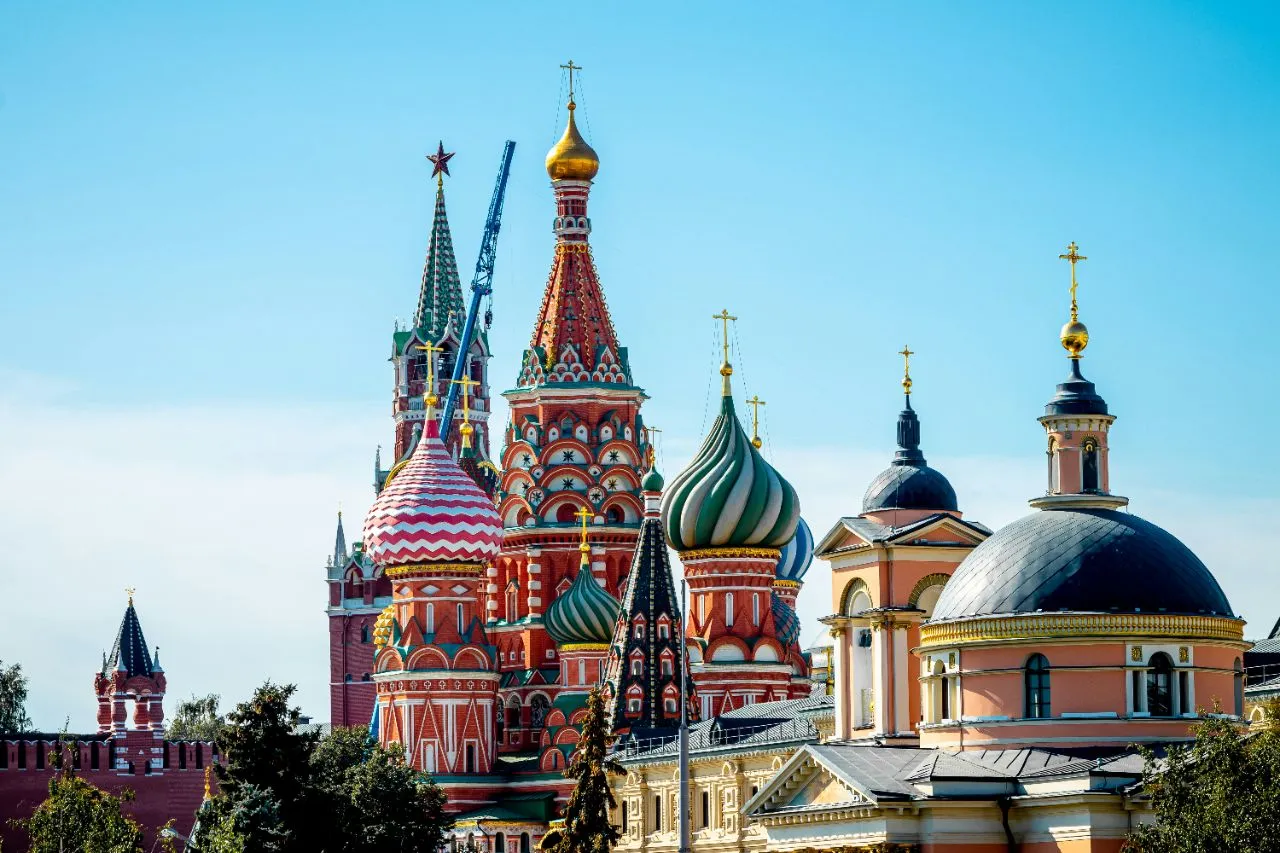
https://asset.coinness.com/en/news/bc2a17626289d15b5f6be1bb1856a54f.webp
Photo by Artem Beliaikin on Unsplash

Masharov told TASS:


"Cryptocurrency confiscated in criminal proceedings should work for the benefit of the state. For these purposes, a special fund can be created, on the balance sheet of which these cryptocurrencies would be located, the capitalization of which will significantly increase over time.”


In the future, Masharov proposes that the funds could eventually be used for educational, social and environmental projects.


Enabling asset confiscation

Masharov supported moves to define digital assets as property within the realm of criminal procedure legislation previously. Since 2021, legislation has been proposed to lay out a properly defined framework to enable the confiscation of such assets in criminal cases. As of last month, Russia’s Supreme Court is currently working towards establishing this.


The Civic Chamber official expressed his willingness to discuss his proposal with other stakeholders such as crypto industry representatives and officials from Russia’s Federal Taxation Service.


If this proposal was to be implemented, it would match a position taken in the U.S. with regard to a Bitcoin reserve. Earlier this month, U.S. President Donald Trump signed an executive order creating a strategic Bitcoin reserve which will be funded mainly by confiscated Bitcoin.


Central bank resistance

Russia’s central bank has been largely opposed to the use of cryptocurrencies within Russia in recent years. Last December, central bank governor Elvira Nabiullina stated that the bank had no plans to invest in cryptocurrencies. Earlier that month, Anton Tkachev, a member of Russia’s State Duma, had put forward a proposal to establish a national Bitcoin reserve.


With the onset of sanctions as a consequence of the conflict in Ukraine, the Russian government has softened its position with regard to cryptocurrencies. Digital assets such as Bitcoin are now seen as a mechanism to enable cross-border trade and cross-border payments, circumventing the international banking system.


It was reported last year that Russia’s central bank had changed course and with that, it was leading efforts to assist Russian companies to use cryptocurrency for international trade, bypassing Western sanctions. Earlier this month, Reuters reported that Russian oil firms are now using leading cryptocurrencies such as Bitcoin, Ethereum and Tether in oil trade deals with their counterparts in China and India.


In another development earlier this month, it emerged that the central bank is now allowing a limited level of crypto investment by investors.


Faced with sanctions and current geopolitical realities, it’s understood that Russia had been considering the use of Bitcoin for reserve purposes, but for the time being, it has opted to concentrate on adding gold and the Chinese yuan to its sovereign wealth fund. 



More to Read
View All
Web3 & Enterprise·

Dec 22, 2023

Buysell Standards and AGST collaborate to expand security token projects in Southeast Asia

Buysell Standards and AGST collaborate to expand security token projects in Southeast AsiaBuysell Standards, a South Korean company operating fractional investment platform Piece, is accelerating its expansion into the Southeast Asian market through a recent business collaboration.A report from Korean news outlet Financial News indicates that the company has signed a memorandum of understanding (MOU) with AGST, a subsidiary of blockchain-focused investor Fundiant Holdings. This collaboration aims to launch security token projects within the Association of Southeast Asian Nations (ASEAN) region.Photo by Kelvin Zyteng on UnsplashSingapore in Q1 2024As an asset manager in Singapore and Japan, AGST is set to play a pivotal role in the issuance and distribution of security tokens in these markets. Their strategy includes launching security token products in Singapore in the first quarter of next year. These products will be backed by assets from Buysell Standards.The partnership between Buysell Standards and AGST is set to be multifaceted, encompassing several key areas of collaboration. Together, they will focus on developing new investment products and building the necessary infrastructure to support them. They will also focus on marketing and promotional efforts in the ASEAN region.Anticipating regulatory exemptionBuysell Standards is among the seven companies that received approval from the South Korean Financial Services Commission to issue security tokens. The company is anticipating a regulatory exemption from the government, which would allow them to introduce fractional investment products linked to ship finance.Buysell Standards expects that its partnership with AGST will facilitate quicker access to funding from international sources for high-quality investment products in South Korea. Meanwhile, AGST seeks to introduce a range of Korean assets to the global security token market.Emphasizing the quick adoption of fintech by ASEAN investors and their fondness for South Korea, Shin Beom-jun, CEO of Buysell Standard, stated that the company is committed to actively promoting Korean security token products on the global investment stage.Kim Chang-soo, Chairman of Fundiant Holdings, expressed his ambition to strengthen the Korean security token market. He observed that the market is currently in an early stage of development, leading to the undervaluation of underlying assets. He believes that introducing Korean security tokens to international markets will reciprocally aid in the expansion and maturation of the domestic market.

news
Web3 & Enterprise·

Apr 19, 2023

HashKey Launches Wealth Management Service Amid High Demand

HashKey Launches Wealth Management Service Amid High DemandHong Kong-based HashKey Group, a leading financial technology company in Asia, has launched Hashkey Wealth, a wealth management service in response to significant demand from investors looking for exposure to the digital assets market.©Pexels/Tima MiroshnichenkoPortfolio diversificationWith the increasing adoption of cryptocurrencies and digital assets, many investors are seeking ways to diversify their portfolios and gain exposure to this emerging asset class. HashKey’s wealth management service provides investors with access to a wide range of digital assets, including Bitcoin, Ethereum, and other cryptocurrencies, as well as alternative investments such as non-fungible tokens (NFTs) and decentralized finance (DeFi) projects.The wealth management program is designed to meet the needs of both institutional and individual investors. It offers a variety of investment strategies, ranging from passive to actively managed portfolios, with different risk profiles to suit investors’ preferences. The program also provides a range of services, including custody, trading, and portfolio rebalancing, to ensure that investors can manage their investments with ease.Established track recordHashKey has a strong track record in the digital asset market, having launched its own cryptocurrency exchange in 2018 and a blockchain accelerator program in 2019. The company has also established partnerships with leading players in the industry, such as Huobi, to expand its reach and provide investors with access to a wider range of investment opportunities.In a statement, HashKey Group CEO, Deng Chao, said, “We are excited to launch our wealth management service and provide investors with access to the emerging digital asset market. Our goal is to provide investors with a range of investment options and strategies to meet their needs, while also providing them with the tools and services they need to manage their investments effectively.”Growing interest in digital assetsThe launch of HashKey’s wealth management service comes at a time of increasing interest in digital assets from both institutional and individual investors. With the market for cryptocurrencies and other digital assets expected to continue to grow in the coming years, it is likely that demand for wealth management services in this space will also continue to increase.Additional servicesThe company also gained approval from Hong Kong’s Securities and Futures Commission (SFC) for a Type 9 asset management license which allows it to manage portfolios that are entirely invested in digital assets.Hashkey PRO, its regulated virtual asset exchange, is due to launch in Q2, 2023. In order to facilitate this, the firm has gained SFC approval for both a Type 1 license which covers dealing in securities and a Type 7 license which enables the provision of automated trading services.Overall, the launch of HashKey’s wealth management service and its virtual assets exchange is a positive development for the digital asset market, as it provides investors with a range of investment options and strategies to suit their needs. With the company’s strong track record in the industry and its commitment to providing investors with high-quality services and solutions, it is well-positioned to capitalize on the growing demand for digital asset investments.

news
Markets·

Dec 13, 2023

Creditcoin listed on Upbit

Creditcoin listed on UpbitCreditcoin (CTC) — an ERC20 token issued on the Creditcoin Network — was listed on South Korea’s largest cryptocurrency exchange Upbit on Tuesday evening (KST), according to an official announcement on the Upbit website.Photo by Maxim Hopman on UnsplashThe token was initially listed on Upbit’s BTC trading market, then on the Korean won-denominated market (CTC/KRW) trading market shortly after. In the announcement, the exchange clarified that it can only be deposited through the Ethereum network and not others like BNB Smart Chain (BSC).Major growthUpbit is the third Korean exchange that CTC has been listed on after Bithumb and Gopax. “Through this listing on Upbit, we expect that CTC’s liquidity will be boosted significantly since it will be traded in a broader market,” said Gluwa, the developer of the Creditcoin Network. Notably, the token’s price jumped 171.14% in just a day following the listing. It is currently $0.64 as of this writing, according to CoinMarketCap.Revolutionizing RWA investmentsCTC tokens power the Creditcoin Network’s global real-world asset (RWA) ecosystem, which functions as a platform for connecting investors and fundraisers. Fundraisers initiate offers on the network, which are pegged with CTC, and investors can choose which offers to invest in based on assessing the risk by examining the fundraisers’ decentralized and public credit history. In this process, blockchain technology plays an important role by facilitating direct contact between fundraisers and investors, building a sustainable cryptocurrency ecosystem and allowing users to share credit history without disclosing personal information to centralized institutions or intermediaries.Since its major Creditcoin 2.0+ mainnet update that transitioned the protocol from a proof of work (PoW) to a fully nominated proof of stake (NPoS) consensus model, Creditcoin has experienced an increase in the number of network participants and the amount of staked CTC.

news
Loading