Top

Avalon integrated with Bybit to offer Bitcoin yield

Web3 & Enterprise·April 15, 2025, 5:14 AM

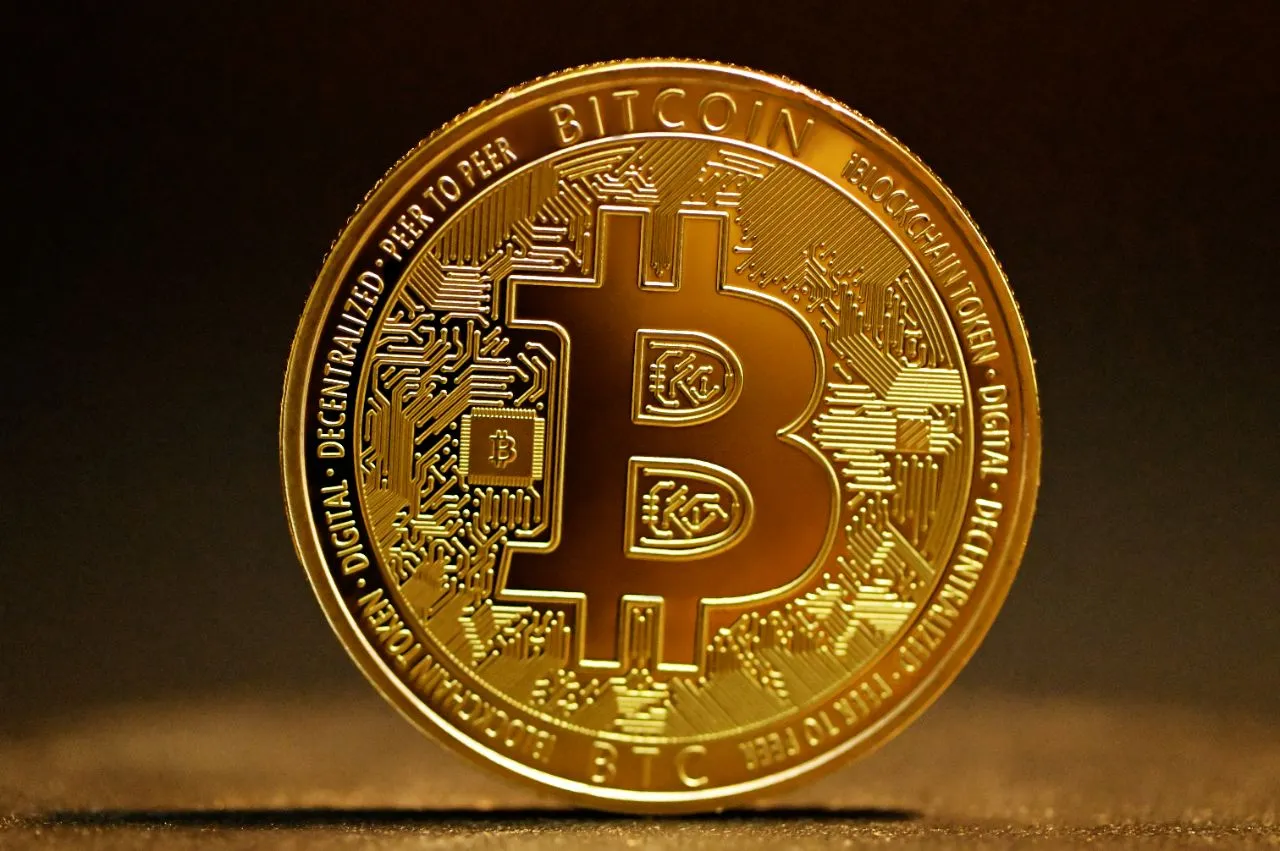
Dubai-headquartered global crypto exchange Bybit has integrated the Avalon Finance protocol within its platform to offer users greater opportunities to earn yield on Bitcoin.


Avalon Finance is a decentralized lending protocol that offers a range of financial services on the Merlin Chain, a Bitcoin layer-2 network. It facilitates users to borrow stablecoins using their Bitcoin as collateral, while also providing opportunities to earn yield by contributing to digital asset liquidity pools.
https://asset.coinness.com/en/news/7a41bb1ce26eb23c0b6f5e9d0422150b.webp
Photo by Kanchanara on Unsplash

CeFi to DeFi bridge

Avalon Labs, the driving force behind the Avalon Finance protocol, took to X on April 14 to outline that the protocol had gone live on Bybit. It stated:

”By integrating with Bybit Earn, Avalon unlocks new yield opportunities for Bitcoin holders by arbitraging our fixed-rate institutional borrowing layer — delivering predictable, enhanced returns through a seamless CeFi-to-DeFi bridge.”


Avalon claims to offer a mechanism which brings Bitcoin into DeFi. It accepts FBTC, an omnichain digital asset with $1.25 billion in total value locked (TVL), pegged 1:1 with Bitcoin, as collateral, while lending it out at fixed interest rates. USDT stablecoin borrowed on the strength of that Bitcoin can then be deployed by platform users to execute high-yielding DeFi strategies via the Ethena Labs synthetic dollar protocol, implicating the use of Ethena USD (USDe) and Ethena Staked USD (sUSDE).


In this way, the Avalon Finance protocol is providing a conduit between centralized finance and decentralized finance. Avalon Labs claims that the offering turns Bitcoin into a productive asset. It stated:


“Returns are stable, secure, and passed back to Bybit Earn users—making Bitcoin a productive asset while maintaining simplicity and risk control.”


More exchange collaborations planned

It’s understood that Avalon plans to collaborate similarly with other crypto exchanges in the future. Towards the end of 2024, the firm raised $10 million in Series A funding, with the funding round having been led by Framework Ventures, with participation from UXTO Management, Presto Labs and Kenetic Capital.


At the time, Avalon Labs asserted that the funding would be used to expand its Bitcoin-centric ecosystem. 


BTC-backed public debt fund

Taking to X in February, the project outlined that after years of research, it was working towards the launch of a Bitcoin-backed public debt fund that would fall within the parameters of the U.S. Securities and Exchange Commission’s (SEC) regulatory framework. The firm stated:

”By exploring regulated investment structures, we aim to bridge the gap between traditional finance and crypto, opening new opportunities for Bitcoin-backed financial products.”


Regulation A is an exemption offered by the SEC enabling a company to sell securities to the investing public without full registration. Should it eventually take this path forward, the project would pioneer this approach to launching a public debt fund as little progress has been made by others in taking such a Bitcoin-related product forward to date.


Towards the end of last month, Avalon Labs announced that it has added support for BlackRock’s “BUIDL” fund, a tokenized fund created by the world’s largest asset manager, which invests in short-term U.S. Treasury bills.


More to Read
View All
Policy & Regulation·

Nov 24, 2023

Korea unveils detailed plan for retail CBDC transaction pilot with 100K participants

Korea unveils detailed plan for retail CBDC transaction pilot with 100K participantsThe Bank of Korea (BOK), Financial Services Commission (FSC) and Financial Supervisory Service (FSS) jointly announced on Thursday (local time) their comprehensive plan to pilot a central bank digital currency (CBDC). This pilot program will concentrate on two key areas: retail transactions and technical experiments within simulated environments.For the retail transaction aspect, the test aims to give citizens direct experience in using the new digital currency, helping them understand its advantages. This practical approach will promote public familiarity with the CBDC.In terms of technical experiments, these will be conducted in partnership with various banks. The goal is to explore and develop methods for constructing a financial market infrastructure suitable for the future, leveraging the capabilities of the digital currency.Photo by Terrence Low on UnsplashRetail CBDC test to commence in Q4 2024The initiative to examine retail transactions using a CBDC is scheduled to begin in the fourth quarter of 2024. This test will focus on improving how vouchers work. Currently, the use of vouchers faces several challenges, such as high fees, complex and slow settlement procedures and the risk of fraudulent transactions. CBDC-based deposit tokens programmed with the digital voucher functionality could help solve these problems. The exploration of digital vouchers within the realm of CBDCs is not just a concern in Korea but also a topic of global interest.Banks that will participate in the CBDC retail transaction test are to be selected by the end of the third quarter of next year, following necessary procedures such as the financial regulatory sandbox policy. These selected banks will receive the green light to issue deposit tokens within this regulatory sandbox framework. They’ll be in charge of recruiting and managing test participants, which includes both individuals and merchants. Additionally, these banks will be responsible for developing digital wallets for users and handling payment transactions. On the other hand, any bank interested in joining technical experiments in simulated environments may apply to do so until mid-December this year.Citizens who want to take part in the retail transaction test for the CBDC can apply through the banks involved in the test. However, it’s important to note that since this CBDC utilization test is a limited trial, the number of participants will be limited to a maximum of 100,000.The retail transaction test for the CBDC will involve three stages: issuance, distribution and payment. Initially, banks will issue deposit tokens with digital voucher functions upon request. Users will then use these tokens to buy goods from merchants, with the transactions being settled accordingly. Before starting, the BOK, FSC and FSS will propose pilot tasks to the banks, following consultations with relevant agencies and the review of pertinent laws. Banks will also propose tasks related to the voucher function. During the test, these tokens will be used solely for digital voucher transactions, and peer-to-peer transfers won’t be allowed.Simulated environment experiments: three use casesFor technical experiments within simulated environments, the financial authorities have selected three use cases focused on examining the technical feasibility of new types of financial instruments.The first objective is to collaborate with Korea Exchange, the only securities exchange operator in the country, to connect the CBDC system with a carbon credit trading simulation platform. This platform will be based on an external distributed ledger. The key objective here is to assess if the “delivery versus payment” (DvP) mechanism between carbon credits and special payment tokens can function smoothly. DvP is a settlement method that ensures the transfer of securities occurs only after the corresponding payment is made.The second objective will see collaboration with the Korea Financial Telecommunications and Clearings Institute (KFTC). In this scenario, a hypothetical issuer will release tokenized assets to the public through a public offering. To manage this, deposit tokens that match the subscription amount by investors will be temporarily frozen, preventing them from being liquidated. After the final allocation of these tokenized assets is determined, the system, using smart contracts, will automatically transfer funds equivalent only to the allocated tokenized assets.The last objective revolves around advancing the concept of a unified ledger introduced by the Bank for International Settlements (BIS). In this endeavor, the BOK aims to issue digital demo securities within the CBDC system. Following this, an experiment will be conducted where financial institutions will have the opportunity to trade these digital securities using the institutional CBDC. This trading will be executed using the DvP method.

news
Web3 & Enterprise·

Jul 09, 2025

Metaplanet aspires to acquisition of digital bank

The CEO of Japanese hotel operator turned Bitcoin treasury company, Metaplanet, has suggested that the firm may consider acquiring a digital bank in the future. Simon Gerovich, the firm’s CEO and a former Goldman Sachs banker, told the Financial Times that part of the second stage of its overall strategy may involve “acquiring a digital bank in Japan and providing digital banking services that are superior to the services which retail now is getting.”Photo by Kanchanara on UnsplashBitcoin gold rushGerovich explained that phase one of Metaplanet’s plan involves participating in what he considers to be “a bitcoin gold rush.” He added: “We need to accumulate as much bitcoin as we can . . . to get to a point where we’ve reached escape velocity and it just makes it very difficult for others to catch up.” Other firms are jumping on the bandwagon, as within a very short timeframe, 140 companies around the world have adopted a Bitcoin treasury strategy. Metaplanet currently weighs in as the fifth-largest corporate holder of Bitcoin globally. Right now, the company holds 15,555 BTC. Its target is a holding of 210,000 BTC, which equates to around 1% of the total Bitcoin supply. Based on current pricing, such a holding would be worth in the region of $23 billion. Acquiring cash-generating businessesOnce the company has accomplished its Bitcoin accumulation goals, it plans to move on to phase two, acquiring cash-generating businesses while leveraging its Bitcoin holdings in order to do so. Using Bitcoin as collateral, Gerovich said that Metaplanet will “get cash that we can use to buy profitable businesses.”  While inroads are being made with regard to the acceptance of Bitcoin as a corporate reserve asset, it is earlier days still for its acceptance as collateral. Last month, the Federal Housing Finance Agency (FHFA) in the United States, ordered Fannie Mae and Freddie Mac, key government-sponsored players in the American mortgage market, to explore the treatment of Bitcoin as eligible collateral for mortgages. Standard Chartered and crypto exchange OKX launched a pilot program earlier this year geared towards the use of crypto for collateral purposes. Gerovich talks in terms of Metaplanet’s phase two plan playing out at a time “when bitcoin, like securities or government bonds, can be deposited with banks and then they’ll provide very attractive financing against that asset.” The Metaplanet CEO stated that he expects the Bitcoin accumulation phase of the plan to play out over a period of between four and six years. The Tokyo-listed firm started accumulating Bitcoin in 2024. Some market participants are backing Metaplanet’s strategy with their own money. Global investment management firm Capital Group recently became Metaplanet’s second-largest investor. Bitcoin treasury criticsHowever, the emergence of Bitcoin treasury firms has also drawn quite a few detractors. Some critics point out that many of these companies have a negative operating income. Market analyst Caleb Franzen asserted that even after buying Bitcoin, they’re still junk companies. Others point out that too many firms have jumped on the Bitcoin treasury bandwagon, making the prospect no longer attractive. Fakhul Miah, managing director of GoMining Institutional, is also concerned about copycats. He told Cointelegraph that ”if these smaller firms crash, we could see a ripple effect that hurts Bitcoin’s image.”

news
Web3 & Enterprise·

Nov 17, 2023

BSN Foundation launches in Singapore with five global members

BSN Foundation launches in Singapore with five global membersThe BSN Foundation, a Singapore-based organization dedicated to building global blockchain infrastructure, on Thursday officially announced its five founding members from different regions and sectors.Photo by Julien de Salaberry on UnsplashBroad representationThe founding members of the BSN Foundation include Blockdaemon, a leading institutional digital asset wallet provider; Zeeve, a Los Angeles-based blockchain infrastructure automation platform; TOKO, a Hong Kong-headquartered digital asset creation platform; GFT Technologies, a German tech firm specializing in financial services and Red Date Technology, a tech firm behind the BSN Spartan Network located in Hong Kong.Representatives from these entities gathered at the Pan Pacific Singapore on Thursday for a launch event. The BSN Foundation will act as the governing body of the BSN Spartan Network, a public infrastructure network based on open-source virtual data centers. The launch of the foundation marks a major milestone in the BSN’s global expansion and its vision to establish a decentralized public layer of the internet.In discussion with Cointelegraph, Tim Bailey, the Vice President of Global Business at Red Date Technology, stated:“The BSN Foundation launch is a vital step in our global expansion, demonstrating the international recognition and support for the BSN Spartan Network’s concept and goals.” He added:“These organizations bring expertise in areas like blockchain-as-a-service, asset tokenization, financial services, and consulting, highlighting the wide applicability and potential of the BSN Spartan Network.”Bailey emphasized that the BSN Spartan Network is designed to change the application and governance of public chain technology. “By focusing on non-cryptocurrency public chains and a decentralized governance model, we’re not just innovating in technology but also in how global collaborations can shape the future of IT infrastructure,” Bailey stated. BSN’s strategy is focused on creating a “more stable and accessible network” for businesses around the world, distancing itself from the volatility related to traditional cryptocurrencies like Bitcoin.Chinese originsThe BSN Spartan Network, launched in September 2022, features a non-tradable token (NTT) issued on its default chain. Each of the network’s data centers is equipped with a single registered NTT wallet for managing and holding these tokens. NTTs can be acquired using fiat currency, selected stablecoins or through various incentive programs.The BSN Spartan Network, which originated in China as the “Blockchain-based Service Network” in early 2020, was developed with the backing of the Chinese government.“BSN was indeed originally initiated in China. However, the BSN Spartan Network, governed by the Singapore-based BSN Foundation, is distinct from the BSN Networks in mainland China,” Bailey stated. He highlighted that the BSN Spartan Network is constructed following global standards, is entirely open source and maintains independent operations from the BSN Networks present in mainland China.UDPN proof of conceptBSN, driven by Red Date Technology as its lead developer, had outlined plans to develop a universal digital payments network (UDPN) as early as 2021. That project continues to progress. Last month, it emerged that SC Ventures, the Singapore-based fintech investment subsidiary of British banking conglomerate Standard Chartered, had partnered with Deutsche Bank in a first proof of concept (POC) of the UDPN. That POC resulted in real-time transfers and swaps of synthetic USDC and EURS stablecoins between the two banks.

news
Loading