Top

OKX relaunches in the United States

Web3 & Enterprise·April 17, 2025, 12:35 AM

Global crypto exchange platform OKX has announced that it has relaunched its exchange services and Web3 wallet within the U.S. market.


In a press release published on April 15, the company said that customers can now access the platform in the United States, “with existing customers migrating seamlessly and new customers gradually gaining access ahead of a full nationwide launch.”

https://asset.coinness.com/en/news/3f51bd9772714e335e56260136e445ac.webp
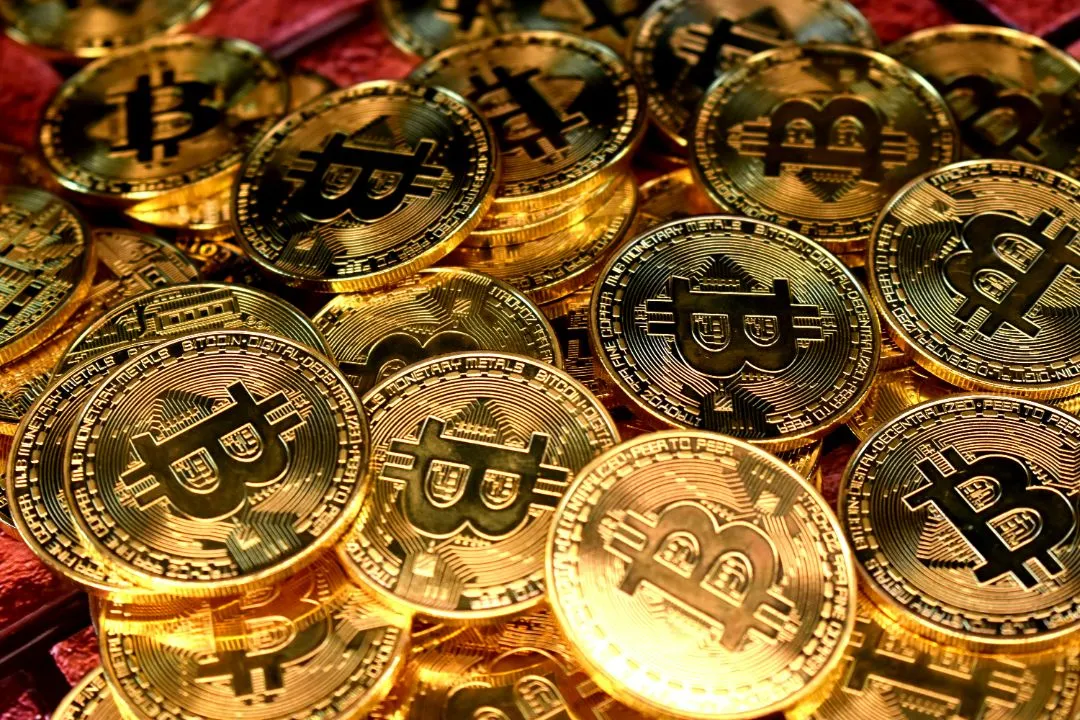
Photo by Danny Burke on Unsplash

Onboarding OKCoin users

In terms of existing customers, the company is referring to users of OKCoin, the former name of OKX, who will now be onboarded onto the newly launched OKX exchange service.


The Seychelles-based company, which was originally founded and operated in China, has established its U.S. headquarters in San Jose, California. The company has appointed Roshan Robert, formerly an executive at Morgan Stanley and Barclays, as its U.S. CEO.


Commenting on the U.S. market relaunch, Robert stated:


"With the US advancing crypto regulatory clarity, we see tremendous opportunities to build trust and deliver secure, compliant digital asset solutions.”


Inflection point

In a blog post published to the firm’s website, Robert said that he had been watching the development of the industry since its earliest days, but that he thinks that the crypto sector has now reached “a critical inflection point.” He added that more so than ever before, the crypto sector is currently interacting more directly with traditional finance and capital markets. 


Referring directly to what platform users can expect from the relaunched service in the U.S., the OKX U.S. CEO said that the firm plans on rolling out new features throughout the year as part of its vision to build a crypto super app.


Rollout of the platform’s services in the U.S. will be carried out on a phased basis. The firm also intends to offer integrations with local banks, together with full support for major assets such as Bitcoin, Ethereum, USDC and USDT.


The OKX Wallet will be made available to U.S. users, supporting a range of digital assets across 130 blockchain networks. The wallet will enable users to access a number of Web3 dApps, facilitate the movement of digital assets between blockchain networks and include a number of tools to assist platform users with their trading activities.


Entering a ‘new era’

It’s likely that a change towards a more positive outlook where the crypto sector is concerned at government and regulatory levels in the U.S., together with a settlement reached with the U.S. Department of Justice (DOJ), has influenced OKX in relaunching its service stateside. 


The DOJ had opened an investigation into the company on the basis of allegations that it was operating a money-transmitting business on an unlicensed basis. In its settlement, the company paid fines and penalties totaling $500 million. With that settlement behind it and a more enlightened climate for digital assets having emerged in the U.S., OKX described the service relaunch as “a new era for OKX in the U.S.”

Yves La Rose, CEO of Web3 banking project, the Vaulta Foundation, said that OKX’s U.S. expansion is a signal, indicating that “a new era of compliant, wallet-led Web3 innovation is underway.” 

Diana Pires, an executive at crypto payments firm Beam, expressed a similar take, stating on X that OKX was relaunching “because the world’s largest economy is finally ready for crypto,” adding that “the floodgates are now open for international crypto companies.”

More to Read
View All
Policy & Regulation·

Jun 13, 2023

Sygnum Bank Achieves In-Principle MPI Licence Approval in Singapore

Sygnum Bank Achieves In-Principle MPI Licence Approval in SingaporeIn a significant milestone for its expansion efforts in Singapore and Southeast Asia, Sygnum Singapore has announced that it has received in-principle approval for its Major Payment Institution Licence (MPIL) application from the Monetary Authority of Singapore (MAS).Photo by Dids on PexelsOngoing global expansionThe Swiss-Singapore firm, headquartered in Zurich with an operational base in Singapore, disclosed this news via a press release published on Monday, marking a major stride forward for the company in its regulated crypto brokerage services.The world’s first digital asset bank also has offices in Abu Dhabi, the United Arab Emirates (UAE) capital, and Luxembourg. The digital assets innovation is progressing on a truly global basis. It’s also developing according to differing timelines on a regional basis relative to the regulatory approach being taken within individual jurisdictions. On that basis, we are seeing a move from many leading digital assets firms to expand internationally to benefit from jurisdictional regulatory arbitrage and in an effort to grow such businesses quickly, with a global reach.MPIL licensing significanceThe MPIL license will empower Sygnum Singapore to introduce a regulated crypto brokerage service that offers a fiat-digital asset gateway and facilitates trade execution for various cryptocurrencies. The platform aims to differentiate itself by providing competitive spreads, high liquidity, and swift trade settlements, in an effort to offer investors a seamless and efficient trading experience.This approval follows the extension of the Capital Markets Licence (CMSL) granted to Sygnum Singapore in 2022. With the CMSL extension, the company was able to launch an array of services encompassing corporate finance advisory, capital market products, and asset and security token custodial services.Wave of regulatory approvalThe approval of Sygnum Singapore’s MPIL application comes at a time when Singapore is witnessing a wave of regulatory acceptance for digital asset companies. Crypto.com and Circle are among the firms that have recently been granted full licenses, signifying a positive trend in the recognition and regulation of the digital asset industry in Singapore.Gerald Goh, Co-Founder and CEO of Sygnum Singapore, expressed his enthusiasm about the in-principle approval, highlighting its importance in the company’s growth plans: “This in-principle approval of our Major Payment Institution Licence by the MAS is a milestone in our strategic growth plans for Sygnum Singapore and South-East Asia.”He emphasized that Singapore’s regulatory framework provides the necessary clarity and confidence for investors to participate in the digital asset market: “Like Switzerland, Singapore has a progressive, robust regulatory framework that provides investors the clarity and confidence to invest in digital assets — and Future Finance — with complete trust.”The approval of the MPIL application is expected to bolster Sygnum Singapore’s position as a leading regulated digital asset service provider in the region. By obtaining this license, Sygnum strengthens its global position within the digital assets space while complementing Singapore’s efforts to develop as a regional crypto hub.

news
Policy & Regulation·

Apr 07, 2023

Korean Financial Regulator to Inspect Non-Fiat Crypto Trading Platform

Korean Financial Regulator to Inspect Non-Fiat Crypto Trading PlatformThe Financial Intelligence Unit (FIU) under the Korean Financial Services Commission (FSC) plans to launch a comprehensive inspection on crypto trading platform Fobl (previously known as Foblgate) from March 11.©Pexels/김 대정Unlike other major Korean crypto exchanges, such as Upbit or Bithumb, which allow trading between fiat currencies and cryptocurrencies, Fobl only offers trading between cryptocurrencies.Inspection on non-fiat exchangesThe FIU’s inspection of Fobl is a follow-up to the regulator’s inspection of GDAC, another Korean non-fiat crypto exchange. This suggests that the FIU will focus on inspecting non-fiat exchanges in the first half of this year.Many in the cryptocurrency industry have been paying attention to the FIU’s move after its first inspection of GDAC, as it could signal the direction in which the regulator would take. Earlier this year, the FIU announced that it would conduct inspections not only on non-fiat crypto exchanges but also on wallet solutions, custodians, and staking service providers. It is known that the FIU has been reviewing anti-money laundering (AML) systems and asset management statuses of these crypto enterprises.Fobl’s possible addition of fiat tradingThe Korean crypto industry suspects Fobl might transform itself into a fiat crypto exchange, considering the FIU’s notice that it will prioritize examining non-fiat exchanges that are preparing to support fiat trading.Fobl CEO’s take on the marketPrior to this news, Fobl CEO Ahn Hyun-joon said in a recent interview with Etnews that the platform is in talks with multiple banks to acquire real-name bank accounts and is complying with all the regulations required by the authorities. During the interview, he also raised concerns about the uncertainty that faces non-fiat crypto trading platforms, pointing out that 97% of the crypto trading in Korea is being carried out in crypto exchanges that support trading of Korean won.In Korea, the financial regulator requires virtual asset service providers (VASPs) offering trading in Korean won to hold real-name registered accounts at domestic banks as a measure to prevent money laundering.

news
Web3 & Enterprise·

Jul 27, 2023

KuCoin Dismisses Notion of a Layoff Plan

KuCoin Dismisses Notion of a Layoff PlanAmidst recent rumors of significant layoffs at Seychelles-based cryptocurrency exchange KuCoin, the company’s CEO has come forward to deny any such plans.While not refuting the possibility of staff reductions, KuCoin’s CEO, Johnny Lyu, took issue with the term “layoffs,” asserting that it was a reevaluation of the organization’s structure rather than job terminations. The speculations about staff cuts were first reported by Colin Wu of Wu Blockchain on Twitter.Photo by Joao Viegas on UnsplashAlleged 30% workforce reductionAccording to his sources, KuCoin was planning to layoff around 30% of its workforce, attributing the alleged measure to a strict know-your-customer (KYC) policy that had impacted the firm’s profits.The KYC policy in question was introduced after KuCoin faced legal action from the United States. In March, the New York Attorney General accused the exchange of violating securities and commodities laws, leading to the implementation of the more stringent KYC measures.Routine bi-annual appraisalsInstead, Lyu has clarified that any adjustments to the company’s headcount were a result of routine bi-annual appraisals aimed at maintaining competitiveness in the market.Taking to Twitter on Tuesday, Lyu referred to the layoff reports as “rumors.” He emphasized that the company regularly evaluates its organizational structure based on employee performance and overall company development to ensure dynamism and competitiveness.The Kucoin CEO pointed to a recent report issued by the company as evidence of the exchange’s ongoing growth. The report revealed that the firm had added 300 new employees in the first half of the year. It also mentioned that KuCoin was in the process of upgrading its KYC authentication systems to enhance user asset security, comply with global compliance requirements, and create a safer trading environment.Despite the speculation and policy changes, KuCoin ranks 11th in terms of “trust score” among other exchanges, according to CoinGecko. Over the past day, the exchange notched up an impressive $327 million in trading volume.KYC policy changeRecently, KuCoin updated its KYC policy, requiring newly registered users to complete the KYC process to access the exchange’s products and services. Existing registered users who had not completed KYC by the deadline faced restrictions on their accounts, limiting certain activities but allowing fund withdrawals.The update to the KYC policy had a notable impact on KuCoin’s trading volume. A day after the announcement, trading volume skyrocketed to $6.8 billion from the previous day’s $500 million, according to CoinGecko data.Lyu has pledged to continue investing in the company’s core businesses while providing users with the exceptional trading experience they’ve been promised.KuCoin may have dispelled rumors of widespread layoffs and clarified that any staff adjustments were part of routine organizational development. However, there’s no doubt that the crypto exchange business is going through a difficult period.Most exchanges have suffered due to regulatory pushback, particularly those that have focused their activities in the United States. Earlier this month, global exchange Binance cut 1,000 jobs with plans to make further cuts in the future.

news
Loading