Top

Ripple expands in UAE with new partners Zand Bank and Mamo

Web3 & Enterprise·May 20, 2025, 5:19 AM

Ripple, the blockchain company behind the XRP token, announced in a May 19 press release that it has added two new customers in the United Arab Emirates (UAE)—Zand Bank and Mamo. Both institutions will use Ripple Payments, the company’s blockchain-based platform for cross-border transactions. 
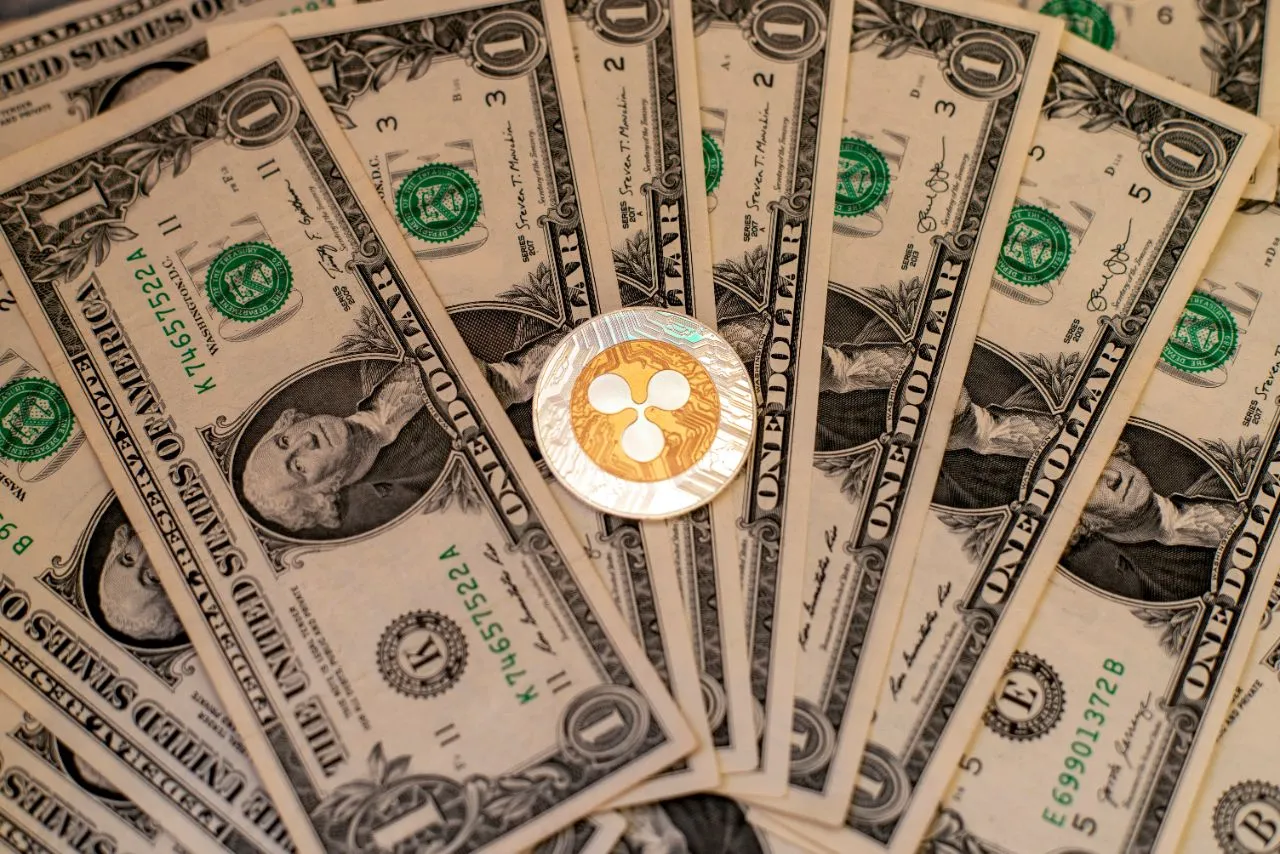
https://asset.coinness.com/en/news/51f9224fb031f465a197998805da8859.webp
Photo by Dmytro Demidko on Unsplash

Expanding under Dubai license obtained in March

This partnership comes after Ripple’s obtainment of a license from the Dubai Financial Services Authority (DFSA) in March to offer regulated crypto payments and services in the Dubai International Finance Centre (DIFC). Ripple Payments facilitates end-to-end payment management for its customers. The platform enables funds to be transferred globally around the clock, with payments settled within minutes.


Ripple’s latest move follows growing demand for blockchain-powered payment solutions in the Middle East. Ripple’s 2025 New Value Report shows 64% of Middle East and Africa (MEA) finance leaders see faster payments as the main reason to adopt blockchain for cross-border transactions.


“Our new partnerships with Zand Bank and Mamo are testament to the momentum that the license has created for our business,” said Reece Merrick, Managing Director for the Middle East and Africa at Ripple.


Zand Bank, the UAE’s first fully licensed all-digital bank, will leverage Ripple’s technology to enhance its payment solutions. “Our collaboration with Ripple highlights our commitment to empowering global payment solutions through blockchain technology. Moreover, we are excited to soon launch an AED-backed stablecoin,” said Chirag Sampat, Head of Treasury and Markets at Zand Bank.


Meanwhile, Mamo, a company that helps businesses consolidate payment collection, corporate cards and expense management, sees the partnership as an opportunity to support the UAE’s growth. “The UAE is on an incredible growth path, with over a million businesses expected to call it home by 2030. At Mamo, we're proud to be at the forefront of this journey making global payments simpler and more accessible for everyone,” said Imad Gharazeddine, CEO and co-founder of Mamo.


Ripple faces legal setback in U.S.

While Ripple continues to expand its business globally, it is facing ongoing legal challenges in the U.S. On May 15, U.S. District Judge Analisa Torres rejected a joint request by Ripple and the U.S. Securities and Exchange Commission (SEC) to approve a proposed $50 million settlement. The settlement would have reduced Ripple's fine from $125 million to $50 million, effectively concluding a four-year legal dispute.


The case began in December 2020, when the SEC accused Ripple of raising $1.3 billion through unregistered XRP sales. In July 2023, Judge Torres ruled that Ripple’s institutional XRP sales violated securities laws, while sales on exchanges to retail investors did not. Despite the SEC easing its crypto enforcement activities under the Trump administration, Judge Torres rejected the proposed settlement, calling it “procedurally improper.”


Ripple’s bid to acquire USDC issuer

In a related development, Ripple made an offer to acquire Circle, the issuer of the USDC stablecoin. Circle, which is preparing for an initial public offering (IPO), is also exploring a potential sale and has reportedly engaged in informal discussions with both Coinbase and Ripple, seeking a valuation of $5 billion. However, Ripple’s offer was reportedly turned down. Meanwhile, XRP is trading at $2.39, up 2.57% over the past 24 hours, according to CoinMarketCap data at the time of publication.

More to Read
View All
Markets·

Apr 24, 2023

Report: Can Bitcoin Replace Gold As a Safe Asset?

Report: Can Bitcoin Replace Gold As a Safe Asset?In light of the substantial increase in Bitcoin (BTC) prices this year, a report from KB Financial Group in South Korea examined the potential for BTC to replace gold as a safe asset.©Pexels/Michael SteinbergThe study delves into the factors behind the recent BTC price surge and emphasizes the need for caution when considering BTC as an alternative to traditional safe assets.3 drivers behind BTC surgeFrom January 1 to March 31 this year, BTC experienced an impressive return of 71%. This surge can be attributed to three main factors: an anticipated increase in liquidity due to market expectations of unchanged or falling interest rates; central banks supplying liquidity to mitigate risks in the traditional banking system; and concerns over the potential delisting of cryptocurrencies should the US court’s decision on the Ripple-SEC case classify XRP, Ripple’s native token, as securities, prompting investors to shift their focus to BTC.The report suggests that the current BTC boom is more likely a result of short-term arbitrages and social conformity, given the greater information asymmetry in the crypto market, which lacks the disclosure system present in traditional stock markets.Persisting risk factorsLast month, blockchain tracker Whale Alert spotted a transfer of 11,125 BTC from an anonymous address to Binance. The primary reason for moving assets from a private address to an exchange address is to sell them, indicating that investors should keep a watchful eye on Bitcoin trading volumes, particularly for any signs of large sell-offs.Data from the crypto data analysis platform Glassnode revealed that the percentage of the BTC supply that was active over a year ago reached an all-time high of 68% in late March. Historically, such an increase has been associated with falling BTC prices.This year, the BTC supply is set to grow due to the US government’s liquidation of seized BTC. As detailed in a March 31 Cointelegraph article, the US government seized 51,352 BTC in a case related to Ross Ulbricht, the creator of the online black market Silk Road. The government has already sold 9,861 BTC, with the remaining amount expected to be liquidated in four additional portions throughout the year.Binance, the world’s largest crypto exchange by trading volume, has been struggling to find banks in the US to store client funds after crypto-friendly banks Silvergate and Signature closed their doors.Need for cautionAlthough various media sources often portray BTC as a safe asset, the report advises caution in accepting these claims. Although some liken BTC to “digital gold,” the two assets share little in common beyond their finite and scarce nature. In fact, gold and BTC diverge significantly in terms of social consensus, intrinsic value, price volatility, and investor protection.Gold serves as a highly liquid asset with applications in both jewelry and industrial goods, in addition to its role as an investment vehicle. In contrast, BTC’s intrinsic value is still debatable. The price volatility of BTC is also a concern, as evidenced by its 71% spike in the first quarter of 2023, compared to gold’s modest 8% increase. Additionally, gold investment products are regulated by law, whereas BTC is not. The report thus recommends treating BTC as a high-risk product and incorporating it into a diverse investment portfolio.It is worth noting that since the outbreak of the COVID-19 pandemic, the crypto market has demonstrated a stronger correlation with the global stock market in response to negative signals. This trend can be partially attributed to the growing presence of institutional investors in the crypto market, who often sell risky assets first to secure liquidity in the face of unexpected shocks.

news
Web3 & Enterprise·

Oct 17, 2023

Hong Kong Crypto Exchange Contemplates Sale at HK$1 Billion Valuation

Hong Kong Crypto Exchange Contemplates Sale at HK$1 Billion ValuationHong Kong’s BC Technology Group is reportedly considering the sale of its crypto platform, OSL, with a suggested valuation of approximately HK$1 billion ($128 million).Photo by Samuel Chan on UnsplashDiscussions with potential buyersThat’s according to a report published by Bloomberg on Monday. OSL holds the distinction of being one of only two exchanges alongside competitor HashKey licensed under the digital asset regulations introduced by the city of Hong Kong in June. Bloomberg cited anonymous sources familiar with the matter having revealed that BC Technology has initiated discussions with potential buyers, including industry players and funds.OSL’s platform encompasses prime brokerage, exchange services, and secure custody solutions for the cryptocurrency markets. Furthermore, OSL plays a pivotal role in facilitating financial institutions’ access to virtual asset trading. Rather than a complete sale of the company, BC Technology is considering the possibility of divesting specific parts of the business, according to these sources.It’s important to note that these deliberations are ongoing, and there is no guarantee that they will culminate in a final deal, as highlighted by the insiders. In response to an inquiry from Bloomberg News, a representative from BC Technology stated:“We are a highly transparent and regulated company. We do not comment on market rumors and speculations.”Valuable trading licenseOSL's regulatory licensing is likely to add considerably to its value. Earlier this year it emerged that digital asset sector firms were shelling out a range between HK$20 million and HK$200 million in their efforts to secure crypto trading licenses in Hong Kong.In May the company obtained Type 1, 4, and 9 licensing from Hong Kong’s Securities and Futures Commission (SFC) through its OSL Asset Management (OSLAM) business. Following the acquisition of licensing, the firm moved to launch its first fund, concentrating on blockchain, artificial intelligence (AI), and Web3 technologies.Hong Kong’s crypto hub challengesHong Kong enabled retail-level crypto trading on June 1, with the aim of further establishing the city as a hub for the cryptocurrency sector. The regulatory change enabled retail investors to trade larger tokens such as Bitcoin and Ethereum on licensed exchanges. Despite these efforts, demand for cryptocurrencies remains lackluster due to the lingering effects of last year’s wave of crypto sector bankruptcies.To compound matters, Hong Kong is also grappling with the repercussions of the JPEX exchange scandal, an unlicensed Dubai-headquartered entity that further tarnished the reputation of the digital asset industry in the region.BC Technology’s market value has shown substantial growth, surging to almost HK$1.9 billion from its low point earlier in the year. However, the company’s shares remain down by 80% from their peak in June 2021, which coincided with the cryptocurrency market’s frenzy during the pandemic.In response to market developments, OSL has withdrawn its application for a digital asset license in Singapore and it is preparing a revised submission. It’s worth noting that certain clients from Singapore are being transitioned to the exchange in Hong Kong.

news
Web3 & Enterprise·

Dec 07, 2023

IEEE to deploy skill certificates on blockchain for Indian members

IEEE to deploy skill certificates on blockchain for Indian membersThe Institute of Electrical and Electronics Engineers (IEEE), a professional association boasting a membership of over 75,000 in India, has chosen the Avalanche blockchain as the primary settlement layer for issuing tamper-evident certificates.Photo by Vishnu Mohanan on UnsplashIntegrating Avalanche blockchainIndia holds the second-largest IEEE membership base globally outside the United States, making this move a significant development in secure credentialing.According to a report by Cointelegraph on Wednesday, Avalanche’s C-Chain will serve as the key settlement layer for IEEE’s certificate issuance due to its compatibility with the Ethereum Virtual Machine (EVM). The decision aims to provide an ecosystem that meets the requirements for tamper-proof, instant and secure verification processes for all trainees and users receiving IEEE credentials.Zupple Labs collaborationThe blockchain certificates will be issued through LegitDoc, a blockchain-based credential lifecycle management system developed by Zupple Labs. Neil Martis, Co-Founder of Zupple, noted that the Indian public sector has shown increased willingness to implement full-fledged blockchain projects over the past 12 months, moving beyond pilot initiatives.This is the latest project in recent weeks that has seen Zupple Labs play a key role in enabling the real-world use of blockchain. Through a collaboration with the Indian Web3 startup in October, the Hindustan Petroleum Corporation (HPCL) streamlined its purchase order process, issuing tamper-proof digital purchase orders via LegitDoc.Avalanche expands into IndiaDevika Mittal, Head of Avalanche’s India arm, emphasized the significance of Avalanche’s EVM compatibility in simplifying the deployment of widely used applications, including credential registries and identity management. She pointed out that reputable institutions like SK Planet and JP Morgan Onyx prefer Avalanche as their go-to blockchain.Mittal has been a key hire for Avalanche blockchain developer Ava Labs recently as part of its efforts to target significant expansion within India. Earlier this year, the company collaborated with China’s Alibaba Cloud, the cloud computing subsidiary of e-commerce behemoth Alibaba Group, assisting with the building of a launchpad that will enable the deployment of metaverses.The partnership between IEEE and Zupple Labs is poised to bring about the issuance of numerous tamper-proof engineering credentials in India. This collaboration underscores the growing acceptance of blockchain in education credentialing, setting a powerful precedent for broader participation in the Web3 landscape.In an interview, Martis expressed the flexibility of their approach, stating:“We would be experimenting with new platforms as additional parallel settlement layers as suitable new tech emerges.”This reflects an openness to exploring evolving blockchain technologies while maintaining a commitment to ensuring the immutability, longevity and security of the solutions.The IEEE-Zupple Labs collaboration aligns with the trend of blockchain integration in educational and professional spheres, offering a glimpse into the future of secure and efficient credentialing systems. As the second-largest membership base outside the United States, India plays a pivotal role in shaping the trajectory of blockchain adoption within professional associations like IEEE.

news
Loading