Top

Iran curtails crypto exchange hours following $90M hack

Policy & Regulation·June 22, 2025, 11:56 PM

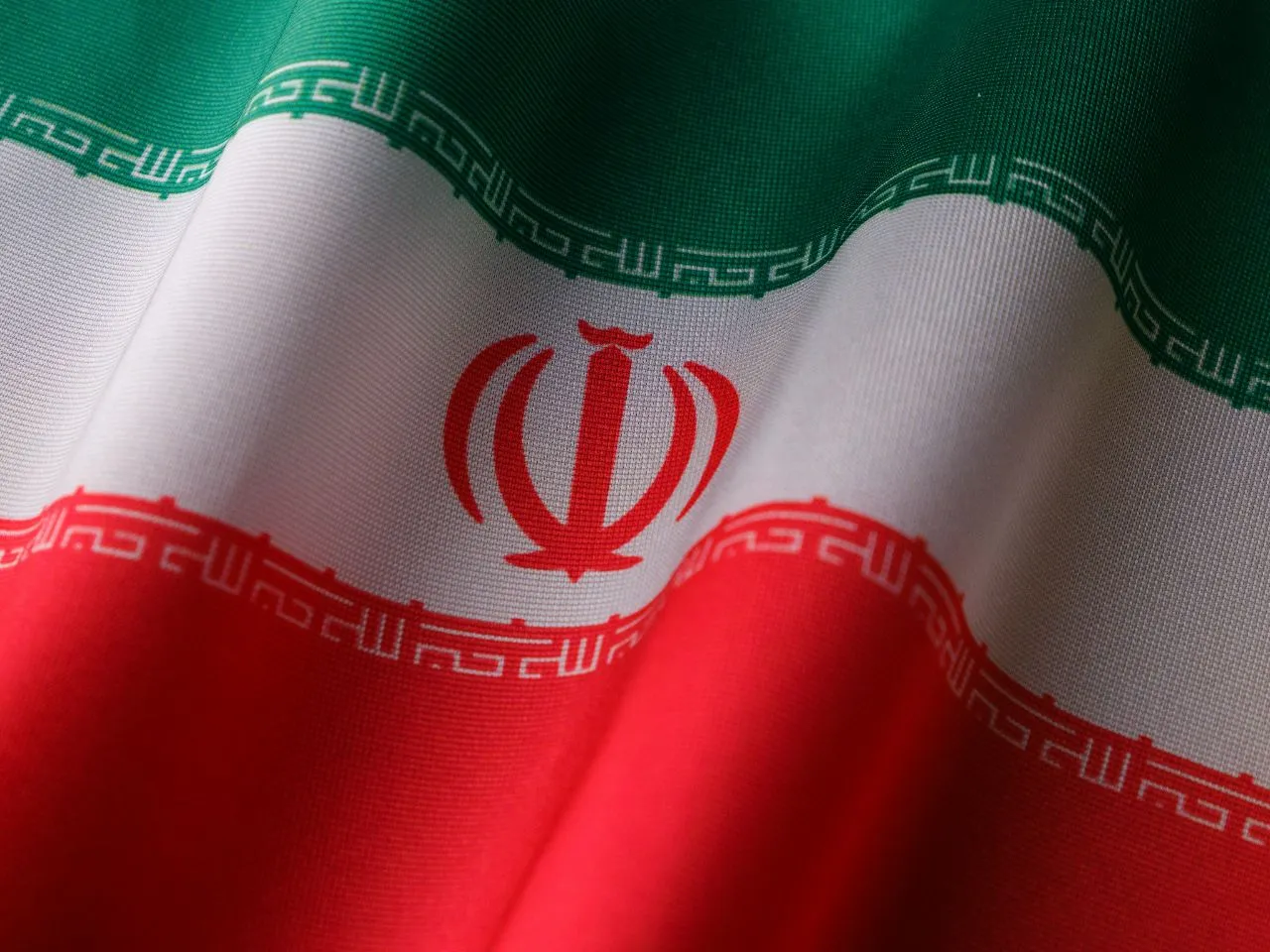
While the crypto markets have not been immune to geopolitical developments, the sector in Iran experienced a more direct effect last week with a politically motivated $90 million exchange hack, prompting the authorities to introduce an exchange curfew.


Blockchain analytics firm Chainalysis outlined on X on June 18 that Nobitex, Iran’s largest cryptocurrency exchange, had been hacked, with crypto assets to the value of $90 million having been drained from exchange-controlled wallets.
https://asset.coinness.com/en/news/91d6b522a07d63c927187c631d5bd852.webp
Photo by Engin Akyurt on Pexels

Weaponizing blockchain technology

The hack had the hallmark of a politically-motivated attack given that rather than the digital assets being stolen, they were sent to vanity addresses, customized blockchain addresses involving user-defined sequences of characters. The vanity addresses contained “politically charged messages” and in sending the funds to them, the funds were effectively burned as they’re now permanently inaccessible. 


The firm stated:

”This incident highlights how crypto exploits aren’t always financially motivated. Bad actors can weaponize blockchain technology for geopolitical messaging, turning hacks into ideological statements rather than profit-driven crimes.”


Pro-Israel hacker group Gonjeshke Darande, also known as “Predatory Sparrow,” appears to have carried out the hack, given that on June 18, it outlined on X that it would release Nobitex’s source code together with other internal information related to the firm’s internal network, while confirming that it had conducted cyberattacks against the company. The group made the following assertion:

”The Nobitex exchange is at the heart of the [Iranian] regime’s efforts to finance terror worldwide, as well as being the regime’s favorite sanctions violation tool.”


Rafe Pilling, director of threat intelligence at Sophos, a British cybersecurity company, told The Guardian that Predatory Sparrow “bears all the hallmarks of a false persona used by a government-sponsored threat group to conduct disruptive operations against targets” linked to the Iranian government.


While Nobitex is estimated to have seven million users, an Open Source Intelligence (OSINT)-based investigation carried out in 2024 linked relatives of Ali Khamenei, Iran’s supreme leader, and other Iranian establishment figures to the crypto exchange.


Minimizing systemic risk

The cyber attack has prompted a response from the Iranian government. In a blog post, Chainalysis outlined that the Central Bank of Iran has instructed all domestic crypto exchange platforms to curtail their service hours to between 10 a.m. and 8 p.m.


The company speculated that this measure could be motivated by a desire to impose a higher level of oversight and control over the local crypto sector. However, it also suggested that it may be part of an attempt by the Iranian authorities to manage and minimize systemic risk.


In recent years, Iran has been subject to extensive international sanctions applied by various entities including the United States, the European Union and the United Nations. Those sanctions have had a significant impact upon the country’s economy, triggering high inflation and currency devaluation. 


With that, crypto has been increasingly viewed by the authorities as a means to circumvent sanctions. Last December, the Iranian authorities appeared to be working towards regulating crypto, embracing the asset class in acknowledgement of its growing importance to the Iranian economy.


In February, Chainalysis reported that sanctioned entities worldwide had received $15.8 billion in crypto transactions in 2024.


More to Read
View All
Policy & Regulation·

Mar 18, 2024

Korean tax agency’s move hints at approving corporate crypto accounts

The South Korean National Tax Service (NTS) is reportedly in the process of setting up virtual asset accounts for its district offices. This initiative is aimed at confiscating and liquidating the digital assets of individuals who fail to pay their taxes. This move comes after the creation of similar accounts by public prosecutors' offices, leading to speculation in the crypto industry that virtual asset accounts will soon be allowed for corporate entities as well.Photo by Nataliya Vaitkevich on PexelsDirect confiscation of virtual assetsA report by the local news outlet Etoday today has revealed that each district office of the NTS is working towards establishing a virtual asset account. This development will empower the tax agency to directly sell virtual assets confiscated from tax delinquents. Previously, the NTS would freeze the accounts of overdue taxpayers at Korean cryptocurrency exchanges, compelling them to convert their assets into Korean won. These funds were then confiscated by the NTS. The new initiative is set to streamline the process, enabling the tax authority to directly confiscate virtual assets without the intermediary step of conversion to Korean won. Speaking about this development, an NTS officer said that as each district office director holds the authority to collect taxes from taxpayers with overdue payments, it's necessary for each office to have its own account. Prosecutors’ Offices’ Upbit and Bithumb accountsThe crypto industry views this development as a potential step towards allowing the creation of virtual asset accounts for corporate entities, starting with government agencies. In December, the prosecutors' offices established their entity accounts at major cryptocurrency exchanges Upbit and Bithumb. Since then, the prosecution has utilized these accounts to sell confiscated virtual assets, aiming to recover funds that had not been collected.  An official from a cryptocurrency exchange indicated that the South Korean government is currently focusing on allowing entities that serve the public good to own virtual asset accounts. This approach is seen as the starting point, with expectations that the trend will gain momentum in the future. The official added that it's rare for the government to provide blanket permissions from the outset, suggesting a gradual and cautious approach to the integration of virtual asset accounts.Money laundering concernsMeanwhile, the Financial Intelligence Unit (FIU) of the Financial Services Commission (FSC), along with other financial regulators, has remained silent on the matter of virtual asset accounts for corporate entities. This reticence stems from concerns with the financial authority that the introduction of corporate crypto accounts could potentially lead to money laundering and the creation of slush funds. An official from the National Assembly’s National Policy Committee said that they have not received any comments from the financial authority in response to inquiries about plans to allow such accounts for corporate entities. The current law doesn’t prohibit corporate entities from trading virtual assets. However, under the auspices of the financial authority, banks have refrained from offering real-name accounts to corporate entities. This policy has been a point of contention within the crypto industry. Advocates argue that allowing corporate accounts could mitigate issues of market manipulation and challenge the dominance of Upbit in the Korean cryptocurrency market.  The official from the cryptocurrency exchange pointed out that the financial authority does not have a clear legal basis for prohibiting the creation of corporate crypto accounts. They suggested that the regulator should develop clearer guidelines and enforce these rules for corporate entities. More serious discussions in AprilMore serious discussions about the introduction of corporate crypto accounts are anticipated to take place in April, following the conclusion of the general election. Last month, the main opposition party, the Democratic Party of Korea, made election promises to open the crypto market to institutional investors. Meanwhile, the ruling People Power Party has been quietly deliberating on virtual asset policy. Despite these political movements, earlier reports indicate a disconnect between the political parties' efforts to relax crypto regulations and the financial regulator's stance. Meanwhile, Hwang Seok-jin, a professor at Dongguk University’s Graduate School of International Affairs and Information Security, expects to see a conclusion on the permission of corporate crypto trading by the end of this year. He said that there has been ongoing discussion about the approval of spot Bitcoin exchange-traded funds (ETFs) and that allowing the trading of such funds requires the ownership of virtual assets by institutions. 

news
Web3 & Enterprise·

Nov 16, 2023

Full operating license approval for Hex Trust in Dubai

Full operating license approval for Hex Trust in DubaiIn yet another instance of progress for the cryptocurrency sector, Hex Trust MENA FZE, the Dubai-incorporated subsidiary of Hong Kong-headquartered institutional-grade crypto custodian Hex Trust, has successfully secured an operating license from the Dubai regulator, the Virtual Assets Regulatory Authority (VARA).Photo by Mohammed Nasim on UnsplashExtending regional presenceThis regulatory milestone, acknowledged by the firm in a statement it made public on Wednesday, not only solidifies Hex Trust’s presence in the Middle East but also marks a strategic move to extend its crypto custodial services to institutional clients and sophisticated investors in Dubai. While based in Hong Kong, Hex Trust has offices in Dubai, Singapore, Vietnam and Italy.This full operating license signifies the successful conclusion of the approval process within VARA’s regulatory framework for crypto service providers, which came into effect earlier this year. Initially granted a minimum viable product (MVP) operational license in February, Hex Trust’s latest achievement grants it the official authorization to continue its operations in the region, marking a pivotal moment in the company’s expansion strategy.With an increased footprint in Dubai, Hex Trust is now poised to deliver comprehensive crypto custodial services to both institutional clients and sophisticated investors. This strategic move is in line with the company’s aspiration to meet the escalating demand for secure and regulated digital asset storage solutions in the Middle East.Filippo Buzzi, Hex Trust’s MENA regional director, underscored the company’s dedication to expanding its reach in the Middle East, stating:“Hex Trust is fully committed to expanding into the Middle East and sees enormous potential for digital asset growth given the progressive regulations, welcoming governments, and thriving crypto ecosystem in the region.”This statement not only highlights the favorable regulatory environment but also emphasizes the increasing interest in cryptocurrencies within the Middle Eastern market.$88 million funding roundHex Trust’s recent success in Dubai comes on the heels of its $88 million Series B funding round last year, showcasing the company’s proactive approach to securing regulatory approvals on a global scale.In August, the firm received regulatory clearance in France, enabling it to offer a spectrum of services, including digital asset custody, purchasing, selling and trading. These regulatory triumphs position Hex Trust as a reputable and compliant entity in the competitive crypto custodial space.Series of approvalsWhile Hex Trust has demonstrated its adept navigation through regulatory processes in Dubai, it’s one of many companies to obtain licensing in the emirate in recent weeks.It emerged yesterday that CRO DAX Middle East, the Dubai-registered subsidiary company of Singapore-headquartered Crypto.com, received a trading license from VARA.Last week, Korean Web3 company CarrieVerse clarified that it had joined the Dubai Multi Commodities Center (DMCC) as a metaverse service provider. The DMCC is a United Arab Emirates (UAE) government agency which has developed into a hub for investors and Web3 startups. CarrieVerse and the DMCC have not as yet revealed details regarding the roadmap for the partnership.At the start of this month, VARA awarded Singapore’s WadzPay, a business-to-business (B2B) technology firm that focuses on enabling digital asset-based transaction processing and settlement, a license to trade within the emirate. Meanwhile, on Nov. 1, it emerged that crypto wallet project Backpack had received a license from the Dubai regulator.

news
Policy & Regulation·

Feb 15, 2024

Singapore’s Web3 sector hopes for budget measures to grow talent pool

Deputy Prime Minister and Minister for Finance Lawrence Wong is slated to unveil the Singapore 2024 Budget Statement on Feb. 16. As Singapore prepares for the unveiling of its 2024 Budget, the city-state’s Web3 community is amplifying its call for crucial government backing. That’s according to a recent report by The Straits Times. The plea from Singaporean firms revolves around two pivotal areas: one, nurturing a proficient talent pool well-versed in blockchain technology; and, in addition to that, having a strength and depth in cybersecurity, so as to fortify defenses against cyber threats.Photo by David Pardo Bernal on UnsplashUrgent need for Web3 talentSome time ago, stakeholders in Singapore set out their stall in terms of the ambition of firmly establishing the city-state as a global hub for Web3 development. It’s off to a good start with many notable crypto and Web3 companies having established themselves in Singapore. However, broadening that industry hub to the fullest extent will involve overcoming the significant hurdles hindering the growth trajectory of Singapore’s Web3 sector. Top of the list is the scarcity of skilled professionals in the blockchain domain. Danny Lim, a core contributor at MarginX, a decentralized exchange, stressed the pressing demand for seasoned developers. Lim underscored the necessity of supporting Web2 developers transitioning into Web3 realms, especially those grappling with job displacement, to solidify Singapore’s status as a nucleus for groundbreaking blockchain ventures. Elaine Zhu, the general manager of the Asian division of blockchain infrastructure firm Parity Technologies, emphasized the critical need for blockchain education, expressing apprehension over the dwindling influx of new developers. In citing a recent report by crypto-focused venture capital firm Electric Capital which quantified developer activity across Web3, Zhu noted that the number of experienced developers in Singapore remains healthy. However, the report found that the number of newly qualified developers dropped by 52 percent last year. Bolstering cyber defensesAdditionally, the industry is clamoring for fortified cyber defenses to shield against the escalating threat landscape targeting digital assets. This focus on security underscores the broader challenge of ensuring the secure proliferation of Web3 technologies and digital currencies within Singapore’s technological ecosystem. A report by Singapore-based blockchain security firm Beosin last year found that exit scams are a growing concern in the crypto-sphere. At the end of last month, the Singapore Police Force, alongside the Cyber Security Agency of Singapore (CSA), issued an advisory in order to raise awareness regarding crypto-centric cyber attacks. Ong Chengyi, representing Chainalysis, hailed Web3 as pivotal for long-term growth and advocated for sustained governmental support to enhance the sector’s capability in mitigating risks using advanced technological solutions. Ong remarked:“We hope to see more public-private collaboration to bolster Singapore’s defences against crypto crime and cyber threats more generally, through the utilization of data and technology.” Angela Ang of TRM Labs echoed that sentiment, emphasizing the imperative for heightened regulatory support to nurture the expansion of digital assets. Ang stated:“To deliver clarity to businesses at scale, whether it’s through licensing decisions or implementation guidance, the Government must invest in both human capital and technology throughout the regulatory process.” 

news
Loading