Top

Grab extends crypto payment options to the Philippines

Web3 & Enterprise·July 29, 2025, 12:04 AM

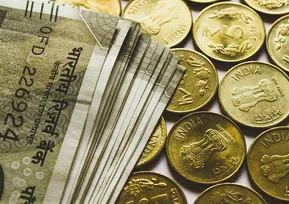
Grab Holdings, the Singapore-based operator of the Grab super app, has extended its facility for crypto payments to its customer base in the Philippines.


The company, which offers ride-hailing, food and grocery delivery and digital payments within a range of services to customers throughout Southeast Asia, introduced the option of crypto payments to service users within its home market of Singapore last year. 

https://asset.coinness.com/en/news/70ea7ac7ad48c702bbc3ee14032f849f.webp
Photo by Kiko Ferranco on Unsplash

At the time, the company expressed the view that enabling crypto payments “added flexibility and convenience” for platform users, providing them with “a seamless and efficient way to access the company’s wide range of services.”


Philippine online news portal Philstar.com reported that Filipino users of the platform can now top up their GrabPay digital wallets with a range of cryptocurrencies, including Bitcoin (BTC) and Ethereum (ETH), as well as U.S. dollar stablecoins USDC and USDT.


In Singapore, Grab rolled out the offering in partnership with Triple-A, a company that enables businesses to pay and get paid in digital currencies. Singapore-based Crypto.com also partnered with the firm last year to enable direct crypto payments.


Financial inclusion

In extending the service to the Philippines, Grab has again partnered with Triple-A, alongside Philippine crypto exchange platform PDAX. CJ Lacsican, Grab Philippines’ vice president for cities, said that “integrating cryptocurrency as a cash-in option for GrabPay reflects [Grab’s] commitment to advancing financial inclusion in the Philippines.” 


She added that the move aims to empower a broader spectrum of Filipinos, particularly those who prefer the convenience of digital currencies and others who have limited access to traditional banking.


Triple-A CEO Eric Barbier said that the launch of GrabPay crypto top-ups went well in Singapore, with a fantastic response from Singaporean platform users. Following that rollout, Barbier believes that the Philippines is a market that’s ready for digital currencies. “This is a big step in making digital currencies easier to use in everyday life across Southeast Asia,” he added.


Driving crypto adoption

PDAX CEO Nichel Gaba suggested that the Philippines “has one of the largest crypto user bases globally,” adding that through this partnership, accessible use cases are being offered “that will both support the existing crypto community and drive greater adoption of cryptocurrency.” 


Grab first pivoted to Web3 with the integration of a Polygon-based crypto wallet in September 2023, with a view towards making crypto more accessible and usable for ordinary people. The super app, which is considered by many to be the “Uber of Southeast Asia,” has 42 million monthly transacting users (MTUs) across Cambodia, Indonesia, Malaysia, Myanmar, the Philippines, Singapore, Thailand and Vietnam. 


The development of the Grab Web3 Wallet came about as a consequence of a collaboration with USDC stablecoin issuer Circle. As part of a strategic partnership, Circle’s Web3 services platform was integrated into the Grab app.


More recently, Grab partnered with NATIX Network, a Solana ecosystem decentralized physical infrastructure network (DePIN) project, in an effort to collaborate on autonomous driving technology and mapping. 

More to Read
View All
Web3 & Enterprise·

Mar 08, 2024

SafePal invests in & partners with Switzerland’s Fiat24

Singaporean crypto wallet provider SafePal has announced a strategic investment in Swiss bank Fiat24, together with the launch of a number of financial services. The partnership is a significant milestone in bridging the gap between the crypto world and real-world financial utilities.Photo by Henrique Ferreira on UnsplashVisa card and in-app bankingThe company outlined in a blog post on March 7 that the centerpiece of this collaboration is the introduction of a crypto-focused Visa card and in-app banking services, both designed to streamline the integration of digital assets into everyday transactions. The default deposit currency for these services is the dollar-pegged stablecoin USD Coin (USDC), providing users with a stable foundation for their financial activities. Through the SafePal mobile wallet app, users can convert their cryptocurrency holdings into USDC via Ethereum layer two scaling network Arbitrum, making for an efficient and reliable process. Once converted, the USDC can be stored in multiple fiat currencies, including USD, EUR and CHF, enabling seamless utilization in various transactions and expenses. Enabling Swiss bank account accessOne of the standout aspects of this initiative is the opportunity for users to establish individually owned, fully compliant bank accounts directly within the SafePal mobile wallet app. By completing the necessary know-your-customer (KYC) and onboarding procedures through Fiat24. Opening such bank accounts will be free, with no account creation or annual management fees being applied. However, transfer and deposit fees will be applied starting from a base rate of 0.6%. The project believes that the integration of NFT technology on Arbitrum will ensure the security and transparency of all related transactions. Veronica Wong, CEO and co-founder of SafePal, emphasized the importance of addressing the accessibility challenges faced by crypto users in a communication with CoinDesk. She highlighted the significance of providing a crypto-friendly banking experience that eliminates the hurdles imposed by traditional financial institutions. Additional payment platform partnershipsIn addition to the crypto Visa cards, SafePal has forged partnerships with leading payment platforms such as Paypal, Google Pay, Apple Pay and Samsung Pay, expanding the usability and convenience of its services. While the Visa card will initially be available in select European regions, plans are underway for its gradual expansion across the continent. Similarly, the in-app banking gateway will cater to users outside the United States and in non-U.S. sanctioned countries, fostering greater accessibility on a global scale. Working towards market growth through a partnership strategy is a route that SafePal has taken in the past. In May 2023 the company attempted to make further inroads into the Korean market by partnering with South Korean enterprise blockchain project Klaytn. In that instance, the wallet provider added support for digital assets that run on the Klaytn network via its mobile app, hardware wallet and browser extension-based wallet. In light of these developments, SafePal's SFP tokens have experienced a modest increase in value. At the time of writing, the token unit price stood at $0.8026, representing a 4.62% increase over the course of the past 24 hours.  

news
Policy & Regulation·

Nov 15, 2023

Korea to introduce more effective guidelines for crypto listing and delisting

Korea to introduce more effective guidelines for crypto listing and delistingThe South Korean cryptocurrency industry is expected to see standardized guidelines for listing and delisting cryptocurrencies on trading platforms by the first half of next year, according to a report by local news outlet ETnews. This move is a response to the current self-regulatory guidelines among cryptocurrency exchanges, which have been found inadequate in effectively managing the listing and delisting of digital currencies.Photo by Mathew Schwartz on UnsplashA dedicated task forceThe Financial Supervisory Service (FSS) in South Korea has reportedly initiated a task force dedicated to creating standardized rules and regulations for cryptocurrency listing and delisting. This team includes both government officials and experts from the private sector.An official from the FSS noted that the task force is aiming to present the final version of the guidelines to the National Assembly before the implementation of the Virtual Asset User Protection Act in July of next year. Operating under the oversight of the financial regulator, these standardized guidelines are expected to enhance their effectiveness and aid crypto businesses in maintaining self-regulation.Frequent listing and delistingThe decision by the Korean financial authorities to formulate these guidelines was prompted by the frequent listing and delisting of cryptocurrencies on trading platforms, which pose risks and cause confusion for customers. An earlier report from the Financial Services Commission’s Financial Intelligence Unit (FIU) highlighted that the number of tokens listed in the first half of 2023 increased to 169, up from 95 in the first half of 2022, while the number of delisted tokens rose from 78 to 115.The WEMIX controversyThe cycle of listing, delisting, and relisting cryptocurrencies has sparked controversies, with WEMIX serving as a notable example. WEMIX is the native token of blockchain gaming company Wemade’s Wemix blockchain network. In December, WEMIX was collectively delisted by the Digital Asset eXchange Alliance (DAXA), which includes South Korea’s top five crypto exchanges: Upbit, Bithumb, Coinone, Korbit, and Gopax. The reason cited was Wemade’s breach of disclosure rules regarding token distribution.However, in a turn of events, Coinone relisted WEMIX on its platform in February this year. Following this, DAXA established self-regulatory guidelines concerning the relisting of tokens. Despite these guidelines, Gopax also proceeded to relist WEMIX earlier this month. As a result of this move, DAXA criticized Gopax for not complying with the self-regulatory guidelines. Gopax faced a restriction on its voting rights within the alliance for three months, and a cautionary note was issued against them.An industry insider noted that despite the efforts of DAXA, their self-regulation measures for cryptocurrency trading services, including the listing process, have not been particularly effective. However, the upcoming rules are expected to be more impactful as they will be in line with the forthcoming Virtual Asset User Protection Act.

news
Web3 & Enterprise·

Nov 16, 2023

Circle introduces Circle Mint with zero-fee USDC minting

Circle introduces Circle Mint with zero-fee USDC mintingIn a move designed to enhance accessibility and compliance, Circle, the issuer of leading U.S. dollar stablecoin USDC, has introduced the “Circle Mint” facility.Singapore launchIn a recently published blog article on its website, the company outlined that the zero-fee minting service is set to launch initially in Singapore. In June, Circle Internet Singapore, the company’s Singapore-incorporated subsidiary, secured a Major Payments Institution (MPI) license from the Monetary Authority of Singapore (MAS). In this most recent announcement, the firm indicated that given the MPI licensing award, it was most appropriate to launch the service initially in Singapore.Circle executives, alongside its co-founder and CEO Jeremy Allaire, were attendees at the Singapore Fintech Festival on Wednesday, an annually organized knowledge platform for the global fintech community. Taking to the X platform, Allaire stated:“It was an honor to host [Singapore President, Tharman Shanmugaratnam] with the @circle team at @sgfintechfest where we officially launched Circle Mint Singapore.”Photo by Mike Enerio on UnsplashCircle Mint facilityCircle Mint Singapore will attempt to strategically position itself as a trusted gateway to the world of digital currencies, emphasizing compliance with MAS regulations. For Singapore-registered entities, the facility offers a range of benefits.Rather than a traditional bank account, Circle Mint is a digital wallet that enables users to send, receive and store digital assets. There will be no minting fees as part of the offering. Customers will be able to take advantage of a zero-fee product offering for both the minting and redemption of USDC. The move eliminates additional risks and additional fees, as well as the ability to do away with the lengthy transaction times often associated with brokers and resellers.Circle Mint Singapore has been designed to align seamlessly with MAS regulations. In that way, the company can reassure its customer base that financial activities are conducted efficiently, securely and compliantly within the regulatory framework.Instant availabilityInstant availability is another feature that Circle is enabling through its Circle Mint product offering. Fiat funds from users’ bank accounts can be swiftly and automatically converted to USDC. That’s thanks to the instant settlement networks of participating banks. Circle Mint Singapore is also planning to expand access to regional banking rails for near-instant settlement, streamlining transactions for users.As digital currency adoption gains momentum in the Asia Pacific (APAC) region, Circle Mint Singapore’s initiatives have the potential to play a pivotal role in making digital currencies more accessible for businesses in this dynamic market.Asian market emphasisIn addition to this latest product offering, other recent activities of the global financial technology firm in recent weeks suggest that it has placed a strong emphasis on market growth in the APAC region.In September, the firm partnered with Southeast Asian super-app Grab. As part of that collaboration, Circle’s Web3 services platform is being integrated into the app to facilitate blockchain-enabled solutions. The move will see Grab’s 25 million users exposed to the facility of a digital wallet within the app.Similarly, the following month, Circle followed up with a deal with Taiwan FamilyMart, a convenience store chain, and the BitoPro cryptocurrency exchange. Once again, Circle’s Web3 services platform is being integrated, this time into the FamilyMart app, so as to enable the redemption of loyalty points in USDC.

news
Loading