Top

Japan’s finance minister acknowledges crypto investment merits

Policy & Regulation·August 27, 2025, 5:48 AM

Katsunobu Katō, a Liberal Democratic Party politician and Japan's Minister of Finance under Prime Minister Shigeru Ishiba's government since October 2024, has said that cryptocurrency assets can play a role in a diversified investment portfolio.


Katō made the remarks while speaking at an event that was held in Tokyo related to the subject of crypto assets on Aug. 25, according to Bloomberg. Katō stated:

''Crypto assets run the risk of high volatility, but if an appropriate investment environment is created, they can become targets for diversified investment.''

https://asset.coinness.com/en/news/46f9c0e01b513711c28add3d38da2146.webp
Photo by JJ Ying on Unsplash

Growing crypto user base

Katō acknowledged that there is a growing user base in Japan related to digital assets. With that, he intends to work towards the provision of a healthy trading environment in Japan for stakeholders within the digital assets sector.


The finance minister added that he has been trying to balance regulation with a need to leave the digital assets sector with sufficient freedom so as to enable the development of innovation.


Crypto tax reform

It emerged over the weekend that the Japanese financial regulator, the Financial Services Agency (FSA), intends to include tax reform measures in respect of the crypto sector in 2026 tax revision proposals that it will bring to the Japanese government. It’s expected that the proposals, scheduled for submission by the end of this month, will call for a separate taxation category for digital assets and the implementation of a flat 20% tax rate. 

Under Japan’s existing tax regimen, crypto trading gains must be reported under the categorization of “miscellaneous income,” with those gains subject to tax rates of up to 55%. The move would bring taxation on crypto trading gains in line with the tax treatment that’s currently in place for equity trading gains. Equities have been given their own category and are taxed at a flat rate of 20%.


Reclassifying cryptocurrencies

Additionally, the FSA plans to propose legislation next year that would result in the reclassification of cryptocurrencies, removing them from their current treatment as a means of payment under the Payment Services Act. The regulator wants crypto to come under the Financial Instruments and Exchange Act, reclassifying it as a financial product.


Katō has outlined his party’s commitment to the consideration of reviewing crypto asset taxation. That item was incorporated into his government’s tax reform plan for 2025, while the Japanese cabinet approved a proposal to amend the Payment Services Act back in March.


As part of plans to have digital assets categorized as financial products, the FSA is also understood to be interested in broadening the scope of insider trading restrictions.


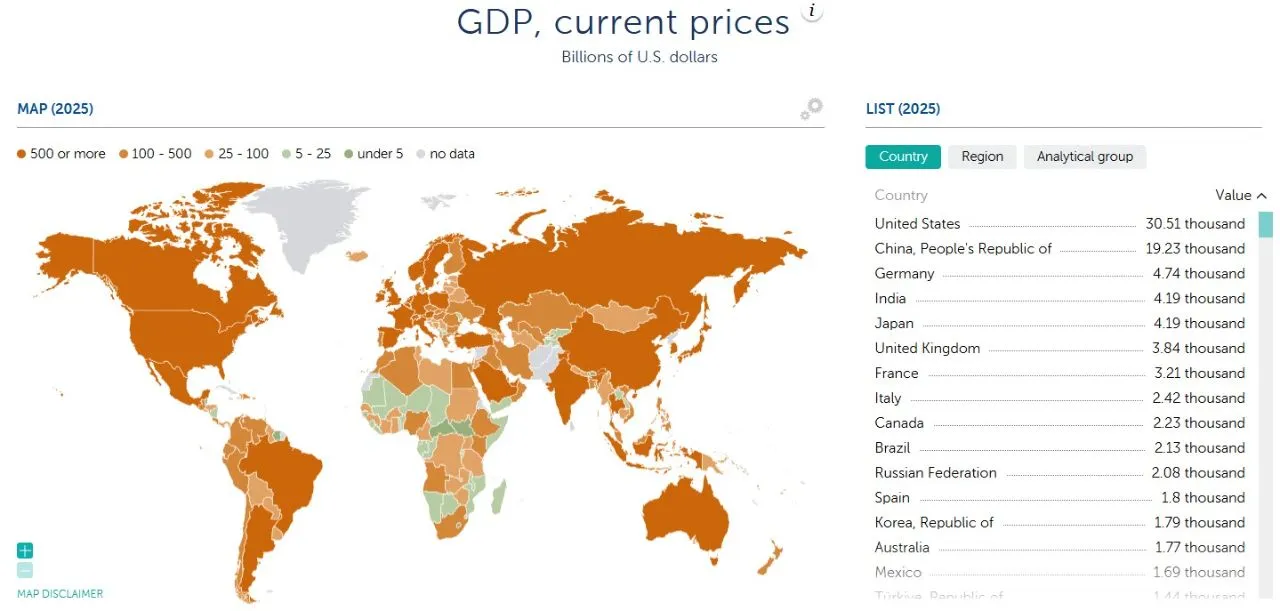
Kato’s remarks are being interpreted as positive for the crypto sector. According to International Monetary Fund (IMF) data, Japan is the world’s fifth-largest economy, with a gross domestic product (GDP) exceeding $4.1 trillion.
https://asset.coinness.com/en/news/7571af1cae99df69b112c000d61f717f.webp
Source: World Economic Outlook (April 2025)

In further positive news for the sector in Japan, it was reported on Aug. 18 that the FSA is likely to approve the issuance of JPYC, a Japanese yen-backed stablecoin, over the course of the coming months.


More to Read
View All
Policy & Regulation·

Oct 16, 2025

U.S. seizes $14B in Bitcoin from crypto scheme linked to Cambodia conglomerate

The U.S. Department of Justice has filed a civil complaint to seize roughly 127,271 Bitcoin linked to an alleged fraud scheme tied to Prince Group, a multinational conglomerate based in Cambodia. That’s according to a press release from the U.S. Attorney’s Office for the Eastern District of New York. The digital assets are currently valued at approximately $14.18 billion and are now in the custody of the U.S. government. Prince Group chairman Chen Zhi, now indicted by U.S. authorities, has been named as the mastermind behind the operation. FBI Assistant Director in Charge Christopher Raia said Chen oversaw an international crypto investment scam connected to a labor trafficking network that defrauded thousands of victims worldwide.Photo by Kanchanara on UnsplashOperations across 30 nationsSince 2015, Chen Zhi has headed the Prince Group, which operates in more than 30 countries. Under his direction, the group allegedly established scam compounds across Cambodia that promoted fraudulent crypto investment scams. The operations targeted victims through social media and messaging platforms with false promises of high returns. According to the allegations, funds were stolen and laundered rather than invested, and perpetrators often built trust over time before carrying out the fraud. Authorities in Vietnam have uncovered a comparable case that did not involve the seizure of cryptocurrency. According to Tech in Asia, Hanoi police confiscated assets worth $34 million from Nguyen Hoa Binh, chairman of the tech company NextTech. The seized property includes 597 gold bars, deeds to 18 properties, and two vehicles. Investigators allege that Binh and nine associates raised funds for the AntEx cryptocurrency project by selling 33.2 billion tokens to 30,000 investors in 2021, collecting around $4.5 million. The defendants are said to have taken part in fraudulent appropriation of assets and accounting violations. Tepid business climate in VietnamThese incidents come as Vietnam’s government works to define its stance on digital assets. According to a Cointelegraph report published earlier this month, the Vietnamese Ministry of Finance said that since the announcement of the country’s five-year digital asset trading pilot plan, no companies have applied to participate. Sharing this update, the vice minister of finance expressed hope that this pilot would launch before 2026. The report points to strict requirements as a likely reason for hesitation. Licensed crypto asset service providers must hold at least 10 trillion dong, about $379 million, in capital. They are also required to back all digital assets with real and tangible assets only, and the framework explicitly prohibits using fiat currencies or securities as backing. These rules leave few options that would attract retail or institutional investors. Gemini eyes Southeast Asia as adoption growsMeanwhile, global firms continue to look to Southeast Asia as activity increases. Dow Jones Newswires reported that Gemini, the American crypto platform founded by the Winklevoss brothers, plans to expand its footprint across the region. In an interview, Saad Ahmed, Gemini’s head of Asia Pacific (APAC), said the company was strengthening its regional operations. A Chainalysis study provides context, showing that the APAC region recorded the fastest growth in on-chain activity compared to other markets in the 12 months ended June. The region saw total crypto transactions rise to $2.36 trillion from $1.4 trillion a year earlier. Although Ahmed did not share investment figures, he said Gemini’s Singapore headquarters has grown to about 65 employees, up from 15 in the final quarter of 2023. He added that the expansion reflects the company’s view of Singapore as a key base for its operations in Asia and globally. Recent criminal discoveries and tightening regulations reveal how Southeast Asia’s crypto scene remains nascent. Governments are stepping up enforcement and shaping new frameworks even as global firms expand across the region, motivated by growing adoption. How policymakers and market players respond to these early tests will define the next phase of digital asset growth in Asia. 

news
Markets·

Aug 21, 2025

China mulls yuan-pegged stablecoin approval

The Chinese authorities are reportedly mulling over the possibility of approving the use of stablecoins pegged to and backed by the Chinese yuan. That’s according to a report published by Reuters on Aug. 20, with the publication citing “sources familiar with the matter.”Photo by Eric Prouzet on UnsplashInternationalization of the Chinese yuanChina’s State Council, its cabinet and primary administrative authority, has scheduled a review of yuan-backed stablecoins for later this month, a development that could potentially lead to their approval. The Chinese have been leaders in recent years in the development of a central bank digital currency (CBDC), the digital yuan. The digital yuan was further along in its development than any other CBDC globally, with the Chinese making concerted efforts to bring the digital currency into use at home, with an eye toward global use for international trade. While the U.S. dollar has enjoyed an extended period as the world’s reserve currency, the weaponization of the currency by the U.S., particularly through the application of sanctions, has led BRICS (Brazil, Russia, India, China and South Africa) nations to consider alternatives. One of Reuters sources asserted that the Chinese authorities are now homing in on the potential to internationalize the yuan via stablecoins. Setting the tone for stablecoin useMembers of the Chinese government leadership are expected to establish the tone for stablecoin use following their upcoming review, outlining the parameters within which the Chinese authorities will permit their use. Reacting to this development, Robin Brooks, a senior fellow at the Brookings Institution, asserted that China’s newfound interest in yuan-backed stablecoins is a sign of “how insecure China is in the global financial system.” Brooks added that the way to internationalize a sovereign currency is to promote the rule of law and property rights rather than pursue the use of stablecoins, which he described as “ridiculous.”  Growing global interestWhile the Brookings Institution is not directly backed by the U.S. government, the organization is nevertheless a Washington, D.C.-based think tank. Despite Brooks’ objection to the use of stablecoins, China is not the only nation to show interest in using them.Taking to X, Raphaël Bloch, co-founder of crypto media platform The Big Whale, pointed out that increasingly, nations around the world are embracing stablecoins due to the efficiency of global currency distribution that is possible via public blockchain networks.  Additionally, stablecoins offer an effective means of government debt financing, given that stablecoin reserves are backed by government bonds. In the U.S., President Donald Trump has ruled out the pursuit of a CBDC. Last month, the U.S. House of Representatives passed the Anti-CBDC Act to prohibit the development of a CBDC by the Federal Reserve. Instead, Trump has said that a stablecoin regulatory bill working its way through the legislative system will ensure global dominance for the U.S. in the crypto sector. In June a Deutsche Bank strategist claimed that the legislation would strengthen the U.S. dollar’s global dominance, with several American politicians having since expressed the same view.Earlier this week, Japan’s Financial Services Agency (FSA) signaled that it is likely to approve the issuance of a yen-pegged stablecoin. Meanwhile, the authorities in South Korea are working on a bill related to won-pegged stablecoins.

news
Web3 & Enterprise·

May 10, 2023

OmniBOLT to Support BRC-20 Tokens on Lightning

OmniBOLT to Support BRC-20 Tokens on LightningSingapore’s OmniBOLT, a project that’s developing technological solutions within bitcoin’s layer two network environment, has outlined that it will support BRC-20 tokens on Lightning Network.Before we consider precisely what OnmiBOLT's decision to support BRC-20 tokens means, let’s cover the backstory.Photo by Sander Weeteling on UnsplashBRC-20BRC-20 is an experimental token standard which was created by an anonymous developer with the handle “Domo”, and username ‘@domodata’ on Twitter. A token standard governs how and where a cryptocurrency can be used. The approach has been pioneered by developers on the Ethereum blockchain who created the ERC-20 standard a number of years ago, relative to the Ethereum network.A bitcoin evolutionIn this instance, BRC-20 is a fungible token standard designed for the bitcoin blockchain. Bitcoin development is very slow and conservative, and deliberately so, in an effort to put network security first. However, it has had two major upgrades over the course of the last few years, namely SegWit and Taproot.Many in crypto have been critical of the bitcoin project on the basis of it being a pet rock that lacked features and the flexibility to use it in other ways aside from as a store of value or means of exchange. However, those protocol upgrades have led to further development that is expanding bitcoin’s use case and versatility.SegWit and Taproot enabled the development of Bitcoin Ordinals in January 2023. Ordinals provide a means to create Bitcoin non-fungible tokens (NFTs), by attaching data to individual satoshis, the smallest denomination of Bitcoin. NFTs created this way are immutable as they’re not created on side chains but on the bitcoin blockchain itself.In a fast moving scenario, the development of Ordinals led two months later to the emergence of the BRC-20 standard. BRC-20 tokens can be stored on the bitcoin base-chain, built with the assistance of Ordinals. BRC-20 is an exciting development as it stands to enable smart contract capabilities relative to bitcoin.Solving the bitcoin fee issueMany see this development as a solution for the longer term fees issue that the bitcoin blockchain will have to overcome. Bitcoin miners are compensated in mining rewards but the level of rewards is being cut in half every four years. The concern is that in the longer term, there may not be enough revenue for miners to continue to secure the network effectively.With the development of Bitcoin Ordinals, more fees are generated, and so this is seen as a means through which the network can sustain itself over the longer term.Mempool backlogSo what’s not to like? The issue that has arisen over the past few days is that bitcoin transaction fees have hit a two year high. Over the past few days, there have been in excess of 400,000 unconfirmed bitcoin network transactions sitting in the mempool. The mempool is a mechanism within the bitcoin protocol that stores the data relative to a queue of transactions that are waiting to be confirmed.Relieving pressure on bitcoinThat brings us back to the significance of the Singaporean team of developers at OmniBOLT deciding to support BRC-20 tokens on the lightning network. That move can relieve the pressure on the bitcoin mainnet. The project is being backed by Waterdrip Capital, Danhua Capital, Redline DAO and others.Bitcoin has been a boring protocol and many have celebrated that fact as a feature and benefit for a network that serves a couple of vitally important use cases exceptionally well. However, development never stops and it’s fascinating to see another side to the protocol unfold, and all the while, it’s not entirely clear where it will end.

news
Loading