Top

Korean crypto exchanges list Trump-linked cryptocurrencies

Web3 & Enterprise·September 02, 2025, 5:25 AM

Cryptocurrencies tied to the family of U.S. President Donald Trump began trading on South Korea’s major exchanges on Monday.


Upbit, the country’s largest exchange, listed WLFI—the native token of World Liberty Financial, a DeFi platform backed by the Trump family—and World Liberty Financial USD (USD1), a stablecoin the platform says is pegged 1:1 to the U.S. dollar and backed by dollars and government money market funds. Bithumb also listed both WLFI and USD1, while Coinone listed WLFI only.
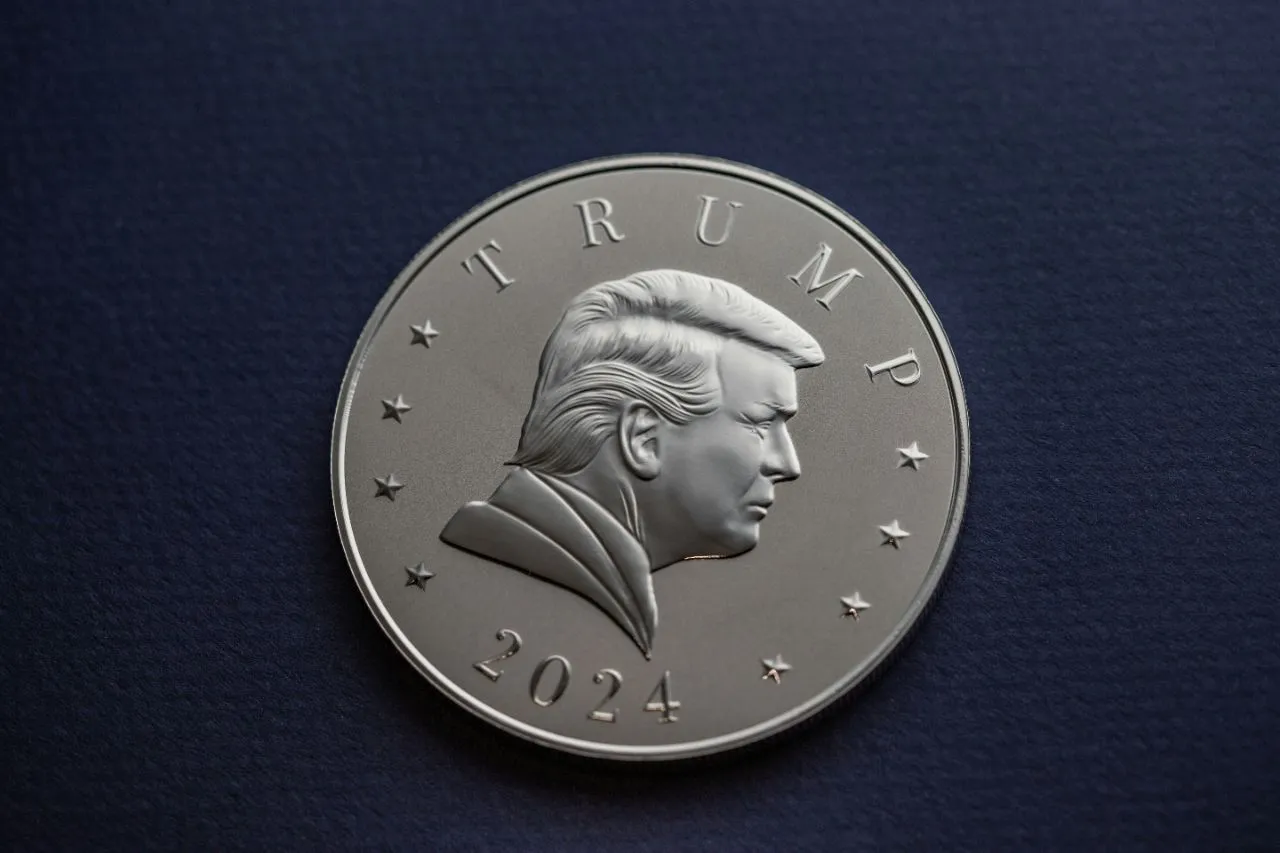
https://asset.coinness.com/en/news/8cdbcae8b4a6a0aad470e9f5784ab395.webp
Photo by Scottsdale Mint on Unsplash

From global listings to a volatile debut

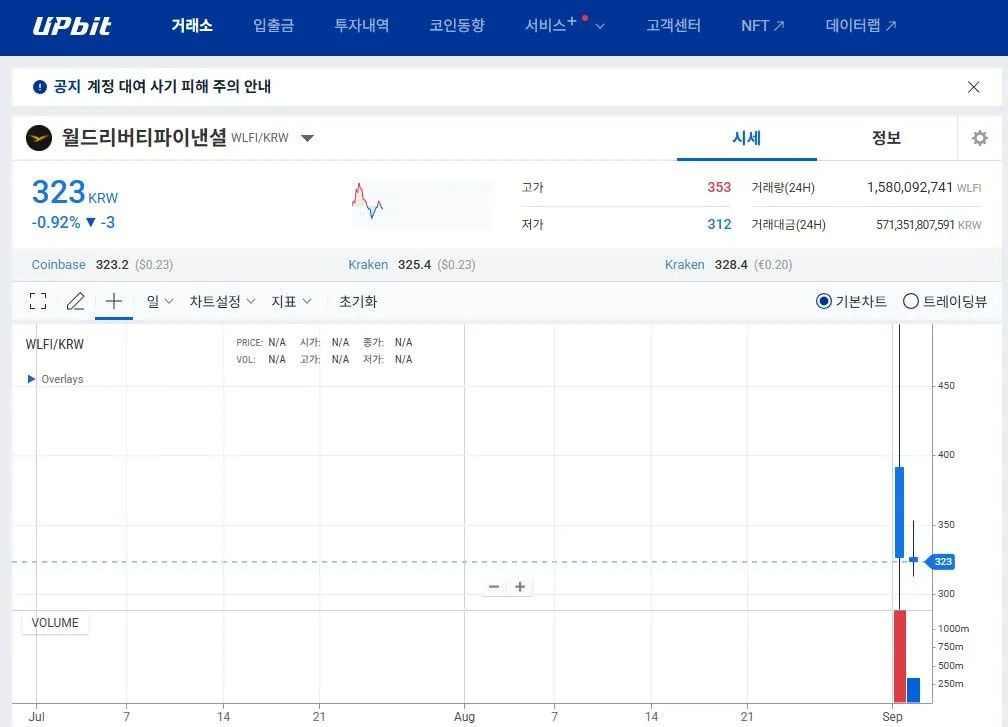
WLFI’s first session was volatile. It opened on Upbit at a floor price of 433.76 won ($0.31) and, roughly 17 hours later, was down about 25% at 323 won ($0.23) at the time of publication.
https://asset.coinness.com/en/news/ddebe18a850dcbf79d22ca0153c03238.webp
Source: WLFI/KRW spot trading pair on Upbit

The Korean launch comes alongside listings on major global venues, including Binance and Coinbase. Until its exchange listings, WLFI holders had been unable to trade their tokens. The Wall Street Journal estimated the Trump family’s holdings, representing less than a quarter of the supply, to be worth close to $5 billion after the listing. Trump’s three sons are named as co-founders of World Liberty, which says tokens allocated to founders and team members will remain locked. President Trump is described as the project’s “co-founder emeritus.”


Political controversy over crypto and holdings

The project has drawn criticism from those who argue it could serve as a conduit for influence, with partners and investors seeking political favor. In April, Democratic lawmakers Senator Elizabeth Warren and Representative Maxine Waters warned the U.S. Securities and Exchange Commission that the family’s stake posed “an unprecedented conflict of interest” in oversight of the crypto industry. Later, White House press secretary Karoline Leavitt said, “Neither the President nor his family have ever engaged, or will ever engage, in conflicts of interest.”


Controversy over public officials’ crypto exposure is not new. Recently, it was reported by The Chosun Ilbo that as of Aug. 14, Lee Eog-weon, nominee to chair South Korea’s Financial Services Commission (FSC), held 10 shares of Strategy, a Nasdaq-listed Bitcoin treasury company with 632,457 BTC in reserves. The disclosure indicates no legal violation because the holdings predate his nomination, but it highlights tension with his public views. In a letter to parliament ahead of his confirmation hearing, Lee questioned crypto’s intrinsic value and argued its volatility undermines its utility as a store of value or medium of exchange.


If Lee were not seeking a government post, his holdings of crypto-related stocks would hardly surprise South Koreans. According to Money Today, citing data from the Korea Securities Depository (KSD), Korean investors increased purchases of crypto-related U.S. equities amid expectations of U.S. rate cuts. Bitmine Immersion Technologies—a Bitcoin miner that also accumulates Ethereum as a treasury asset—was the second-most purchased U.S. stock by Koreans in August, with net buys of $252.77 million, or 7.6% of all purchases among the top 50 U.S. stocks. Stablecoin issuer Circle ranked 10th at $92.62 million, and the GraniteShares 2x Long COIN Daily ETF, which delivers twice the daily price movement of Coinbase, ranked 11th at $90.74 million. In total, crypto-related stocks and ETFs accounted for 30.4% of the top 50 U.S. equity holdings by value.


South Korea weighs spot ETFs amid investor surge

Policy is moving in tandem with market interest. Spot crypto ETFs have recently been elevated to South Korea’s national agenda, opening the door to potential approval. Analysts say such products could repatriate demand that has been flowing overseas. Kim Jin-young of Kiwoom Securities argues that expanded regulatory approval could reshape Korea’s capital market by widening investor access, drawing in institutional capital, stabilizing prices, and diversifying available crypto-linked products.

 

More to Read
View All
Policy & Regulation·

Apr 26, 2024

Crypto.com indefinitely delays South Korea launch following on-site inspections

Crypto.com, one of the world's largest cryptocurrency exchanges, has indefinitely delayed its service launch in South Korea after the country's financial regulators conducted an on-site inspection on the exchange. The inspection came after the country’s Financial Intelligence Unit (FIU) under the Financial Services Commission detected data that appeared to violate anti-money laundering (AML) compliance requirements from the documents submitted by Crypto.com, according to local media Segye Ilbo. This decision came just six days ahead of its planned launch, originally scheduled for April 29.  The exchange has secured a virtual asset service provider (VASP) license by acquiring the local trading platform called OkBit in June 2022. A VASP license allows a digital asset exchange to operate in Korea.  Photo by Leeloo The First on PexelMitigating ‘Kimchi Premium’ effect Crypto.com initially planned to launch a mobile app featuring cryptocurrency trading on April 29, targeting South Korean retail investors. The platform aimed to differentiate itself from other local competitors by offering crypto assets at reasonable prices, mitigating the so-called Kimchi Premium effect, as announced in a press conference on April 2. The Kimchi premium refers to relatively high crypto prices in the Korean market compared to other foreign markets, which is prevalent in Korea’s major licensed crypto exchanges. The effect often results in Korean investors buying crypto assets at higher prices than those on other global crypto exchanges such as Binance. This is likely where the concerns for AML violation come up, financial experts assume, as the platform’s strategy could facilitate arbitrage during operation.  Crypto.com remains committed to Korea launch In a statement sent to CoinDesk, a spokesperson of Crypto.com said, “Crypto.com maintains the highest Anti-money Laundering standards in the industry. We will postpone our launch and take this opportunity to make sure Korean regulators understand our thorough policies, procedures, systems and controls, which have been reviewed and approved by major jurisdictions around the world.”  The person also mentioned that South Korea is a difficult market for global crypto exchanges to enter, but still emphasized the company’s commitment to cooperating with local regulators.  “OkBit maintained approximately 900 customers at the point of acquisition by Crypto.com, and OkBit has never been cited for any AML infractions. Since the acquisition, existing OkBit customer access has been limited to withdrawals,” the spokesperson said. 

news
Web3 & Enterprise·

Feb 15, 2024

Game company behind XPLA blockchain witnesses growth in revenue last year

Com2uS Holdings, the South Korean game publishing company behind Layer 1 blockchain XPLA, disclosed today that its revenue last year saw a 22.5% increase from 2022, reaching KRW 142.3 billion ($106.7 million). On the back of the revenue growth, the company's consolidated operating loss narrowed to KRW 14 billion, improving from 2022’s KRW 26.4 billion. Additionally, the net loss decreased to KRW 16.5 billion, down from the previous year’s KRW 70.6 billion. The operating loss for the fourth quarter stood at KRW 16.5 billion, showing an improvement from 2022 Q4's KRW 20.9 billion. During the same period, revenue reached KRW 21.4 billion, and the net loss was recorded at KRW 8 billion.Photo by Andrey Metelev on UnsplashGame sales and marketing expensesCom2uS Holdings attributed the increase in profits to game sales growth, which was encouraged by the release of more games. However, the company also noted a decrease in income from investments in associates and an increase in marketing expenses, which were driven by the launch of new games. Last year's operating expenses totaled KRW 156.4 billion. Labor costs, which constitute the largest portion of operating expenses, experienced a year-on-year decrease of 6.2%, amounting to KRW 46.7 billion. In contrast, there was an increase in spending across three areas: commissions rose by 43.8% to KRW 30.7 billion, loyalty expenses increased by 26.6% to KRW 25.1 billion and marketing saw a jump of 134.9% to KRW 21.1 billion. According to a report from local news agency Yonhap, Jung Chul-ho, CEO of Com2uS Holdings, emphasized at the earnings presentation today that the company is committed to growth in game publishing, blockchain projects and platform initiatives, all directed towards enhancing the company's value.Triple-A games on XPLA blockchainAs part of the company’s blockchain endeavors, the XPLA platform is set to focus on improving user convenience and incorporating major content, including a variety of triple-A games. Looking ahead, Com2uS Holdings anticipates that its idle role-playing game, Soul Strike, will contribute to the company's revenue for the first quarter. Since its debut last month, Soul Strike has been attracting attention not only in Korea but across Asia. The game publisher also outlined its global release plans for the MMORPG, Zenonia Chronobreak. Gamers in Taiwan can expect access to the game in the second quarter, while those in Japan and others will be able to play in the fourth quarter.

news
Web3 & Enterprise·

Jun 20, 2023

Conflict Identified as Crypto.com Trading on its Own Platform

Conflict Identified as Crypto.com Trading on its Own PlatformTrading practices at Crypto.com, the Singapore-based cryptocurrency exchange, have raised questions about potential conflicts of interest within the digital assets industry.Citing a number of unnamed sources, the Financial Times (FT) made the claim in a report published on Monday.Photo by Pixabay on PexelsConflict of interestIn traditional financial markets, exchanges typically match buyers with sellers at competitive transparent prices, while market making and proprietary trading are conducted by separate private companies. However, US regulators have recently cracked down on similar activities at digital asset exchanges. Binance, the world’s largest crypto exchange, faced 13 charges from the US Securities and Exchange Commission (SEC), including allegations of manipulative trading to inflate trading volume.The presence of internal traders at Crypto.com has not been widely known since the company’s launch in 2016. The FT’s sources claim that Crypto.com executives provided sworn statements to external trading houses denying the company’s involvement in trading activities.Employees were allegedly instructed to deny the existence of an internal market-making operation. In response to inquiries, Crypto.com denied that employees were asked to lie, stating that their internal market maker functioned similarly to third-party market makers, ensuring tight spreads and efficient markets on their platform.The majority of Crypto.com’s revenue reportedly comes from its app for retail traders, where the company acts as the counterparty for transactions and operates as a broker model. The company’s trading team hedges these positions on various venues, including their own exchange, to maintain risk neutrality. Crypto.com emphasized that their exchange provides a level playing field for institutional traders.According to insiders, Crypto.com’s proprietary trading desk engages in trading activities on the company’s exchange and other platforms, solely focused on generating profits rather than facilitating an exchange. The market making desk, on the other hand, aims to enhance liquidity on the platform.Not a revenue sourceCrypto.com defended its practices by stating that comparing trading volumes to competitors is common in the industry. It said that the company’s priority is to continuously improve order book liquidity and reduce spreads, benefiting all participants. The firm told Decrypt that trading is not a source of revenue: “While we do have some market making activity, for example, we have internal market makers for our CFTC-regulated product Up/Downs in the United States.”As a private company, Crypto.com publishes accounts in different countries, but revenue breakdown by business line is not disclosed.Closure of institutional tradingFollowing the SEC’s enforcement actions, earlier this month Crypto.com announced the closure of its exchange for institutional US traders due to limited demand in the current market landscape, effective from June 21.In any marketplace transparency and fairness are crucial. It’s fair to say that there has been some level of sharp practice among some actors in the marketplace while regulators have been lacking in getting up to speed with the emergent sector, and moving to protect consumers. With the major crypto platform failures of 2022 has come renewed interest in resolving these issues. That may make for some short-term difficulty, but in the longer term, it should mean greater protections for market participants so long as a common sense approach is pursued.

news
Loading