Top

South Korea to mandate disclosure of crypto funds in home purchases

Policy & Regulation·September 09, 2025, 6:22 AM

South Korean authorities will require homebuyers to disclose funds originating from cryptocurrency sales, a move aimed at increasing transparency in the nation's tight real estate market. The new rule is part of a wider government effort to address housing affordability, which is particularly pronounced in Seoul, and to integrate digital assets into its regulatory framework.


The change, announced on Sept. 7 as part of new housing supply measures, will alter the mandatory funding plan submitted during property transactions. Proceeds from digital assets will be listed as a distinct category, similar to funds from stocks or bonds. Officials are also expanding loan disclosure requirements to include business loans and overseas borrowing, closing potential financing loopholes.
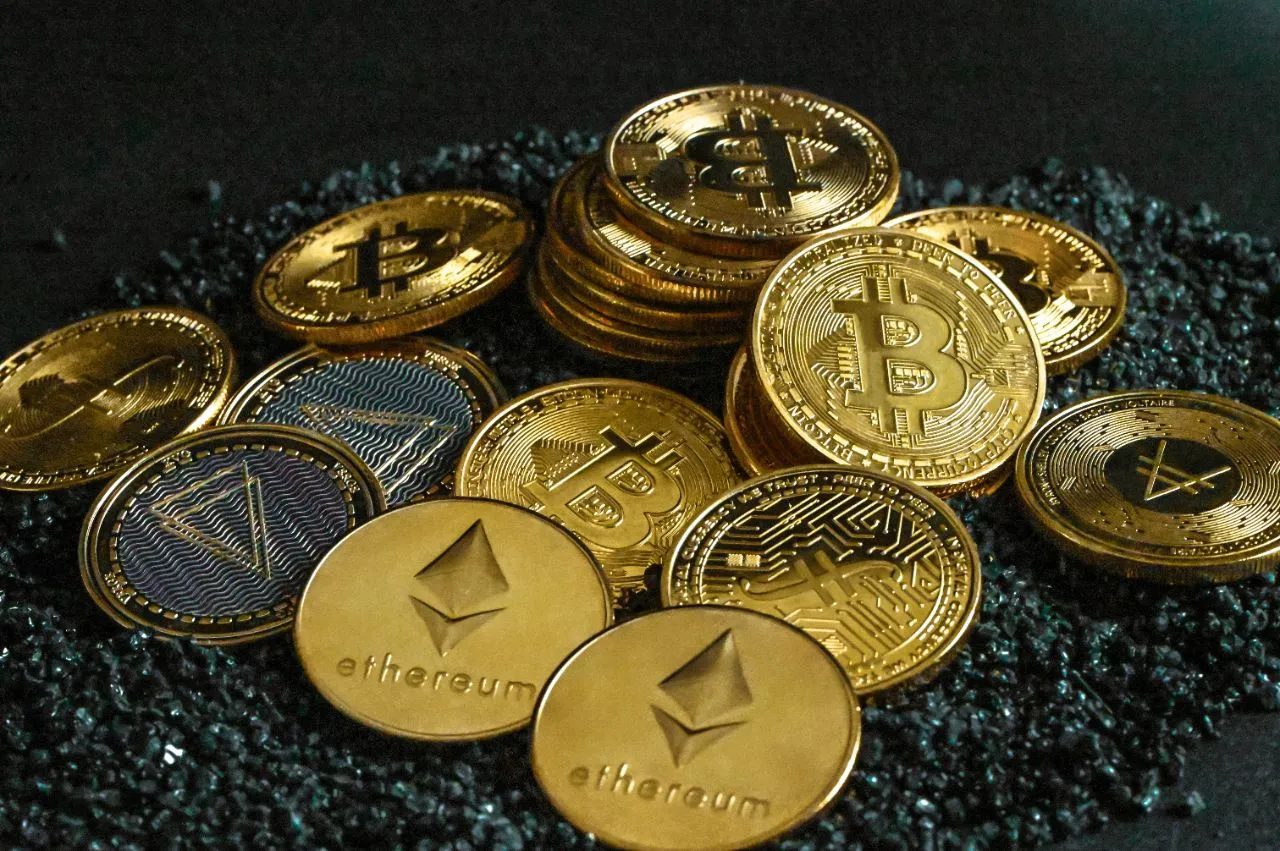
https://asset.coinness.com/en/news/db71559f141f43539e2bc0216cd969d5.webp
Photo by Traxer on Unsplash

Impact of asset volatility on property values

The policy follows growing evidence that volatility in assets like cryptocurrency can spill over into the property market. A 2024 study cited by Maeil Business Newspaper highlighted that both the COVID-era stock rally and Bitcoin's 2023 price surge had a discernible impact on housing values.


According to Yu Jung-suk, a professor at Dankook University, apartments in Seoul's affluent Gangnam district are particularly sensitive to fluctuations in Bitcoin and the KOSDAQ index. He noted that high-profile property acquisitions by young crypto investors, even if few in number, can significantly sway market sentiment. Professor Yu suggested that regulators may need more comprehensive tools to manage the risks connecting different asset classes.


The government's new measures also seek to cool the capital's housing market, where prices have continued to rise despite a slowdown in growth. In contrast, prices in areas outside Seoul have been declining since 2022. To address the supply-demand imbalance, officials plan to begin construction of 1.35 million new homes in the Seoul metropolitan area between 2026 and 2030.


Stablecoin regulation and CBDC trials advance

Beyond real estate, officials are developing a formal regulatory structure for stablecoins. The Presidential Commission on Policy Planning is reportedly considering a model where a consortium of banks and fintech firms would be granted rights to issue a won-pegged stablecoin.


Supervision for this new system would fall to a proposed Financial Stability Council, a body intended to serve as a central coordinator for financial policy, comprising the finance ministry, the Bank of Korea, and other regulators. The initiative aims to combine the stability of the traditional banking sector with the innovation of non-bank financial companies.


The evolving regulatory environment is attracting attention from global industry leaders. Executives from Tether, the issuer of the USDT stablecoin, met with Shinhan Financial Group CEO Jin Ok-dong in Seoul on Sept. 8. While Tether representatives stated they were monitoring the regulatory climate, they confirmed no specific business plans were discussed.


Separately, the Bank of Korea is moving forward with digital currency experiments. In partnership with government agencies and six major commercial banks, the central bank will launch a pilot program to test the use of a digital currency for distributing state subsidies and vouchers.

 

More to Read
View All
Web3 & Enterprise·

Jun 08, 2024

Bitdeer sets out mining chip roadmap

Singapore-headquartered Bitcoin mining company Bitdeer has outlined a roadmap of chip development which will culminate in the introduction of its most energy efficient mining chip to date, the “SEAL04” chip. According to a press release published by the company on June 6, the company outlined that it wanted to be transparent in demonstrating its plans over the short to medium term in terms of research and development and technological advancement.Photo by Michael Förtsch on UnsplashIterative progressionThe starting point for its roadmap is the SEAL01 chip, which the company introduced in Q1 2024. That mining chip was engineered using a four-nanometer process technology. It was developed in collaboration with a semiconductor fabricator albeit that the company has not disclosed the identity of that fabricator. That chip weighed in at 18.1 Joules/Terahash (J/TH). The SEAL01 represents the company’s first release relative to its SEALMINER technology.  Bitdeer feels that providing guidelines for technology releases will better inform market participants, and that’s important given that uncertainty creates a major difficulty for those operating in the Bitcoin mining space.  With that, Bitdeer is projecting a Q3 2024 release for its SEAL02 miner, which will clock up between 15 and 16.5J/TH. SEAL03 is scheduled for Q4 2024, with an efficiency boost taking it to between 11 and 12J/TH. Finally, the SEAL04 is scheduled for release in Q2 2025. That chip is expected to have an energy efficiency range as low as 5.5-6J/TH. The two most critical factors for Bitcoin miners to stay competitive include the cost of energy and the level of energy efficiency achieved by the mining equipment that is being used. It’s believed that the roadmap will help in managing miners’ expectations relative to technological advancement.  Gearing up for a post-halving mining environmentTo develop the SEALMINER equipment series, Bitdeer outlined last March that it had “assembled an international team of professional engineers specializing in chip design, firmware, and hardware engineering.” At that time, the company suggested that the new range of mining equipment would allow it to assist the Bitcoin mining community “in seizing opportunities following the 2024 halving event.” Alongside its chip development roadmap, the company came to the industry’s attention earlier this week with stablecoin issuer Tether acquiring a 25% stake in the Singaporean mining equipment developer, according to a filing with the U.S. Securities and Exchange Commission (SEC). This acquisition makes Tether the second-largest shareholder in Bitdeer, behind Victory Courage Ltd., which is registered to Bitdeer CEO Jihan Wu. Wu, who co-founded Bitdeer and served as CEO of ASIC manufacturer Bitmain previously, was appointed as CEO of Bitdeer in January. The appointment was made so that Wu could oversee what was expected to be a period of rapid growth at the company. In the June 6 SEC filing, Tether Holdings Limited disclosed control over 23,587,360 BTDR shares. This significant increase in holdings stems from a private placement deal closed with Bitdeer last week, enabling the Bitcoin miner to secure $100 million in financing. The deal also includes a warrant allowing Tether to purchase up to 5,000,000 additional shares at $10.00 each over the course of the next year. Bitdeer plans to use the raised funds to expand its data centers, develop ASIC-based mining rigs and support other general corporate purposes.  

news
Policy & Regulation·

Nov 29, 2023

Standard Chartered joins China’s CBDC pilot trials

Standard Chartered joins China’s CBDC pilot trialsStandard Chartered Bank has joined the advanced stages of China’s central bank digital currency (CBDC) pilot trials, making it one of the world’s largest multinational banks to partake in such an initiative.Photo by Eric Prouzet on UnsplashEnabling e-CNY exchangeChina initiated its CBDC pilot trials over a year ago, with it being much further ahead of other CBDC initiatives internationally in terms of development. It has now expanded its trials to include more lenders, with Standard Chartered China becoming the latest participant.This development means that Standard Chartered Bank’s users in the Asian nation will soon have access to the digital version of the Chinese yuan by seamlessly integrating its platform with China’s dedicated CBDC app. According to an announcement by Standard Chartered Bank (China) Ltd. on Monday, the bank will be enabled, through partner firm City Bank Clearing Services Co., to offer its clients the ability to purchase, exchange or redeem e-CNY.In its announcement, Standard Chartered China’s President, Zhang Xiaolei, stated:“As an international bank rooted in the Chinese market for 165 years, Standard Chartered is optimistic about the development prospects of digital renminbi.”Joining e-CNY testing programThe e-CNY pilot testing program in China has been extended to 26 cities and provinces. Standard Chartered’s Chinese subsidiary will involve itself with supply chain financing, trade financing and cross-border merchant payments as part of that pilot program.The adoption of CBDCs is anticipated to reduce reliance on physical currency notes while ensuring transparent and tamper-proof transaction histories. China’s CBDC, known as the digital yuan or e-CNY (digital renminbi), has garnered international attention for its progressive approach to digital currency.Broader digital assets sector involvementStandard Chartered’s involvement in China’s CBDC pilot marks a milestone, emphasizing the bank’s commitment to digital innovation. However, the British banking conglomerate has had a broader approach to digital assets beyond this CBDC collaboration. A report by Nikkei Asia last month suggested that the banking group was making a concerted effort to develop its digital assets-related business within the Asian region through its Singapore-based investment arm, SC Ventures.Earlier this month, SC Ventures unveiled Libeara, a platform which plans to offer the first-ever tokenized Singapore dollar government bond fund. Subsidiary companies include digital asset custodian Zodia Custody and institution-first digital asset marketplace Zodia Markets.China has been at the forefront of CBDC experimentation, with initiatives like testing offline payment systems integrated with SIM cards. This innovative approach allows users to initiate CBDC payments by simply bringing their phones close to sale terminals. The trials, initially launched in major cities such as Shanghai, Beijing and Shenzhen, have encouraged residents to embrace e-CNY for everyday transactions.While China’s advancements in CBDC trials are noteworthy, other nations, including India, Japan and the U.S., are also actively engaged in the advanced phases of CBDC-related research and development. These global efforts seek to diversify financial settlement options, providing individuals with a broader range of choices in the evolving landscape of digital currencies.

news
Web3 & Enterprise·

May 11, 2023

Shots Fired in New OKX Ad Campaign

Shots Fired in New OKX Ad CampaignGlobal crypto spot and derivatives exchange OKX has launched a daring ad campaign that sets US-based rival exchange Coinbase firmly in its cross hairs.The formerly Chinese and now Seychelles-based exchange has pushed out a global ad campaign along the following theme: “The system doesn’t need an upgrade; it needs a rewrite.” The ads were launched on Tuesday, pointing out the ills of the traditional, centralized financial system.Photo by Merakist on UnsplashCrypto exchange rivalryThe advert doesn’t explicitly call out its rival, Coinbase. However, it is nuanced in taking a subtle dig at the US-based exchange. Exactly two months prior, on March 9, Coinbase released its own ad campaign. Coinbase claimed in its ad that “it’s time to update the system,” with OKX’s subsequent commercial having been carefully worded to poke fun at the Coinbase commercial.With a number of high profile epic failures of crypto businesses over the past twelve months, including the fall of FTX, the remaining exchanges in the business have been tripping over themselves in an effort to convince the alternative asset-investing public that theirs is the safest platform upon which they can securely trade.In its sixty second commercial, OKX poses the question “why don’t we change everything?”, set up by its claim that the conventional finance system is broken.The last of the big spendersThere’s been a notable change of strategy in the marketing activities of crypto businesses since the height of the last crypto bull run. Gone are the marketing excesses exemplified most by the now bankrupt FTX exchange.FTX demonstrated itself to be a profligate spender on all manner and means of marketing, particularly during 2021 and 2022. It paid Wall Street investor and Shark Tank star Kevin O’Leary $15 million to be a spokesperson for the company. Similar deals were struck with a range of celebrities including former NBA star Shaquille O’Neal, NFL stars such as former New England Patriots quarterback, Tom Brady, and a host of others.At the height of its marketing opulence, the fraudulently run firm signed a $135 million sponsorship deal that provided it with the naming rights to the home stadium of the NBA’s Miami Heat. 2022's Super Bowl, one of the world’s largest single marketing opportunities, saw FTX and others pay out big on advertising spend.By contrast, this year’s Super Bowl was almost a complete washout as far as crypto business participation was concerned. Meanwhile, all of the celebrities that featured in FTX’s marketing activities have found themselves the subject of multi-million dollar class action lawsuits filed by FTX creditors.A more sobering marketing strategyDespite the reputational damage that crypto has suffered due to these high profile failures, firms like OKX and Coinbase have continued to maintain a responsible level of advertising and marketing activity.That’s best exemplified by OKX’s ongoing marketing relationships with McLaren’s Formula One racing team and Manchester City Football Club. In March, US-based crypto exchange Kraken announced a marketing partnership with the Williams Formula One racing team.Crypto.com is probably the only crypto firm that spent excessively during the last bull run yet has continued to maintain a relatively high level of marketing activity. Much of that may have been due to commitments it had made during a more buoyant market. Notwithstanding that, the firm did fall foul of the UK advertising regulator, who banned its NFT promotion in December 2022.

news
Loading