Top

Turkish Lira emerges as dominant fiat trading pair on Binance

Policy & Regulation·November 11, 2023, 12:47 AM

The Turkish Lira (TRY) claimed the top spot as the most influential fiat trading pair on Binance throughout the month of September, as per the latest research from the leading cryptocurrency exchange.
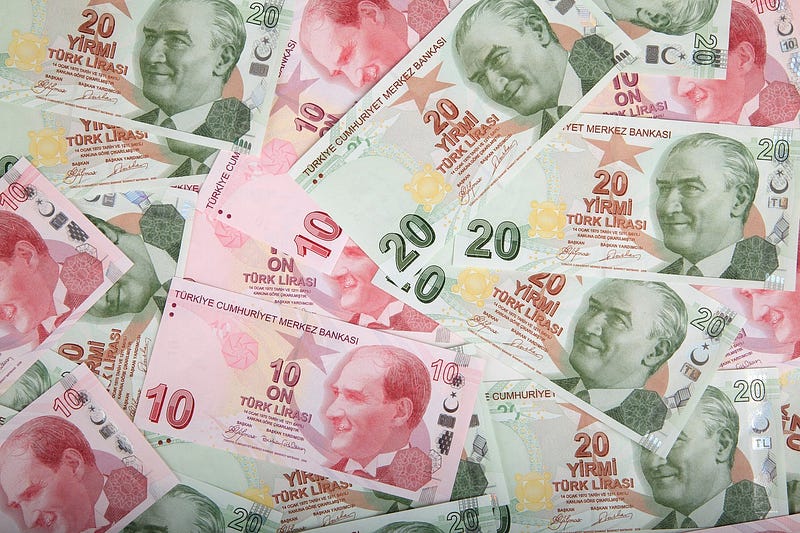
Photo by PublicDomainPictures on Pixabay


75% of all fiat volume

According to a report by Cointelegraph on Friday, despite being the fourth-largest crypto market globally in terms of transaction volume, following the United States, India and the United Kingdom, the Turkish Lira commanded a staggering 75% of all fiat volume in early September. This surge in the TRY trading pair is attributed to a recent influx of crypto investors into the Turkish market.

In its analysis last month, crypto market data provider Kaiko put Turkish Lira dominance at 81% on Binance. Kaiko also pointed to growth in the volume of the Brazilian Real on Binance, while dominance of the British Pound and the Euro were fading.

It’s important to note that the disproportionate level of lira-based fiat volume on the Binance exchange may also have come about due to difficulties Binance has had in recent months in keeping various fiat on and off-ramps open. In June Binance US suspended USD deposits while pausing fiat withdrawals.

It has also faced disruption when it comes to Euro payments, withdrawals and deposits. In May Binance Australia users experienced difficulties relative to AUD deposits and withdrawals following a decision to terminate the availability of PayID services to Australian account holders.


27% new crypto sector participants

Binance’s research revealed that 27% of participants in Turkey initiated their crypto investment journey within the past year, with 8% joining in the last six months alone. Most respondents indicated holding up to $175 (5,000 TRY) in cryptocurrencies, expressing a strong inclination towards investing in real estate.

The profitability factor emerged as a significant motivator for Turkey’s interest in crypto, with ease of monitoring, no minimum threshold, and low transaction costs standing out as key drivers for new investors. However, the inherent risks associated with crypto investments contribute to the hesitancy observed among many Turkish investors.

The evolving landscape of crypto adoption in Turkey is evident in the statistics, showing a substantial increase from 16% to 40% over the last three years. Chainalysis’ Global Crypto Adoption Index 2023 ranks Turkey at 12th place. Moreover, the country received humanitarian aid in the form of cryptocurrency during the 2023 earthquake, underscoring the growing integration of digital assets in various aspects of Turkish society.


Protecting long-term wealth

A report by KuCoin earlier this year identified a marked increase in crypto investors in Turkey. It found that one of the main motivations for the pursuit of crypto investments in Turkey was the desire to create long-term wealth. Recent years have seen the Turkish sovereign currency suffer from runaway inflation. Recent data put the year-on-year inflation rate at 59%.

It’s likely that the ongoing loss of buying power of the Turkish Lira is a key motivator for Turkish citizens in choosing to onboard into crypto, in an effort to safeguard their savings and wealth.

More to Read
View All
Policy & Regulation·

Jan 08, 2024

Samjong KPMG and Xangle seminar says crypto market will improve this year

According to crypto data research platform Xangle, the crypto market is on the road to recovery this year thanks to positive outlooks on developments like a spot Bitcoin ETF, regulatory changes and diversified services.Photo by CHUTTERSNAP on UnsplashBitcoin’s resilienceSpeaking at a special seminar on virtual assets co-hosted by CrossAngle and accounting firm Samjong KPMG in Seoul last Friday, Kim Jun-woo, Co-Founder and CEO of Xangle, cited Bitcoin’s positive reputation as one of the reasons for the optimism. "There are reports that Bitcoin has a low correlation with risky virtual assets," he said. Public sentiment toward Bitcoin is also expected to improve this year as the global economy is expected to emerge from recession and manage a soft landing. Another major item on the agenda is a possible approval by the U.S. Securities and Exchange Commission (SEC) of a spot Bitcoin ETF this quarter. Web3 revolutionIn terms of innovative services, Kim stated that Web3 is expected to be actively implemented in local corporations after going through conceptual and technical testing stages. "In South Korea’s crypto market, (resources like) app stores and mobile phones exist, but there are no actual apps," Kim said. "I expect that figures from traditional finance and existing Web2 companies will enter the Web3 industry this year."  "Web2 companies will discover new business opportunities in Web3 and play a role in bringing existing content and users to Web3," said Lee Hyun-woo, Co-CEO of Xangle, in his presentation on the importance of Web3 system integration and virtual asset disclosure. "Their participation is important for the stable maturation of the Web3 ecosystem," he added. Regulation and governanceIn regards to policies and regulations, expectations point to a resolution of various uncertainties as cryptocurrencies are slowly becoming more integrated into the sphere of traditional finance. In South Korea, the imposition of basic legal regulations on virtual assets is accelerating, such as the Virtual Asset User Protection Act. The Financial Services Commission (FSC) also released guidelines for accounting and disclosure of virtual assets last month, which was examined in detail at the seminar. "The financial authorities' guidelines are more detailed than before. We expect additional guidelines from them in the future to further resolve shortcomings," Choi Yeon-taek, Managing Director of Samjong KPMG, commented.

news
Markets·

Aug 13, 2024

OSL Executive: Crypto ETFs have challenge to overcome in Hong Kong

At the Foresight 2024 Hong Kong Summit on Aug. 11, Gary Tiu, director and head of regulatory affairs for OSL, a crypto market custodian, exchange and prime brokerage, outlined in a panel discussion that the crypto exchange-traded fund (ETF) market in the Chinese autonomous territory is challenged insofar as it lacks market incentives.Photo by Cecelia Chang on UnsplashThe intermediary problemTiu’s company hosted the event, alongside Foresight News and crypto publication The Block, who reported on Tiu’s comments. The OSL executive said that when it comes to funds and structured products in Hong Kong, there’s a “very rich layer of intermediaries— brokers, banks, private banks, retail banks, etc.” involved. Tiu explained that they make a lot of money from the distribution of such products, resulting in unlisted products being marketed far more effectively by comparison with listed products. It’s against that backdrop of misaligned incentives that Tiu identifies challenges for crypto ETFs on the public markets in Hong Kong. He stated: “So I think the incentive system in Hong Kong is one of the reasons why ETFs do have a bit of a hard time growing as a financial instrument.” In the case of ETFs, the OSL executive explained that equity brokers take just a few basis points in commission, only about 1-2% of what they make on the sale of structured products. Bias against Bitcoin and EtherTiu is also of the belief that cryptocurrencies like Bitcoin and Ether have a reputational problem among Hong Kong’s investment community, stating: “I think there is still a bit of a bias in the eyes of the regulators and also in the eyes of the financial institutions, that somehow bitcoin ETF is just this unique class of risk that you need to be extra cautious about.” Chen Zhao, who heads up the digital assets section of Hong Kong-based independent financial advisory firm Fosun Wealth, chimed in with his own concerns. According to Zhao, the crypto ETF products currently marketed in Hong Kong are lacking in terms of the depth of dealers and brokers offering the products. Zhao explained that there are three main types of market participant active on the Hong Kong markets, namely western institutions, Hong Kong-based institutions and their counterparts from mainland China.  Zhao stated: “Chinese brokers and dealers, they’re not allowed or they choose not to deal with the product, and for the western financial institutions, they don’t have the necessity of dealing the products because they acquire more fees and incentives, and have easier access to the U.S. ETFs.” While progress is far more modest by comparison with the U.S. market, the Hong Kong crypto ETF market continues to develop, with spot Bitcoin and Ethereum ETFs setting a record trading volume last week. In the same week, Mox Bank, a subsidiary of British banking multinational Standard Chartered, launched trading services relative to spot Bitcoin and Ethereum ETF products in Hong Kong. Last month, OSL CEO Patrick Pan, anticipated that an Ethereum ETF product that incorporated staking would launch in Hong Kong within six months. Many commentators have suggested that institutional interest in Ethereum ETFs will begin in earnest once a yield-producing staking product hits the market.

news
Web3 & Enterprise·

Jul 04, 2023

Hana Bank Enables Korean Art Collectors to Prove Ownership with NFTs

Hana Bank Enables Korean Art Collectors to Prove Ownership with NFTsHana Bank, one of South Korea’s largest banks, has announced a partnership with Trackchain, a Korean blockchain firm, to enhance digital art banking services based on Web3 technology, according to a press release.Photo by Debby Hudson on UnsplashArt banking and NFTsThe collaboration aims to develop and operate a platform that promotes art banking services, including the exhibition, advertisement, and distribution of artworks. Furthermore, the two entities will create non-fungible tokens (NFTs) to verify the ownership of artworks and introduce artwork custody products. They will also explore and construct business models that integrate finance and blockchain technology.Bank’s custody serviceHana Bank, recognized as a leader in art banking, has already established a comprehensive custody service that ensures secure management, storage, and liquidation of art collections. Through this partnership, Hana Bank plans to refine NFT technology, which will provide transaction history and ownership verification for artworks. The objective is to enhance transparency and convenience for art collectors during the trading process.Visitors who purchase artworks by Artist Cho Sung-hee at an exhibition hall in Gangnam, Seoul, and choose to store them in Hana Bank’s custody will receive NFTs issued by Trackchain. These NFTs serve as proof of ownership, authenticating the artworks. Cho Sung-hee is known for her collage works created with Korea’s traditional hanji paper, made from laminated sheets. The exhibition will run from July 4 to 28.Additionally, purchasers of the displayed artworks will receive Cho’s digital art NFTs. Meanwhile, customers who use Hana Bank’s mobile app, Hana 1Q, to create their own artworks will earn corresponding NFTs.Kim Young-hun, Head of Hana Bank’s Wealth Management Unit, expressed enthusiasm about their Web3-based art banking service, emphasizing that it will facilitate easier art purchases and provide enhanced security for managing art collections. Kim also stated that the bank intends to expand its services further to deliver exceptional cultural experiences.

news
Loading