Top

Metaplanet surpasses 4K Bitcoin following stock split

Web3 & Enterprise·April 02, 2025, 2:52 AM

Metaplanet, the Tokyo-headquartered Bitcoin corporate treasury firm, has purchased an additional 696 BTC, following a stock split, bringing its total Bitcoin holding to 4,046 BTC.

https://asset.coinness.com/en/news/a0422ee7fdf4524247bbec6658b16cf2.webp
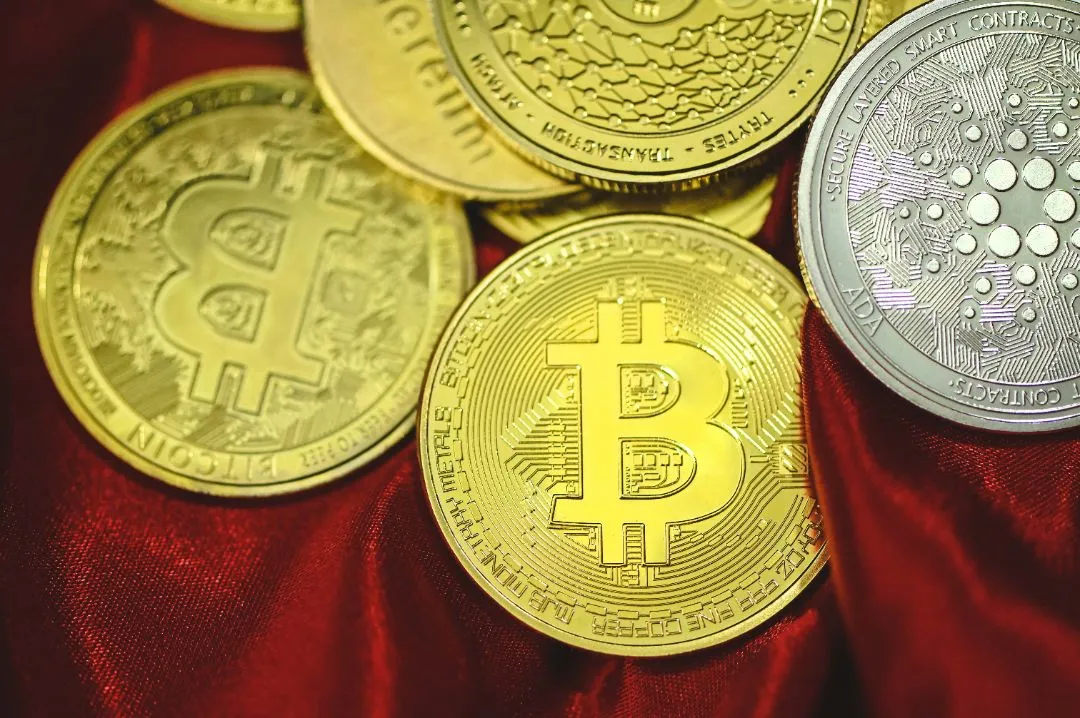
Photo by Kanchanara on Unsplash

$341 million in Bitcoin

The company publicized details of its latest Bitcoin purchase on X on April 1. It outlined that funding of this purchase was enabled through the allocation of cash held by the firm as a consequence of the sale of put options. 


The average purchase price of the 696 BTC was 14,586,230 yen ($97,694). The average price the firm has paid per Bitcoin in relation to its entire holding of the leading digital asset is 12,943,181 yen ($86,689). Its overall Bitcoin holding has a total value of approximately $341 million.


Taking to X, the firm’s CEO, Simon Gerovich, said that Metaplanet’s Bitcoin Income Generation business achieved 770 million yen ($5.2 million) in Q1 revenue, while year-to-date its Bitcoin yield has reached 95.6%.


Stock split & bond issuance

This purchase follows both a stock split and the issuance of bonds worth 2 billion yen ($13.3 million). On March 31, Metaplanet filed a disclosure outlining details of the bond issuance. The company issued the zero interest bonds via its Evo Fund. Buyers will be permitted to redeem the newly issued bonds at face value by Sept. 30. 

In an X post, Gerovich suggested that the bond issuance was being implemented in order to facilitate the company “buying the dip,” taking advantage of a downturn in the Bitcoin unit price over recent weeks.


In a notice filed on Feb. 18, Metaplanet outlined details of its 10-to-1 stock split. The company described how it executed a reverse 10-to-1 stock split last August. This has created a problem for investors as in the interim, the stock price has increased significantly. Consequently, the share price is unwieldy, placing a substantial financial burden on investors.


On that basis, the latest stock split will enable greater investor accessibility and improved liquidity. Arising from that, Metaplanet expects that it will gain a broader investor base.


On March 30, Gerovich reported that Metaplanet stock is now a component within Betashares’ Crypto Innovators ETF. Betashares is an Australian asset manager with over $50 billion in assets under management. 


The Metaplanet CEO suggested that the development pointed towards “growing interest from institutional investors,” while expressing his satisfaction with Australians now having access to Metaplanet’s Bitcoin First Strategy via the Australian Securities Exchange (ASX).


The ‘Asian MicroStrategy’

Metaplanet is being regarded by many industry commentators as the “Asian MicroStrategy,” referring to the American Bitcoin treasury firm that recently rebranded to Strategy, having pioneered a particular approach to building a position in Bitcoin within a corporate treasury.


Metaplanet appears to have adopted the same Bitcoin playbook. In an appearance on the Coin Stories Podcast recently, Metaplanet’s Gerovich said that he encourages his friends to put “100% of their net worth into Bitcoin.”


Last month, the company confirmed that it was pursuing a strategy to accumulate 10,000 Bitcoin in 2025 and 21,000 Bitcoin by 2026. The firm is now ranked ninth in the world as a corporate Bitcoin holder. Within Asia, it is the leading corporate holder of the world's largest digital asset.

More to Read
View All
Web3 & Enterprise·

Oct 04, 2024

Circle moves towards further APAC expansion via MHC Digital partnership

MHC Digital Group, an Australian digital assets management platform, has entered into a partnership with USDC stablecoin issuer Circle Internet Financial, with a view towards increasing the circulation of USDC within Australia and the Asia-Pacific (APAC) region. MHC was founded by well-known venture investor Mark Carnegie, with the company having offices in Sydney and Singapore. The firm will work with Circle to distribute USDC in Australia and within the APAC region. MHC has been marketing its services towards institutional investors and it’s that same client group that the two firms want to target in order to increase USDC circulation. The firm will provide “cost-effective and efficient USDC access” where institutional clients are concerned.Photo by Catarina Sousa on PexelsCrypto ‘a better mousetrap’ In a media release published on behalf of the two companies, Carnegie claimed that while many people still claim that there is no use case for crypto, hundreds of billions move globally at a fraction of the cost experienced via the traditional financial system. “Crypto is simply a better mouse trap for the vast majority of international payments,” he added. Commenting on the development in an interview with the Australian Financial Review, Carnegie stated:“I’m hoping we can show there are hundreds of millions of dollars of forex [foreign exchange] trading fees, where super funds are getting their faces ripped off by Macquarie Bank and the other incumbent banks.” Appealing to pension funds Carnegie wants to get large pension funds on board in using USDC. He pointed to the fact that global banks make $170 billion from corporations and individual investors through the movement of funds over the SWIFT network. He can see that major savings can be made if USDC is used relative to these fees. Despite all this, Carnegie acknowledges that it will be a hard sell to get them on board. As part of these plans, MHC Digital will be launching an over-the-counter (OTC) trading desk, which will be targeted towards hedge funds, crypto enterprises and high-net-worth individuals. APAC opportunity Kash Razzaghi, Circle’s chief business officer (CBO), identified APAC as presenting with an adoption opportunity beyond institutional clients. Razzaghi stated: “With its young, mobile-first and digital wallet-ready population, the Asia Pacific region is ahead of the curve when it comes to digital asset adoption." Carnegie appears to be similarly enthusiastic when it comes to the APAC region. In an interview with CNBC back in January, he suggested that the crypto bull run was “an Asian story this time round.” It’s understood that the two companies are also considering collaborating on the issuance and distribution of an Australian dollar (AUD) denominated stablecoin. This development is the latest in a string of initiatives taken by Circle to bring about USDC adoption in the APAC region. In 2023 the company partnered with SBI Holdings with the objective of enhancing the circulation of USDC within the Japanese market. The very same rationale resulted in it partnering with Tokyo-based crypto trading platform Coincheck in February 2024. The company has also tried to trigger adoption at a retail level, through collaborations with FamilyMart convenience stores in Taiwan and Southeast Asian super app Grab. 

news
Policy & Regulation·

Feb 10, 2025

Russia preparing to launch crypto mining equipment registry

The Russian authorities are in the process of bringing in a national registry for crypto mining equipment, with registration to be a mandatory requirement for all operators. That’s according to a report published by Russia’s state-owned news agency, Tass, on Feb. 3. The registry is being established by the country’s Ministry of Energy, with Yevgeny Grabchak, deputy minister of energy, heading up the project.Photo by Egor Filin on UnsplashThe measure is being introduced as part of a raft of amendments to existing mining regulations. The objective is to improve oversight relative to crypto mining activity within the Russian Federation.  Unauthorized mining has been a concern for the Russian authorities for some time. According to the TASS report on this development, the registry would make mining without equipment registration “impossible.” Late last year, a Russian government commission moved to ban crypto mining in specific regions of the country. Management of the power grid was understood to be the main motivating force. Crypto mining activity had caused power shortages in some areas.  A seasonal ban was implemented, running from December to mid-March, with the measure to be repeated each year until 2031. In August of last year, Russian President Vladimir Putin had signed into law legislation that recognized the legitimacy of crypto mining in Russia.  Illegal mining, particularly within these restricted regions, continues to be a concern for the authorities, prompting this latest measure. Additionally, the authorities plan on establishing clear criteria in order to define crypto mining and deal with gaps in current legislation which may be enabling illegal and unregistered operators to carry out such mining activity. According to a report last month by local news media outlet Prime, Russia saw a surge in demand for Bitcoin mining equipment in Q4 2024. Crypto equipment demand increased threefold in comparison with the same quarter in 2023. Addressing the need for a crypto equipment registry, the Russian government stated: “It is important to adapt the law ‘On Mining’ to the current situation, in particular, based on practical experience, to formulate clearer criteria for classifying activities specifically as the production of digital currency.” While efforts are being made to get a firmer grasp on unauthorized mining in areas that are being impacted by power shortages, work is also being done to use crypto mining as a mechanism to fully exploit surplus energy.  Last month, it was revealed that Russian state-owned power company Rosseti is evaluating Bitcoin mining as a means through which surplus energy can be utilized in low-demand regions. In a separate development, the TASS news agency also reported on Feb. 3 that crypto miners are now in a position to report their earnings via online accounts with Russia’s Federal Taxation Service (FNS). The TASS report stated: “A new function has appeared in the personal accounts of taxpayers. With the help of the online service, users can now send information about receiving digital currency to the tax authority.” The feature appears once the registered user submits an electronic signature. 

news
Web3 & Enterprise·

Jun 22, 2023

Uniswap Competitor Maverick Protocol Raises $9M in Funding

Uniswap Competitor Maverick Protocol Raises $9M in FundingMaverick Protocol, a Singapore-centric DeFi project which aims to disrupt Uniswap’s dominance, has announced a fresh capital funding round.On Wednesday, Maverick announced that it successfully raised $9 million in a seed funding round led by Founders Fund. Prominent participants in the round include Binance Labs, Coinbase Ventures, Pantera Capital, and Apollo Crypto.It’s not clear what Maverick’s current valuation stands at, and in discussion with Fortune, Alvin Xu, one of the co-founders of Maverick Protocol, refrained from disclosing that valuation.Photo by Towfiqu barbhuiya on Pexels“Surgical approach to DeFi”Joey Krug, a partner at Founders Fund, expressed confidence in Maverick’s potential to contribute to the growth of the DeFi industry through its “surgical approach to decentralized finance.” Krug added that “Maverick has quickly established itself as a hub for liquid staking token trading whilst having greater capital efficiency for liquidity providers.”The injection of capital into Maverick comes at a time when crypto enthusiasts are seeking alternative platforms for purchasing and exchanging tokens. This shift in interest was sparked by the Securities and Exchange Commission (SEC) in the United States filing lawsuits earlier this month against two prominent centralized crypto exchanges, Binance and Coinbase.Following the news of the lawsuits, both Binance and Coinbase experienced significant outflows of cryptocurrencies. Simultaneously, the trading volume on decentralized exchanges, which are characterized by their lack of central ownership, surged from $1.2 billion the day before the Binance lawsuit was filed to $3.1 billion on the day the suit was made public, according to data from DefiLlama. These events occurred during the early afternoon when the SEC unveiled its charges.Crypto industry OGAlvin Xu has been actively involved in the crypto industry since 2018 when he joined the Tron Foundation and subsequently BitTorrent. For a time, he worked at Ethereum-centric blockchain infrastructure firm, ConsenSys, contributing to the development of the MetaMask wallet.In 2021, Xu embarked on the creation of Maverick Protocol, an automated market maker. Typically, market makers like Citadel Securities play a crucial role in traditional finance, matching buy and sell orders for stocks. In the crypto realm, where trading operates 24/7, Uniswap has gained popularity as it automates market making for a wide range of tokens.Xu believes that his new protocol can challenge Uniswap’s dominant position, stating: “That’s definitely our goal.” However, he acknowledges the substantial advantage Uniswap holds as a first-mover in the crypto world.Since its launch in March, Maverick Protocol, currently employing nine individuals, has set its sights not only on competing with Uniswap and other automated market makers but also on surpassing centralized exchanges such as Binance and Coinbase. Xu acknowledges that achieving this goal will require time and further development, stating: “I think it’s still early.”Maverick Protocol’s recent funding round provides a strong boost to its ambitions, stoking further competition with market leader Uniswap, while playing a role in shaping the future of DeFi.

news
Loading