Top

SK Securities introduces fractional investment service with three partners

Web3 & Enterprise·November 03, 2023, 9:02 AM

SK Securities, a major South Korean securities firm, announced on Friday (local time) that it has launched a service aimed at enabling fractional investments.

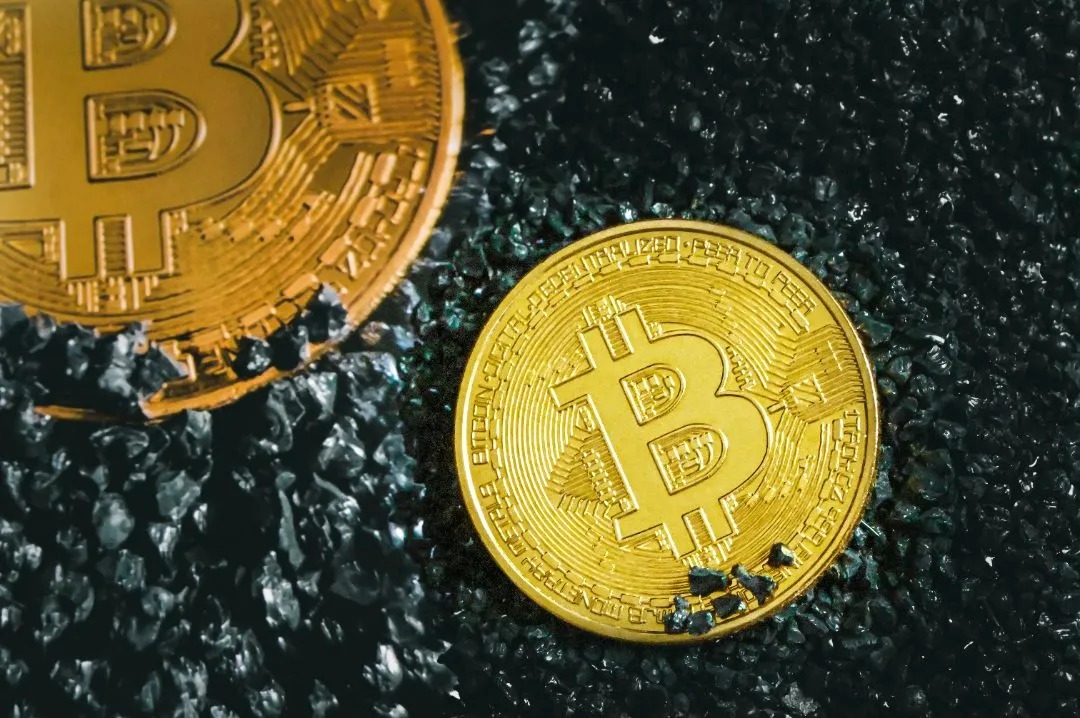
Photo by Mathieu Stern on Unsplash


Real estate, artworks and luxury goods

This service involves three fractional investment companies: real estate platform Funble, online art auction house Seoul Auction Blue and luxury goods platform Treasurer.

This offering represents the first phase of the fractional investment alliance, delivering a wide array of investment insights from these platforms. Funble presents details on housing subscriptions, special housing supplies and key real estate market indicators. Seoul Auction Blue provides analyses of the art market along with information on individual artworks. Additionally, Treasurer offers insights into an assortment of luxury collectibles, including fine wines. Customers of SK Securities can easily access this service through the company’s mobile trading system called Frequency 3.0.


Second phase in H1 2024

As part of the second phase, SK Securities is developing an API-integrated system designed to link with assets on these fractional investment platforms. This system is slated for launch in the first half of the upcoming year.

An SK Securities spokesperson explained that the firm has rolled out this novel service to guide its clients through the emerging arena of fractional investments, while also enriching their investment options. Beginning with this offering, SK Securities aims to broaden its collaborative efforts with fractional investment entities. Furthermore, the firm is committed to advancing the security token ecosystem, which will involve channeling investments into blockchain startups and participating in security token consortiums.

On a related note, SK Securities inked a memorandum of understanding (MOU) with Woori Bank and Samsung Securities in September, targeting the development of business models for security tokens within the bounds of regulatory compliance.


More to Read
View All
Policy & Regulation·

Jun 07, 2023

SEC Lawsuit Stalls Binance’s Gopax Acquisition Deal in South Korea

SEC Lawsuit Stalls Binance’s Gopax Acquisition Deal in South KoreaNothing exists in a vacuum, and on that basis, it appears that ripples emanating from the recent lawsuit filed by the Securities and Exchange Commission (SEC) in the United States against global crypto exchange Binance have resulted in the company struggling to complete the acquisition of South Korea’s Gopax.Photo by Daniel Bernard on UnsplashSuspended pending reviewThe acquisition deal between Binance and South Korean crypto trading platform Gopax has hit a roadblock as a direct consequence of the lawsuit. The Financial Services Commission (FSC), the financial watchdog in South Korea, has put the acquisition on hold as it reviews the situation.Binance had acquired a majority stake in Gopax in February, with plans to re-enter the South Korean crypto market after a two-year absence. Gopax is a top five cryptocurrency exchange in South Korea, alongside Upbit, Bithumb, Coinone, and Korbit. However, according to a report by local news media, the FSC has suspended Gopax’s executive change report filed on Tuesday in light of the SEC lawsuit. The report outlined the nomination of three Binance members, including Leon Singh Poong, as inside directors of Gopax.The FSC cited the allegations of securities law violations against Binance and the SEC’s request to freeze Binance.US assets as the reasons for its cautious approach.Gopax revivalThe significance of Binance’s acquisition of Gopax goes beyond its re-entry into the South Korean market. It also aimed to revive the struggling local crypto trading platform. In November 2022, Gopax faced challenges when it suspended withdrawals of principal and interest payments from its decentralized finance service, GoFi, following the collapse of the Bahamas-based FTX crypto exchange and the bankruptcy of Genesis, a US digital assets financial services firm.Digital Currency Group, the parent company of Genesis, was reportedly the second-largest shareholder of Gopax and a key business partner providing the GoFi product. Binance’s acquisition deal intended to inject new capital into Gopax to facilitate customer withdrawals and interest payments for GoFi.The SEC lawsuit against Binance alleges the exchange’s commingling of customers’ funds and violations of various securities laws. The SEC has filed 13 charges against Binance, its subsidiaries, and its CEO, Changpeng Zhao.Acquisition strategyBinance appears to have been pursuing an acquisition strategy in attempting to carve out a greater market share in Asian markets. Binance entered the Japanese market via acquisition in November 2022 when it purchased local crypto platform, Sakura Exchange BitCoin. At the end of last month, Binance announced that it was rebranding the business as Binance Japan and launching it as a stand alone bespoke platform dedicated to the Japanese market.In Thailand, the global crypto exchange has varied its approach, entering into a joint venture rather than a full acquisition. It has partnered with Gulf Innova, with the new entity, Gulf Binance, recently having been awarded a trading license by the Thai regulator.The outcome of the SEC lawsuit and its impact on Binance’s operations in South Korea remains uncertain. The FSC’s review process will consider the allegations against Binance and the implications of the SEC’s actions before making a decision on the Gopax acquisition. The crypto industry will closely monitor the developments as they unfold, as no doubt the saga will have broader implications for Binance and its expansion plans.

news
Web3 & Enterprise·

Apr 12, 2023

South Korea’s GDAC Suffers $13M hack

South Korea’s GDAC Suffers $13M hackSouth Korean cryptocurrency exchange, GDAC, has suffered a significant hacking incident that has resulted in the loss of approximately 23% of its custodial digital assets.©Pexels/PixabayThe hack occurred on Sunday when some of the exchange’s hot wallets were breached, and the stolen assets were transferred to an unidentified wallet. GDAC reported the incident on Monday and disclosed that the exchange lost over $13.1 million in Bitcoin, Ether, Wemix, and USDT, with more than $10 million in Wemix.According to blockchain analytics firm Arkham Intelligence, the hacker has since swapped the USDT for ETH, sending 461 ETH to cryptocurrency tumbler, Tornado Cash. The hacker used three separate wallets to take funds from two of the exchange’s hot wallets. Arkham has labeled the wallets as follows:GDAC Hacker 1: 0x244615D99684175d31369332039b2D84ce925EC5GDAC Hacker 2: 0x62B5eb2cb925Ce2898f9327B235b3228e7Cac1C2GDAC Hacker 3: 0x87597bDB421482190e223aCa0A4DEAd75AB0a98DGDAC deposits/withdrawals suspendedGDAC has suspended its withdrawal and deposit services and reported the incident to the Korea Internet and Security Agency and the Financial Intelligence Unit. The exchange has also requested other cryptocurrency exchanges to block incoming transactions from suspicious addresses.In a notice posted on its website, GDAC CEO Seunghwan Han apologized for the suspension of deposits/withdrawals and concern relative to the hack, adding that the firm will be working towards investor protection and safe withdrawal of funds in due course. GDAC also posted the breakdown of the digital asset quantities lost in the hack, with the hacker stealing 60.80 BTC, 350.5 ETH, 10,000 WEMIX and 220,000 USDT.Crypto hacks increasingThis hacking incident comes at a time when cryptocurrency hacks have been on the rise. According to blockchain analytics firm Chainalysis, illicit actors stole $3.8 billion worth of assets last year, the largest one-year loss in crypto’s history. In addition, other crypto platforms have also suffered notable hacks and exploits in the past 15 to 18 months. Axie Infinity’s Ronin bridge, for example, suffered a $625 million hack last year, and decentralized-finance protocol Sushi was exploited for $3.3 million on Sunday.GDAC is not the only South Korean cryptocurrency exchange to suffer a significant hacking incident. In 2018, Coinrail was hacked, resulting in the loss of approximately $40 million worth of assets, and in 2021, Upbit suffered a $50 million hack.In response to these incidents, South Korea has taken steps to tighten regulations around cryptocurrency exchanges. In March 2021, the country’s Financial Services Commission issued a revised regulation that requires cryptocurrency exchanges to maintain stricter anti-money laundering measures and report suspicious transactions.The GDAC hack is a stark reminder of the risks associated with cryptocurrency investing and the importance of implementing robust security measures. Investors and cryptocurrency exchanges should take note of this incident and ensure that they have adequate security measures in place to protect against potential hacks and exploits.

news
Web3 & Enterprise·

Sep 12, 2023

LG CNS Chooses Six Startups to Foster Innovation in Digital Transformation

LG CNS Chooses Six Startups to Foster Innovation in Digital TransformationLG CNS, the information technology (IT) arm of South Korean conglomerate LG Group, said Tuesday that it has chosen six startups to nurture under its sixth annual Startup Monster program — a program dedicated to supporting technology startups that are capable of pioneering consumer values in the realm of digital transformation (DX). By directly contributing to their growth as startups, LG CNS also aims to secure them as future business partners.Photo by Milad Fakurian on UnsplashAmong those startups is Zkrypto, a company specializing in zero-knowledge proof technology — a method of providing the validity of a statement without revealing the statement itself. Zkrypto will work with LG CNS on security solutions and privacy protection services necessary for operating digital finance services such as digital wallets and security tokens. The two companies already established their relationship earlier last month when they signed a memorandum of understanding (MOU) to jointly develop blockchain-powered business models.Investing in startup growthUnder the program, the companies will undergo a six-month technology assessment as well as receive KRW 100 million (approximately $75,000) in funding to demonstrate the feasibility of technology integration into their businesses. LG CNS said that it would carry out the assessment by leveraging its extensive business references and technical resources along with assistance from other IT experts.“Through the Startup Monster program, we will continue to discover and nurture promising startups with innovative technologies and create an ecosystem where we can grow together,” said Jeon Eun-kyung, Executive Director of LG CNS’ Convergence Technology Research Institute.Participants from diverse industriesThis year’s recruitment attracted over 240 applicants, resulting in a highly competitive selection ratio of 40:1. Other selected startups besides Zkrypto include GradeHealthChain, Quantum Universe, Delivery Lab, mAy-I, and Circle Platform, which specialize in emerging DX technologies, such as big data analysis, artificial intelligence (AI) modeling, and extended reality (XR).GradeHealthChain is known for its health management app LOG, which analyzes health checkup results and medical information to allocate an overall health score. Users can provide these scores and other medical information to insurance companies partnered with GradeHealthChain to receive premium discounts on insurance. In turn, the insurance companies can use this data to accurately assess the customer’s health status and recommend optimal insurance products. LG CNS plans to work with GradeHealthChain to create services for insurance product recommendations.On the other hand, Quantum Universe specializes in the planning, production, and distribution of XR content. With LG CNS, the company will jointly develop digital twin technology that replicates physical objects in a digital environment for applications in smart factories and manufacturing. They are also pursuing marketing projects using metaverse technology.mAy-I and Circle Platform were chosen for the program for their impressive technical capabilities in data collection and AI modeling. Meanwhile, Delivery Lab operates a food distribution platform in the smart logistics field.LG CNS has been actively nurturing startups and working with them through the Startup Monster program since 2018. Up until last year, a total of 22 startups participated in the program.SelectStar, one of last year’s participants, is currently collaborating with LG CNS as a data construction partner for AI businesses. The two companies have notably created KorQuAD 2.0, a Korean language machine reading comprehension dataset.In addition, Lovo, an AI text-to-speech solutions startup from the third Startup Monster program, worked with LG CNS on developing an AI contact center. According to industry sources, Lovo’s corporate value has increased more than 20 times from the time it participated in the program, reaching KRW 100 billion.

news
Loading