Top

Busan to Host Blockchain Week in Busan 2023 Next Month

Policy & Regulation·October 27, 2023, 7:34 AM

The South Korean port city of Busan is set to host this year’s Blockchain Week in Busan (BWB) from November 9 to 10 (local time) at the Signiel Busan Hotel. Touting the theme “Target 2026 Blockchain Busan,” local and overseas experts in the field of blockchain and Web3 will come together to discuss the prospects and potential of Busan to become an urban blockchain hub by 2026. The event will be co-hosted by local newspapers Busan Ilbo and Maeil Business Newspaper and jointly organized by entrepreneurship base camp Nonce, contents commerce network JJ Global, and Busan-based media company Bonmedia.
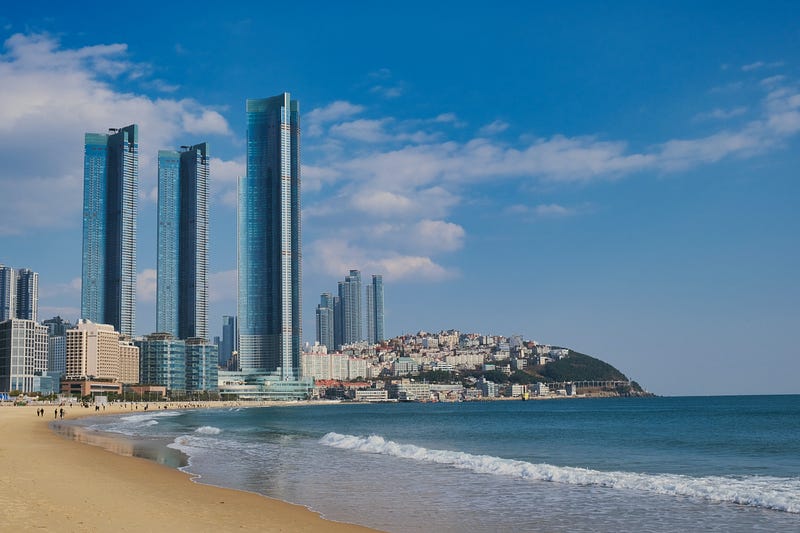
Photo by Minku Kang on Unsplash


Preparing for the future of blockchain development and financial innovation

The first day of the event will kick off with an opening speech by the city’s mayor Park Heong-joon as well as presentations on Busan’s trajectory for nurturing blockchain development. In addition, Kim Sang-min, the leader of Busan’s initiative to establish its own digital asset exchange, will present the three-year vision for the Target 2026 goal. Various Web3 companies will also gather for the inauguration of the Busan Blockchain Alliance.

“BWB 2023 will give us the chance to envision how blockchain technology can change Busan and to visualize how the field will transform in ten years’ time,” Kim commented.

A subsequent panel discussion will feature Rory Knight, the Chairman of Oxford Metrica, and Dimitrios Psarrakis, a financial economist who contributed to the EU’s Markets in Crypto-Assets Regulation (MiCA), who will speak on the Korean government’s digital asset regulations.

Several professionals including Patrick Yoon, CEO of Crypto.com’s Korea branch, and Kim Ji-yun , CEO of blockchain software firm DSRV, are set to talk about various concepts under the umbrella of bridging blockchain and finance. This includes blockchain-based payment systems, digital IDs, and central bank digital currencies.

In particular, loan officers from major investors like the Korea Development Bank, Korea Investment Venture Corporation, and BNK Financial Group will also be in attendance, giving Web3 companies an opportunity to introduce their business models and pitch their ideas for the architectural development of Busan’s urban blockchain infrastructure.


Global investment insights and regulatory prospects

Investment managers from overseas venture capital firms will be at the center of the second day’s events, covering a panel discussion about the global Web3 investment ecosystem and Busan’s integration into it. Caroline Pham, a Commissioner of the US Commodity Futures Trading Commission, is also set to speak with Jin Kang, Head of Legal at blockchain venture capital firm Hashed, on suggestions on crypto regulations for innovation.

Meanwhile, Korean representatives of global mainnet projects plan to discuss the role of business directors in the Korean cryptocurrency market.

“In pursuit of the vision that we will present at this year’s BWB, Busan is fully dedicated to becoming a global blockchain hub and a leading first mover in the industry by merging finance and blockchain technology,” said Mayor Park.


More to Read
View All
Web3 & Enterprise·

Jul 11, 2025

Chinese FTX creditors push back against potential payout exclusion

A Chinese creditor of failed crypto exchange FTX has filed an objection on his own behalf and that of 300 others, with a U.S. bankruptcy court against a motion lodged with a view towards excluding payouts to creditors resident in China, Russia and 47 other foreign jurisdictions.Photo by Mariia Shalabaieva on UnsplashPotential distribution forfeitureThe FTX Recovery Trust, an entity formed in January to oversee the FTX bankruptcy estate following the adoption of a plan of reorganization, filed a motion last week seeking the approval of the Delaware Bankruptcy Court in the United States to adhere to new parameters related to the claims of creditors residing in restricted overseas jurisdictions. Besides China and Russia, the list of restricted jurisdictions also includes many within the Asian region, including  Afghanistan, Iran, Iraq, Macau, Myanmar (Burma), Nepal, North Korea, Pakistan, Qatar, Bangladesh and Cambodia. The FTX estate claims that these jurisdictions have regulations and laws restricting cryptocurrency transactions. In such cases, the FTX Recovery Trust claims that it cannot break local laws.  The difficulty for creditors resident in these countries is that if it's deemed illegal to reimburse them, they won’t qualify for the next scheduled distribution from the estate. In that instance, distribution forfeiture will be triggered. Taking to X on July 7, FTXcreditor.com, an entity that has been buying up bankruptcy claims from FTX creditors over the course of the FTX bankruptcy process, highlighted the peril that creditors residing in these restricted countries may face. It stated: “Distribution forfeiture is triggered at every distribution record date. The first record date already passed, if your claim is still tied to a local KYC when the stamp drops, that tranche is potentially gone.” Short timeframe for objectionsMr. Purple, a pseudonymous distressed assets bankruptcy professional who has been advocating for FTX creditors since the collapse of the business in November 2022, concurred with this view in a subsequent post on X. He pointed out that an extremely short timeframe has been given to affected creditors to respond. The motion was filed on July 2 and objections are due by July 15. $500 million in claims are at stake which accounts for 5% of all creditor claims. Of this, 82% of these claims belong to Chinese creditors. In a series of follow-up posts, the bankruptcy professional describes several procedural issues that he believes will result in it being incredibly difficult for affected creditors to have their funds reimbursed.Mr. Purple concludes:”The incentives are designed to be extremely risk averse in finding [a legal opinion] that paying creditors is legal! [The estate’s lawyers will] take the fees and say its not legal.” In his court filing, the Chinese creditor, who is resident in Singapore, stated: “My family holds four KYC-verified accounts with aggregate claims exceeding $15 million USD.” . . . “We have fully complied with every procedural requirement under the Plan. The proposed motion now jeopardizes our right to distribution in an arbitrary and inequitable manner.” On X, he asserted that the FTX Recovery Trust’s motion “constitutes an impermissible and material modification of the Plan.” Aside from legal action, the only other potential solution for creditors residing in restricted countries is to sell their claims. However, claims buyers are pricing in greater risk with lower rates and less favorable terms.

news
Policy & Regulation·

Sep 19, 2023

Rising Cryptocurrency Arbitrage Transactions Raise Concerns in South Korea

Rising Cryptocurrency Arbitrage Transactions Raise Concerns in South KoreaThe number of arbitrage transactions between South Korean and foreign cryptocurrency exchanges has been experiencing a notable uptick, according to a report by local media outlet Maeil Business Newspaper.In recent developments, foreign actors engaging in price manipulation have been transferring substantial amounts of cryptocurrency assets to Korean exchanges, driving up prices. Subsequently, they transfer these tokens from Korean exchanges back to overseas platforms, capitalizing on the price discrepancies to generate profits.Photo by Maxim Hopman on UnsplashBithumb’s case in H1According to documents submitted to Kim Hee-gon, a member of the ruling political party People Power Party, on Monday, KRW 3.4 trillion ($2.6 billion) worth of tokens were moved from Bithumb, a leading Korean cryptocurrency exchange, to foreign trading platforms during the first half of this year. Although this figure marks a 40% decrease compared to H1 2022’s KRW 5.7 trillion, primarily due to the significant decline in token prices across the cryptocurrency market, it’s noteworthy that the number of transactions has seen a significant increase.Other exchangesGopax, another major exchange in the nation, recorded token outflows totaling KRW 12.3 billion. On the other hand, Upbit, Coinone, and Korbit, which are also prominent exchanges, declined to provide data due to reasons like confidentiality concerns. However, given that Upbit holds an 82.0% share of the Korean crypto market, nearly four times larger than Bithumb’s share (14.2%), it is suspected that the volume of tokens transferred from Upbit to foreign platforms would likely have followed a similar proportion.While the value of tokens sent from Bithumb to overseas operators saw a year-over-year decrease, the number of transactions surged to 231,302, nearly doubling the figure of H1 2022’s 124,048 transactions. The average transaction size was KRW 14.7 million.Even though the overall enthusiasm for cryptocurrencies might have cooled off since last year, the spike in the number of transactions suggests that there’s been a surge in arbitrage trading between Korea and foreign markets.Kimchi premiumEarlier this month, a significant transaction caught the eye of cryptocurrency market observers in South Korea. On September 1, crypto data analytics firm Arkham identified that 170,000 CyberConnect (CYBER) tokens were transferred to Bithumb from a crypto wallet thought to be owned by DWF Labs, a firm specializing in cryptocurrency trading and investment. The timing of the transaction coincides with a period during which the Kimchi premium for CYBER exceeded 100%. The Kimchi premium refers to the crypto price gap between Korean exchanges and their foreign counterparts.The complicating factor here is that DWF Labs is a foreign entity that is managed by a foreign team.The use of corporate accounts is virtually prohibited in the Korean crypto market. The Travel Rule mandates that any transfers of tokens between Korean and international exchanges must go through accounts that have been verified under Know Your Customer (KYC) guidelines. Given these regulations, there are growing suspicions within the crypto community that foreign venture capitalists may have used accounts in borrowed names to conduct sales on Korean exchanges, which are restricted to Korean citizens. However, it’s worth noting that there is currently no legal basis for taking punitive action even if borrowed-name accounts were indeed used.Lawmaker Kim commented on the limitations of current financial regulations aimed at preventing money laundering in the cryptocurrency market. Despite efforts by financial authorities, including the introduction of the Travel Rule, Kim stated that these measures have not been very effective. He emphasized the urgency of enhancing the regulatory framework to curb potential illicit activities involving cryptocurrencies, such as those exploiting market arbitrage opportunities.

news
Policy & Regulation·

May 23, 2025

Pakistan establishes authority to regulate crypto

Pakistan’s Ministry of Finance has signed off on the establishment of the Pakistan Digital Assets Authority (PDAA), a body which will be responsible for the implementation of regulations governing blockchain and the digital assets sector. In a report published by Pakistani English-language newspaper Dawn, the media outlet outlined that the Ministry of Finance has taken this step in an effort to embrace future innovation in the finance sector.  The new agency will be responsible for monitoring the operations of digital wallet service providers, stablecoin issuers, the development firms behind decentralized finance (DeFi) protocols, crypto custodians and crypto exchange platforms. Photo by Hamid Roshaan on UnsplashFrom crypto ban to crypto regulationIn October 2022, Pakistan was removed by the Financial Action Task Force (FATF), a global money laundering and terrorist financing watchdog, from its grey list. The following year, Pakistan’s Minister of State for Finance and Revenue, Aisha Ghaus Pasha outlined that banning cryptocurrency was a condition of the country’s removal from the FATF grey list. Accordingly, the South Asian country proceeded to ban digital assets, with Ghaus Pasha declaring that crypto would “never be legalized in Pakistan.”Despite the adverse position taken previously by the authorities in Pakistan where digital assets were concerned, in 2024 a survey carried out by Chainalysis revealed that Pakistan featured strongly in terms of retail-level crypto adoption. With this latest development, Pakistan is moving forward progressively with digital assets, albeit that it is doing so while being cognizant of the current requirements demanded by FATF related to crypto. The newly-formed PDAA will act to ensure FATF-compliant innovation, while striving for economic inclusion and the adoption of digital assets in a responsible manner. Regulating to lead crypto innovation rather than catching upPakistan’s current Minister for Finance and Revenue, Muhammad Aurangzeb, said that “Pakistan must regulate not just to catch up — but to lead.” He added that through the establishment of the PDAA, a digital assets regulatory framework that protects consumers will be created. Furthermore, he claimed that such an approach would attract global investment, putting Pakistan “at the forefront of financial innovation.”Another area of focus for the PDAA will be the facilitation of the tokenization of government debt and national assets. Pakistan runs an annual average electricity surplus of 4,000 megawatts. In 2024, total electricity generation was recorded at 92,091 GWh while demand weighed in at 68,559 GWh. With that, the Pakistani authorities want the PDAA to create the correct conditions that will lead to regulated Bitcoin mining operators utilizing this energy resource. Other objectives which have been set out for the new agency include encouraging the growth of startups aimed at building blockchain-based solutions at scale, the regulation of what is estimated to be a $25 billion informal crypto market and the provision of legal clarity within the crypto sector in Pakistan for both local and international investors. This latest positive development follows the formation of the Pakistan Crypto Council (PCC) back in February. That event signaled a policy shift in Pakistan with regard to digital assets. In March PCC CEO Bilal bin Saqib said that Pakistan was done sitting on the sidelines and that the authorities now want to see Pakistan develop as a “leader in blockchain-powered finance.”

news
Loading