Top

AEON launches on BNB to expand crypto payments in Asia

Web3 & Enterprise·November 13, 2024, 8:26 AM

AEON, a modular payment protocol that aims to standardize and unify crypto payments, has launched a QR code payment system on the BNB Chain, with a view towards expanding crypto payments in Southeast Asia.


The project clarified in a press release published on Nov. 11 that its BNB-based QR code payment system has been established in collaboration with Terminus, a payment association project that bridges crypto and real-world transactions through banks, e-wallets and fiat settlement networks.


The new service means that merchants can now access AEON’s payment system without having to acquire additional hardware, while crypto payments are settled in fiat currency. AEON believes that the new offering provides greater convenience for users and merchants, while also supporting the BNB Chain ecosystem through the promotion of a seamless payment experience at offline locations throughout the Southeast Asian region.

https://asset.coinness.com/en/news/f360fd03f378ffc91eb90c5be7309ff8.webp
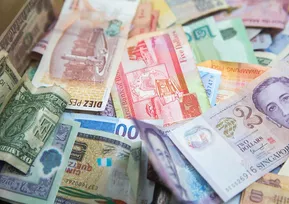
Lara Jameson on Pexels

Integrating with Asian payment networks

Users can now rely on assets such as Bitcoin (BTC), Ethereum (ETH), Tether (USDT), USD Coin (USDC) and Binance Coin (BNB) as a source of funds for payments, which can be made in-store by scanning a QR code via a network of merchants throughout Southeast Asia. 


Once a transaction is confirmed, funds are converted to fiat currency in real time. The offering minimizes friction for the merchant, making it easy for them to accept crypto as a means of payment. 


This scan-to-pay feature has now been integrated with national payment networks like VietQR, a money transfer service in Vietnam that enables customers to scan and pay across the mobile apps of the Southeast Asian nation’s banks. Similarly, AEON has integrated with another such service in Thailand known as ThaiQR, which is supported by a number of leading Thai banks. 


Connecting Web2 with Web3

In an article posted to X last month, Terminus outlined that acting as a “payment association” isn’t just a label but an attempt by the company to take an approach that seeks to connect Web2 with Web3 in a manner previously thought impossible. It believes that it is creating a powerful ecosystem by taking disparate payments providers and joining them together via a cohesive payments association.


In bridging Web2 and Web3 Terminus says that it is laying “the groundwork for a future where payments are not only efficient but universally accessible.”


Network integrations seem to be key where crypto payment solutions providers are concerned. With that, AEON has been active in bringing about other such integrations beyond this collaboration with Terminus. In September, it entered into a partnership with Singapore’s Alchemy Pay, a crypto-to-fiat payment gateway, with a view towards combining Alchemy’s expertise in payments with AEON’s payments infrastructure and protocol.


In October AEON integrated with the TRON layer-1 blockchain network. The collaboration means that decentralized applications within the TRON ecosystem can accept crypto payments over AEON’s payments infrastructure.


More to Read
View All
Policy & Regulation·

Nov 21, 2024

Russia looks to implement crypto taxation and mining policy changes  

A number of reports published by local Russian media in recent days suggest that the Russian authorities are implementing taxation and regional controls on cryptocurrency mining.Photo by Michael Parulava on UnsplashRegional mining banA report published by the Moscow Times on Nov. 19 suggests that Russia’s Deputy Prime Minister, Alexander Novak, has led a government commission that plans to implement a ban on cryptocurrency mining in specific Russian regions.  The authorities have been motivated in enacting such a ban in order to combat power shortages. With that, a ban is being implemented on a temporary basis during the heating season. The restrictions will apply to miners located within six regions within the North Caucasus, as well as the Zabaikalsky region in Siberia and territories now controlled by Russia in Ukraine. The ban will apply from December through to mid-March 2025, with this seasonal restriction to be applied subsequently each winter until 2031. Back in August, Russian President Vladimir Putin signed into law legislation which legitimized cryptocurrency mining within the Russian Federation. That law recognized mining activities and the concepts of mining pools and mining infrastructure operators. The legislation requires mining operators to register with the government. Individual miners can mine without registering so long as they stay within specified energy-use limits. Earlier this month, the authorities set a power consumption limit of 6,000 kWh per month for those unregistered miners.  The legislation also recognized the ability of stakeholders to trade in foreign digital assets on Russian blockchain platforms, with Russia’s central bank, the Bank of Russia, retaining the ability to ban specific digital assets from being traded if such trading is deemed to be a threat to Russia’s financial stability. 15% tax proposalEarlier this week Russia’s Interfax news agency reported that the Russian government had approved draft amendments to a bill concerned with the purchase and sale of digital currencies relative to crypto mining activity.  According to those proposed legislative amendments, digital assets will be classified as property from a taxation perspective. Income derived from mining activities will be assessed in terms of taxation based on market value at the time of receipt of the asset. The legislative amendments propose a 15% tax rate for cryptocurrencies. Furthermore, crypto transactions will not be subjected to value-added tax (VAT). However, income derived from such transactions will be taxable in the same way as income from transactions involving securities. Crypto mining operators will be permitted to deduct operating expenses from their taxable income. Russia’s Finance Ministry is understood to have clarified that the taxation approach would strike a balance between Russian government interests and those of commercial operators. With the introduction of legislation to recognize cryptocurrency mining activity earlier this year, Ki Young Ju, CEO of on-chain and market data analytics firm CryptoQuant, noted the country’s growing involvement and national-level engagement with digital assets. The coming months will determine if these latest crypto mining restrictions will dampen the level of involvement of Russia-based crypto miners.

news
Web3 & Enterprise·

Oct 18, 2023

Standard Chartered Muscling Into Asian Crypto Space

Standard Chartered Muscling Into Asian Crypto SpaceUK banking giant Standard Chartered is making a concerted foray into the Asian crypto sector through its Singapore-based subsidiary, Standard Chartered Ventures.Photo by Kirill Petropavlov on UnsplashTargeting institutional businessThat’s according to a report by Nikkei Asia on Tuesday. It’s believed that the company is positioning itself as a trusted choice for institutional cryptocurrency clients amid the backdrop of digital token price volatility and recent upheavals in the industry. The move will pit the British bank directly against global crypto exchange Binance in key Asian markets, specifically Singapore and Japan.Rene Michau, the Global Head of Digital Assets at Standard Chartered, emphasized what he considers to be the bank’s unique advantage in the digital asset space, stating:“As regulated banks, we have a fairly deep infrastructure around risk, conduct compliance, and the activities that go along with crypto assets.”This solid infrastructure includes established risk frameworks, governance structures, and compliance tools that Standard Chartered is keen to bring into the cryptocurrency sphere, thus making it an attractive option for its clients.Zodia Custody and Zodia MarketsStandard Chartered’s substantial involvement in the cryptocurrency market is channeled through its majority ownership of Zodia Custody, responsible for safeguarding digital assets, and Zodia Markets, a crypto exchange tailored for institutional clients.Both entities have been making significant progress in bringing their offerings to market in recent months. Zodia Custody recently launched its services in Singapore, offering a secure solution for financial institutions to manage their crypto holdings. Last month it launched a crypto staking product targeted at institutional clients.In the same month, Zodia Markets achieved in-principle approval to trade as a broker-dealer in the United Arab Emirates. Zodia Custody has also been successful in the UAE, launching its crypto custodian service in Dubai in May.Japan and SingaporeThis concerted effort by Standard Chartered follows a broader trend where traditional financial institutions, such as DBS Group Holdings in Singapore, are entering the cryptocurrency market, capitalizing on the challenges faced by younger crypto players in proving their credibility.Binance rebranded its Binance Custody unit as Ceffu and expanded its offerings for corporate customers in Singapore. While Binance asserts the independence of Ceffu, the exact nature of their capital relationship remains undisclosed.A parallel competition is unfolding in Japan, where Binance Japan has entered the market and Standard Chartered’s Zodia Custody has formed a joint venture with SBI Digital Asset Holdings, targeting institutional clients.While Standard Chartered has achieved a lot through its crypto-focused subsidiaries in a short space of time, there’s always room for improvement. In June, Hong Kong’s banking regulator singled out Standard Chartered alongside HSBC, appealing to both banking groups to make greater efforts to bank crypto clients within the Chinese autonomous territory, as it looks to compete with Singapore in becoming a regional crypto hub.The cryptocurrency sector has witnessed increased scrutiny as virtual currencies like Bitcoin and Ether have gained popularity. The rise of digital token exchanges, each vying for custody of assets belonging to investors who have embraced cryptocurrencies, has sparked concerns about corporate governance and security.Giants in traditional finance, like Standard Chartered, are stepping in to offer institutional investors a safer path to engage with virtual assets while leveraging the trust associated with established brands.

news
Policy & Regulation·

Aug 26, 2023

Binance Takes P2P Service Measures in Response to Sanctioned Russian Banks

Binance Takes P2P Service Measures in Response to Sanctioned Russian BanksGlobal crypto exchange Binance has removed the option for users to conduct transactions via sanctioned Russian banks on its peer-to-peer (P2P) platform, a decision that comes on the heels of a Wall Street Journal exposé published earlier this week, shedding light on the platform’s involvement in facilitating the movement of funds for Russian users.Previously, Binance’s peer-to-peer service featured five Russian banks under sanctions as a method for ruble transfers between users. However, the company swiftly acted to address potential compliance concerns. Fittingly, this latest news was also broken by the Wall Street Journal on Friday.Dmitry Sidorov on PexelsSailing too close to the windWhen approached regarding the omission of these banks, a Binance spokesperson stated: “We regularly update our systems to ensure compliance with local and global regulatory standards. When gaps are pointed out to us, we seek to address and remediate them as soon as possible.”The Wall Street Journal’s article outlined how Binance’s peer-to-peer platform facilitated ruble-to-crypto trades that frequently involved the sanctioned Russian banks, with Rosbank and Tinkoff Bank being prominent examples.These trades often utilized layers of intermediaries to convert funds from these banks into Binance balances, as detailed by various company resources, user screenshots, and messages in official chat groups. Despite these revelations, Binance’s exchange had continued to handle significant volumes of ruble trading, according to data compiled by digital asset research firm CCData.US DoJ probeBinance’s activities in Russia could potentially contribute to its ongoing legal challenges in the United States. The US Justice Department (DoJ) has been probing the company’s actions for potential violations of American sanctions on Russia. In response to such concerns, the Binance spokesperson emphasized:“Binance aims to diligently comply with the global sanctions rules and enforces sanctions on people, organizations, entities, and countries that have been blacklisted by the international community, denying such actors access to the Binance platform.”WorkaroundsTraders, however, had reportedly found workarounds to the bank removals, as observed in the official Telegram chat group for Russian clients. Many shared that they could still engage with sanctioned banks by selecting alternative payment methods and then manually inputting their Rosbank or Tinkoff bank details.Earlier this year, an investigative report by CNBC alleged that employees of the company had told it that Binance staff regularly helped Chinese customers to bypass Know Your Customer (KYC) controls in order to access the platform. More recently, another report, once again by the Wall Street Journal, found that business in China was booming, which surprised many given that China banned crypto trading within the country in 2021.It’s apparent that the company is reacting to regulatory and legal pressures in taking the decision to make these changes to its P2P service. Perennial crypto critic US Senator Elizabeth Warren took to X (formerly Twitter) on Friday, stating:“I rang the alarm about sanctions evasion by Russia using the crypto platform Binance — and urged [the DoJ] to investigate potentially false statements it made to Congress. We need stronger crypto regulations to rein in illicit finance.“

news
Loading