Top

Global Blockchain Incheon Conference to Promote Web3 Exchange and Advancement

Web3 & Enterprise·October 24, 2023, 5:27 AM

The city of Incheon is set to host the Global Blockchain Incheon Conference (GBIC 2023) this year from October 30 to 31 under the theme “The Age of Discovery: Voyage to the New World of Blockchain.” The conference aims to provide a space for the exchange of Web3 technologies that are becoming a part of daily life and facilitating communication between businesses, all in the pursuit of establishing Incheon as a global blockchain hub.
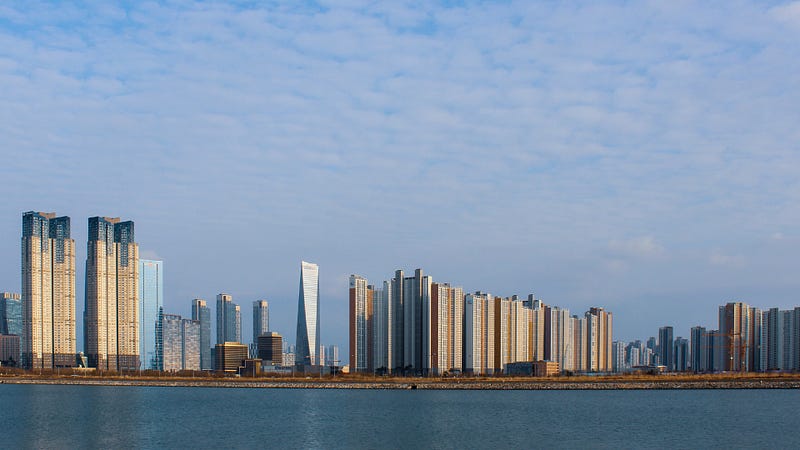
Photo by Jiho Choi on Unsplash

The city intends to reveal its master plan to achieve this pursuit, consisting of five major strategy points: citizen participation, sustainable growth, advanced innovation, development of a business-friendly environment, and global technological leadership.


Exploring the rich tapestry of GBIC 2023

The event will include an opening ceremony, keynote speeches, seminars, and additional activities such as hackathon competitions, photo exhibitions of cutting-edge technologies, and interactive zones. Keynote speakers include Marouen Zelleg, Head of Business Development at Polygon Labs’ Asia-Pacific region; Patrick Yoon, General Manager Korea at Crypto.com; Shun Ishikawa, COO at Astar Foundation; and Christopher Lai, Director of the Hong Kong Trade Development Council’s Korea branch.

There will be sessions centered around various themes such as stepping into the future of blockchain, improving safety for the citizens of Incheon, delivering tangible innovation, integrating blockchain into daily life, venturing beyond regulations into new possibilities, disseminating technology, and innovating industrial ecosystems.

In particular, the conference will also hold a demo day, where companies can showcase demos for their products and services to attract potential investors.


Diverse experiences for visitors

Attendees will have the unique opportunity to see how blockchain technology is integrated into daily life by receiving non-fungible tokens (NFTs) minted with Incheon’s mascots — Deungdaeri, Bumi, Kkomi, and Aini — and participating in blockchain-powered games. Other NFTs, such as those issued by Shinhan Bank with records of information like confirmation of entry and coupon usage, will also be available.

GBIC is also holding other online and offline activities for visitors to participate in, such as quizzes, social media events, and souvenir distributions.

“We will demonstrate how digital technology is integrated into daily life through blockchain in the Web3 era that we are living in,” said Son Hye-yeong, Head of the city’s Data Industry Division. “We encourage everyone’s interest and participation in the blockchain presentations and forums led by global leaders.”

GBIC will take place at Songdo Convensia in Incheon, an international conference complex located in Songdo International Business District.


More to Read
View All
Policy & Regulation·

Jul 14, 2025

Shanghai officials potentially signaling openness to stablecoins

The Shanghai office of a Chinese regulatory body which oversees assets belonging to state-owned enterprises (SOEs) is reported to have held a session dedicated to the topic of digital assets and in particular, stablecoins, fueling speculation of a positive shift in outlook on crypto in China.Photo by Hanny Naibaho on UnsplashOn July 11, Reuters reported that the State-owned Assets Supervision and Administration Commission (SASAC) held the meeting in Shanghai on July 10, with the publication suggesting that the event represented “a marked shift in tone” in the consideration of digital assets in China, bearing in mind that crypto trading and mining are banned within the country. Following the “development trend and response strategies” study session, He Qing, director of the organization, said that there was a need for "greater sensitivity to emerging technologies and enhanced research into digital currencies." The regulator called on Chinese state-backed agencies to consider the adoption of blockchain technology for use cases like real-world asset (RWA) tokenization, supply chain finance and cross-border trade. A policy expert from Shanghai-headquartered securities firm, Guotai Haitong Securities, attended the meeting, outlining details on the history, characteristics and categories of cryptocurrencies and stablecoins, while also discussing global regulatory frameworks. Last month, a subsidiary company of Guotai Haitong Securities, Guotai Junan International (GTJAI), became the first company from the Chinese mainland to be given approval by the Hong Kong securities regulator to offer digital asset trading services. Adapting to the stablecoin trendIn June, state-owned financial newspaper, Securities Times, called on Beijing to adapt “to the trend of stablecoins.” The publication claimed that industry insiders “generally believe that, as an emerging payment tool, the unique advantages and potential risks of stablecoins cannot be ignored, and that the development of [yuan-backed] stablecoins should be sooner rather than later”. The same month, Pan Gongsheng, governor of the People’s Bank of China, acknowledged that stablecoins are playing a role in disrupting global payments infrastructure.  It also emerged recently that JD.com, a Chinese e-commerce giant, and Ant Group, an affiliate company of the Alibaba Group, have been lobbying the Chinese authorities for the authorization of yuan-based stablecoins. On X, Shanghai Macro Strategist, a China strategist, claimed that the recent surge in the Bitcoin unit price had come about as a consequence of this stablecoin-focused SASAC meeting in Shanghai. At the time of writing, BTC has appreciated 9.3% over the course of the past seven days. The strategist suggests that the event is fueling speculation that “the Chinese government may be in the early stages of reassessing its official stance on the crypto industry.” In their monthly report for May, the strategist pointed out that “Beijing’s outright rejection of [Bitcoin] as a legitimate asset” was holding the leading asset back on its path to “reserve status.” The strategist added: “Over the longer term, a shift in China’s stance could prove to be the single most powerful bullish catalyst—elevating Bitcoin from a fringe asset to a globally recognized store of value.”

news
Policy & Regulation·

Jun 27, 2023

Binance Weighs Up UAE Expansion Amid Regulatory Pressures

Binance Weighs Up UAE Expansion Amid Regulatory PressuresGlobal cryptocurrency exchange Binance is contemplating a strategic shift towards the Middle East as it faces regulatory challenges in the United States and Europe.Alex Chehade, the General Manager of Binance Dubai, believes that the United Arab Emirates (UAE) could emerge as a preferred destination for crypto businesses due to favorable and transparent regulations.Photo by Saj Shafique on UnsplashUAE’s regulatory certaintyChehade emphasized the UAE’s ambition to establish itself as a key player in the Web3 industry and diversify away from fossil fuels, with cryptocurrencies playing a significant role in this transition. Speaking to Cointelegraph, the local branch manager of Binance highlighted the certainty and predictability offered by the UAE’s regulatory framework, making it an attractive environment for business development.Binance MENA statistics indicate that the UAE has the highest number of cryptocurrency holders, with approximately 28% of UAE residents owning cryptocurrencies. This data highlights the significant interest and adoption of digital assets in the country.Binance obtained a Virtual Assets Regulatory Authority (VARA) license in Dubai in 2022, making it one of the first exchanges to do so. The license includes a Virtual Asset License obtained in March and a Minimal Viable Product (MVP) license secured in September. The MVP license allows Binance to offer a full range of approved digital assets and related services.Facing difficulties in the US & EuropeThis strategic consideration by Binance comes at a time when the exchange is grappling with legal issues on multiple fronts. Lawsuits filed by the Securities and Exchange Commission (SEC) and the Commodities Futures Trading Commission (CFTC) in the United States have added to the regulatory pressure. In Europe, Binance has faced challenges, including an order from the Belgian FSMA to cease operations immediately, de-registration in the UK, ongoing investigations in France, and withdrawal from the Netherlands and Cyprus.In Europe, Binance recently decided to delist privacy tokens, such as Zcash and Monero, due to changes in local anti-money laundering regulations. However, the exchange later reversed that decision on the basis that the classification of these assets has been revised to comply with legal requirements within the EU.While European officials aim to establish Europe as a hub for cryptocurrencies with the implementation of Markets in Crypto-Assets (MiCA) regulations, Binance’s actions suggest a preference for other jurisdictions.The rise in popularity of cryptocurrencies in the UAE can be attributed, in part, to the VARA. Chehade commends VARA for providing a clear regulatory framework for crypto businesses, which he believes is lacking in other regions.As Binance faces regulatory pressure in the West, the company is exploring opportunities in the Middle East, particularly in the UAE, where the regulatory framework, growing crypto community, and commitment to becoming a Web3 hub make it an attractive prospect for expansion.It is understood that Binance’s Founder and CEO, Changpeng Zhao (CZ), lives in Dubai. However the headquarters of the company has remained unclear. Originally founded in Shanghai in 2017, the firm was later moved to Tokyo and later to Malta. Perhaps the UAE will serve as the company’s base going forward.

news
Web3 & Enterprise·

Nov 22, 2023

Korean health management app leverages blockchain for iris-based solutions

Korean health management app leverages blockchain for iris-based solutionsIRIS, a blockchain foundation focused on healthcare, announced on Wednesday (local time) the launch of a health management app developed in collaboration with Hongbog, a South Korean provider of iris-based biometric systems. This app offers services customized to each user’s health status and lifestyle.Photo by Kalea Jerielle on UnsplashIridology-based health analysisUnlike other healthcare platforms that primarily focus on exercises, IRIS’ app offers long-term and periodic health trend analysis reports through iris photography. This approach is based on “iridology,” a concept used in traditional Korean medicine, and the app also recommends visits to specialized healthcare providers based on its findings.The app instantly analyzes a user’s biometric information through artificial intelligence once a picture of their eyes is captured with a smartphone camera. Within 15 seconds, users can view their results, based on which the app recommends personalized exercises and nutrients.This platform serves both personal disease management and prevention, and can also be utilized by public health centers for monitoring the health of local residents. Presently, it provides five health ratings for cholesterol, stress levels, and four specific organs: the brain, lungs, liver and kidneys. Future updates will optionally include information on an additional 15 organs, such as the heart, bronchi, pancreas and stomach.Blockchain-powered privacy protectionA representative from IRIS conveyed that their goal in an aging society is to assist customers in preventing serious illnesses and promoting longer, healthier lives. They emphasized that the app enables regular measurement of health indicators, aiding in disease prevention and management. The representative also mentioned that by storing sensitive healthcare information on the blockchain, the service eliminates the risk of personal data leaks.

news
Loading